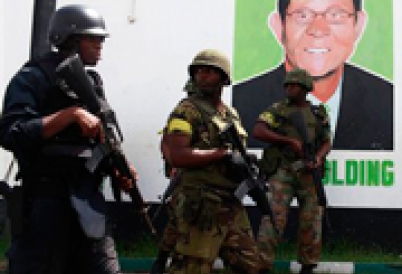
Recent civil unrest in Jamaica raised concerns about the goverment's ability to tackle criminal gangs and drug lords. Experts disagree on the prime minister’s future political prospects in the wake of turmoil in Tivoli Gardens sparked by the search for kingpin Christopher Coke.
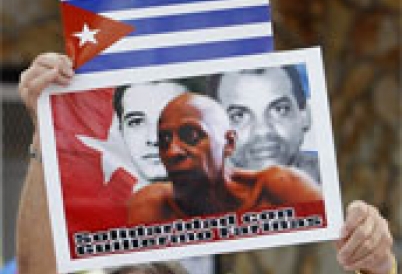
Following a rare meeting between Cuban President Raúl Castro and Roman Catholic Church leaders, reports revealed that the Cuban government agreed to transfer political prisoners to jails closer to their hometowns and to move sick prisoners to hospitals.
Legal harassment is being used to threaten freedom of expression in certain Latin American.
The media landscape in Latin America is changing dramatically as countries pass, apply, and repeal media laws.
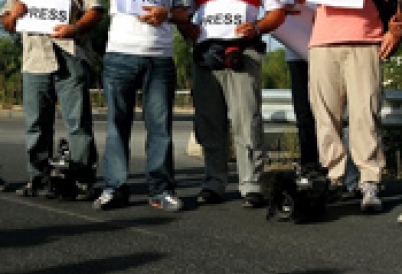
While some journalists reporting in Latin America face threats to personal security, others deal with official intimidation in what some warn could roll back hard-won press freedoms. But governments and journalists have also taken steps to ensure greater access to information.
The Wilson Center’s Andrew Selee writes in the Houston Chronicle on U.S.-Mexican collaboration to combat drug violence and trafficking. “[W]hile stepped-up enforcement on the border is certainly welcome, it can hardly be the primary solution,” he writes. Excerpted from an Americas Quarterly essay.
Writing for openDemocracy, Dartmouth's John M. Carey looks at the Latin American trend of holding referendums to pave the way reelection. "[P]residents themselves tend to lack judgment as to when enough is enough," he writes. Adapted from an essay published in the Summer 2009 Americas Quarterly.