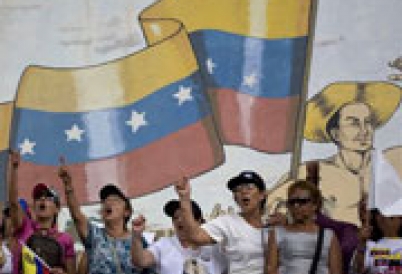
Venezuela continues its trend of nationalizations, with the cement industry serving as the latest example. Meanwhile, a series of decrees and blacklisting of candidates in advance of November municipal elections appear designed to strengthen Chávez’s hand.
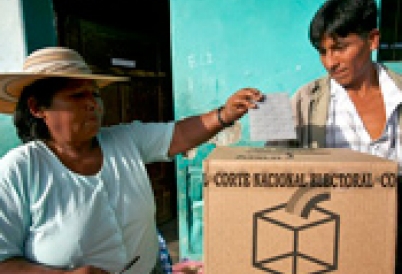
President Evo Morales’ political mandate gained a boost through his victory in a recall vote. But protests promised by opposition leaders raise questions about bridging the country’s political divide.
Paraguay's new President Fernando Lugo represents a change in leadership after six decades under the rule of the Colorado Party. But challenges lie ahead for the former priest after he takes office.
In an AS/COA interview, Bolivia expert Eduardo Gamarra of Florida International University discusses the complex series of referenda taking place in Bolivia, explaining what is behind the political divisions affecting the country. Speaking about Sunday’s recall vote, Gamarra comments that, “The president is basically running a riskless election.”
In a new article for Poder magazine, COA Vice President Eric Farnsworth examines proposals by U.S. presidential candidates to create a body of democratic nations, saying, "If carefully constructed, this may be an idea whose time has come." He recommends that past examples be taken into account to avoid the mistakes and build on the successes of predecessors.
The failure to pass federal immigration reform and the lack of sufficient related initiatives serve as obstacles to the integration of Hispanic legal residents, even as raids and punitive state-level immigration laws create a climate of fear.
AS/COA Director of Public Policy Programs Juan Cruz Diaz draws on his experience at the 2005 Mar del Plata Summit to look ahead to next year’s meeting of regional leaders, outlining steps that should be taken for a successful summit.