As the 50-year anniversary for the Cuban Revolution nears, Raúl Castro makes his first state visits abroad. His statements at a regional summit raise speculation about future relations with Washington and what mediating role Brazil could play.
In El Diario/La Prensa, Christopher Sabatini writes that the media inflated South America's leftward shift. Instead, election outcomes reflect the desire for pragmatic change similar to the one shown by the choice of Barack Obama for U.S. president. (en español)
President Hugo Chávez and his Colombian counterpart Álvaro Uribe may each seek reelection. Both command high approval ratings but face possible political and economic challenges in the coming year.
Venezuelans voted Sunday in municipal elections. While President Hugo Chávez's Socialist Party won 17 of the 22 governorships up for grabs, the opposition chipped into his party's power grip by gaining the mayoralty of Caracas and other crucial posts.
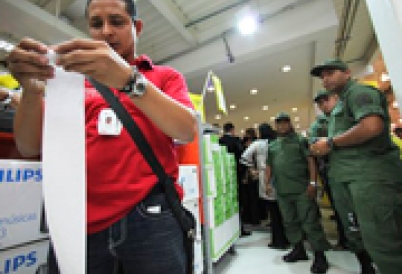
Since July, commodity prices have contracted, threatening spending programs and fiscal policy in Venezuela in particular. But the Chávez government remains optimistic amid cautionary calls.
Leopoldo López Mendoza, mayor of the Chacao municipality of Caracas, was favored to win the mayoralty of the Venezuelan capital until he and hundreds of other candidates were banned from running in upcoming municipal elections. In an interview, López talks about the questionable legality of the ban and the threat posed to democracy in Venezuela.
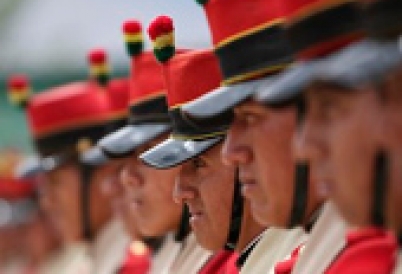
As violent clashes die down in Bolivia, concern remains over deep political differences between supporters and opponents of President Evo Morales. Meanwhile, the unrest coincided with a diplomatic tit-for-tat involving Bolivia and Venezuela against the United States.