A year and a half after cutting diplomatic relations, Bogota and Quito's efforts to repair ties are showing signs of progress. Foreign ministers from each country met Friday to continue talks.
Colombia
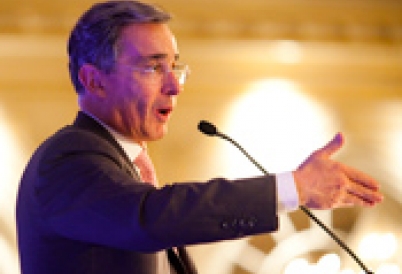
Colombian President Álvaro Uribe joined Americas Society/Council of the Americas for a question and answer session about his country's economy and the constitutional process that would pave the way for him to seek a third consecutive term. Read his remarks.
Colombia's President Álvaro Uribe held a question-and-answer session, giving an overview of his country's economic progress and improved public safety. He also discussed constitutional changes underway that could allow the possibility of a third term.
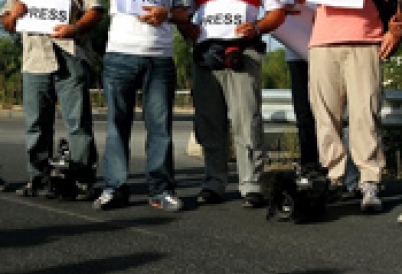
While some journalists reporting in Latin America face threats to personal security, others deal with official intimidation in what some warn could roll back hard-won press freedoms. But governments and journalists have also taken steps to ensure greater access to information.
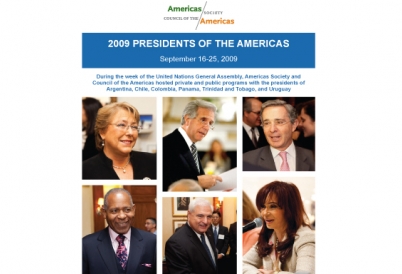
During the week of the United Nations General Assembly, Americas Society and Council of the Americas hosted private and public programs with the presidents of Argentina, Chile, Colombia, Panama, Trinidad and Tobago, and Uruguay.
"If the United States is going to be a partner with Latin America—a healthy and laudable goal—the aspiring powers of the hemisphere need to shake off their timidity and worn-out rhetoric," write AS/COA's Senior Director of Policy Christopher Sabatini and Kissinger Associates' Stephanie Junger-Moat.
South American leaders met Monday in Quito for a UNASUR summit, where they debated action on a probable U.S.-Colombian military pact. Though not present at the summit, Colombia’s President Álvaro Uribe visited seven countries last week to clarify the deal’s terms.