Bernard Aronson, former assistant secretary of state for inter-American affairs, argues in The Washington Post that delaying the ratification of free-trade agreements with Colombia and Panama sends Latin America a message: "Friends of the United States get thrown under the political bus."
"A strong trade agenda presents a unique opportunity to promote economic growth, global partnerships and bipartisan cooperation," argues Congressman David Dreier in an op-ed for Politico. "International trade plays an important part in improving a nation’s circumstances — far beyond the immediate scope of exports and imports."
A free-trade agreement with Colombia would "give confidence to investors the country badly needs," as well as help finance judicial investigations, support the building of efficient infrastructure, and support human rights efforts, writes Edward Schumacher-Matos for The Washington Post.
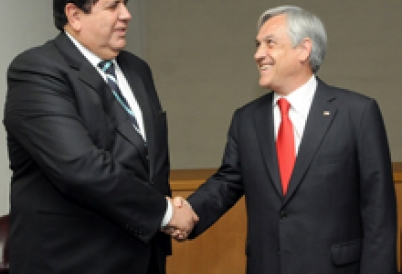
Peru and Chile’s presidents made use of their time in Asia to carve out trade deals on APEC’s sidelines. Lima closed a deal with South Korea and concluded negotiations with Japan while Chile inked a pact with Malaysia and announced it would start negotiations with Thailand.
Communities across the United States "could benefit from a more business and export friendly climate that encourages even more innovation and invention that would bring new jobs," argues COA's Brian Wanko in an op-ed for The South Bend Tribune.
"In the absence of passage of these bilateral agreements, a possible near-term alternative would be to welcome Colombia and Panama into ongoing negotiations for the Trans-Pacific Partnership," writes AS/COA's Eric Farnsworth in an opinion letter to the Financial Times.
"Speculation is rampant in Washington that the November 2 mid-term elections will usher in a new phase of trade expansion for the United States," argues Eric Farnsworth in an op-ed for The Miami Herald.