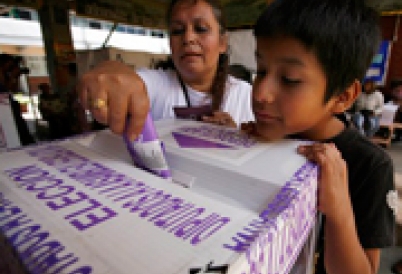
Uruguay is slated to hold a November 29 runoff election after no candidate pulled in more than 50 percent of the vote on Sunday. Former guerilla leader José Mujica of the governing party appears well-placed for victory in the next round but he could face a challenge if his opponents form a coalition.
Negotiators for deposed Honduran leader Manuel Zelaya and the interim government continue the slow march toward ending the political standoff. The two sides have exchanged proposals to resolve the sticky question of Zelaya's return to power. Meanwhile, the clock keeps ticking down to November presidential elections.
The surprise return of deposed leader Manuel Zelaya to Honduras on September 21 sparked a tense—and at times violent—period in the Central American country. With the outcome in doubt inside the country, AS/COA takes a look at the roles of external actors seeking to resolve the crisis.
Deposed Honduran leader Manuel Zelaya made a dramatic return September 21, taking refuge in the Brazilian Embassy in Tegucigalpa. Hemispheric leaders pressed for a solution to a three-month-old political impasse, but tensions run high in the Central American country.
Now in its sixth year, AS/COA's Buenos Aires conference drew together high-level leaders to present their views on Argentina’s current and future opportunities.
In an AQ web exclusive, Daniel Altschuler takes a look at the Honduran de facto government's failed attempts to gain international recognition and change world opinion that President Manuel Zelaya must be restored to power.
"If the United States is going to be a partner with Latin America—a healthy and laudable goal—the aspiring powers of the hemisphere need to shake off their timidity and worn-out rhetoric," write AS/COA's Senior Director of Policy Christopher Sabatini and Kissinger Associates' Stephanie Junger-Moat.