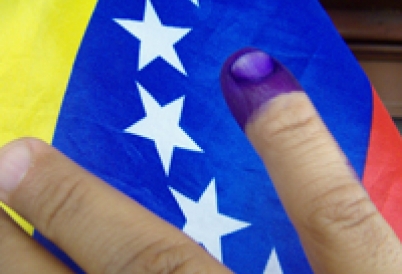
"Over a five week span, voters in Venezuela, Brazil, and the United States, respectively, will make choices that will reconfirm or redirect the Bolivarian revolution, support or soften the international course that President Lula has set, and continue or overturn the ongoing pause in the U.S. trade agenda with the hemisphere," writes COA's Eric Farnsworth.
President Evo Morales is transferring more authority to departments—even when the results have been politically uncomfortable.
Juan Manuel Santos takes over Colombia’s presidency on August 7 and has built a team to take on economic and diplomatic challenges as the country celebrates its bicentennial. Learn more about the new cabinet.
President Inácio Lula da Silva's protogé Dilma Rousseff and rival José Serra poll neck and neck as the race heats up for Brazil’s October election.
AS/COA, in conjunction with the Brookings Institute and the Cuba Study Group, held a panel on findings of the new working paper Empowering the Cuban People through Technology. The paper recommends loosening restrictions on U.S. telecom firms to boost Cuba’s access to IT and the Internet.
AS/COA's Christopher Sabatini writes in ForeignPolicy.com for the White House "to loosen restrictions on U.S. telecom activities in Cuba and assist U.S. business in providing the tools for Cubans to communicate beyond the prison walls of the Castros' island nation."
Andrew Selee, director of the Woodrow Wilson Center's Mexico Institute, talks with AS/COA Online about the July 14 Mexican cabinet shuffle and what it signifies for President Felipe Calderón’s last two years in office.