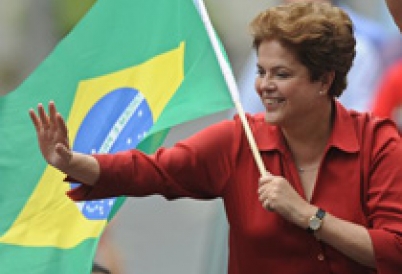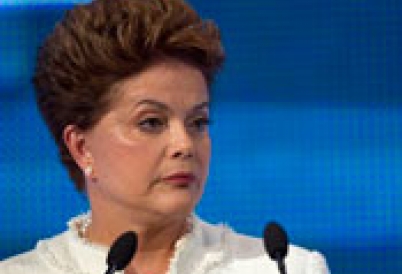
Brazilian President Luiz Inácio Lula da Silva this week announced a major infrastucture investment plan valued at roughly $880 billion. News of the plan could provide a boost to the political campaign of his chosen successor, Dilma Rousseff, ahead of the October 2010 election.
Americas Quarterly hosts a live chat on March 31 about how to extend technological inclusion to minorities across the hemisphere. Paulo Rogério, founder of Brazil’s Instituto Mídia Étnica, leads an online discussion addressing the underlying conditions behind exclusion from the digital revolution.
A dispute over U.S. cotton subsidies took another turn this week when Brazil announced plans to suspend intellectual property rights on some U.S. products. That and retaliatory tariff measures are slated to take effect in April, though both sides hold hopes for negotiations.
Brazil's Iran ties and a devestating earthquake in Chile have been the main focuses of U.S. Secretary of State Hillary Clinton's Latin American travels this week. Her trip, from February 28 through March 5, brings her to Uruguay, Argentina, Chile, Brazil, Costa Rica, and Guatemala.
"If we are able to influence public opinion through media outlets we will be able to overcome the black community's traditional lack of political voice," writes Paulo Rogério, founder of Brazil-based Instituto Mídia Étnica, in the Winter 2010 issue of Americas Quarterly.
From October 2009 through October 2010, seven presidential races are taking place in Latin America, with elections in Uruguay, Honduras, Bolivia, Chile, Costa Rica, Colombia, and Brazil. AS/COA offers an interactive guide to the results thus far and poll figures for elections yet to come.
As Brazil's influence on the world stage increases, its partnership with the United States should be based on mutual recognition and respect, writes COA's Eric Farnsworth in Folha de São Paulo. Economic and political security should not come at either country's expense. (em português)