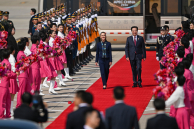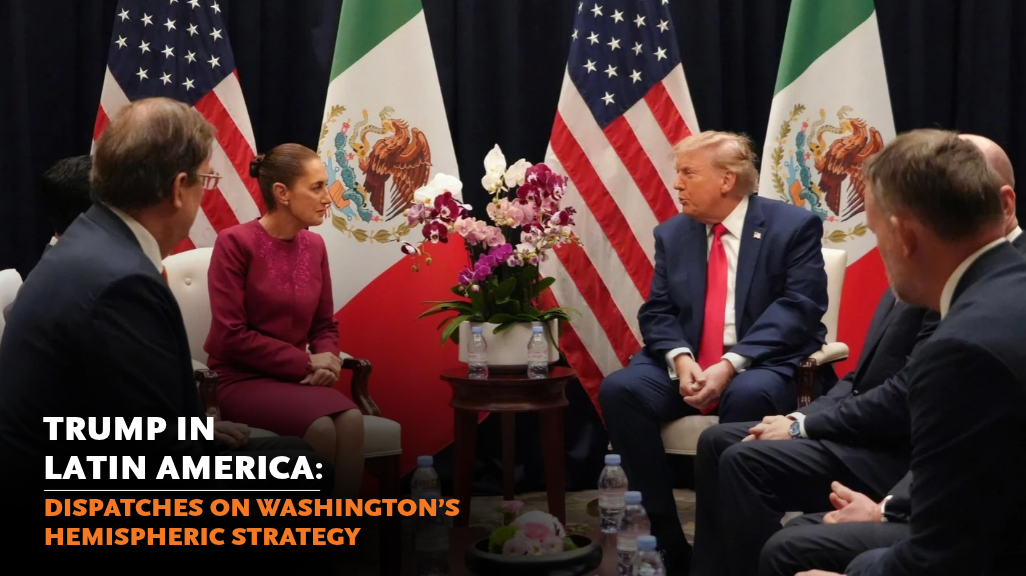
Mexican President Claudia Sheinbaum and U.S. President Donald Trump

Mexican President Claudia Sheinbaum and U.S. President Donald Trump at APEC. (Sheinbaum's X))

Trump in Latin America: Hegseth in Caracas, Trump in Shenzhen, Tito in DC

By Chase Harrison and Carin Zissis

Nov 12–18: The defense secretary stops in Colombia and Venezuela while the president talks trade with Mexico and Canada at APEC.

Welcome back to our weekly dispatch of stories on the U.S. role in Latin America. Follow us each week and see previous roundups at as-coa.org/dispatches, or sign up to receive them via LinkedIn.

Here’s what to know this week: 

  • Hegseth makes surprise trip to Venezuela before heading to Colombia.
  • During APEC summit, world leaders meet, including U.S. and Mexico trade delegations.
  • Post-midterms, the U.S.-LatAm agenda for the lame duck Congress and second half of Trump term shapes up.
  • Plus: Rubio meets Honduras’ Asfura, Brazil investigates Vance-founded donor network, Segura visits Trinidad and Tobago, and first ever FEPA charges are levied.
Hegseth’s surprise South American double header

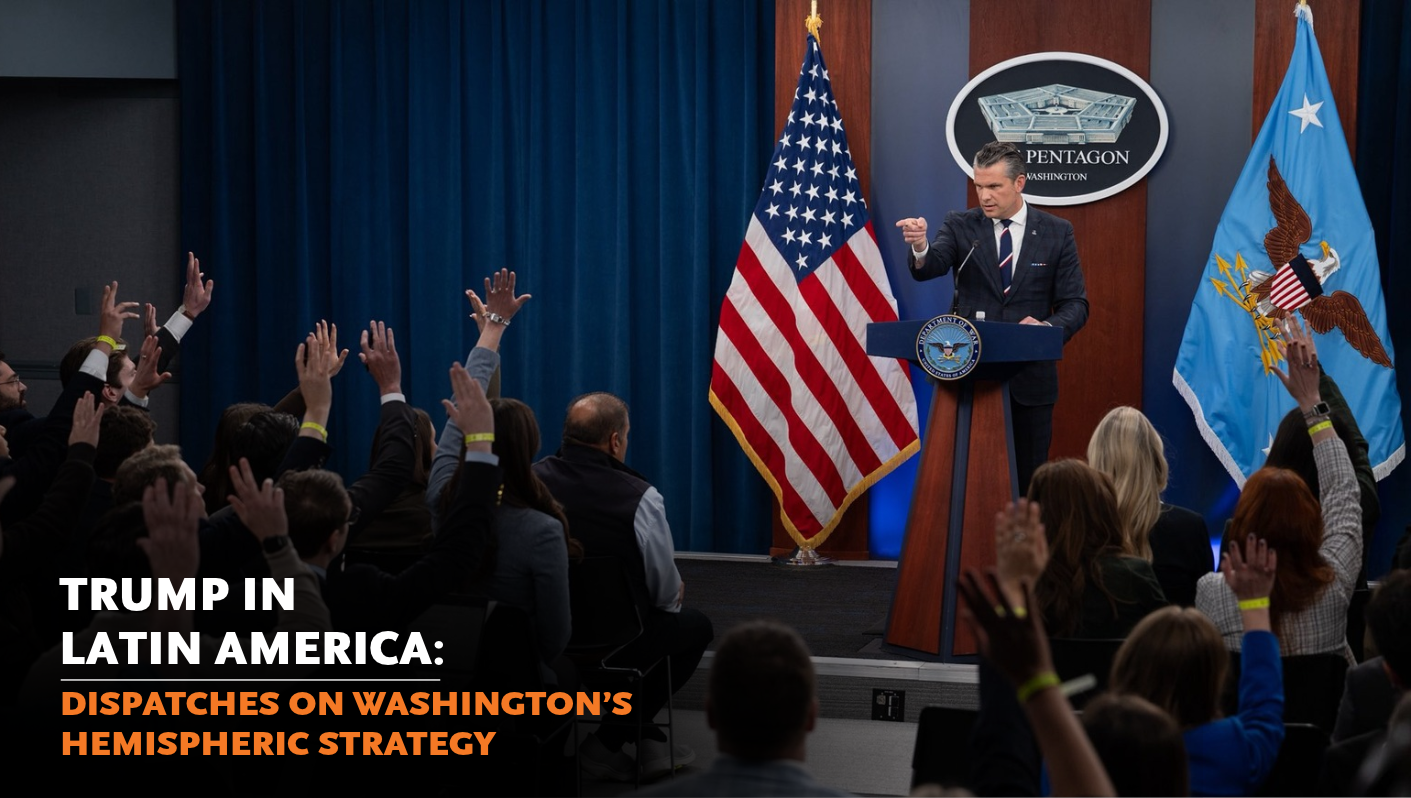
U.S. Secretary of Defense Pete Hegseth made a surprise visit to Venezuela on November 18, the third Trump cabinet official to visit the country. Hegseth visited the presidential palace in the morning to meet with interim President Delcy Rodríguez, who is shepherding U.S.-led reforms to Venezuela’s energy sector and finances, and Defense Minister Gustavo González López. There, Hegseth signed a military cooperation agreement that includes joint training, intelligence sharing, and “removing threats.” He said, “We look forward to...deepening our defense cooperation and our defense partnership in ways that utilize the expertise of the U.S. military and the war department alongside the great capabilities of your military.” 

Also present at the meeting were recently appointed Foreign Minister Oliver Blanco and financier Alejandro Betancourt, who owns the private company involved in the August U.S.-Venezuela oil deal that Hegseth helped negotiate. 

Later on November 18, Hegseth is set to visit Bogotá, Colombia where he will meet with Defense Minister Jorge Eduardo Mora López and other military top brass. Hegseth is also set to deliver a transport aircraft to the Colombian Armed Forces, which comes as the two countries are expanding their military cooperation. Earlier this month, the Chairman of the Joint Chiefs of Staff Gen. Dan Caine also met with Mora López in Colombia. 

Mexico, Canada meetings in China despite turbulence in ties

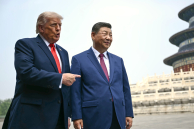
Eyes are turned to Asia this week for the APEC summit in China, where Trump met with Mexican President Claudia Sheinbaum for a Wednesday discussion she described as “very good” before adding, “We are advancing on a common agenda.” The conversation, which only lasted 20 minutes, may not have left much time to get into the weeds of ongoing trade negotiations related the U.S.-Mexico-Canada Agreement (USMCA), but it was high level. On the U.S. side, attendees included White House Chief of Staff Stephen Miller, Secretary of State Marco Rubio, U.S. Trade Representative Jamieson Greer, and Commerce Secretary Howard Lutnik, while Mexican Economy Secretary Marcelo Ebrard and Foreign Minister Roberto Velasco joined from the Mexican side. Trump and Sheinbaum have held numerous phone calls, but the meeting in Shenzhen is their first in-person encounter outside of World Cup events. Another meeting is around the bend, though; the two leaders plan to have a tête-à-tête during the G20 Summit in Mar-a-Lago next month. 

But the China meeting comes amid concerns in Mexico that the newly promoted Miller’s hardline approaches to immigration and security could spark bilateral tensions. Late last week, Trump threatened to double tariffs on Mexico if it didn’t control migrant caravans making their way to the U.S. southern border. Meanwhile, on Tuesday, DEA head Terry Cole posted a warning that “Mexico is fueling cartel networks” and that his agency is “not backing down” when it comes to uncovering illicit ties between officials and organized crime groups. That same day, which also happened to coincide with Sheinbaum’s one-on-one meeting with Chinese President Xi Jinping, the U.S. Embassy in Mexico posted that fentanyl produced in Mexico is made with Chinese ingredients. The Chinese Embassy hit back, arguing that the U.S. fentanyl crisis can be blamed on its regulatory deficiencies and substance abuse challenges. 

Find out more about U.S.-Mexico security tensions in a prior edition. 

Mexico wasn’t the only meeting Trump’s delegation held with a neighbor on APEC sidelines. Canada’s Prime Minister Mark Carney also had a short discussion with his U.S. counterpart in which they talked about “a mutually beneficial trade agreement.” The two leaders sitting down together represented an advance in what has been a combative relationship marked by a breakdown in trade talks over the summer and a round of tit-for-tat tariffs. But tensions remain. In recent days, Carney told reporters that, while an integrated North American automotive sector is a top priority, Ottawa could look to new partners in Asia—China included—if U.S. tariffs persist. Trump trade advisor Peter Navarro responded on X, where he characterized the prime minister’s comments as an attempt to “play China off the U.S.” and called the move “offensive in the extreme.” 

See a prior edition for coverage of the U.S.-Canada trade battle. 

But before any of these leaders landed in China, Brazil’s president was talking Trump tariffs in Manila, where both leaders attended the Association of Southeast Asian Nations (ASEAN) summit. On the sidelines, Luiz Inácio Lula da Silva told journalists that his country “learned an extraordinary lesson,” adding that: “Instead of weeping or begging the U.S. government ... to have pity on us, we decided to look for other partners.” 

Read in on U.S. tariffs on Brazil in a past dispatch. 

Trump and Republicans look to lame duck session and beyond

The final races have been called from the November 3 U.S. midterms and the freshmen representatives, a majority of whom are Democrats, are in Washington for orientation. Still, the existing Congress will serve until January 3. What can be expected in the lame duck session?

Today, the Senate Foreign Affairs Committee is considering 17 ambassadorial nominations, including for Colombia, El Salvador, and Trinidad and Tobago. Meanwhile, on November 16, Trump nominated Kara Frederick, a former Defense Department employee who also worked at the conservative Heritage Foundation and the Center for a New American Security, to be the U.S ambassador to Bolivia, a position that’s been vacant since a 2008 diplomatic rift.

While the Trump administration pushes to fill the 94 ambassadorial vacancies, it has also continued to advance its hemispheric strategy as it enters the back half of the presidential term. On November 12, Trump said on a radio interview, “I want to get Cuba done before I leave,” suggesting a possible military intervention where Rubio would play a key role. Meanwhile Rubio announced on November 13 that three Guatemala-based groups would receive terrorist designations with one, Los Lorenzanas, named a Foreign Terrorist Organization (FTO). That brings the total number of Latin America-based groups given a FTO designation in Trump’s second term to 22. The administration also announced $4.5 million in U.S. military aid to Peru for the development of port infrastructure at Callao, a rival facility to the Chinese-developed Chancay port. 

In other news

Network vulnerabilities. The Washington Post reports that Brazilian federal police are investigating a donor network co-founded by U.S. Vice President JD Vance for possibly intervening in Brazil’s presidential election. Fourth-place finisher Renan Santos claims he was approached by the group, who was looking for a conservative candidate to support against Lula and believes they went on to support runner-up Flávio Bolsonaro. 

Cyber center centered. Assistant Secretary of State for Western Hemisphere Affairs Juan Pablo Segura visited Trinidad and Tobago on November 17 where he met with Prime Minister Kamla Persad-Bissessar to discuss investment and celebrated a cybersecurity center built by a U.S. company in the island nation.

Rubio and Asufura speak security. Rubio met with Honduran President Nasry “Tito” Asfura on November 13 in Washington to discuss the Shield of the Americas, the Americas Counter Cartel Coalition, and the Central American country’s designation of two gangs as terrorist organizations.

Honduran faces first-ever FEPA charges. The Department of Justice announced the November 16 arrest of a former Honduran consul general and her sons for running a bribery and money-laundering scheme out of the country’s Atlanta consulate. The charges facing Ada Eucedo Serrano, who was posted in Atlanta from 2022 to 2026 and used a transportation firm to extract bribes from Honduran citizens seeking services, are the first ones carried out under the 2023 Foreign Extortion Prevention Act.

Related

Explore