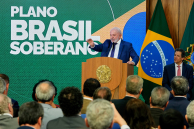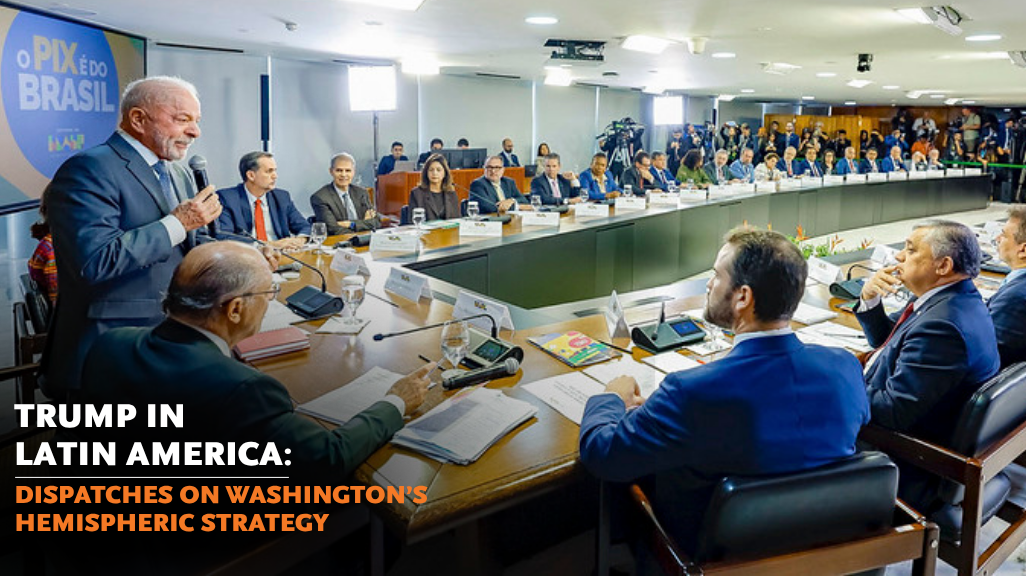
Lula in ministerial meeting

Brazilian President Luiz Inácio Lula da Silva speaks to his cabinet. (Planalto Presidential Office)

Trump in Latin America: Brazil Hit with Tariffs and Terrorist Designations

By Chase Harrison and Khalea Robertson

May 28–June 3: Trump endorses Colombia’s de la Espriella, Rubio weighs in on regional relations, and USTR ruling spells new tariffs for region.

Welcome back to our weekly dispatch of stories on the U.S. role in Latin America. Follow us each week and see previous roundups at as-coa.org/dispatches, or sign up to receive them via LinkedIn

Here’s what to know this week: 

  • United States hits Brazil with tariffs, designates two Brazilian criminal groups as terrorist organizations.  
  • USTR findings on 301 investigations spark new regional tariffs.
  • In a congressional hearing, Rubio comments on Venezuela and hemispheric allies.
  • Washington is allegedly investigating two Mexican governors amid bilateral tensions.
  • Canada visits Washington to kickstart USMCA discussions.
  • Plus, Trump endorses de la Espriella, Arévalo refutes U.S. military strikes, Landau lands in Haiti and the Dominican Republic, and SOUTHCOM commander meets with Cubans. 
White House makes big moves on Brazil trade and terrorist designations

On June 1, the U.S. Trade Representative Jamieson Greer announced that a Section 301 investigation will lead to a 25 percent tariff on Brazilian goods, unless Brazil resolves U.S. concerns by July 15. In the announcement, Greer said Brazilian trade policies and practices “are unreasonable and burden or restrict U.S. commerce.” He acknowledged productive meetings between Presidents Donald Trump and Luiz Inácio Lula da Silva but said trade disagreements remain unresolved.  

The investigation—initiated in July 2025—covered a wide swathe of issues ranging from digital trade to anticorruption enforcement to intellectual property rights.

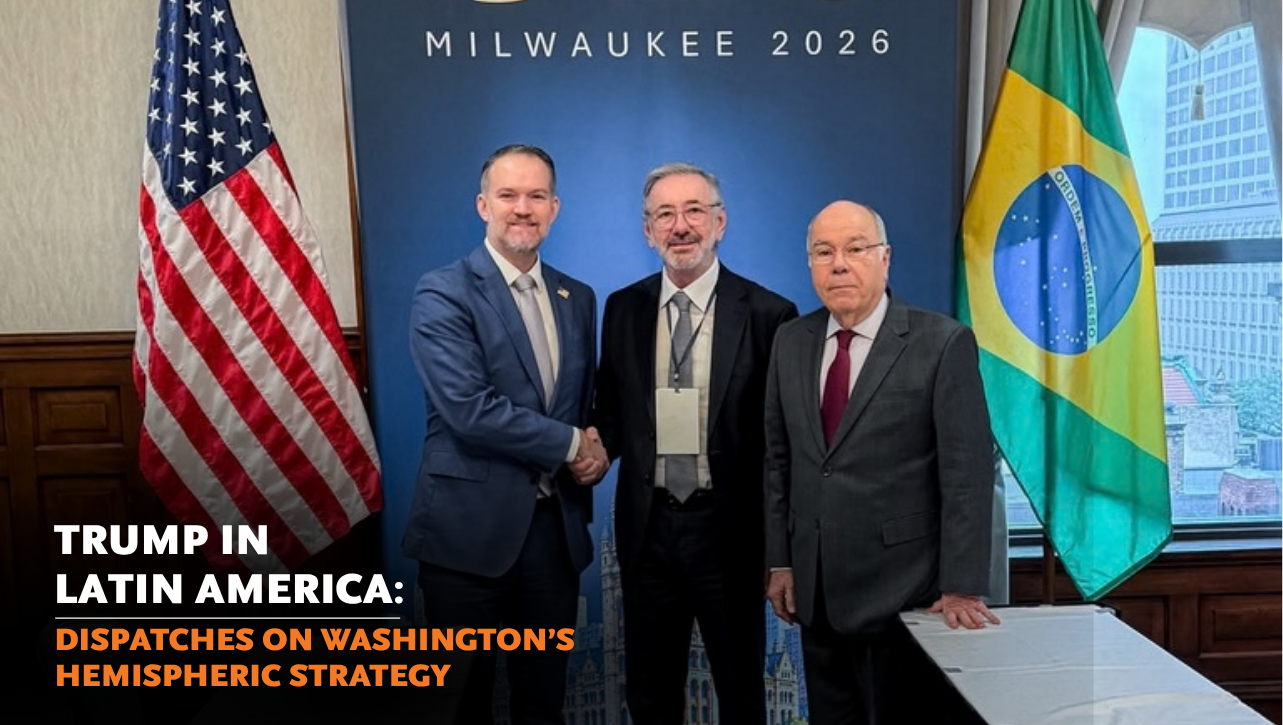
Still, if implemented, the 25 percent tariff would exclude more than half of U.S. imports from Brazil, including beef, coffee, aircraft parts, and minerals. During an OECD meeting today in France, Greer met briefly with Brazilian Foreign Minister Mauro Vieira and expressed his intention to keep communication going.

The 301 finding comes after a May 28 State Department announcement that two Brazil-based criminal organizations—the Red Command and the First Capital Command (PCC)— would be designated as Foreign Terrorists Organizations (FTO) starting June 5. The designations increase the legal tools and sanctions Washington can leverage against entities that support these groups. The PCC has been involved in operations laundering over $5 billion through fintechs and investment funds in Brazil’s financial sector.   

Once added to the State Department list, these groups will bring the total number of FTO designations in the Western Hemisphere during Trump’s second term to 17.   

Lula expressed frustration over both the USTR and FTO moves, describing them as politically motivated to support the interests of his opponents in the Bolsonaro family. In a social media statement, Lula said his country could respond with countermeasures and lamented that “U.S. participation in Brazil’s exports reached its lowest value in history in Q1, 9.4 percent.”   

Right-wing Brazilian presidential candidate Flávio Bolsonaro, who met with Trump in the White House on May 26, took credit for the decisions.  

301 rulings hit the Americas

Brazil wasn’t the only country hit by 301 rulings. In a June 2 announcement, the Office of the U.S. Trade Representative announced that 60 countries had failed to effectively restrict importations of goods produced with forced labor, leading to the potential application of 12.5 percent tariffs. This 301 investigation, which was initially announced on March 12, covered Argentina, Brazil, Canada, Chile, Colombia, Costa Rica, the Dominican Republic, Ecuador, El Salvador, Guatemala, Guyana, Honduras, Mexico, Nicaragua, Peru, Uruguay, and Venezuela.

Washington nominates ambassadors for Latin American ambassadorial roles

Alongside these major moves, the Trump administration announced on June 1 that it is nominating Cuban American Daniel Perez, the former Florida Speaker of the House, as the U.S. ambassador to Brazil. The White House also nominated ambassadors to Colombia, Ecuador, El Salvador, and Paraguay.  

Rubio on the region

In a wide-ranging June 2 hearing before the Senate Foreign Relations Committee, Secretary Marco Rubio said the Washington could now count on a coalition of about a dozen “friendly countries” in the Western Hemisphere willing to cooperate on security and economic matters, noting the exceptions of Brazil, Colombia, Cuba, Nicaragua, and Venezuela. He singled out Colombian President Gustavo Petro as “problematic.”   

Rubio stressed that Venezuela's democratic transition requires more time but celebrated the release of some political prisoners and recent personnel changes in the interim government led by Delcy Rodríguez. He also said oil revenues were now being used responsibly, and pointed to the fact that Venezuela no longer sends fuel to Cuba as one reason for the island’s current humanitarian crisis.

Mexico: New U.S. investigations of sitting governors underway?

On June 3, The Los Angeles Times reported that Washington is investigating two influential governors from Mexico’s ruling party for organized crime ties, per unnamed sources. As such, the United States has revoked the visas of Governors Alfonso Durazo of Sonora and Américo Villareal Anaya of Tamaulipas, but both have reportedly entered the United States using a type of parole for cooperating witnesses. Durazo served as the head of security from 2018 to 2020 in the cabinet of former President Andrés Manuel López Obrador (2018–2024).  

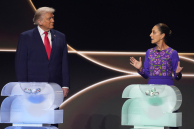
Such a step would indicate an escalation of the Trump administration’s pursuit of corrupt elected Mexican officials following the April indictment of Sinaloa Governor Rubén Rocha Moya and other officials from the governing Morena party. That indictment sparked pushback from President Claudia Sheinbaum. In a May 31 public gathering to mark two years since her electoral win, Sheinbaum suggested to the large crowd that "perhaps we’re seeing sectors of the U.S. ultraright use our country to position themselves ahead of their 2026 elections.” The president later clarified that she “does not believe that President Trump is who has headed this offensive."   

On Monday, U.S. Ambassador to Mexico Ronald Johnson took to X to write: “The fight against cartels should unite us, not divide us … Every moment spent turning this shared security challenge into a political dispute is a missed opportunity to strengthen our partnership.” Sheinbaum responded in a Tuesday press conference, saying, “He should stick to bilateral issues and respect internal matters in our country.”  

Headlines of the week

Trump weighed in on Colombia’s presidential election with a Tuesday night Truth Social post endorsing far-right candidate Abelardo de la Espriella ahead of the June 21 runoff. De la Espriella thanked Trump for his support and pledged to take U.S. trade and security relations to “a place never seen before” under his potential administration.  

On Tuesday, Canadian Trade Minister Dominic LeBlanc was in Washington to meet with Greer and kickstart bilateral USMCA talks on the trilateral deal. In his weekly newsletter, former U.S. Ambassador to Mexico Antonio Garza highlights that while U.S.–Mexico talks have been advancing, “tensions over Ottawa's digital service taxes on U.S. streaming giants, alongside lingering disagreements on a unified North American approach to Chinese industrial inputs, mean Canada is facing a much steeper uphill climb to find its footing.”  

Guatemalan President Bernardo Arévalo on Thursday refuted a May 28 New York Times report that his government had signed an agreement with the United States to conduct joint military strikes against narcotrafficking organizations in this country’s territory. Instead, he told reporters, his administration had relayed “a request” to “intensify” existing anti-drug trafficking cooperation agreements.  

Deputy Secretary of State Christopher Landau made a weekend trip to the island shared by Haiti and the Dominican Republic. On May 29, Landau met with Haiti’s acting Prime Minister Alix Didier Fils-Aimé for updates on ongoing U.S. security support in the Caribbean country. A day later, he held economic talks with President Luis Abinader of the Dominican Republic.  

Also in the Caribbean on Friday was U.S. Southern Command chief General Francis L. Donovan, who met with senior Cuban military officials near the U.S. naval base at Guantánamo Bay. CNN notes that previously monthly meetings at the perimeter of the Guantánamo installations had been paused since the start of Trump’s second term. Donovan’s visit comes just two weeks after CIA Director John Ratcliffe was in Havana.  

Carin Zissis contributed to this week's dispatch.

Related

Explore