As Xi Visits Trump: Five Charts on China’s Latin America Ties
As Xi Visits Trump: Five Charts on China’s Latin America Ties
Beijing’s economic relations with Brazil, Chile, Mexico, and Peru reveal the region’s role in the U.S.-China competition.
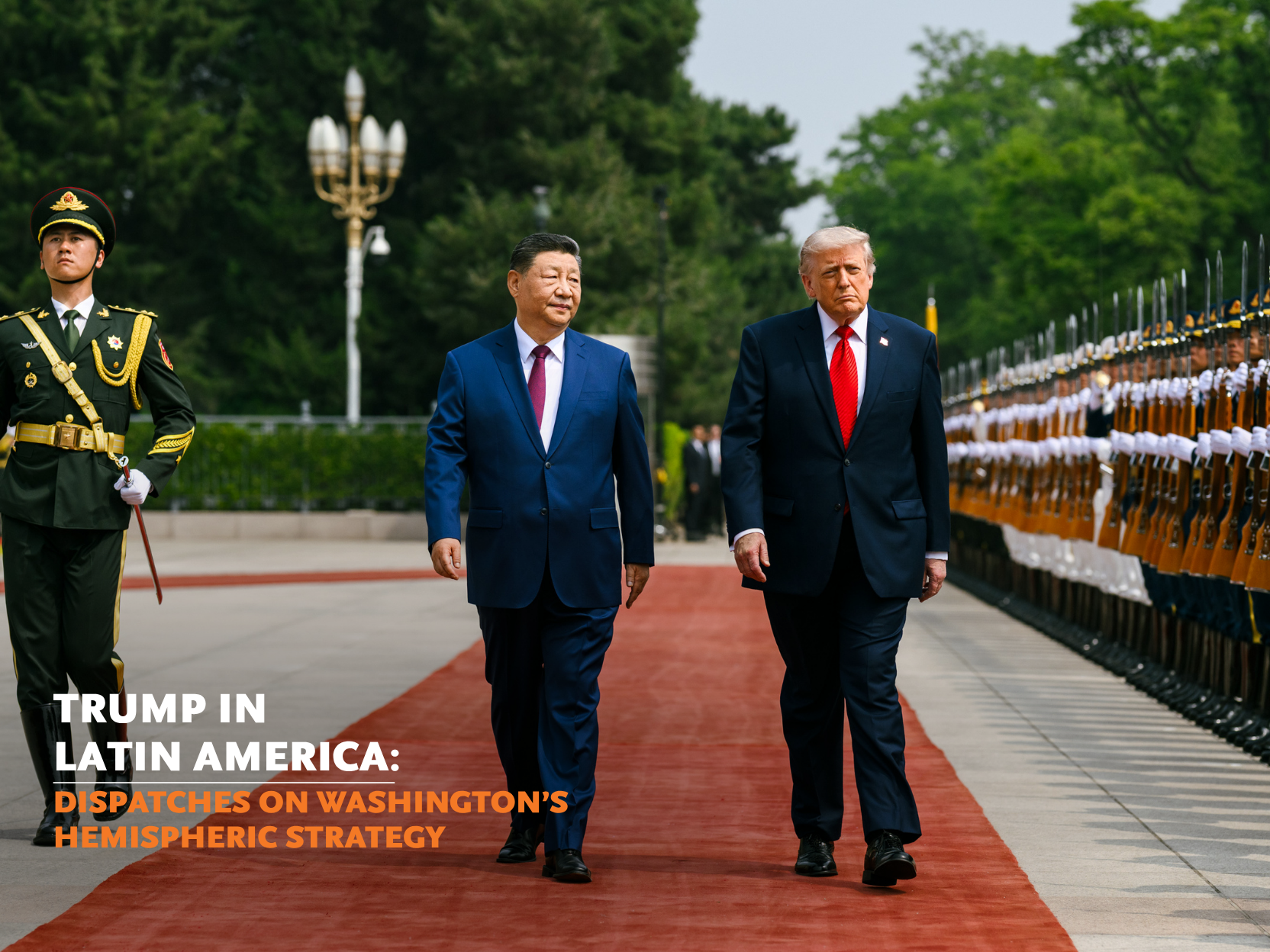
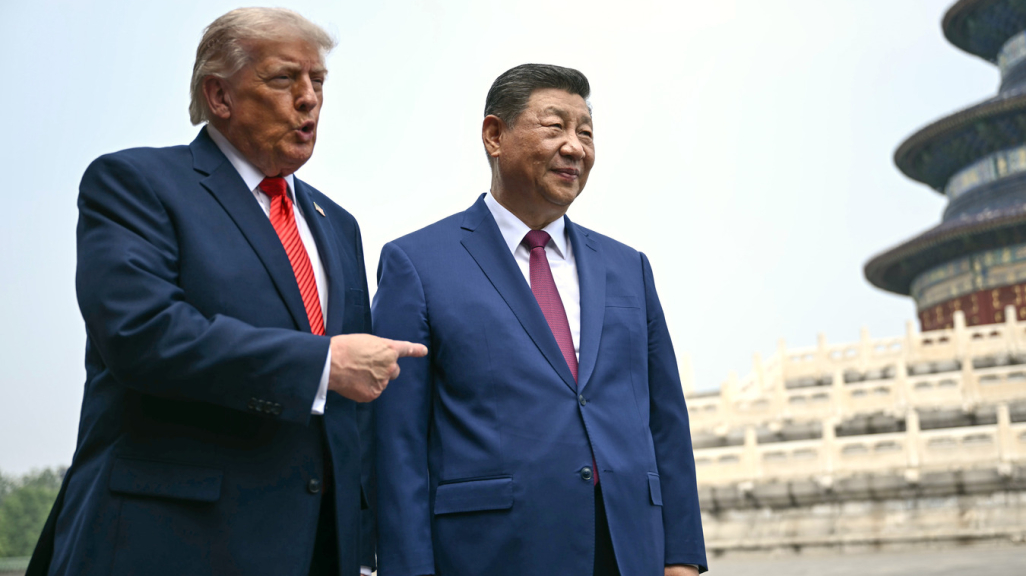
The UN General Assembly in New York isn’t the only mega meeting scheduled for late September. The world’s attention will pivot to the White House on September 24, when Presidents Xi Jinping of China and Donald Trump of the United States meet to hash out AI, trade, and tariff tensions that could send ripple effects across the globe.
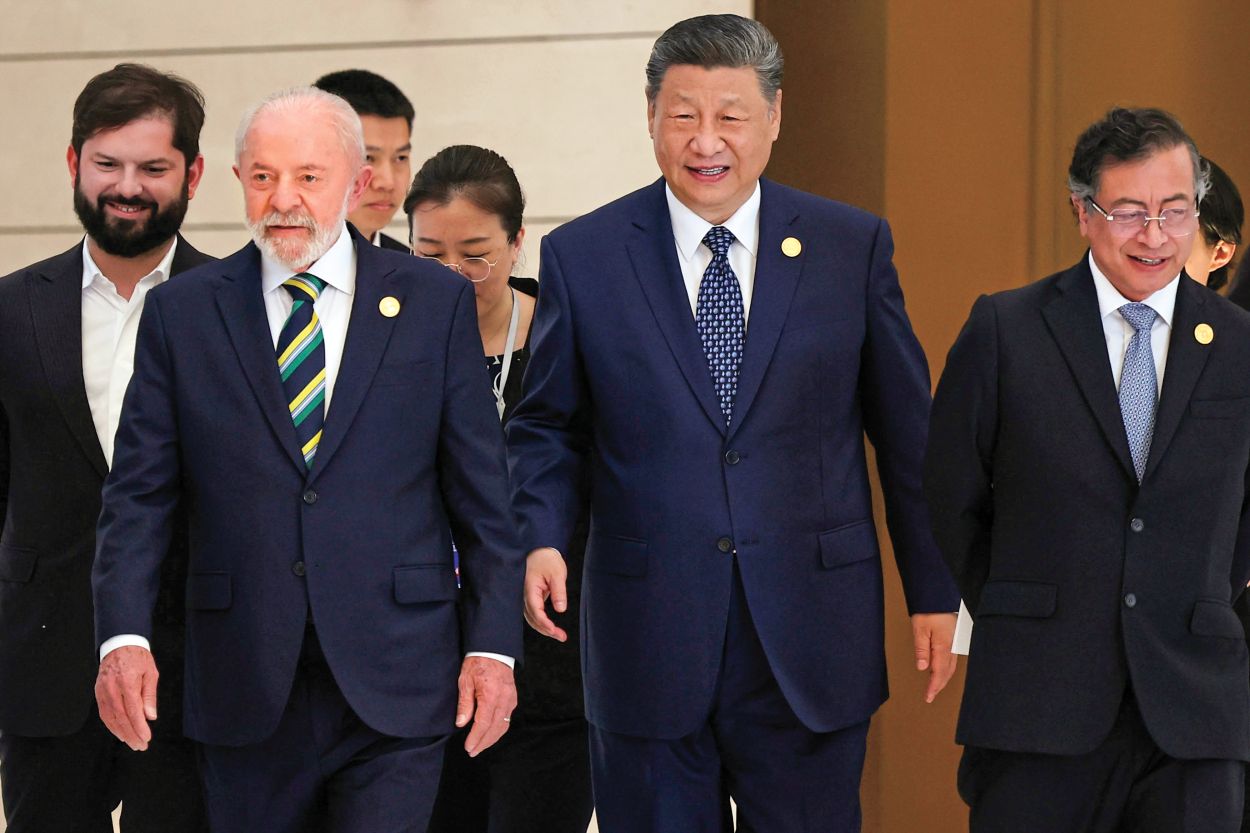
Will Latin America and the Caribbean be watching? The region has become a battleground for the U.S.-China rivalry, particularly in terms of economic influence. Chinese trade in goods with Latin American and the Caribbean doubled between 2013 and 2024, as Beijing leapfrogged Washington to become South America’s top trading partner.
Still, Washington maintains pole position in much of the rest of the region and the Trump administration’s 2025 National Security Strategy laid out goals to curb the influence of “non-hemispheric competitors” in the Americas. U.S. pressure contributed to Panama’s early 2026 removal of a Hong Kong-based company from ports bookending the Canal. In February 2025, Panama became the first (and thus far, only) hemispheric country to withdraw from China’s Belt and Road initiative. Twenty-two countries in the region remain in it.
Latin American governments, including those led by right-wing Trump allies, have sought to hedge their bets. The libertarian administration of Argentina’s Javier Milei, for example, renewed a $19 billion currency swap arrangement with Beijing in August, just months after repaying $2.5 billion owed to Washington on a $20 billion bailout package. That same month, Ecuador’s President Daniel Noboa took a weeklong trip to China where he met with Xi and left with $47 million worth of commitments for police funding, El Niño preparations, and renewable energy generation. Ecuador is one of five Latin American countries holding free-trade deals with China. The others? Chile, Costa Rica, Nicaragua, and Peru.
AS/COA Online looks at China’s top four trade partners in the region—Brazil, Mexico, Chile, and Peru—by value of total goods exchanged to examine factors driving Latin America’s economic relationship with Beijing.
The Andrés Bello Foundation’s Parsifal D’Sola Alvarado covers what the post-Maduro era means for Beijing’s strategy in Latin America.
- Value of goods traded with China in 2016 v. 2025: $58.4 billion v. $170.8 billion, a 193 percent increase
- Top exports: Soy, crude oil, iron ores and concentrates
- Top imports: Vehicles and parts, machinery, electrical equipment
China became Brazil’s top trading partner in 2009, and Latin America’s largest economy is also the region’s top recipient of Chinese investment, capturing nearly 30 percent of FDI flows between 2013 and 2024. Still, Washington remains the biggest foreign investor in Brazil.
An August 20 announcement of a $445 million round of AI investments is expected to be split between Chinese and U.S. companies—and showcases the balancing act.
But a sector where China has made major inroads is electric vehicles (EVs). In the first half of 2026, Brazil became the largest importer of Chinese EVs globally, purchasing $4.5 billion worth between January and May. Chinese car companies have also begun to set up factories in Brazil, avoiding import duties of up to 35 percent on EVs intended to protect the domestic auto industry.
“China and Brazil are determined to unite their voices against unilateralism and protectionism. Trade wars have no winners,” said Brazil’s President Luiz Inácio Lula da Silva during a May 2025 state visit to Beijing to sign 30 cooperation agreements. Lula has been a vocal advocate for diverse economic partnerships, often using participation in multilateral trade forums such as the Southern Common Market (Mercosur) and BRICS to push his message. Amid a tariff standoff with the White House this year, Lula raised “the importance of accelerating negotiations for a Mercosur–China agreement” during a July phone call with Xi, echoing a message that came out of a February visit to Beijing by Mercosur partner, Uruguayan President Yamandú Orsi.
- Value of goods traded with China in 2016 v. 2025: $74.9 billion v. $143.5 billion, a 91.6 percent increase
- Top exports: Copper, lead
- Top imports: Phones and parts, Vehicles and parts
Although Mexico, as one of the largest economies in the Americas, stands as China’s second-biggest regional trade partner, China’s share in Mexico’s overall merchandise trade is relatively small, sitting at around 10 percent, and making it a distant second to the United States, Mexico’s northern neighbor and USMCA partner.
The Trump administration has nonetheless ramped up scrutiny of the relationship between Beijing and Mexico City, accusing Mexico of being the “biggest enablers” of what an August 2026 White House report called “China’s Shadow Transshipment Network.” The report argues that Mexico has allowed China to reroute goods through third countries, disguising origin and taking unfair advantage of the USMCA deal when exporting to the United States. Indeed, Mexico’s imports from Vietnam, with which it shares a Pacific regional trade deal, rose 123 percent in the second quarter of 2026, year on year.
President Claudia Sheinbaum pushed back in a press conference that month, saying: “We have shown on various occasions that there is no triangulation scheme.” She pointed to her government’s increase in levies on imports including vehicles and parts, steel, aluminum, and textiles from China and other Asian countries, with rates of up to 50 percent implemented in January. The duties drew China’s ire, but Economy Secretary Marcelo Ebrard argued the move protects domestic manufacturers. In the auto sector, imports of Chinese cars and car parts fell 31 percent and 46 percent, respectively, in the first half of 2026 year on year.
The debate on Chinese involvement in Mexican industry has entered bilateral USMCA negotiations as the U.S. government seeks to tighten rules of origin within the North American trade bloc. The Wall Street Journal reports that the latest sector under the microscope is artificial intelligence hardware, just as computer chips and servers have overtaken vehicles as Mexico’s top exports to the United States.
- Value of goods traded with China in 2016 v. 2025: $31.7 billion v $67.1 billion, a 111.7 percent increase
- Top exports: Copper, lithium
- Top imports: Machinery, electrical equipment, apparel
While Mexico was the last country worldwide to stand as an obstacle to China’s joining the World Trade Organization, Chile was the first Latin American one to open the door to the Asian giant’s entry back in 1999. Six years later, Chile also became the first to sign a free-trade agreement with Beijing.
Critical minerals form the base of Chile’s exports to China. A global mining powerhouse, Chile sells about half of its copper (including refined copper) and more than 70 percent of its lithium to China, where it helps sustain tech manufacturing and power the global energy transition.
The government of President José Antonio Kast entered office in March on the back of a flashpoint in U.S. efforts to restrict Chinese telecommunications in the region. Earlier in the year, the administration of Kast’s leftist predecessor, Gabriel Boric, backed out of a contract for a Chinese company to build an underwater fiber optic cable linking Valparaíso to Hong Kong amid U.S. pressure, which included visa restrictions on Chilean officials involved in negotiations.
While a new, right-wing government is in place, the balancing act continues. “We are allies of the United States and China. Both are fundamental and important for Chile,” Foreign Minister Francisco Pérez Mackenna, who visited China in August, told El Mercurio in a September 13 interview. Kast heads there in November for the Asia-Pacific Economic Cooperation (APEC) forum. The leaders of the two other Latin American APEC members, Sheinbaum and Peru’s Keiko Fujimori, also plan to attend.
- Value of goods traded with China in 2016 v. 2025: $8.4 billion v. $50.4 billion, a 500 percent increase
- Top export: Copper
- Top imports: Machinery and equipment, phones, cars
Peru is not only second to Chile in signing a China FTA, inked in 2009, but it’s also the Asian country’s second-biggest copper source. Peru’s most lucrative export, the metal makes up around two-thirds of what Lima ships to Beijing. Days before Fujimori’s July 28 inauguration, Lima ratified an upgrade to the 2009 FTA to modernize customs, investment, and e-commerce frameworks.
While the new president has signaled intentions to forge closer bonds with Washington, she has also defended her country’s pursuit of diverse economic partnerships. China has been the Andean country’s top trading partner for much of the past 15 years, and Peru is the region’s second-largest recipient of Chinese investment, driven largely by mining and infrastructure projects. When asked about this relationship during a September 10 joint press conference with U.S. Secretary of State Marco Rubio during his Lima visit, Fujimori noted that Peru would “continue having trading relationships with countries in Asia, the Pacific, and Europe.”
Rubio arrived in the Peruvian capital with warnings about “Chinese Communist Party-backed projects [that] challenge Peru’s legal frameworks.” This was a reference to a legal dispute concerning the scope of Peru’s supervisory powers over the Chancay megaport, which Xi inaugurated in 2024. China’s embassy in Lima hit back at Rubio’s accusation in a social media post, writing: “The Western Hemisphere is no one’s ‘backyard’.”