Mark Carney

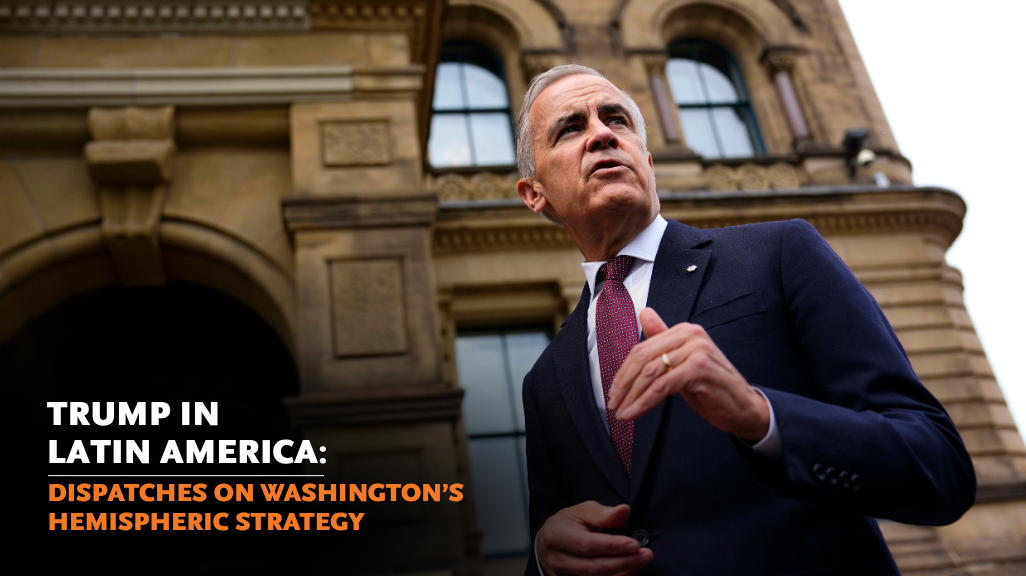
Canadian Prime Minister Mark Carney. (AP)

Trump in Latin America: Canada's Tariff Retaliation, Mexico's Trade Cooperation

By Khalea Robertson

Aug 20–26: Plus, Trump and Lula hop on the phone again; State warns the region on Chinese espionage.

Welcome back to our weekly dispatch of stories on the U.S. role in Latin America. Follow us each week and see previous roundups at as-coa.org/dispatches, or sign up to receive them via LinkedIn.

Here’s what to know this week: 

  • U.S.–Canada trade talks collapse amid a tariff tit-for-tat.
  • Mexico’s economy and foreign secretaries head to Washington to talk trade, security.
  • Plus: Presidents Trump and Lula get on the phone; U.S. military ramps up support to Ecuador as strikes on drug boats in the Pacific restart; State slaps more sanctions on Cuba while talks stall and urges vigilance on Chinese telecoms equipment. 
Trade war with Canada intensifies

“I warned that America is trying to break us so they can own us. And I promised that will never, ever happen. We are keeping that promise,” declared Canadian Prime Minister Mark Carney at a press conference on August 22, when Washington’s 50-percent tariffs on an array of goods kicked in. Three days later, Ottawa hit back with reciprocal tariffs on around 700 U.S. products, with rates ranging from 15 to 50 percent and set to take effect September 8.  

Bilateral trade hostilities escalated after a deal to stave off the U.S. tariffs, which were announced in July, collapsed late on August 21. Canada–U.S. Trade Minister Dominic LeBlanc pointed to Washington’s requests to exclude medium- and heavy-duty vehicles from tariff reductions and limit the countries with which Ottawa could ink free trade agreements as major sticking points.  

Politico, on the other hand, documents “the 72 hours that cratered the U.S. trade deal” in a tale of conflicting interests. U.S. Trade Representative Jamieson Greer said in an August 24 interview that after offering significant tariff reductions on steel, aluminum, autos, and lumber, the Canadians “simply wanted more,” adding: “I don’t know if it was political for them. It certainly doesn’t make economic sense.”  

The new U.S. tariffs affect around $20 billion worth of Canadian exports, including alcohol, dairy, and ice hockey equipment and do not exempt goods covered under the U.S.–Mexico–Canada Agreement (USMCA). Canada’s retaliation fulfills Carney’s promise to match U.S. tariffs “dollar for dollar,” also hitting $20 billion of U.S. goods. Canada’s action will see levies on U.S. steel and aluminum rise to 50 percent.

More tariffs could be coming: U.S. President Donald Trump has threatened to raise levies on Canadian steel, auto parts, cars, and trucks “both large and small” to 50 percent come January 1.

The United States is Canada’s top trading partner and The New York Times says that, given the size of the U.S. economy, Ottawa’s retaliation “will have the effect of a pea shooter in a gun battle.” Still, 26 U.S. states count Canada as their top customer, notes GZERO Daily, which outlines Carney’s political motivations.   

Or, as Toronto-based analyst Solange Márquez, put it in an AS/COA interview: “Whenever the White House attacks Canada and Carney responds in a tough way, his approval ratings go up.” Márquez, a law professor at the National Autonomous University of Mexico and a fellow at the Canadian Global Affairs Institute, talked with AS/COA’s Carin Zissis about the U.S.–Canada trade war and where Mexico fits in this North American dispute.  

A tale of two North American trade tracks

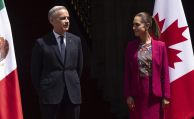
While tempers flare between USMCA’s northernmost partners, Mexico’s President Claudia Sheinbaum struck a different tone on her own country’s path forward with Washington on USMCA negotiations, saying at her August 26 press conference: “I am optimistic that an agreement can be reached.” 

A fourth round of bilateral talks is slated to take place in September, but Economy Secretary Marcelo Ebrard traveled to Washington this week for another one of his frequent visits. The secretary is on a mission to negotiate tariff reductions on Mexican steel and aluminum as well as on vehicles and auto parts. Greer this week called talks with Mexico “constructive.”  

How a Mexican governor exposes a bilateral tension

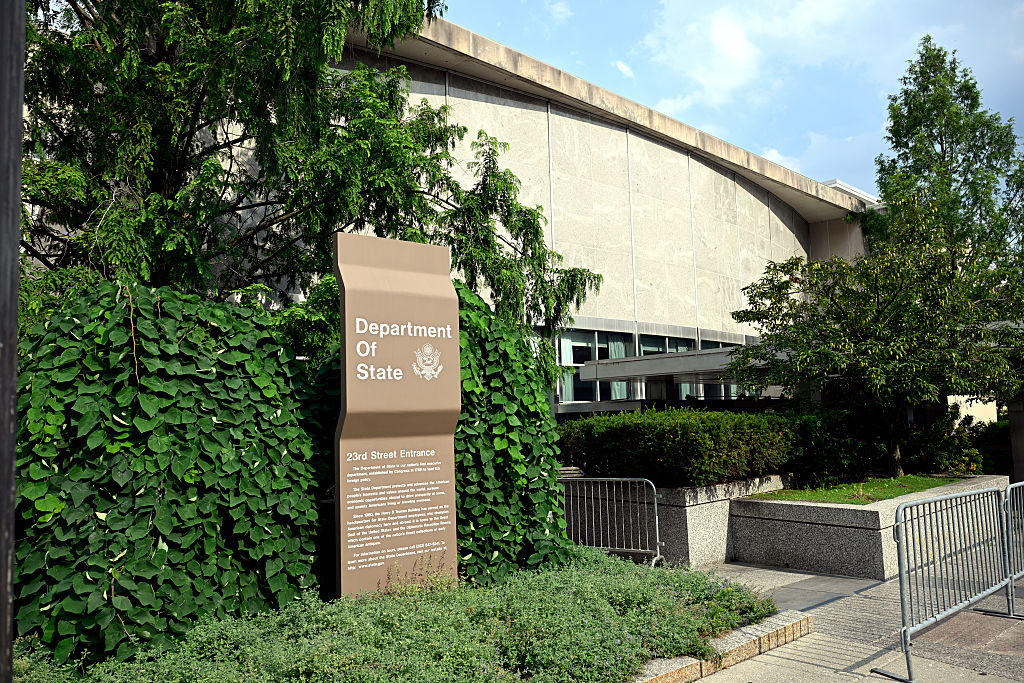
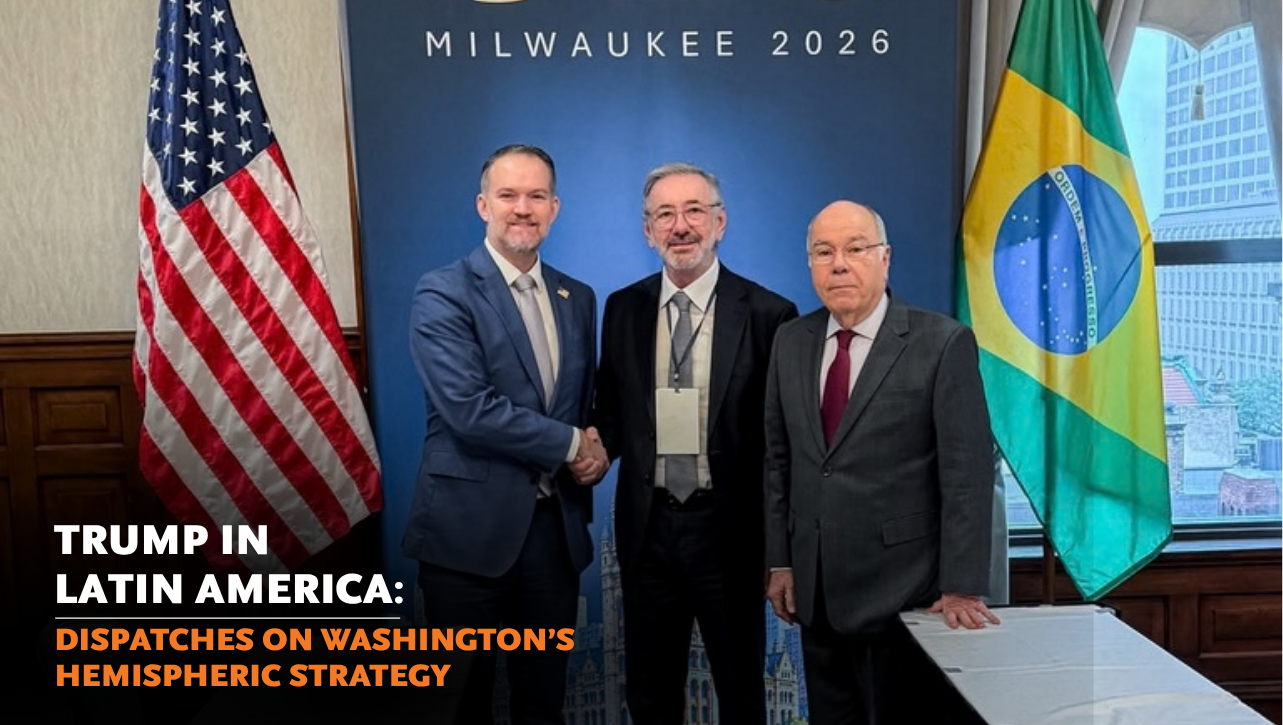
Ebrard isn’t the only one in town. Mexican Foreign Secretary Roberto Velasco was in Washington on August 26 for his first face-to-face meeting with Secretary of State Marco Rubio. The two met not long after the son of former Mexican President Andrés Manuel López Obrador penned a letter to Trump decrying the revocation of his U.S. visa and demanding Rubio’s dismissal. (See last week’s dispatch for more.) While trade talks advance, the visa issue is a reminder of other tensions.

Take the case of Rubén Rocha Moya, who stands accused by the U.S. Department of Justice (DoJ) of conspiring with the Sinaloa cartel to traffic drugs into the United States. (See April 30 dispatch for more.)  Rocha Moya, a member of Sheinbaum’s governing party, took an indefinite leave of absence from his role as governor of Sinaloa after the indictment came to light in April, even as Sheinbaum rejected an extradition request as a matter of Mexican sovereignty.  

However, when Rocha Moya decided to briefly reinstate himself this past weekend, Sheinbaum sent a stern social media message: “Power without principles becomes arrogance; power without limits, abuse.” Some observers signal that Sheinbaum’s firmness indicates a move to consolidate control over her powerful party, which rumored to face rifts between sparring factions.

Just 34 hours after retaking office, Rocha Moya stepped down again.   

The next question, as Rubio and Velasco meet, is what happens if Rocha Moya does—or doesn’t—end up in Washington’s hands. A State Department readout of the meeting says Rubio urged for "decisive action” on immigration, drug smuggling, and organized crime.  

In other news

Trump and Lula reconnect on call: Trump and Brazilian President Luiz Inácio Lula da Silva spoke on the phone on August 21, marking their first direct communication since a May White House meeting. In the call, Lula spoke out against the U.S. 301 tariffs implemented in July, which relate to accusations of unfair trade practices, and both leaders agreed to resume trade negotiations, tentatively this week.  

Financial Times reports that Lula sees his relationship with Trump as much more productive than with Rubio, with whom he has traded public barbs.

“Trump is the best of all of them [in the U.S. government], he is the one who talks most seriously with me.”

—President Lula
Resumed strikes: Southcom restarted its strike campaign against alleged drug vessels in the Caribbean and Pacific regions this week after a two-month pause.

In Quito’s defense: Ecuador’s defense ministry announced on August 20 that the U.S. military had delivered two warships and three Black Hawk helicopters, tripling the country’s capacity to combat maritime drug trafficking.  

That same day, the U.S. Treasury Department imposed sanctions on owners and operators of fishing vessels accused of trafficking cocaine for Los Choneros and Los Lobos, two Ecuador-based criminal groups the State Department designated as Foreign Terrorist Organizations in September 2025.   

Sanctions on Cuban outreach: The State Department imposed additional sanctions on Cuba on August 20, targeting nine entities and three individuals linked to mining, construction, and international outreach. The three individuals are leaders at a state-run organization identified in a July State Department report as “the central nexus of the entire Cuban intelligence and influence network.”  

In an August 22 interview with Brazilian outlet Folha de S. Paulo, Cuban President Miguel Díaz-Canel said negotiations with the United States were “at a standstill.”  

Eyes on China: Ahead of an AI-focused summit between Trump and Chinese leader Xi Jinping scheduled for September 24, State’s Assistant Secretary for Western Hemisphere Affairs Juan Pablo Segura on August 21 warned countries in the Americas to avoid purchasing “high risk technologies” from Chinese telecom and surveillance equipment companies, which he said are forced to “cooperate with Beijing’s intelligence services.” 

Carin Zissis and Chase Harrison contributed to this weekly roundup.

Related

Explore