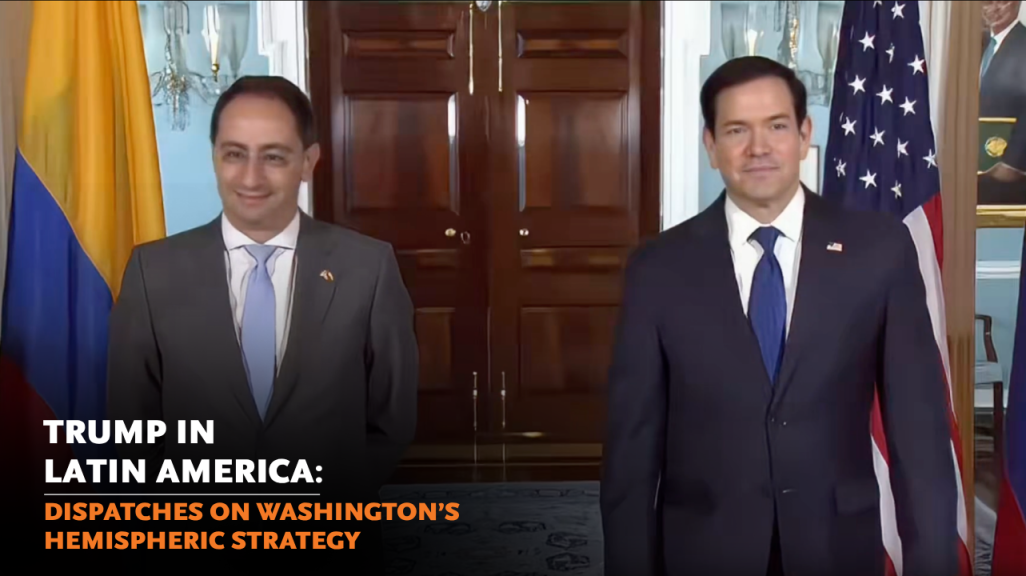
Restrepo and Rubio

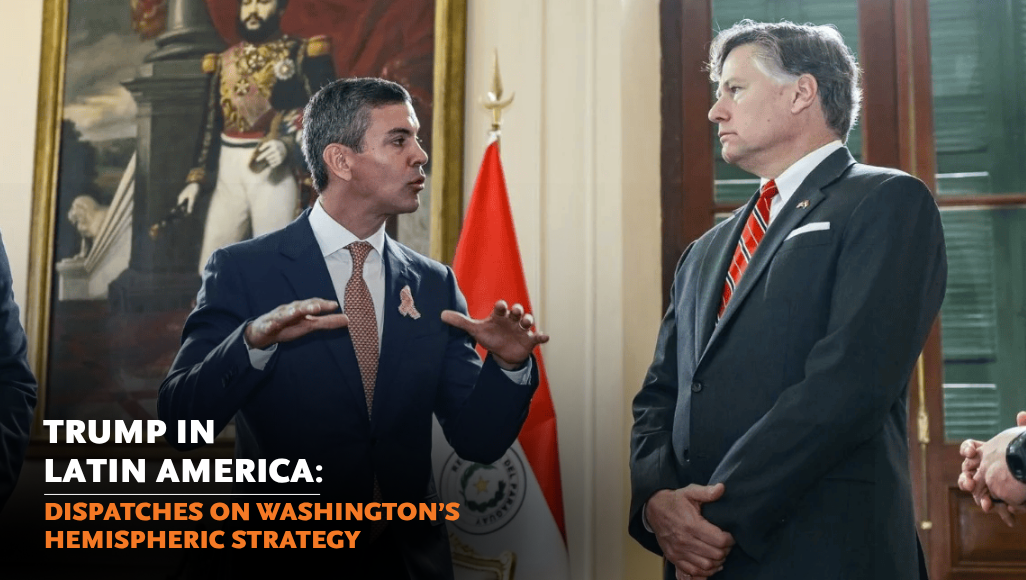
Colombia's Vice President-elect José Manuel Restrepo and U.S. Secretary of State Marco Rubio. (Restrepo's X account)

Trump in Latin America: Brazil Readies for Tariffs; Venezuela Opens Oil to Private Sector

By Luisa Leme , Chase Harrison and Khalea Robertson

July 9–15: Plus, Colombia’s vice president meets with Rubio and recordings of a Mexican governor put her in hot water.

Welcome back to our weekly dispatch of stories on the U.S. role in Latin America. Follow us each week and see previous roundups at as-coa.org/dispatches, or sign up to receive them via LinkedIn

Here’s what to know this week: 

  • USTR is expected to hit Brazil with 25 percent tariffs as deadline for trade remediation arrives.
  • With U.S. backing, the Venezuelan government denationalizes oil sector and initiates democracy talks with opposition.  
  • Leaked audios show Mexican governor allegedly negotiating information-for-immunity deal with U.S. law enforcement.
  • Two regional presidents seek accountability for killings by U.S. immigration authorities.
  • Plus, Colombia’s vice president-elect visits DC and Rubio readies to host summit on far-left terrorism. 
More tariffs coming to Brazil

The White House is expected to formally announce 25 percent tariffs on Brazilian goods on July 15, the deadline Brazil was given to take action over trade disputes lodged by the United States.  

A Brazilian official cited by Reuters said that despite meetings between the two governments since June 1, when the U.S. Trade Representative’s Office (USTR) concluded its Section 301 investigations into Brazil's alleged unfair trade practices (see June 3 dispatch), negotiations didn’t move forward as the United States “want[s] the impossible." Brazil’s Minister of Development, Industry and Foreign Trade Márcio Elias Rosa identified electronic financial system PIX and ethanol as key sticking points.

Brazil is set to be the first recipient of tariffs resulting from ongoing USTR 301 investigations involving a total of 60 countries

If implemented, the levies would exclude more than half of U.S. imports from Brazil but still hit more than 4,000 products, from sugar to pig iron. “Roughly 60 cents of every dollar the United States buys from Brazil escapes the potential new tariff completely. [The] exemption list is the document that matters. We should watch what gets added to it, not the rate,” highlights Peterson Institute for International Economics Senior Fellow Monica de Bolle. A joint letter signed by the U.S. Chamber of Commerce, AmCham Brazil, and the National Confederation of Industry addressed to Rosa and Foreign Minister Mauro Vieira as well as U.S. Trade Representative Jamieson Greer, says more than 6,500 small businesses in the United States rely on products imported from Brazil while 3,900 U.S. companies invest in the country.  

Should the tariffs be implemented, Brazilian officials expect negotiations between the two countries to continue only after the country’s presidential elections in October. The topic has already come up in the presidential campaign. Candidate Flávio Bolsonaro came to the United States to speak at the USTR public hearing and ask for tariffs to be delayed, as 47 percent of Brazilian voters believe the decision on the tariffs are partially his responsibility. 
 

Venezuela open to democracy talks and oil privatization

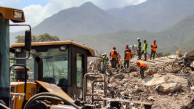
While clean-up and recovery efforts continue in Venezuela following the June 24 earthquakes that devastated La Guaira and parts of the Caracas, the interim government presses on with its U.S.-guided transition.  

On the political front, the opposition—represented by the national assembly elected in 2015, widely considered Venezuela’s last legitimate vote—and the interim government—represented by Jorge Rodríguez, president of the current chavista-controlled legislature—announced on July 14 that talks on restoring democratic institutions will begin on August 1. The 2015 National Assembly’s press release also thanked the U.S. government for its support in the process. 

The announcement came a month after a June 18 meeting between Rodríguez and the previously exiled president of the 2015 Assembly, Dinorah Figuera (see June 24 dispatch). As El País writes, U.S. support for that encounter was seen by some as a sidelining of opposition leader María Corina Machado, whom the Trump administration has reportedly discouraged from returning to Venezuela. 

And on the economic front, interim President Delcy Rodríguez signed off last week on a major reform to Venezuela’s hydrocarbon law, which paves the way for private-sector participation in the refining, marketing, and distribution of the country’s primary revenue-earner, which for decades has been run almost exclusively by the state company, Petróleos de Venezuela SA, or PDVSA. Opening Venezuela’s oil sector to private companies has been a key goal of the Trump administration, which, since January, has held Venezuela’s oil revenues in a U.S.-controlled fund. 

Meanwhile, The New York Times reports on U.S. Secretary of State Marco Rubio’s deep involvement in the running of Venezuela’s government.  

Leaked audios raise questions about Mexican governor

Two leaked audios between Baja California Governor Marina del Pilar Ávila and individuals allegedly linked to the U.S. Federal Bureau of Investigation revealed Ávila's attempts to cut a deal with U.S. agencies—offering information relevant to criminal investigations in exchange for immunity. In June, Ávila confirmed that her ex-husband, Carlos Torres, is under investigation by the Mexican Attorney General’s office for participating in a plot that allowed the Sinaloa Cartel to operate in Baja California.  

Back in May 2025, Ávila and Torres both had their U.S. tourist visas revoked, though no explicit reasons were stated at the time. Ávila acknowledged the authenticity of the recordings but her office said they were fragments, questioned the identities of the interlocutors, and denied any criminal wrongdoing.    

Headlines of the week

Fury over U.S. immigration deaths: Following the July 7 killing of Mexican national Lorenzo Salgado Araujo by ICE agents in Houston, Mexican President Claudia Sheinbaum announced on July 14 her government would file criminal charges in U.S. courts over the deaths of Mexican migrants in detention and enforcement operations. Colombian President Gustavo Petro likewise demanded accountability from the Trump administration for the July 13 murder of Colombian national Johan Sebastián Durán by ICE in Biddeford, Maine.

The killings spurred a back and forth on U.S. policy regarding ICE’s vehicle stops, with President Trump reversing a July 14 decision by ICE to suspend the practice.

Rubio meets de la Espriella’s Cabinet: Colombia’s Vice President-elect José Manuel Restrepo—and several other key cabinet appointees—met with Rubio on July 15 to speak about the bilateral relationship.    

More Cuba sanctions: The State Department sanctioned 10 more Cuban entities on July 13,  including paramilitary groups, state-owned fuel companies, and the ministry of tourism.  

U.S. eyes Caribbean investments: The U.S. International Development Finance Corporation’s Chief Policy Officer Caroline Vik embarked on a three-country Caribbean tour from July 13 to 15, stopping first in Jamaica before heading to Trinidad and Tobago and Antigua and Barbuda to explore opportunities in energy, port infrastructure, and telecommunications.  

What to watch

On July 16, Rubio is hosting a summit on countering the “resurgence of transnational far-left terrorism” with ministers from more than 60 countries across Latin America, Europe, and Asia invited, according to documents obtained by The Washington Post.  

The third round of bilateral talks between the United States and Mexico as part of the 2026 review of the USMCA agreement will occur on July 20 in Mexico City. The agenda, per a document from the Mexican government, includes topics like strengthening the supply chain and rules of origin, lowering tariffs, and setting the schedule and rules for the annual reviews that will now occur as the U.S. government decided against a long-term renewal of the agreement.

Related

Explore