LatAm in Focus: Financing Venezuela’s Future in the Aftermath of Disaster
LatAm in Focus: Financing Venezuela’s Future in the Aftermath of Disaster
The IRC’s Rafael Velasquez and CAF’s Ángel Cárdenas Sosa discuss the short- and long-term priorities for funding recovery after the June 24 earthquakes.
The double earthquakes of June 24 accentuated a year of profound change in Venezuela. The United States’ January 3 ouster of Nicolás Maduro catalyzed an ongoing economic transition guided by the interim government of Delcy Rodríguez, hand-in-hand with the administration of U.S. President Donald Trump. Now, what was already a significant undertaking to address years of economic mismanagement and infrastructural deterioration has become even more urgent in the face of a tragedy that has claimed thousands of lives and livelihoods while causing economic damages of up to $37 billion, per a preliminary UN assessment.
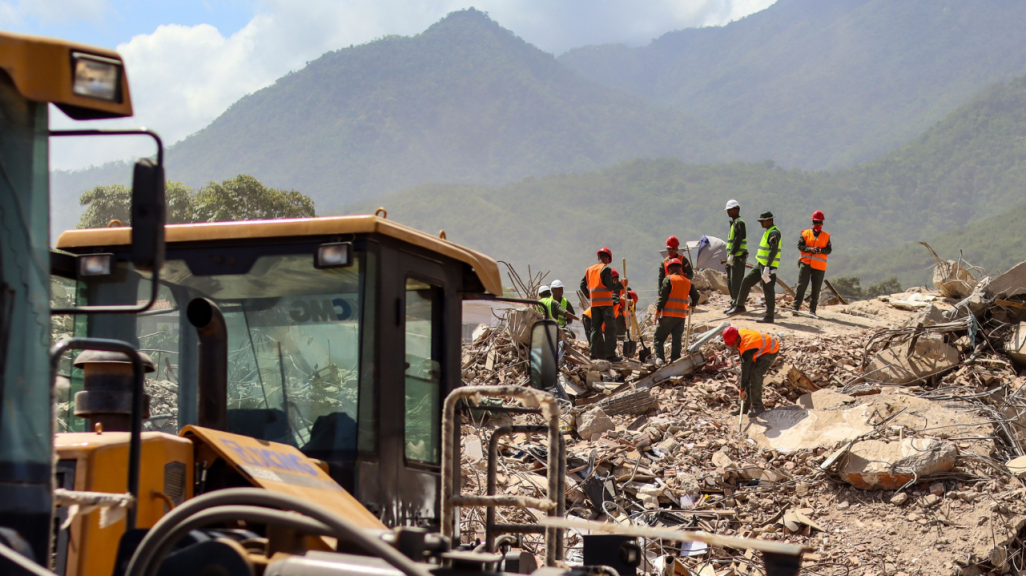
As of July 12, more than two weeks after the 7.2- and 7.5-magnitude quakes devastated the coastal state of La Guaira and parts of Caracas, authorities report 4,490 confirmed deaths, with 16,740 injured and almost 18,00 displaced from their homes. The numbers are expected to climb as recovery efforts continue, and crowdsourcing websites indicate there are tens of thousands still missing.
The June 24 disaster caused large-scale damage to Caracas and La Guaira. Learn about the catastrophe, as well as the U.S. and Latin American response.
But, as the world rallies in support of Venezuela, can this disaster present an opportunity to attract the resources needed to accelerate the country’s long-term reconstruction? In this episode of Latin America in Focus, AS/COA’s Luisa Leme speaks to representatives from two organizations that have been responding to Venezuela’s humanitarian and financial challenges for years: the International Rescue Committee (IRC) and CAF – The Development Bank of Latin America and the Caribbean.
"Beyond clearing the rubble and providing that life-saving assistance right now ... Venezuelans will be in need of assistance for the next months, maybe for the next [few] years,” said Rafael Velasquez Garcia, who leads the IRC’s emergency response team in Venezuela. He explains the earthquakes add another 1.4 million people in need of humanitarian attention to the almost 8 million whom aid organizations had identified before June 24, highlighting that preexisting challenges with an underresourced healthcare system and inconsistent water and electricity supply have only been heightened. Velasquez stressed the need to keep donor attention on the country for the long haul: “There is a need to recover livelihoods, to restart an economy, [and] to refurbish, fix, and get schools running.”
On July 8, the UN launched an appeal for an additional $296 million to fund the emergency response, on top of the $632 million it had requested for Venezuela at the beginning of 2026.
It’s a financing challenge that Ángel Cárdenas Sosa, CAF’s general manager of Infrastructure for Development, says multilateral development banks are working around the clock to meet and will require private sector support. “This is not going to be a 12-month operation,” he warned, but “I think there’s commitment in Venezuelan society that this has to happen as fast as possible.” Already, CAF has established a Fund for the Recovery and Reconstruction of Venezuela to channel donations for the rebuilding effort. And as the interim government continues with plans to restructure its debt, Cárdenas Sosa offered optimism that the disaster could prove “a key catalyst for transformation.”
Our guests
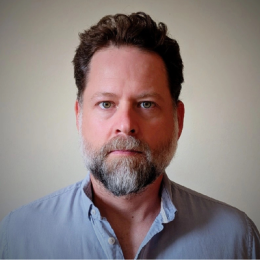
Rafael Velasquez Garcia is the International Rescue Committee’s emergency response lead for the Venezuela earthquakes. He has also served at the IRC’s lead coordinator across Colombia and Venezuela, as well as Mexico. Velasquez has two decades of experience managing humanitarian responses to displacement, conflict, and emergency situations in various parts of the world, including Guatemala, Jordan, Lebanon, Nigeria, Somalia, and Yemen.
Velasquez holds an MA in International Peace and Conflict Studies from the United Nations University for Peace, where he was a visiting lecturer from 2014 to 2019.
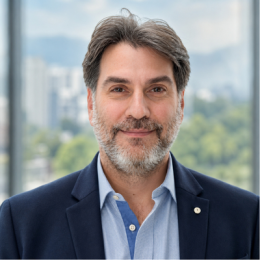
Ángel Cárdenas Sosa is an economist who currently serves as the general manager of infrastructure for development at CAF – the Development Bank of Latin America and the Caribbean. Cárdenas Sosa has more than 20 years of experience in multilateral banking at both CAF and the World Bank, and has held roles such as general secretary, auditor general, and director of infrastructure and energy projects. He has also taught at universities in Argentina, Spain, Uruguay, and Venezuela.
Cárdenas Sosa was a 2019 Eisenhower Fellow and holds graduate degrees in business and public administration.
Subscribe to Latin America in Focus, AS/COA's podcast focusing on the latest trends in politics, economics, and culture throughout the Americas.
This episode was produced by Associate Producer Khalea Robertson. Luisa Leme is the podcast’s executive producer and this week’s host.
See information on how to donate to CAF’s Recovery and Reconstruction Fund and how to support the IRC’s work in Venezuela.
Share and subscribe at Apple, Spotify,YouTube, or wherever you get your podcasts. Access other episodes of Latin America in Focus and send us feedback at latamfocus@as-coa.org.
The music in the podcast is “Norwegian Wood” performed by the C4 Trio for Americas Society. Find out about upcoming concerts at musicoftheamericas.org. Share your love for Latin America: Join Americas Society.
Opinions expressed in this podcast do not necessarily reflect those of Americas Society/Council of the Americas or its members.
[MUSIC]
Luisa Leme: On June 24, two massive earthquakes hit Venezuela, and what was a year of big changes in the country took a complicated turn.
[Clip of noises of commotion during an earthquake.]
Leme: The quakes were among the strongest to hit Venezuela in more than a century, devastating the region of La Guaira, near Caracas. And the damage that includes a whole airport and nearly 60,000 buildings, adds to the nearly 8 million people in the country who were already in need of humanitarian assistance before the earthquakes.
[MUSIC]
Leme: Hi, I'm Luisa Leme of AS/COA Online. Welcome back to Latin America in Focus.
If you follow the region like we do, you probably know Venezuelans are still searching for their loved ones, and rescue teams from all over the world are in La Guaira and parts of Caracas to help right now. But beyond the aftermath of the quakes, Venezuela already had big infrastructure needs, a major debt restructuring coming, and a delicate route to economic recovery, all against a complex political backdrop.
So how to finance sustainable reconstruction in a country going through a critical transition? Can the earthquakes attract more resources for the long-term humanitarian work needed? And what needs to happen for Venezuela to rebuild? And better?
To answer some of these questions, we spoke with two guests from organizations working in Venezuela for years: the International Rescue Committee and CAF, the Development Bank of Latin America and the Caribbean.
Rafael Velasquez Garcia: It's not just the people arriving here; it's the messages of support from all over the world. It is clear to me that the spirit of wanting to help people, even if it's thousands of miles away, is still there.
Now, my concern is that beyond the hard visuals of a destroyed building, there is a need that will go longer than, you know, just the wounds and the lacerations, the immediate loss of life. There is a need to recover livelihoods. There is a need to restart an economy. There is a need to refurbish, fix, and get schools running.
Leme: That's Rafael Velasquez Garcia, the team leader of the International Rescue Committee's emergency response in Venezuela. He spoke with me from Caracas about the inspiring work happening on the ground now, but also the need to keep attention on Venezuela in the long run.
How to finance this? CAF's general manager of infrastructure for development, Ángel Cárdenas Sosa, also spoke from Caracas, and he says that costs can grow but also become an opportunity.
Ángel Cárdenas Sosa: If you spend one day looking around the literature on catastrophes or tragedies, probably half of it would say they're key catalysts for transformation. I think the role of the private sector would be huge here, and it would also represent an amazing economic opportunity.
Leme: Thank you for joining us, whether you're listening in Canelones, Cascais, or Cape Town. Check the episode notes for ways to help organizations working on Venezuela's recovery. And if you liked this episode, don't forget to share with a friend, review, and subscribe to Latin America in Focus on Apple, Spotify, or wherever you listen to your podcasts.
[Show intro: You're listening to Latin America in Focus. Latinoamérica en foco. América Latina em Foco. A podcast by Americas Society/Council of the Americas on politics, economics, and culture in the region.]
Leme: Welcome to Latin America in Focus and thank you so much for participating in the podcast, Rafael.
Velasquez: Thank you for having me.
Leme: So you arrived in Caracas this week after this major disaster. And you have experienced so many countries and so many other situations and emergencies that have happened around the world.
Can you tell us how you evaluate, how you assess the situation in Venezuela now and the work that is happening?
Velasquez: Yes, so comparing it with other responses that we have managed, one of the things that comes to mind is the Beirut blast. The reason I mention that is because we oftentimes deploy a team of humanitarian experts to a new location where humanitarian assistance is needed. In this case, the catastrophe, the crisis, the shock happened where our teams were based.
So you add a variable of complexity because the people you lean on, your protection specialist who knows about case management for people who may be victims of gender-based violence, your WASH expert who knows about hygiene kits and the tablets used to make water drinkable and safe, are the people whose houses, whose families, whose friends have been affected by the earthquake. So, obviously, the first thing that comes to mind is ensuring the safety and wellbeing of the team.
And then stepping out of that and looking at the damage, looking at the crisis itself. One of the first things we did was drive down to La Guaira. You are used to seeing one, two, three buildings, but here we're talking about block after block of completely flattened buildings from all different socioeconomic strata. You can drive 15 minutes in one direction and see these buildings overlooking the beach completely destroyed. Right behind them, housing that was more for the lower-middle-class strata, completely destroyed. And then you drive 30 minutes in the opposite direction, where you had public housing arrangements, and you have 200 identical houses, again, some of them completely flattened, some of them burned down to nothing, and some of them leaning on the next house.
So the scale of the damage is really... It's important to remember we're talking about two earthquakes here.
Leme: The International Rescue Committee has been in Venezuela since 2018. What was the situation in Venezuela before for your organization, and how did the earthquakes change the context in the country now?
Velasquez: Yes, you're right. The International Rescue Committee started scoping operations in 2018 and registered in Venezuela in 2021 and has been responding to the mass exodus of millions of people who left the country. And they were doing so in Colombia, they continued to do so in Peru, Ecuador, and Mexico, where I was based for a while.
Here's what changes: As you correctly pointed out, the humanitarian response plan in Venezuela recognizes that there was already a crisis before the earthquake. The document itself looks at 7.9 million people in need of humanitarian assistance. Now, that humanitarian response plan was so underfunded that it targeted only 5 million people.
You add this to that context, and one of the figures that helped bring some clarity to the scale of the damage is that the affected area had approximately 65,000 people in need of assistance before the earthquakes, out of that larger number I mentioned, the 5 million targeted people. Right now, because of the earthquake, they're looking at adding an additional 1.4 million people.
And this is difficult because these are humanitarian response plans that look at things in an integrated way. It's not just your shelter need. It's not just your WASH need. It's not just your protection need. It's all of it. And the intervention right now, rightly so, is focused on search-and-rescue operations. But the damage is going to go far into the future, beyond debris clearing and beyond the recovery of the immediate medical needs of the people. We're looking at damages that will last months, if not years.
Leme: At the same time, we see a lot of attention from outside, from different countries and rescue missions coming into Venezuela. Do you think that with the response from outside or the increased level of attention and aid, can you tackle these 1.4 million people?
Velasquez: I'm trying to find a balance because there's a lot of inspiring work that has been done in the past week and a half, two weeks. It's truly amazing to see people mobilize and support search-and-rescue operations. But I had conversations with institutional donors talking about the media spotlight moving away after the initial stages.
And so, personally, I do feel a little conflicted. I am inspired by the search-and-rescue teams. It is truly amazing and that's really moving, particularly in a context where over the last year, in our sector we've been hearing more and more on how international aid is not a priority, on how humanitarian assistance is not a priority. [There have been] massive budget cuts all over the world.
But what I saw here was that that might be what some people think, but it's definitely not what the majority of the world thinks. It's not just the people arriving here; it's the messages of support from all over the world. It is clear to me that the spirit of wanting to help people, even if it's thousands of miles away, is still there.
Now, my concern is that beyond the hard visuals of a destroyed building, there is a need that will go longer than just the wounds and the lacerations, the immediate loss of life. There is a need to recover livelihoods. There is a need to restart an economy. There is a need to refurbish, fix, and get schools running. We're talking about hundreds, I believe 400 schools, that have been damaged.
So the impact, as horrible and as bad as it has been, is only going to deteriorate more if we don't pay attention to the early recovery through the next months and years, supporting Venezuelans being able to move on and empowering them to take on this recovery path that only they can take.
Leme: IRC released a communication about public health concerns, the lack of healthcare professionals, and there were infrastructure needs in the country before. What would you say are the big priorities right now? For people from outside who want to help beyond the search and rescue, what would you tell them that they need to focus on?
Velasquez: So from our side, we've prioritized three sectors. We're looking at health because, as you correctly pointed out, the health system was already stretched and it has further collapsed with the number of health posts and hospitals, more than 30, that are damaged. In that sense, we're working with partners that for example, either they're improvising health posts in locations where there are high concentrations of people and with partners that have mobile health units. And this is very important because people are still on the move. But talking to these partners, they explained to us today that there is an increase in respiratory disease, that there is a high risk for waterborne disease as well, and that they're seeing an influx of people coming from the communities. Because even if you were living in these areas that were affected, and your house was not damaged, maybe you had someone in your family with a chronic disease who required the services of those posts, and now they're no longer available. So that's one reason we're prioritizing health.
WASH, I mentioned before, includes vector control; making sure there is access to safe water; access to latrines; and the recovery of sewage systems.
And then we're also looking at protection. And protection, in our sector, it's a bit of a broad term. It basically looks at ensuring that people's rights are protected. We specialize in issues related to making sure that people who have higher levels of vulnerability, victims of gender-based violence, unaccompanied minors, children are able to access support services, psychosocial support, psychological first aid, which is so important because, from previous experiences, those are accelerators. And oftentimes, as you know, in our culture, these are things that we deprioritize because we don't recognize the trauma and the impact trauma can have on our health and well-being, and the secondary impact that it has on our families.
Leme: You talked about people on the move, and we know that there has been an exodus of millions of people from Venezuela in recent years. And a lot of the work that you've done is with migrants in Colombia. What is the potential migration impact of this catastrophe in Latin America? How can these earthquakes change migration and the humanitarian situation in the region?
Velasquez: A couple of things on that. First of all, and this is anecdotal, but we do have offices on both sides of the border, and our field offices are reporting that they're seeing, from both sides, movements from Colombia, obviously people who want to come check [and] support their families, going into Venezuela. They’re also starting to see people come from the impacted areas move towards the border. So we can see this, not necessarily circular, but we do see flows starting to increase.
But additionally to that, I think we have to consider a couple of things. Number one: That mass exodus, the 7 or 8 million people who left Venezuela, was mostly of working age. So that affects the profile of the population we're trying to help. The profile of the population in Venezuela, compared with others in the region, has aged more. And that's a consideration when you provide humanitarian assistance because it becomes less accessible. You can't just arrive at a camp and assume that people, who are normally in their 20s, 30s, and 40s, will come to you to pick up a hygiene kit. You have to take into consideration an aging population. That's what we call a vulnerability amplifier that we need to consider.
The other thing, to your question, is that there is some debate outside in terms of returns to Venezuela. What we see, actually, is that many of the returns have not been a reflection of changes in the socioeconomic conditions in the country. They actually are a reflection of changing norms and policies in the countries where they were hosted. I wouldn't say that there was a massive number of people returning because things had improved here at all.
Leme: Yeah. So many governments around the world have been sending tons of aid. Beyond the rescue teams that you mentioned, there has been … whether it be food, machinery, medical supplies, and funds, right? How does the volume of aid compare with the size of this catastrophe?
Velasquez: So there are definitely some inspiring figures and the amounts that you see. What I see right now, what I saw today when I was visiting our teams, is that a lot of the people affected were receiving food from their local churches. That is not to say that there isn't a mass provision of food from international organizations, but you do see still that demand at the local level.
And another comparison that is interesting: As we mentioned early in our conversation, I believe it's now more than 40 countries, probably 50, that have sent search-and-rescue operations. What I saw, though, when I went today, this morning, to do a monitoring visit, still the majority of the rubble clearing and search and rescue is done by local communities. These are people who are basically clearing up their own houses or that of their neighbors.
So the big concern, of course, is that this is search and rescue, immediate assistance, and food for the next couple of weeks, three weeks, or maybe for the next month. But that doesn't really address the structural needs, and that doesn't address the secondary impact of this earthquake, which is affecting what we are now looking at: 1.4 million people.
Leme: What I'm curious about also is how do we grab this moment and try to move the needle here. You were in a situation that was underfunded, as you were saying, that you're making choices between, you know, millions of people, and now we have this flood of attention.
Velasquez: So I think the main message is that we help people understand that beyond cleaning the rubble and providing lifesaving assistance right now, we need to make sure that people have a nuanced understanding that Venezuelans will be in need of assistance for the next months, maybe for the next years, and that this was a country already in a situation of dire humanitarian need in the region. It had the second least funded humanitarian response plan in the region after Haiti. Our region, unfortunately, has the two least funded humanitarian response plans.
So as people hopefully listen and understand that there's a lot of good that has been done, that they should also understand that supporting organizations, supporting local actors, supporting partners interested in the early recovery that will go for the coming months is crucial at this stage.
Leme: That's great. Thank you so much, Rafael.
Velasquez: Thank you so much for having me.
[MUSIC]
Leme: As time passes, Venezuela’s crisis is evolving. What should be the priority? And how to finance recovery in a country while challenges such as economic sanctions are in place? I spoke with Ángel Cárdenas Sosa, general manager of infrastructure for development at CAF, to better understand the work ahead.
[MUSIC]
Leme: Ángel, thank you so much for being on Latin America in Focus. We really appreciate you taking the time.
Ángel, you're an economist looking at reconstruction and infrastructure, and working on how to finance very big projects in Latin America. I can only imagine how much patience you have built throughout the years, but I'm going to start with a very impatient question. According to NASA this week, nearly 60,000 buildings were damaged in Venezuela because of the two earthquakes, and the epicenter of this disaster was near the main airport in the country. How long do you think it will take for Venezuela to rebuild?
Cárdenas Sosa: Thank you, Luisa, for having me. That's probably a very tough question that, upfront, I'm not sure I'm going to be able to answer properly, but I think I can give you estimates. And the reason why it's hard to answer at this moment is that even the estimates are still in the making. As we're speaking right now, with the UN and the UN system organizations, and we're going to be joining efforts with other multilaterals to hopefully have a better post-disaster needs assessment. And that's what normally happens when disasters like this take place: the UN comes in and assesses what the main needs are, and that could probably give you a better perspective of what is going to be needed.
Recent estimates I mean, the range is pretty broad. Some people say about $7 billion is needed to rebuild the La Guaira and Caracas corridor, but some others go up to $37 billion. And if you think of that in terms of GDP of the country, it's about from 6 or 7 percent to 37 percent of GDP. If that last one is true, I mean, this is a major crisis because, basically, if 37 percent of GDP has been destroyed. If that is the case, that would take a few years to rebuild.
But I think the good part of this is that this happens in a sequence. You know, I mean, not only there is the humanitarian assistance first and initial recovery, but also you need to start prioritizing which infrastructure comes first and what you do in parallel. Because I think the key message here is that there is no reconstruction without opportunities. You need to build economic opportunities as you rebuild the country or the area. It's not only the housing, which is critical, but you also need energy, you need water, you need internet because, with that enabling infrastructure, you can create opportunities to make a living. Because, at the end, what happened, particularly in La Guaira, the state by the airport, is not only that buildings collapsed, but that economic activity as we know it has also collapsed.
Because, I mean, these are people who one day woke up, on June 24th, woke up and had a job and had a house, and at the end of that day they didn't have a house. They probably didn't have most of their family members because they were dead or disappeared at that moment. They might not have a job because the infrastructure vanished. I mean, and this is the lesson learned internationally: You need to rebuild or reconstruct but also provide opportunities.
To your concrete question, it's going to take a long time. I mean, I'm not sure if anyone can give you a right estimate, but this is not going to be a 12-month operation. But the good part of this is that I think there is a commitment in Venezuelan society that this has to happen as fast as possible. And, you know, that's why I think all the members or agents of the ecosystem of multilaterals and development financing are working around the clock to provide mechanisms that can channel funds, and, you know, our expertise and support to help that happen.
Leme: You have been seeing an outpouring of aid now for relief efforts, and CAF, the Development Bank of Latin America and the Caribbean, established a new fund, the Fund for the Recovery and Reconstruction of Venezuela. Can you tell me a little bit about this fund and how it works? And we can even go back a little bit and you can tell me: What is the work that CAF was already doing in Venezuela before the earthquakes, and how is this work changing?
Cárdenas Sosa: This is interesting because, in our relationship with Venezuela, we are the only multilateral that remained in the country. We never left the country for two reasons: Venezuela is a member country and a founder of the bank. Also, our headquarters are there. We have probably around 300 people working here from our headquarters office in Caracas. So we have a lot of people on the ground, and, more importantly, we have been working with Venezuela without any stop in the past almost 50 years. And when you look at our portfolio, we cover a lot of water security and energy, and we've been working with them in technical cooperation, nonreimbursable technical cooperation in many sectors such as bilateral trade, agribusiness, and financial inclusion. And we've been here.
When this took place, when these two earthquakes happened on June 24, I think we doubled down on our bet on Venezuela, and that is probably the best way to say it. We immediately announced, within 24 hours, the launch of the Reconstruction and Recovery Fund. And we provided seed capital initially of up to $1 million, and we also provided humanitarian assistance of approximately an additional $300,000 to quickly respond to the size of the problem, because at that moment you needed to move machinery to hopefully get through the rubble and rescue people. That was our first action. But we provided the solution of this vehicle, a mechanism to channel donations or contributions, thinking about our long-term view. This is a long-term game, so we have prioritized this, and we are working to have this vehicle in place to identify and develop the key projects that will unlock that reconstruction process.
Leme: One question I have is more of a technical question about the fund. What is the difference between countries giving money or entities giving money to the United Nations or to different organizations and people sending money to a fund like CAF's?
Cárdenas Sosa: Well, I think there are at least two or three, more than differences...
The first is the expertise. We are mainly an infrastructure bank. We have financed more than $200 billion in the last 20 years in infrastructure projects across the region so... And I think a big part of the reconstruction will require to have that expertise and that execution capability.In terms of not only leveraging and fundraising but also structuring and making sure the projects are well executed. So that is expertise a multilateral like CAF has.
The second is deployment capability, which is connected to execution, but also to having a local presence and local insight. Having our headquarters here and having more than 300 people in Venezuela with a lot of Venezuelan expertise and knowledge and having been the only multilateral that never left.
And in doubling down on our bet on Venezuela this time, we committed that we are not having any administrative or operational fees. So I mean, we are providing our own resources because we want to maximize the impact of every dollar that comes into the fund. So I would probably say those three factors are important.
And the fourth one everyone has is that we have quite a bit of credibility and can confirm the trustworthiness of the resources that come in and how they are executed. And I think that's always an assurance investors want to have.
Leme: That's great that you explained this. You talked about trustworthiness and you talk about what makes people invest in this long-term game. Venezuela had problems accessing resources before the earthquakes, right? And one of the reasons for this difficulty in getting resources is that the country is sanctioned. You can explain better about the difficulties or the challenges with that, but the country hasn't been fully integrated into the international banking system in recent years. So how does this change relief efforts and rebuilding in the country?
Cárdenas Sosa: The baseline of Venezuela is different from that of many other countries because, as you just mentioned, the country has been sanctioned for quite a while. There are challenges that were already in place beforehand, and that makes it harder to quickly deploy aid and even to unpack this multilateral financing process.
Having said that, I think the silver lining in this is that you are seeing a lot of like, you know, transformation in the general license framework from the sanctions, and allowing, for instance, the banking system to have correspondent banking, and that allows banks to work with other banks globally. You see in terms of humanitarian and development licenses expanding. NGOs are actually having a more flexible framework to come and work. So, I think the recent efforts of the Venezuelan government alongside this tragedy, which is very unfortunate, have probably provided more flexibility in terms of the sanctions. So that would definitely help.
Leme: Apparently, more than 100 economists and academics have signed a public letter on July 7 asking for the lifting of the sanctions and a debt moratorium for the country. And we're talking about possibly the largest debt restructuring that we're going to see in these years, right? Is it possible to hit pause on this process? How do you see those things running alongside the needs for reconstruction and rebuilding?
Cárdenas Sosa: As for the broader conversation about debt restructuring and the macroeconomic challenges, I think those are there, and they still need to be taken care of. And I think the government has been pretty upfront about its willingness to face that, restructure its debt, and, more importantly, to get access to the international markets. And, you know, those, in the end, are good signals to the markets to bet again on the country.
And I think it's also fair to see it not only from the restructuring side, but to see it from the revenue side, which I think was the case that the Venezuelan government was making before. It's that Venezuela has so many opportunities to increase its GDP, its energy production, and what it can provide to the global economy, [and] that this is just one milestone that requires to be taken care of, but it’s an important one that would unlock a lot of value from the Venezuelan economy. So within that context, I would probably say that the government will remain, and has actually expressed that it will continue, with its debt-restructuring process.
Leme: It almost sounds like, in a sense, that you're saying that things are being arranged and that there might be some positive conditions for the private sector to ignite a process of coming back and attracting more investment into Venezuela.
Cárdenas Sosa: That's something we've been seeing in the past couple of months. I mean, there was this column from El País that quoted a conversation many of us had on a panel in Colombia, and I think it's important just because it was like, the key question right now is not “Have you gone to Caracas?” it is “When did you go to Caracas?” Because at this moment, in the past couple of months, Venezuela became one of the most interesting places to come.
Because again, if you look at the economy and its resources and all the enabling factors, it makes a good business opportunity case. I mean, it has critical minerals, it has gas, it has oil, but also has a vast amount of water. It has amazing biodiversity. It has a great geographical position. I mean, you fly from here to Europe in less than eight hours. You have Florida in two and a half hours. You have Argentina in six hours. But more importantly, you could definitely produce energy-intensive goods and services, and you can easily connect with other value chains globally. So, I think the enthusiasm we were seeing in investors will remain.
Obviously, at this moment, it's hard because I think most of the country is grieving. I mean, I'm Venezuelan. I'm also doing it. It's difficult, what happened, but I think our resilience will have to emerge, and we'll have to get through it and understand that we're also facing an amazing opportunity as a country to move forward.
Leme: And it's a big, big challenge. I was reading an interview with the head of the United Nations in Venezuela, Gianluca Rampolla, and he said that the resources that are flowing now might not be sufficient for reconstruction—as you said, it could hit $37 billion—and that countries that go through disasters need resources of their own as well. We're talking about this country in transition, with an interim government, now working closely also with the United States. So there has been a lot of change for Venezuela in the past six months, and then the earthquakes hit.
You were saying how reconstruction will work if it comes with opportunity. Can we pinpoint whether a tragedy like this brings specific opportunities to the country? What do you see as the silver linings of the earthquakes right now?
Cárdenas Sosa: I think I'm an optimist by default, so I would say yes. If you spend one day looking through the literature on catastrophes or tragedies, half of it would argue that they are devastating events that will sink countries or regions, and probably half would say they are key catalysts for transformation. Indonesia is probably one of the key examples that always comes up, you know, how within this tragedy, they were able to enlargen their infrastructure and they bet on economic recovery and social recovery. So since I’m an optimist by default, I would say it’s a huge opportunity for us.
And I think in that context, you look at the different agents in the ecosystem and they are committed to it. I think the role of the private sector will be huge here, and it would also represent an amazing economic opportunity. And multilaterals, not only us who have been here for many years, but also the other multilaterals are coming. You saw the announcement from the IDB. The World Bank is coming back. I think we are pulling together to jointly work on this reconstruction. So that is an assurance to me that this tragedy will eventually become an opportunity.
And I think it's fair to say, if you look at what the government says, they are betting on this. If you look at the international actors, not only the United States but governments around the region, they are betting that Venezuela can also have this as a catalyst to transform its economy and meet its potential.
So I'm optimistic. I mean, I think the silver lining of this is that while the tragedy is painful and it will take time to grieve, at the same time, it unlocks and I think it makes faster the process to make some decisions. The airport, for instance. The airport was a priority before, and now it's a requirement.
Leme: Ángel, thank you so much for participating in Latin America in Focus.
Cárdenas Sosa: Thank you, Luisa. And I have to do this: Please, whoever sees this, if you feel you could contribute to the Venezuelan situation right now, get on our page and donate. There is no minimum donation. $1, $1,000, everything helps. And we'll make sure to work with that, to multiply it as much as we can, and to make the most out of it.
Leme: That's great. Thank you.
[MUSIC]
Leme: Thanks for listening. I'm Luisa Leme, sitting in for our host, Carin Zissis. This episode was produced by our associate producer, Khalea Robertson. I'm the executive producer for the show.
Check the episode notes for links to AS/COA Online's Venezuela coverage and ways to help organizations working on recovery on the ground. You can also access the link to contribute to CAF's fund, which we mentioned in the interview.
You can find other episodes of Latin America in Focus at www.as-coa.org/podcast. Or write us an email telling us what you think at latamfocus@as-coa.org. Don't forget to share, review, and subscribe on Apple, Spotify, YouTube, or wherever you get your podcasts.
[MUSIC]
The music in the podcast was performed by Venezuela's virtuoso C4 Trío for Americas Society. That's the group that plays our theme song.
Find out about upcoming concerts at musicoftheamericas.org. And if you like the soundtrack of this podcast, consider becoming an Americas Society member for preferential access to all performances at 680 Park Avenue in New York, as well as art exhibitions, book talks, and more exciting events.
Opinions expressed in this podcast do not necessarily reflect those of Americas Society/Council of the Americas or its members. Thank you.
[MUSIC]