LatAm in Focus: What Trump and Lula Want from U.S.–Brazil Ties
LatAm in Focus: What Trump and Lula Want from U.S.–Brazil Ties
CEBRI’s Fernanda Magnotta takes the temperature of the bilateral relationship after a May meeting focused on tariffs and rare earths.
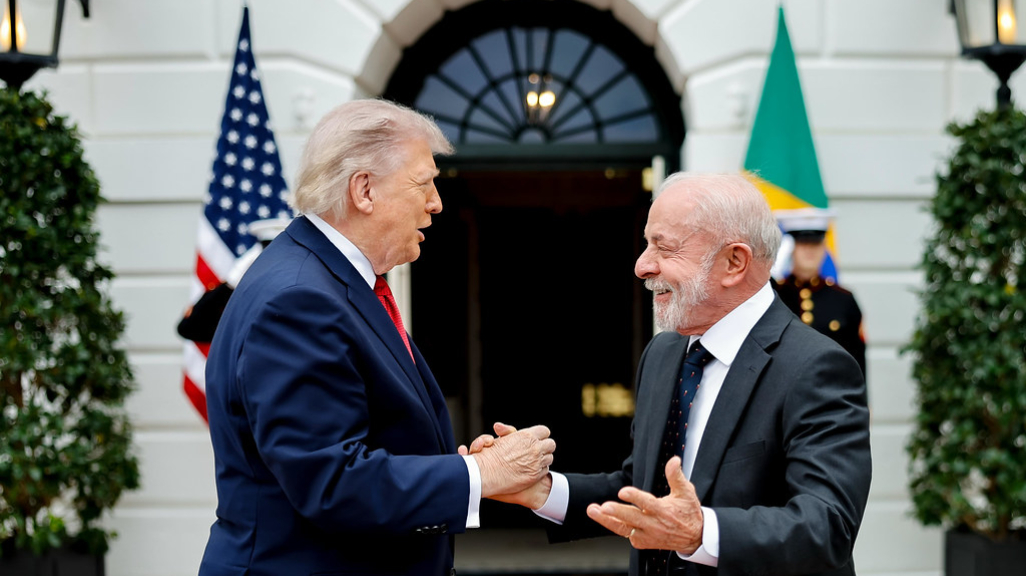
The May 7 meeting at the White House between Brazilian President Luiz Inácio Lula da Silva and U.S. President Donald Trump was months in the making. For much of the previous year, the relationship between the leaders of the Western Hemisphere’s two most populous countries was tense, stemming from trade disputes and security issues. But at the end of what turned out to be a three-hour meeting, the presidents emerged smiling for the cameras.
“We need to be very careful in interpreting the meeting,” cautioned Fernanda Magnotta of the Brazilian Center for International Affairs (CEBRI), “The differences in agendas and interests between the two governments are structural, and they're still there, and they are going to be there.”
On one side, Magnotta told AS/COA Online’s Luisa Leme, Brasília is focused on lowering tariffs and expediting the end of U.S. trade investigations while avoiding foreign terrorist organization designations on criminal groups operating in Brazilian territory. Washington, on the other hand, is pushing for more involvement in Brazil’s burgeoning rare earths sector to propel U.S. ambitions to compete technologically with China. “Brazil is the number two in the world in critical minerals and rare earths,” Magnotta explained, “The number one is China, and the U.S. is trying to avoid dependency on China for, of course, strategic reasons. So, the U.S. is looking to Brazil as an alternative in this kind of strategy that we all know as friendshoring.” One week after welcoming Lula, Trump jetted off to Beijing to meet with President Xi Jinping.
Looking ahead at electoral tests later this year—with Brazil’s presidential election in October and U.S. midterms in November—she highlighted the two leaders’ shared desire to project international strength during delicate domestic moments. “The word that, for me, defines the meeting and the future of this relationship is sobriety,” said Magnotta. “Both of the leaders recognize that they really depend on the other, especially because of the economic agenda. If we look into the meeting, it was not as political as people could imagine. It was very concentrated in the less sensitive or complicated issues.”
“The word that, for me, defines the meeting and the future of this relationship is sobriety.”
Our guest
Dr. Fernanda Magnotta, based in São Paolo, is a senior fellow at the Brazilian Center for International Relations (CEBRI), a top Brazilian think tank, and at Inter-American Dialogue's Brazil Program. An expert on U.S. foreign policy and U.S.–China–Latin America relations, she also is the head of the International Relations program at the Armando Alvares Penteado Foundation (FAAP) university and serves on the editorial board of FUNAG, the academic branch of Brazil’s Ministry of Foreign Relations. She is also an international affairs analyst for CNN Brasil. In 2025, Dr. Magnotta was awarded the rank of Officer of the Order of Rio Branco, Brazil’s highest honor in the field of international relations.
Subscribe to Latin America in Focus, AS/COA's podcast focusing on the latest trends in politics, economics, and culture throughout the Americas.
This episode was produced by Executive Producer Luisa Leme and Associate Producer Khalea Robertson. Carin Zissis is the host.
Share and subscribe at Apple, Spotify,YouTube, or wherever you get your podcasts. Access other episodes of Latin America in Focus and send us feedback at latamfocus@as-coa.org.
For more of Dr. Magnotta’s analysis on this topic, check out her articles in Americas Quarterly on the Trump-Lula relationship and the U.S. interest in Brazil’s rare earths.
The music in the podcast is “Galopada” performed by Itiberê Zwarg for Americas Society. Find out about upcoming concerts at musicoftheamericas.org. Share your love for Latin America: Join Americas Society.
Opinions expressed in this podcast do not necessarily reflect those of Americas Society/Council of the Americas or its members.
[MUSIC]
Carin Zissis: The meeting was a long time coming. For months, there were rumors that the Brazilian president would visit the White House. Tariffs and security had become urgent topics for the U.S.-Brazil negotiating table, but it was hard to get Presidents Luiz Inácio Lula da Silva and Donald Trump to sit together in the same room.
After all, there was a history of tensions between the two leaders. But then, tempers cooled: first, with a brief moment at the UN last September...
[CLIP of Trump: “He seemed like a very nice man, actually. Thirty-nine seconds, we had excellent chemistry. It’s a good sign”]
Zissis: ...and then, during a meeting in Malaysia.
[MUSIC]
Zissis: Trump’s threat of 50% tariffs on Brazilian goods came down and diplomatic efforts paid off. The leaders of the two largest countries in the Americas came together in Washington on May 7. The White House encounter was scheduled to last an hour but ended up taking three.
[CLIP of Lula (translated): “He laughed because from now on he will always smile. He learned that smiling is good for you.”]
[MUSIC]
Zissis: Hi, this is Carin Zissis of AS/COA Online.
You might have seen the image of Lula and Trump smiling together. What does it mean for U.S.-Brazil relations—notably in an election year?
Fernanda Magnotta: We need to be very careful in interpreting the meeting. In Brazil, people celebrated a lot, and I understand that. But, you know, the differences in agendas and interests between the two governments are structural. And they're still there, and they are going to be there when we come to a more, you know, hands-on approach, when we need to sign an agreement or when we need to establish a cooperation. I told people here in Brazil that it's kind of a joke. We said that it was a meeting to set up another meeting.
Zissis: That’s Fernanda Magnotta. She’s a senior fellow at the Brazilian Center for International Affairs, or CEBRI, and a professor at F-A-A-P University in Brazil.
Magnotta told my colleague Luisa Leme that more conversations could mean Brazil is making progress when it comes to avoiding FTO designations and future tariffs. And then, there’s the question of rare earths.
Magnotta: Brazil is the number two in the world in critical minerals and rare earths, so it's a very important country. It's important to remember that the number one is China, and the U.S. is trying to avoid dependency on China for, of course, strategic reasons. So, the U.S. is looking to Brazil as an alternative in this kind of strategy that we all know as friendshoring.
What the U.S. really had on their minds, it was talk about this very narrow perspective, in the Brazilian point of view. So, they just wanted to talk about critical minerals and rare earths as part of the bargaining for the tariffs.
[MUSIC]
Zissis: Today, we’re taking the temperature of U.S.–Brazil ties.
Thank you for joining us. Whether you’re listening in Sydney, Santiago, or San Francisco, don’t forget to subscribe to and share Latin America in Focus on Apple, Spotify, YouTube, or your podcast platform of choice.
[SHOW INTRO WITH UPBEAT MUSIC – Latin America in Focus Podcast]
Voice over: You’re listening to Latin America in Focus.
Voice over 2: Latinoamérica en foco
Voice over 3: América Latina em foco
Voice over 1: A podcast by Americas Society/Council of the Americas on politics, economics, and culture in the region.
Luisa Leme: Fernanda, thank you so much for being with us today. My first question for you is about timing: timing for this meeting, since we know this meeting between Lula and Trump was something Brazil diplomats were working on since the beginning of the year, and it didn't happen right away.
Can we talk about why now? And what does this meeting, which was confirmed and happened within a week, say about this relationship?
Magnotta: Thank you so much for your invitation. It's a pleasure to be here with you. And well, let's start by saying that, Luisa, this is not the best moment of the bilateral relationship. And at the same time, it's not the worst moment at all.
I believe that the... the choosing [of] this specific period for the meeting was kind of made by opportunity. Actually, the Brazilian diplomats, they were trying very hard to get this meeting done, especially because of the tariffs. Brazil is very worried about the investigation that is under execution right now in USTR, and,the Brazilian authorities consider that maybe in one or two months, some tariffs can again be decided against Brazil. We had very high tariffs decided last year, almost one year ago. Then they were partly removed, but now we have this investigation under Section 301.
So, the timing is based on the feeling that the Brazilian government had to, in advance, work to avoid having tariffs imposed again. So this was the main preoccupation, the main reason that the Brazilian government was trying to push very hard for the meeting in this moment.
Also, we have another subject in the agenda that is related to the combat of narco-trafficking in Latin America and Brazil in particular. The Trump government, uh, is giving some information, is signaling for the possibility of considering some of the criminal groups in Brazil as narcoterrorists.
Leme: [The] foreign terrorist organization designation. We spoke about it in the podcast before.
Magnotta: Yeah, exactly. The two groups in Brazil are maybe being considered to be included under this designation: PCC and Comando Vermelho. So, the Brazilian government, the current Brazilian government, is mainly against it, because the idea is that if Brazil receives this kind of designation for these two groups, maybe it can open doors for some kind of intervention in the future. We can somehow lose control over the negotiations related to cooperation in security and this agenda in particular.
So in both cases, tariffs and also security issues, Brazil was trying to, in advance, react and avoid that this kind of action could somehow become a turmoil, especially in an electoral year such as this one in Brazil. We're having elections in October this year, and, of course, President Lula is running for the second [consecutive] term. So he is trying to control the situation as much as he can.
And timing also reflects the fact that President Lula had a major defeat one week prior to the meeting with Trump, here in Brazil in domestic issues. Such as the nomination he decided to indicate for the Supreme Court. The Senate in Brazil somehow reacted in a bad way, rejected the name he suggested. And then we had another major defeat in the definition of the punition against people convicted for crimes on January 8 in Brazil, which is considered the Brazilian January 6, for the Americans. So, both of these defeats made the political environment here very bad for President Lula. And that's why going to DC and making sure that another bad result in international affairs would not, somehow, become a problem.
So Brazil was trying to get the image of, you know, Lula as a statesman, someone that's being, respected, even when he is in front of someone that is ideologically very different or something like that. It's important to mention, Luisa, that here in Brazil, the major campaign that President Lula made during the tariffs period was based on the idea of sovereignty. So giving this idea that President Lula is received to major discussions in the White House, Oval Office, this picture was very important for President Lula.
So timing is related to both sides—foreign affairs, international relations, bilateral affairs—but also it had something to do to the political atmosphere in Brazil domestically.
Leme: Yeah. On the United States side, I would say that question of timing also can be posed. We can add that this happened days before President Trump travels to China. So how [does] meeting with Brazil fit into this context of the U.S.-China relationship and the interests that U.S. might have with Brazil?
Magnotta: Well, I'll step back a little bit just to say that we need to be very careful in interpreting the meeting. I know that the major highlight was that, oh, it was a success, you know, no slippery or any kind of hostile situation for both presidents. So the message was good for both of them.
In Brazil, people celebrated a lot and I understand that. But I say that we need to be very careful because, you know, the differences in agendas and interests between the two governments are structural. And they're still there and they are going to be there when we come to a more hands-on approach, when we need to sign an agreement or when we need to establish a cooperation.
I told people here in Brazil that it's kind of a joke. You know, because you're Brazilian. We said that it was a meeting to set up another meeting, and actually to establish working groups.
Leme: Yeah, there was nothing signed, right? There was not a big agreement or that they come up with a big announcement at the end.
Magnotta: Yeah, besides having a big picture side-to-side, they were saying nice things about the meeting. President Trump said that Lula was a “dynamic” president, and then he said later that President Lula is a smart guy and the meeting was great. President Lula celebrated, said that it was very converging.
But, you know, they have actually not entered into a direct collision course. And if we look into the agenda itself, there is very little real convergence between them. And when we see the press conference that the government of Brazil made actually what is very... very clear is that U.S. accepted to have Brazil and accepted to have this meeting because they are targeting very strategic issues such as critical minerals and rare earths. They want to talk about tariffs because Brazil wants to talk about tariffs, just because it's a way... it's an opportunity to link... a linkage strategy of negotiation, to critical minerals and rare earths.
Brazil is the number two in the world in critical minerals and rare earths, so it's a very important country. It's important to remember that the number one is China, and the U.S. is trying to avoid dependency on China for, of course, strategic reasons. So the U.S. is looking to Brazil as an alternative in this kind of strategy that we all know as friendshoring. So, Brazil is an alternative to China in this very strategic terms for technological competition in the long run.
So, for me, it's very clear that Brazil and President Lula, they wanted to go to the U.S. with a broader agenda. But when they arrived in DC, they couldn't have a chance to talk about what they really wanted. Some issues were not mentioned. So what the U.S. really had on their minds, it was [to] talk about this very narrow perspective, in the Brazilian point of view. So they just wanted to talk about critical minerals and rare earths as an exchange... as part of the bargaining for the tariffs.
And I say that China was the hidden subject of the Lula-Trump meeting all the time; not just because of this particular topic that we're mentioning here, but also because China is a very important partner for Brazil. And not just for Brazil, but for the whole Latin American region for more than a decade. And this relationship has been changed a lot during this period.
In the case of Brazil, since 2009, China replaced the U.S. as the number one in trade. And also, if you come to Brazil and look around, we're having the Chinese in very strategic sectors. We're talking about satellites, telecommunications, electric cars, biomaterials in many different areas, vaccines. So, when Brazil talks to the U.S. nowadays, it's always about China as well.
China was the hidden subject of Lula-Trump meeting because at the same time, the critical minerals is a way of helping the U.S. in this decoupling with China, in the bilateral relations with China. It's a way to say, you know, the U.S. wants to get back the “backyard,” as some would say. And it's interesting to say that President Lula, when he gave his public interview just after the meeting, he said, "Well, I explained to President Trump that Brazil not simply chose China because it wanted to, but because of a withdrawal, an absence of the U.S."
So he claimed that if the U.S. is more interested in the region and in Brazil, including these strategic areas, Brazil is open to that investment. So, I think China was present in this both ways.
Leme: Do you think that this gets to become leverage for Brazil in addressing those other sticking points in the bilateral relationship, right?
Celso Amorim, Lula's longtime advisor, right, watched the meeting from Brasília, and then he said that Trump will now have to think twice before crossing Brazil's interests. He was speaking about sovereignty, about these FTO designations like you were saying, given that, oh, this is a good result for Brazil.
But my question to you is that can U.S. interest in rare earths that are in Brazil halt this 301 investigation? Is this true bargaining here?
Magnotta: Yes, I think the bargaining is real. But I still think there are some main tensions that are very important and must be considered into this negotiation. Because if we talk about tariffs versus critical minerals and rare earths, we need to take the main aspects into this analysis.
The first one is that the U.S. wants speed and geopolitical security. This is what the U.S. wants. And Brazil wants, particularly with the rare earths and critical minerals, industrial sovereignty and greater value capture. This is what Brazil wants. So to make sure that this negotiation can go ahead, Washington prefers supply chains aligned to the West, but Brazil, Brasília, seeks to maintain a multipolar logic. This is what the players in Brazil mentioned.
And it was very interesting to watch in that day of the meeting, Brazil said, "We are very worried about national sovereignty, autonomy, and diversification in purchasing, but especially processing of rare earths and critical minerals.”
Leme: Yeah, 'cause Brazil has a lot of reserves, but it doesn't have a, a full chain, let's say. They cannot process all the rare earths and doesn't get the full supply chain.
Magnotta: Yeah, and not even the U.S. actually. The only country that, you know, really developed that technology is China.
So, if the negotiation between U.S. and Brazil passes through this kind of approach, like we are just investing in Brazil if we are the very unique partner or if it's just something that happens in [one] direction, it's not involving any third partner such as China or other[s], if it's something, you know, pledging for exclusivity, I don't believe Brazil can accept. And I don't know if even the U.S. can do that because at some point, the U.S. will need some help [in] processing. So this is, you know, the tie here.
It's interesting to see how the Brazilian authorities refer to that aspect in particular because they said, "Oh, wow, we're having, a discussion in our Congress here in Brazil." It was just approved one day before the bilateral meeting saying that Brazil is open to having external foreign investment in critical minerals and rare earths. So, we're open to that, it's not a problem. It's something that is kind of a consensus between different political groups here in the country. But everybody is invited to invest, also [investors] within the U.S.
So, Brazil is making very clear that it's not going to be something unique, or a privilege of the Americans. And what I see is that the American side is [wanting] guarantees and to have some kind of exclusivity. So I think this is something that we need to better understand.
And talking about tariffs: under the investigation of 301, we need to consider that the lack of consensus is related to the fact that the Americans always say that Brazil is applying very high tariffs to the American product. And Brazil is always denying that, saying that's not true.
Leme: Right, both countries announced that there will be a working group that in 30 days maybe we will hear about that, what are the results. And Lula said something about whoever has the numbers wrong will have to cede.
How do you see this coming forward? How do you see these next 30 days?
Magnotta: Yeah, the next 30 days will be something that we already know. None of them have the wrong numbers. The numbers are really, really correct. What's the problem with the numbers? You know, numbers are very tricky, because you can interpret the numbers in different ways, and this is exactly what's happening here.
Because what the Brazilian side says is that tariffs under 301 are unfair, make little sense given the surplus of the relationship with the U.S. And Brazil says that the average rate that Brazil applies to the US products is around 2 percent. This is what President Lula said to President Trump. But the problem is that the U.S. government's not looking [at] the average number. They are looking to the strategic sectors, and sectors in which the U.S. is very under pressure of some specific industries in the country, such as ethanol, for example. It became, like, the major example over the years. Brazil applies 18 percent of tariffs for the American ethanol, and it's a sector that is always putting a lot of pressure under all the U.S. governments in the last decades.
So Brazil will try to sell the narrative that we have the surplus. So we're not Mexico, we're not China, we're... It's not fair. But at the same time, it's also correct, the American way of shaping that, in the terms of saying, "Yes, but, you know, the average is not solving the problem. We are trying to discuss another specific groups of products that, for us, are considered important.” And those groups are the ones the Brazilian side is not exactly very open to discuss[ing]. So the working group that are being formed right now, they probably will have this challenge of finding some flexibility.
So of course, we don't want the tariffs back. People say here in Brazil that maybe if things are not going well under the investigation and the tariffs come back, it could be around 30 or 40 percent.
Leme: Oh, wow.
Magnotta: So the productive sector here, they really don't want to have that again. So maybe it will be a reason for the Brazilian side of the group, the working group, to make it more flexible under some of the sectors in the U.S. So I think this is the focus on what they're working right now.
Leme: Right. Let's go on the political side a bit then. And we know that both presidents sit on opposite sides of the political spectrum. But here they were smiling at the cameras. Is this also an issue that this relationship is too big to fail, Fernanda? It's such an unpredictable world.
Magnotta: Yes, I do agree to this idea that the relationship is too big to fail. I think that the word that, for me, defines the meeting and the future of this relationship is sobriety. I think both countries, both presidents, they tried the best that they could to make these statements reflect the idea of restraint.
I was talking to an American diplomat, very good friend of mine, the day of the meeting, and it was very funny actually because he said, "You know, it was a big victory, uh, for Lula in the political point of view because Trump's post at the Truth Social was boring and normal." [LAUGHS] So being boring and normal is a great big victory. Especially because the adjective that President Trump decided to use to describe Lula, could be defined as very random, such as “dynamic.”
But, you know, from the Brazilian point of view, it's something that can be used politically in the domestic agenda. Because remember that President Trump was the president that got elected accusing the opponent side, President Biden, another president of 80 years old, of being, you know, very fragile. He said many times that President Biden was an old guy, out of stamina or something like that. And then, he describes another 80-year-old guy that is running for an election as someone “dynamic.” So, it's something that helps Lula in this way as well.
At the same time, I would say that Lula for his side, he also managed the situation to be in this agenda of sobriety as well because he spent the last month accusing the U.S. of violations in Iran, saying that the U.S. is crossing all the limits of international law, et cetera, in Gaza. But then he decided to go to DC to have the picture, to shake hands, and from the Brazilian point of view, this is also a concession.
Leme: And, you know, they're both in their eighties or near their eighties, right? Trump is 79. They are both facing lower popularity rates at home. They have elections coming up. How do you see this personal relationship between the two leaders affecting, then, U.S.-Brazil relations?
And what is your sense when it comes to the possibility of Trump declaring his support for the Bolsonaros again, like he did in previous election? And how, you know, this whole tariff talk started when Trump was talking about the Supreme Court case on Jair Bolsonaro, right?
How do you see this relationship evolving and what might play out during both election seasons?
Magnotta: This is a very good question, Luisa. I think, of course, personality matters, especially when we talk about such characters as Lula or Trump. But it’s not the central variable in this bilateral relationship, I still believe that. Both leaders, Lula and Trump, they have strong personal styles, as we can see, and highly individualized political brands, let's put it this way.
Trump tends, in my perspective, to value personal chemistry, symbolism, and, you know, transactional dynamics. This is what we're having from the meeting. Lula operates in a more institutional and diplomatic manner in this relationship in particular, especially in foreign policy in general.
Of course, there is no strong ideological affinity between them at all, unlike Bolsonaro and Trump, for example. That relationship was of course based on personal alignment. But at the same time, both Lula and Trump, they are very experienced in political negotiation and they understand the importance of some pragmatism.
Everybody says here in Brazil that for Trump it's very important to be sided with winners, not losers. And I think this is part of the reason that he can connect to President Lula and admire at some point President Lula, even if they are very different in many aspects.
Bolsonaro openly admired Trump's political style, rhetoric, worldview. But even with that, the relationship, the bilateral relationship between Brazil and the U.S. during the period was not very different. We didn't have any, you know, groundbreaking announcement or a very special moment, even considering this good personal approach.
And in the other side, in the other political spectrum, the same happened to Biden and Lula. Many people here in Brazil, they believed when Biden was the U.S. president and Lula was the president of Brazil, that the bilateral relation would have like a momentum because of the convergence among the agendas.
So, President Lula was caring a lot about the green agenda, green diplomacy. President Biden had the same priority. They both were very [intent] to talk about multilateral agenda, reforming multilateral structures. They were somehow much more similar than, of course, Lula and Trump, or other presidents in the past. But again, we didn't have any great or big announcement.
If the convergences between Bolsonaro and Trump or between Lula and Biden were not enough to make the bilateral agenda go further, we can take from that the message that, well, personal affinity is something that can help, but it’s not enough to make it better. Or can... or we can say make it worse at the same way.
Leme: This is great. Fernanda, I really appreciate your time and our conversation. This was really great.
Magnotta: Thank you so much for the invitation, Luisa. It's a big pleasure.
[MUSIC]
Zissis: Thanks for listening. I’m your host Carin Zissis. This episode was produced by our associate producer Khalea Robertson and executive producer Luisa Leme.
Check out the podcast notes for Fernanda Magnotta’s articles in Americas Quarterly.
You can find other episodes of Latin America in Focus at www.as-coa.org/podcast or write us an email telling us what you think at latamfocus@as-coa.org.
If you like this episode, share it, write us a review, and subscribe at Apple, Spotify, YouTube, or wherever you get your podcasts.
[MUSIC]
The music in the podcast was performed for Americas Society. Find out about upcoming concerts at musicoftheamericas.org. And consider becoming an Americas Society member for preferential access to all performances at 680 Park Avenue in New York, as well art exhibitions, book talks, and more exciting events.
[MUSIC]
Opinions expressed in this podcast do not necessarily reflect those of Americas Society/Council of the Americas or its members. Thank you.