LatAm in Focus: As Brazil Faces a Familiar Rivalry, What's Changed for Voters?
LatAm in Focus: As Brazil Faces a Familiar Rivalry, What's Changed for Voters?
Quaest pollster Felipe Nunes explores how the country's jaded but politically engaged electorate view the tight Lula–Bolsonaro race.
A sense of déjà vu will accompany Brazilians who head to the polls on October 4. In a presidential contest with 13 official candidates, the race again comes down to President Luiz Inácio Lula da Silva on the left and a Bolsonaro on the right, this time, Senator Flávio Bolsonaro, son of jailed ex-President Jair Bolsonaro (2019–2023).

The president and Bolsonaro scion Flávio are in a deadlock ahead of the October 4 vote in a race marked by corruption, security, and economic worries.
While many voters have already settled into their political camps, “in general, Brazilians are not very happy with this competition,” says pollster Felipe Nunes. Speaking with AS/COA Online’s Luisa Leme, Nunes unpacks how an increasingly informed electorate wanting new options feels about having familiar options to address affordability and a sweeping corruption crisis ensnaring figures across the political spectrum. “Brazilians are thinking that they tried everything—they tried different groups, they tried different presidents—but their lives haven't changed significantly.”
What has changed, he says, is that Brazilians’ cultural and social values have become more important in determining their vote. Incumbent Lula is seeking to convince an entrepreneurial population that his administration's efforts to raise incomes will translate to improvements in affordability over the next four years. His most recent play was a 120-day ban on online gambling meant to tackle growing household debt. But will that move and boosts to Brazil’s welfare program be enough to help Lula break through his ceiling of support? Flávio Bolsonaro, meanwhile, hopes to both tap into and moderate his father’s firebrand political persona that galvanized the Brazilian right. Either candidate will need to win over urban women and independent voters, who Nunes estimates make up around 30 percent of the electorate.
Can Flávio Bolsonaro maintain momentum or will President Luiz Inácio Lula da Silva mount a comeback in the October 25 runoff?
As for the effect of the Supreme Court scandal on the race, Nunes argues that “in a highly polarized election, scandals usually do not move large numbers of voters from one side to the other.” But, he added, it can activate voters and boost turnout, a decisive factor in this tight presidential election: “If we see a 50-50 vote intention in the second round, what will make the difference is if you guarantee that your voters will be able to show up.”
Our guest

Felipe Nunes is the CEO of Quaest, a leading polling and research firm in Brazil, and a professor at the São Paulo School of Economics at the Getulio Vargas Foundation university. He holds a PhD in political science from the University of California, Los Angeles.
Nunes’ primary research interests focus on elections, polarization, and misinformation. In addition to writing several research papers on these topics, he has also authored two books: Brasil no espelho (Brazil in the Mirror, 2025) and Biografia do Abismo (Biography of the Abyss, 2023) with Thomas Traumann.

Subscribe to Latin America in Focus, AS/COA's podcast focusing on the latest trends in politics, economics, and culture throughout the Americas.
This episode was produced by Executive Producer Luisa Leme with support from Associate Producer Khalea Robertson. Carin Zissis is your host.
Stay up to date with AS/COA Online’s ongoing coverage of Brazil’s 2026 elections, including our poll tracker that features Quaest surveys. And catch up on our content on all the key votes across the region this year in AS/COA Online’s Guide to 2026 Latin American Elections.
Listen to past episodes with Felipe Nunes on the key issues that drove the 2022 election and that year’s Lula–Bolsonaro runoff.
Share and subscribe at Apple, Spotify,YouTube, or wherever you get your podcasts. Access other episodes of Latin America in Focus and send us feedback at latamfocus@as-coa.org.
The music in the podcast is Paulo Bellinati's "Baião de gude” performed by Newman Oltman Guitar Duo and João Luiz for Americas Society. Find out about upcoming concerts at musicoftheamericas.org. Share your love for Latin America: Join Americas Society.
Opinions expressed in this podcast do not necessarily reflect those of Americas Society/Council of the Americas or its members.
[MUSIC]
[Clip of Supreme Court justices arguing with each other.]
Carin Zissis: Believe it or not, that’s the sound of a recent exchange during a Supreme Court session in Brazil.
Three weeks before Latin America’s biggest election of the year tempers flared over the largest banking fraud in Brazil’s history involving pension funds and ensnaring plenty of politicians.
[Clip of Supreme Court justices arguing with each other.]
Zissis: The investigations named presidential candidate Flávio Bolsonaro directly. But they also cite Alexandre de Moraes, the Supreme Court justice loathed on the right and loved on the left for putting former president Jair Bolsonaro in jail for a coup attempt.
That means the Banco Master case hit frontrunners on both sides of Brazil’s polarized political spectrum. In one corner, we have one of the last leftist leaders serving currently in Latin America: President Luiz Inácio Lula da Silva. And in the other corner: Senator Flávio Bolsonaro, son of the former president, representing the right in Brazil.
So here’s the question: In a tight race where every vote counts, will this scandal decide the outcome?
[MUSIC]
Zissis: Hi, I’m Carin Zissis with AS/COA Online. Welcome back to Latin America in Focus, a podcast series where we give you the context of the big issues affecting the Americas.
Today, we go behind the presidential competition and see why voters might be reacting differently to the same well-known brands in Brazilian politics.
Felipe Nunes: In a highly polarized election, scandals usually do not move large numbers of voters from one side to the other. The important question becomes “does it confirm something voters already believe?” So a scandal, for me, becomes politically powerful when it reinforces a preexisting story.
Zissis: That’s Felipe Nunes, pollster and CEO of Quaest, and professor at FGV in São Paulo. He spoke with my colleague Luisa Leme about how the Brazilian vote has changed, creating new challenges for both Lula and Bolsonaro.
Nunes: What we're seeing now is that, you know, a little bit of a negligence, as if Brazilians are thinking that, you know, they tried everything—they tried different, like, groups, they tried different presidents, but their lives hasn't changed significantly.
Zissis: They cover Lula’s affordability hurdles as an incumbent, how independent and swing voters might cast their ballots , and whether corruption scandals can influence turnout come October 4.
So stay with us, and subscribe to the show on all major audio platforms and follow Americas Society/Council of the Americas on social media.
[Show intro: You're listening to Latin America in Focus. Latinoamérica en foco. América Latina em Foco. A podcast by Americas Society/Council of the Americas on politics, economics, and culture in the region.]
[MUSIC]
Luisa Leme: Welcome back, Professor Felipe Nunes, to Latin American Focus. It's good to have you here.
Nunes: My pleasure to be back.
Leme: Felipe, thank you so much for being with us again. I can say that everything that we discussed in past episodes about previous elections continues to be true, and we're going to link those episodes in the notes of this episode for the people who really wanna geek out on Brazilian elections.
But since 2018, we started seeing these two big names, Lula and Bolsonaro—Lula even before—in Brazil's presidential race, and a lot has changed since then for Brazilians.
Let's start by talking about Brazilian voters. You wrote a terrific book called Brazil no Espelho, or Brazil in the Mirror, giving a big picture of who Brazilians are and what they believe in. How have they changed over the past decade?
Nunes: So, Luisa, I think one of the great paradoxes of this election is that the political names, they look very familiar to us, but Brazil actually, the country, has changed a lot, right? Uh, Brazilian politics, as you said, is still organized around Lula on one side and the Bolsonaro family on the other side. So, if you only look at the ballot from outside, you might think Brazil has not changed, but voters, the Brazilian population have changed a lot.
So that's one of the main arguments of my book: Religion, gender, security, uh, family values, political identity, uh, all of that have become much more important in determining how people vote.
At the same time, Brazil is a very contradictory country. It's at the same time economically modern in many ways. You have Pix, for example, a very sophisticated way of making monetary transactions. Brazilians want economic opportunities. They want to be entrepreneurs. But culturally, we are still quite traditional. They also want protection, order, and security.
Leme: This is all reflected in your polls right now, right?
Nunes: Exactly. Yeah, it's all there. It's very interesting, these contradictions. But one of the main characteristics that I would say explains what's going on in Brazil at this moment, and I wrote this in my book, is that Brazil is a very low-trust society. In the research behind my book, I showed that only 6 percent of Brazilians said that most people can be trusted. 94 percent said, "You have to be very careful with other people."
That, Luisa, matters a lot politically. In a low-trust society, people tend to rely more heavily on their family, on their church, in their community, only on the people who have the same values and identities that you have. So politics become less of a rational issue and become more emotional.
Leme: There is one difference between 2026 and previous races: This competition has never been so tight, and it has never been so tight for the incumbent, for Lula, in the polls. Why is this 2026 Brazil presidential race so close?
Nunes: Yeah. So I think there are here two different stories to be told. One is polarization, right? Brazil has two very strong political camps, political groups, and both of them have very high floors to start a competition, right? Lula has a loyal electorate. The Bolsonaro family also has an extremely loyal electorate. Very few people, uh, move directly from one camp to the other over electoral cycles. This is what produces what I call in my first book, The Biography of the Abyss, what I call the calcified electorate, so this is one part of the story.
The second part of the story, it's a story that shows why the incumbent at this moment has a much more difficult time to compete. He's running as an incumbent with a government that a significant part of society doesn't trust, that doesn't think he's doing a good job. That's very different from previous moments of Lula's career. In 2006, Lula was running, for example, Luisa, for reelection with a much stronger evaluation. In 2010, his popularity was so high that he was able to transfer enormous political capital to Dilma Rousseff.
Leme: I think he was the president with the highest approval rating in the region at that time.
Nunes: Yes. Oh, for sure. Yeah. But now in 2026, Lula has a strong electoral floor, as I said, but he also has a relatively low ceiling. For an incumbent, this is a problem because if voters are unhappy, Lula has to persuade them that the next four years will be better than the last four. You know, Bolsonaro has an easier message. He can simply say, "If you are unhappy, let's change the government," right?
So this is not only an election between Lula and Bolsonaro's son, Flávio; it's also an election between continuity and change. And when an incumbent is more unpopular than popular, change becomes a very powerful message, and I think that's why the competition is so tight at this moment.
Leme: I wanna discuss the challenges the president faces and how people perceive his performance right now. We're talking about the one name who's been present in races since Brazil became a democracy again. He’s very well known, with high rejection rates, and this is probably the last time that we're gonna see him on the ballot given his age, he's 80.
Why has it been so hard for Lula? You know, the economy in Brazil, from the outside, has been sound: low inflation rates, low unemployment. So why has it been so difficult to engage voters now?
Nunes: Here we are talking about a very famous expression in political science and in politics in general, which is the impact of the economy on voters' behavior, right? And, it's curious, but Brazilian politics has become very similar to American politics. And as someone who is from Brazil and did my PhD at UCLA, it's interesting to see how similar things have become. And when I look at the defeat of, uh, the Democrats in the last election in the U.S., I can clearly see a trend that's similar to the Brazilian trend. And both have a relation to the affordability problem, right?
I think, Luisa, this is probably Lula's most important substantive challenge at this moment. There is a gap between the economic indicators and the lived economy. Uh, a government can point to employment, income, tax cuts, social programs. All of those things, of course, matter, but voters do not experience GDP statistics. They experience the supermarket, rent, electricity, transportation. In Brazil right now, debt. People, you know, have a lot of problems with debt.
So, in one of our recent surveys, we identified, for example, that 64 percent of Brazilians said their income had increased over the previous year, but only 10 percent said their income had increased more than their cost of living. That gap is politically devastating for Lula. It means someone can, um, objectively be earning more money and still feel poorer, right? This is why I prefer to talk about affordability rather than income.
And there is also a political communication problem. Policies such as tax relief or debt renegotiation, they may objectively benefit voters for some time, but those benefits do not automatically generate political credit at this moment. So our polls do not show that voters are feeling that their lives are better off now than it was, uh, four years ago.
Leme: Is Lula losing ground in specific areas of Brazil, or is there a group that's feeling this more?
Nunes: Yeah. Brazil still has a very recognizable electoral geography. Lula remains much stronger in the Northeast and among low-income voters. The Bolsonaro, uh, group is stronger in the South, much of the Center-West, and increasingly in the Southeast. Looking at this geography, this makes the Southeast particularly important because we're talking about lots of voters, especially in São Paulo and Minas Gerais. It contains an enormous share of the electorate, the three biggest groups.
Leme: A president has never won Brazil without winning Minas Gerais.
Nunes: Yes. Yeah. So usually, Minas indicates very clearly how competitive the election would be and in which direction it goes. So at this moment, Lula has a disadvantage, a numerical disadvantage in Minas. Flávio Bolsonaro is in front of him in a possible second round in this very important swing state. Minas is like Pennsylvania or Ohio, you know, states like that.
So in terms of geography, the South keeps bolsonarista, the Northeast keeps lulista, and for me the game will be decided in the Southeast.
Leme: On the other side, we have the Bolsonaros. The son of the former president. Do you see big differences between former President Jair Bolsonaro, who's in jail now, and his son, Flávio Bolsonaro? How do voters perceive them?
Nunes: They share a political brand, but they are very different in terms of their political characteristics.
Jair Bolsonaro was, especially in 2018, a disruptive candidate. He was able to present himself as an anti-system outsider, even after decades in Congress. But his message was about fighting against the system. His political strength was based on confrontation, authenticity, anger, and a very direct emotional relationship with his supporters, who, for the first time after the dictatorship, were able to call themselves right-wing voters again, right?
Flávio's different. He's more controlled, more conventional, I would say more disciplined. That creates, uh, on the one hand, advantages for him; on the other hand, disadvantages. The advantage is that he can potentially reduce resistance among voters who disliked Jair Bolsonaro's personality or style without losing the Bolsonaro brand, Bolsonaro's loyal supporters. The disadvantage is that he does not naturally reproduce the father's charismatic connection with the base.
So, uh, you know, there is here, I would say, a strategic paradox for the campaign. Flávio needs his father, because Jair Bolsonaro remains the emotional leader of this movement. But Flávio also needs to, to show voters outside the movement that he would be his own president. So, you know, he needs to be more moderate without losing the radical perspective of the electorate.
Leme: But at the same time, we still have a lot of people who have not decided. People who say in the Quaest polls, "I could change my mind."
Nunes: Yeah, around 35 percent still can change the vote among the ones who already decided on a candidate, and around 40 percent is still undecided in a spontaneous question when we ask them whether they have decided on an alternative yet.
Leme: Yeah. So then there's a lot of people in the middle and a lot of people to be convinced. Who are these voters, and how do you see them behaving in the polls now with this high polarization, the lack of a third option that is a threat? Because, uh, we have Augusto Cury, who's a writer whom nobody even heard of before rising in the polls temporarily, right?
Nunes: Yeah, yeah. Cury was a small wave, let's say. A weak wave, you know. It's hard to surf.
But getting to your main question, the most important group is the group that I call independent voters, right? I would be careful not to describe them exactly like American swing voters. They are not necessarily ideological centrists, so it's necessary to be careful about this. Uh, what defines them is that they do not have a strong personal attachment to either political leader, right? Uh, and this is important because the Lula and Bolsonaro blocs are already almost completely consolidated. That's why I call them a calcified electorate.
Leme: How do you divide voters?
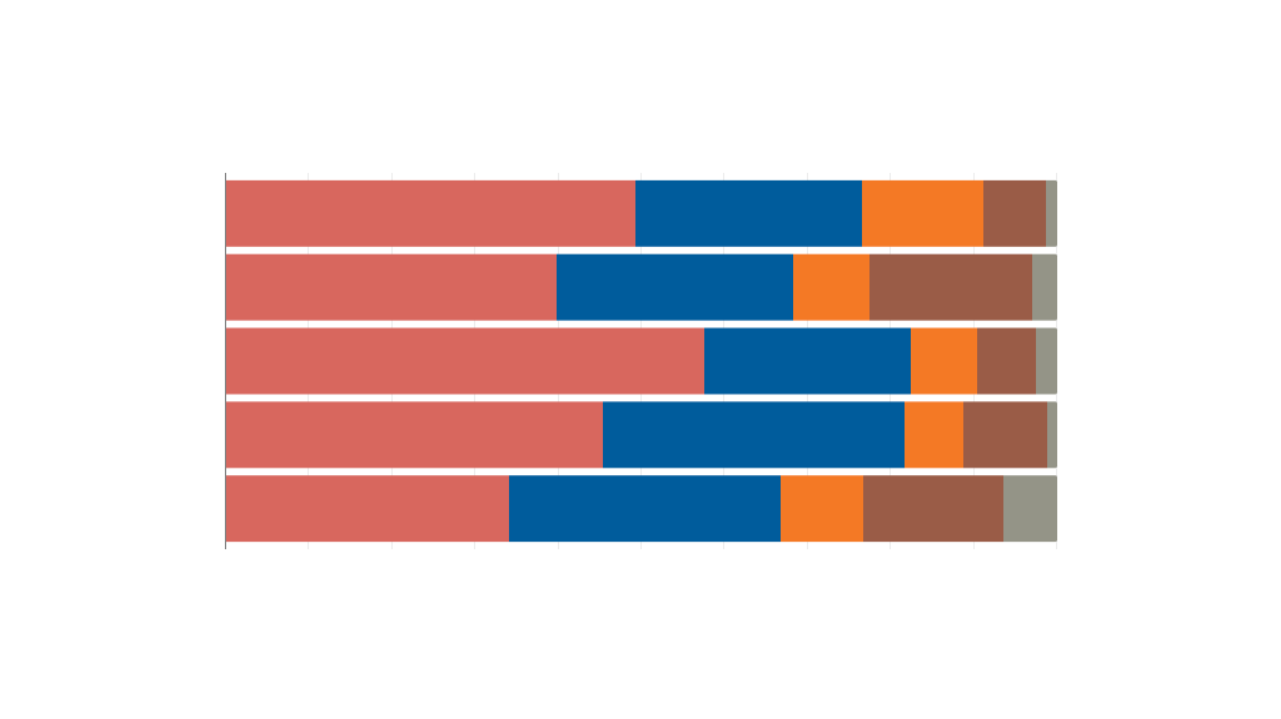
Nunes: I divide into five groups. The lulistas,...
Leme: Mm-hmm.
Nunes: which is around 22 percent. The left voters who do not like to be attached to Lula, 13 percent. The independents, around 30 percent. The right-wing voters who do not like to be called bolsonaristas, we're talking about 22 percent. And then the bolsonaristas, 13 percent, right?
Although these five groups divide themselves and they have different, uh, perspectives in terms of values, political behavior, in the latest Quaest runoff simulation, Lula gets about 96 percent among his own political camp, the lulistas and the esquerda, and the leftists, I'm sorry. Uh, Flávio gets almost all Bolsonaro supporters and a very large majority of the non-Bolsonaro right voters. So the election is decided outside those groups.
Right now, Flávio has a numerical advantage among those independents, but this is still a remarkably, I would say, open group. They are very volatile. A very large share of them say they would cast a blank or no vote if the competition remains Lula and Flávio.
These independent voters are not very happy at this moment. They are not very engaged at this moment. But a big portion of them say they will vote. They're not just not yet decided about who they will vote for. That's why it's such a tight, so competitive, race at this moment.
Leme: Felipe, inside those independents, there are the swing voters. When you talk about affordability, when you talk about security as a top concern among voters, who are the swing voters? Who are the people inside those independents who are more hit by those issues and might be changing from one candidate to the other?
Nunes: If I had to choose one group, I would describe it as middle-class urban women who live in big cities and, on one side, care about the public policies because they care about, uh, education for their children, they care about the health system because they know that, in the end, they are the ones who have to support family members. But at the same time they want autonomy, they want to have a good salary. They're looking for more independence, to be part of the economic system. They have religious attachments, so they are more traditional than the progressive woman.
So they are the ones who will decide among the independents, you know, which side will have an advantage.
If they vote by their values, they tend to vote more for Flávio. If they vote by their necessity for the state, for the support of the state, they tend to vote for Lula. So, it's a fight, uh, between these two sides that, that matters for them.
Leme: And then I can come back to your book because in the book we read that Brazilians are more conservative, more suspicious, and individualistic than we might think, but that God will decide what's gonna happen in their lives.
And people are tired. They are worried about security, and they are tired. Can you explain a little bit how you see this picture of Brazilians that we read in the book, these Brazilians that I just described, and those independents that you're talking about?
Nunes: So my book is about the structural values of Brazilians. So more than trying to understand opinions that change all the time, my exercise in this research was to try to go deeper and understand, you know, a direction where we would see Brazil going.
And the trajectory here for me is very clear. Brazilians are not happy with their lives. The economic and political crises that have been happening since 2013 make us more conservative in terms of, you know, the decision-making we do, not only politically but also in terms of our consumer behavior.
And this is well expressed in our last elections, right? If you think about it, we had an impeachment in 2016, then we had, um, 2018 won by a different group than the group that was in the government. Then in 2022, we had another alternative. You know,
Leme: Jair Bolsonaro loses the election by the narrowest result ever, and Lula gets to the presidency again, which is the mandate that he's ending.
Nunes: And now in 2026, we are again with this big change kind of feeling. You know, if it was not for Lula—a president who has been here, competitive and important in Brazilian politics since, I would say, the '80s, the '70s—if it wasn't for him, you know, the movement in terms of change would be even stronger.
So, since 2013, what we are seeing in the elections is what I describe in the book. Brazilians are not happy. They're looking for a change all the time. And that's exactly what they did by supporting the impeachment of Dilma, then supporting Bolsonaro, then defeating Bolsonaro.
So change is the, is the word that I would say really connects the values that I identified in my research and the voting intentions that we are observing right now.
Leme: Do you see apathy, then? When you talk about change, are people still interested in participating? Are they motivated to participate in democracy? How do you see that?
Nunes: Yeah, the dangerous part of everything we are talking about here is that the economic and political crisis that is producing this feeling of change is also producing an apathy in the electorate, right? Although the interest in following political news has increased, although Brazilians are more, um, self-identified with one of the groups, in general, Brazilians are not very happy with this competition. They don't feel represented by the political system. They feel there is huge corruption as a whole. Corruption that involves Lula, Bolsonaro, the Supreme Court, the Congress. Everywhere we see this feeling of corruption.
So the consequence of this is not more participation, it's not protests in the streets. What we're seeing now is a little bit of negligence, as if Brazilians are thinking that, you know, they tried everything, they tried different groups, they tried different presidents, but their lives haven't changed significantly.
So, uh, the best way to describe our attitude toward democracy now is that we're not satisfied with it. We don't think the outcomes of democracy fulfill our goals as a society. And the main consequence of that is that abstention is going up, turnout's going down. And we are reaching, uh, patterns and standards of turnout similar to the ones we observe in countries like the U.S., where voting isn't mandatory, right? As if Brazilians were like, "You know what? There's nothing that we can do to change for good."
Leme: You mentioned that there has been a growth in interest in political news, and people are more informed, they're more aware of what's happening...
Nunes: And they have more opinions! Everybody here has an opinion.
Leme: [Laughs] But now the Supreme Court and a scandal which is hitting the judiciary now, in Brazil, are really taking center stage in the campaign and in the elections. Felipe, how much does a scandal this size, this proportion change voter intention?
Nunes: Here's where I need to be very careful in my answer because everything's happening at the moment that we are talking.
Leme: We are recording three weeks before the election, on the day of a major trial that is happening in the Supreme Court right now.
Nunes: Yeah. But anyway, so in a highly polarized election, scandals usually do not move large numbers of voters from one side to the other. The core voters, um, they kind of reinterpret almost everything through their existing political identities. So the important question here is not simply how serious a scandal is; The important question becomes: Does it confirm something voters already believe? Uh, does it connect with one of the dominant narratives of the election?
So a scandal for me, Luisa, becomes politically powerful when it reinforces a preexisting story, when your bias can be confirmed by that scandal.
Leme: It reinforces this calcification, the polarization that we see.
Nunes: Exactly. And then in a scenario where people are like, you know, not so engaged in the election, this scandal kind of works to engage [them]. This scandal kind of works to motivate and mobilize voters who already have a preexisting idea about that story.
Leme: And we are seeing this right now?
Nunes: Yes, especially on the right-wing side, right? The bolsonarista voters and the right-wing voters, they already believe that there is a very unfair decision that was taken by part of the Supreme Court. They believe the institutions are not working, the institutions are unfair.
Leme: And let me just say for our listeners, the decision that we're talking about is a decision that convicted former President Jair Bolsonaro and put him in jail, and therefore unable to run for president right now.
Nunes: Exactly. So, as they believe that something is wrong about the Supreme Court, when they see a scandal inside the Supreme Court, they think, "You see, I was right. I knew it. Something was wrong." So, this engages voters. This didn't change voters' minds. This only activated them, right?
And in an election where abstention is a variable that can decide the outcome, this is pivotal. This is critical in a scenario like that.
Leme: I'm gonna put you on the spot. What will decide this election, Felipe?
Nunes: Ha. If I knew it, you know. [Laughs]
Leme: It's a hard one, yeah.
Nunes: Yeah, that's a very hard question. It's a million-dollar question. I mean, let me answer you with things that we know, right? It's very polarized. It's polarized around Lula and Bolsonaro. Um, the size of both groups is very similar, so it's a very competitive race.
At the same time, it's a race where voters are not very motivated. So, for me, what will decide the election isn't a rational argument. It's not about persuasion. It's about mobilization. Whoever is able to mobilize their base to go to vote, to cast the vote, I think will have an advantage. If we see a 50/50 vote intention in the second round, what will make the difference is if you guarantee that your voters will be able to show up.
And why I'm saying that? Because, historically, Lula voters are less likely to show up than Bolsonaro voters. The poor voters, the low-educated voters, usually vote less. So, I really think the mobilization aspect is something new in Brazil, and if I had to pick one variable, I think this will be the most decisive variable this year.
Leme: Felipe, thank you so much for coming to Latin American Focus. We so appreciate you, and we will be following all of the polls and all of your analysis until the end of October for sure.
Thank you.
Nunes: Thanks for the invitation, and let's see what happens. Let's buckle up because it's going to be a very interesting election.
[MUSIC]
Zissis: Thank you for listening. I’m your host, Carin Zissis. This episode was produced by Associate Producer Khalea Robertson and our Executive Producer Luisa Leme.
Learn more about the Brazilian elections and track the polls with us at our election guide at as-coa.org/2026.
If you haven’t subscribed yet, do so now. Latin America in Focus has over 200 episodes on key issues that help you better understand the region. Check out past episodes on our website at www.as-coa.org/podcast
Help us by sharing this episode. We’re on Apple, Spotify, YouTube, or wherever you get your podcasts. And send us an email at latamfocus@as-coa.org or let us know what you think on social media.
[MUSIC]
The music in the podcast was performed for Americas Society. Find out about upcoming concerts at musicoftheamericas.org. And consider becoming an Americas Society member for preferential access to all performances at 680 Park Avenue in New York, as well as art exhibitions, book talks, and more.
Opinions expressed in this podcast do not necessarily reflect those of Americas Society/Council of the Americas or its members.