Dispatches from New York: What Matters for Latin America at the UN
Dispatches from New York: What Matters for Latin America at the UN
Follow the speeches and sideline meetings related to Washington’s policy in the region.
This page was originally published on September 22, 2026, and has since been updated.
Welcome to a special edition of our weekly dispatch on the U.S. role in Latin America. With regional leaders convening in New York this week, we broaden our lens to cover events at the UN, as well as sideline conversations related to U.S. ties and policy in the region. Follow us each week and see previous roundups at as-coa.org/dispatches, or sign up to receive them via LinkedIn.
AS/COA Online's regular roundup covers U.S policy news on the Americas in the era of the Donroe Doctrine.
Leaders in New York for the 81st meeting of the UN General Assembly will not only debate solutions to global challenges, but also find themselves hosted by an agency that’s arguably at its most fragile point since the UN Charter was inked in 1945.
António Guterres, who opened the floor for the final time in his role as UN secretary general, warned that, even as the world hurtles toward dramatic shifts fueled by AI and climate change, “Our institutions and systems of governance continue to reflect the power realities and interests of a largely bygone era.” Meanwhile, he noted, geopolitical divides are widening: “Cracks have become canyons.”
The first two presidents to address the UN, Brazil’s Luiz Inácio Lula da Silva and the United States’ Donald Trump, offer examples of these diverging global visions. Two days before taking the UN podium, Lula published a Financial Times op-ed, co-authored with Canadian Prime Minister Mark Carney and other leaders, contending that “the need for multilateral cooperation is very much alive” and pitching an initiative called Partners for Multilateralism to, among other things, support the reform of the UN system and other international agencies. Trump, for his part, repeatedly used the term “globalist” in a pejorative manner to warn against bureaucratic control on matters such as migration, the environment, and artificial intelligence.
When next year rolls around, could a Latin American be charged with healing such fissures? A tradition of regional rotation dictates that, after Guterres steps down in December, the next UN secretary general should be from the Latin American and Caribbean. Five of the seven remaining competitors hail from the region.
For now, new Latin American leaders are taking the UN stage this week, including Peru’s Keiko Fujimori and Chile’s José Antonio Kast. Venezuela’s interim President Delcy Rodríguez will also take to the podium, marking the first time a head of state from her country does so since 2018.—Carin Zissis
AS/COA Online covers the major episodes affecting the Americas from this week’s UN proceedings.
Twelve days before a vote in which Lula is fighting for his own reelection, he opened the forum for the tenth time and used Brazil’s inaugural slot to appeal to the international community and his base back home. He began by expressing “indignation” over the UN’s inability to constrain war and protect the vulnerable, in a speech that proposed diplomacy and sovereignty as the counterweights to the interests of powerful countries and industries that he framed as disrupting the world order.
“[In Latin America and the Caribbean] geographical proximity to the world’s greatest military power is inescapable, especially in the context of renewed hegemonic temptation,” Lula said, alluding to the United States before adding: “Brazil is too big to fit in anyone’s backyard.” And while acknowledging the threat of organized criminal groups, he said his country “will not outsource the responsibility of defending [our] borders.” Brazil is not a member of the U.S.-backed regional security initiative known as the Shield of the Americas; Secretary of State Marco Rubio will convene members later in the afternoon.
In his warnings about foreign interference, Lula said Venezuela “deserves to decide its own destiny” and mentioned the situations in Nicaragua, Haiti, and Cuba. He also brought up concerns over threats of outside intervention in Brazil’s October 4 elections, ringing alarm bells over disinformation networks working against Brazil’s “robust electoral system,” before adding: “Brazil will not allow foreign and domestic enemies of democracy to stop the people’s will.”—Luisa Leme
From poll trackers to podcast episodes to key facts, our guide tracks Latin America’s largest election this year.
“America is back and our country is stronger today than ever before,” asserted Trump. In an address that heralded U.S. economic, technological, and military might as the means to resolve global issues, Trump claimed success in ending several long-standing conflicts across the globe, including in Gaza, while pledging a near-term end to hostilities with Iran and the Russia-Ukraine war.
The U.S. president’s message extended to Latin America. “Our actions in Venezuela are proof that the United States will no longer permit threats to America to gain a foothold anywhere in the Western Hemisphere,” he said, referring to the January operation that ousted former leader Nicolás Maduro while interim President Rodríguez looked on from the floor. Trump added that his administration would continue “reasserting American power, including military power” to combat cartels and drug trafficking and stem undocumented migration in the region.
Venezuela, Mexico, and Cuba received special attention in Trump’s comments. Ahead of a sideline bilateral meeting with Rodríguez, he hailed the cooperation that led to a major oil deal announced last month that gives Washington a stake in a fifth of Venezuela’s proven oil reserves. “To the victor belong the spoils,” he said, adding that the deal would help drive down global energy prices. Experts have cautioned it’s unlikely for Venezuela to significantly boost production in the short term.
Trump also trumpeted “a good relationship” with the government of Mexico’s Claudia Sheinbaum on fighting drug trafficking, despite calling the country “the epicenter of cartel violence.” Amid stagnated negotiations with the Cuban government, mounting sanctions, and a de facto oil blockade, Cuba’s delegation walked out as Trump declared the island “a failed state” and said Rubio was working to bring about “a fundamental change” in the Caribbean nation. —Khalea Robertson
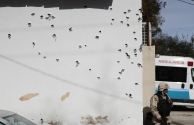
The second Trump administration has designated some 20 regional groups as foreign terrorist organizations. AS/COA Online tracks the designations.
In just its second meeting as a body, Shield of the Americas members gathered in a meeting chaired by Trump, who launched the body in March in 2026 and hailed the group as the “largest alliance for economic and national security to ever convene in the Western Hemisphere.” After the meeting, 15 countries released a joint statement affirming their cooperation on economic growth and security, and joining the United States in designating 24 criminal groups as foreign terrorist organizations. The governments also affirmed they will take action at the Organization of American States to enforce the Rio Treaty, a 1947 hemispheric security mechanism that defines an attack on one signatory as an attack on all.
In the meeting, Trump spoke of his desire for more military action on crime groups, saying, “You let us know, and we take them out, or you take them out yourself—I like that even better. But if you can’t, we’ll do it for you.”
At the meeting, Trump also spoke on developing the region’s mineral wealth, especially rare earths. “The resources of the Americas must always belong to the people of the Americas,” he said, warning leaders that they “not let it be taken over by hostile outside powers." China dominates the world’s rare earth trade and has been securing deals within the region, a trend that may color the September 24 meeting between Trump and Chinese President Xi Jinping.
Presidents and prime ministers present at the Shield meeting included Argentina’s Javier Milei, Chile’s Kast, Guyana’s Irfaan Ali, Honduras’ Nasry Asfura, Paraguay’s Santiago Peña, Peru’s Fujimori, and Trinidad and Tobago’s Kamla Persad-Bissessar. Seated among regional allies, Trump praised Latin America’s “big shift to the right” and suggested his endorsement of candidates had helped them gain victory in recent elections. Several senior members of his administration joined as well, including Rubio, Treasury Secretary Scott Bessent, U.S. Trade Representative Jamieson Greer, and White House Deputy Chief of Staff for Policy Stephen Miller.
After Trump’s remarks, Paraguay’s Peña, who recently became just the second head of state to visit Caracas since Maduro’s ouster, expressed gratitude for U.S. actions in Venezuela, but said, “We need to continue to work and make sure that there is democracy again in Venezuela.” Later that day, Trump met with interim leader Rodríguez, who has stalled on scheduling elections in her country.
Colombian Vice President José Manuel Restrepo, who was elected in June alongside President Abelardo de la Espriella, noted that in those elections, “we almost lost the democracy of Colombia, before adding: “and I think that this kind of initiative... is a way to preserve our democracies in the region.”—Chase Harrison
Security concerns featured prominently in the remarks of Peru’s Fujimori and Chile’s Kast, who spoke in successive speeches that marked their debuts at the General Assembly.
Speaking 57 days into her tenure, Fujimori said her country is at “war” with transnational criminal groups and that trying to confront them independently had been a mistake. On that front, she highlighted her government’s entry into the Shield of the Americas, first announced during Rubio’s September 10 visit to Lima.
Kast who joined the Shield meetings on Tuesday, pointed to Chile’s October 2019 protests as the beginning of a downturn in national fortunes, as well as organized crime causing “homicide levels [that] rose to a degree Chile had never seen in modern history.” He touted a decline in murder rates during the first half of the year.
Kast, like Trump, has also been vocal about controlling undocumented immigration. The Chilean president, who took office in March, said his “Border Shield” plan had boosted deportations by 50 percent and decreased unauthorized entries by 86 percent. Irregular entries in Chile peaked in 2021 at 57,000, driven in large part by a Venezuelan exodus, but have steadily declined since. In April, the figure hit its lowest level in five years. —Khalea Robertson
Hours after listening to the U.S. president laud the operation that placed her former boss in a Brooklyn prison, Venezuela’s Rodríguez had her first in-person meeting with Trump. The sit-down, held at a Manhattan hotel that evening, was closed to the press, but, on X, Rodríguez hailed it as “a historic meeting” that covered cooperation on energy, mining, and security. In addition to the 65-billion-barrel oil deal, U.S. companies recently announced plans to produce and sell Venezuelan aluminum and gold. The country’s national assembly approved a law in April to allow foreign investment in the mining sector.
Rodríguez’s social media post also thanked the Trump administration for supporting her country’s “reentry into multilateral spaces” and providing aid to Venezuela after twin earthquakes struck on June 24.
Histórico encuentro entre la Pdta. E @delcyrodriguezv y el Presidente de Estados Unidos, @realDonaldTrump , que marca una nueva etapa de diálogo y entendimiento entre ambos países.
Venezuela avanza con una visión de transformación económica, política y social, promoviendo… pic.twitter.com/F7QnipI1is— Oliver Blanco (@OliverBlanco) September 23, 2026
Also present at the meeting on Tuesday evening were White House Chief of Staff Susie Wiles, Miller, Bessent, and Rubio. The secretary of state is said to be overseeing talks between Rodríguez’s government and Venezuela’s opposition, a second round of which is expected to conclude this week.
One important figure absent from those talks? María Corina Machado, who unsuccessfully tried three times on September 22 to leave Panama to head to her home country, even as the interim president was in New York.—Khalea Robertson
The Canadian prime minister had his quick trip to New York cut shorter when a New York air traffic control mess delayed his arrival on Monday, preventing him from joining the kickoff of “Partners for Multilateralism” (see intro). And Carney won't speak at the General Assembly before heading back to Ottawa on Wednesday due to other commitments; Foreign Minister Anita Ananad will instead represent her country by delivering Canada’s UN speech on Saturday.
But even if he didn’t take to the UNGA podium, Carney’s presence still drew attention. One reason is that, ever since he delivered a landmark speech at the World Economic Forum at the start of the year, he has been seen as an outspoken voice for collaboration among “middle powers” in the face of a U.S.–China competition. Another is ongoing turbulence in the U.S.–Canada relationship amid collapsing bilateral trade talks.
Carney was in the assembly hall when Trump delivered his speech, though the U.S. leader made no mention of Canada, Washington’s second-biggest trade partner.
But the prime minister, who joined side events on Palestine, did hold a press conference while in New York on Tuesday. When asked if he would be meeting with Trump, he replied that “it’s most valuable to meet those who you don’t normally see.” In his remarks to media, he trumpeted his country’s deepening ties with Europe, as well as aid commitments focused on Palestine and environmental protection. But he opened by listing the grave challenges facing the world, from financial shocks to climate change to broken supply chains. “No one country, no matter how powerful, can manage these challenges alone.” —Carin Zissis
It’s practically customary for the president of Argentina to bring up the country’s territorial dispute with the United Kingdom over the Malvinas/Falkland Islands at the UN General Assembly. But when President Milei took the dais on September 23, he was speaking amid a period of renewed uncertainty about the future of the dispute and the U.S. position on it. In the past month, Trump has—more than once—said he is reviewing U.S. neutrality on the dispute and on September 12 added that he'd “probably be able to settle” the Malvinas/Falkland question.
Milei seized on Trump’s remarks, recently making a national address on this issue and toughening sanctions on businesses operating on the island and exploring the area for oil. In his UN address, he defended the steps taken, calling them “a peaceful, practical, and effective defense.” He criticized the UN, an organization he called “useless” in his speech, as being ineffective in its ability to enforce its own resolution that there should be no unliteral action in territorial disputes.
“The Malvinas issue is not merely a matter between Argentina and the United Kingdom; it is also a question regarding this organization’s ability to enforce its own resolutions,” Milei said.
In 1982, Argentina initiated a brief war with the UK for control of the islands, during which the Southern Cone country suffered a majority of the casualties. The conflict was a decisive blow to the military dictatorship in Argentina, which surrendered at the time. But the matter of control over the territory, rich in natural resources and strategically placed, has been an ongoing sore spot. —Chase Harrison
“I wish to say the following loud and clear at this general assembly. In Venezuela, there will be elections,” said Rodríguez in the interim leader’s first speech since assuming the presidency of her country. But even though Rodríguez assured the forum that Venezuelans will head to the polls at some point, her speech did not indicate a timeline, despite domestic and international pressure. “The Venezuelan people with their age-old wisdom will determine when the correct time for these elections is, and Venezuela's institutions will be prepared to guarantee this inclusive and transparent process takes place."
Rodríguez, who met in a private meeting with Trump two days earlier (see post above), praised the U.S. president in her speech and celebrated the oil deal between the countries, calling it "one of the most all-encompassing and significant [deals] ever signed.” She did not comment on Maduro, who sits in a Brooklyn jail just a few miles from the UN headquarters, but did reference his January 3 ouster as “a [2026] dispute with the United States of America, which was ratcheted up and became more extreme.”
It’s been a busy few days for Rodríguez, who, in addition to her sit-down with Trump, has met with various leaders. In her meeting with the Prime Ministers Rob Jetten of the Netherlands and Gilmar Pisas of nearby Curaçao, Jetten emphasized the need for elections. Rodríguez has also met with Chile’s Kast, and put to bed a dispute with Trinidad and Tobago’s Persad-Bissessar. Chile has been a destination for Venezuelan refugees in recent years while Trinidad and Tobago sits miles away from Venezuela’s coast, resulting in close cooperation around energy and trade.—Chase Harrison
Peña welcomes Venezuela back into regional fold. The Paraguayan president’s address on September 23 encouraged support for Venezuela’s democratic transition and reintegration into regional and international bodies, including Mercosur. Peña defended a visit he made to Caracas just days before the General Assembly, calling it a show of Paraguay’s support for democratic dialogue in Venezuela and saying: “We cannot wait for the United States or some northern power to resolve our problems. We have to do it ourselves.”
Noboa calls for transnational solutions to transnational problems. “No state can defeat an enemy that knows no borders by acting alone,” said Ecuador’s President Daniel Noboa during his September 23, security-focused speech at the UN General Assembly. A day later, U.S. Southcom and Drug Enforcement Agency personnel helped Ecuadorian police arrest more than 30 people in drug raids across three provinces of western Ecuador. Authorities linked those arrested to the New Generation Jalisco Cartel, one of the criminal groups named on the Shield of the Americas agreement signed this week (see above).
Minerals critical to Bolivia’s global talk. In his first intervention at the UN General Assembly since his November 2025 inauguration, Bolivian President Rodrigo Paz declared his country open to international investment, adding: “We want partners who understand that investment isn’t only a transfer of money.” Speaking on September 24, he highlighted his country’s reserves of critical minerals such as lithium and copper as key to the global energy transition. In April, the Paz administration signed a memorandum of understanding with the United States to promote cooperation and investment in the critical minerals sector.
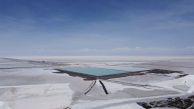
Texas A&M's Diego von Vacano traces a history of political and economic obstacles stifling the sector and outlines the path ahead for the new president.
Colombia takes on organized crime and globalism. President De la Espriella, who has vowed not to leave Colombia throughout his term, delegated Vice President Restrepo to read his remarks on September 24. Echoing Noboa, the Colombian representative called for greater international cooperation in tackling transnational crime. The address also reflected Trump’s criticism of “globalism.”
Barbados’ Mottley advocates peace. That same day, Prime Minister Mia Mottley used her time at the podium to reaffirm the Caribbean region as a “zone of peace.” She expressed support for the renewal of the U.S.-backed Gang Suppression Force in Haiti, criticized the U.S. embargo and “other unilateral coercive measures” against Cuba, and backed fellow CARICOM member state Guyana in its case at the International Court of Justice (ICJ) against Venezuela over the disputed oil-rich Essequibo region currently administered by Guyana.
The main action wasn’t always in the General Assembly hall, as leaders took advantage of the quorum in New York to meet on the sidelines and broker agreements.
A new U.S.-Argentina initiative. On September 23, the United States and Argentina announced the launching of the “Andes-Atlantic Corridor” to bolster energy, digital, and transportation infrastructure, as well as connecting areas of Argentina rich in minerals and energy resources to Atlantic ports and Western markets. The U.S. Export-Import bank committed to making $7 billion in loans available for the project.
Eyes on Essequibo. Energy was also on the agenda in a September 24 meeting between Guyanese President Irfaan Ali and a delegation of three Democratic members of Congress, with a focus on the United States’ support for Guyana in its territorial dispute with Venezuela over the Essequibo region. The ICJ is expected to soon rule on the status of the territory, which featured in the General Assembly speeches of both Ali and Rodríguez. Venezuela presented arguments in front of the court but does not recognize its authority.
Capitalizing on the financial capital. On the same day she visited AS/COA, September 24, Peru's Fujimori visited the New York Stock Exchange, where she pitched her country to investors. “You look at the [macroeconomic] fundamentals, and that is what Peru has to offer,” she said, before ringing the closing bell, one of five world leaders that week to do so.
Costa Rican minister sacked over Shield attendance. Even presidents who didn’t visit New York had an eventful week. Costa Rica’s Laura Fernández fired her Foreign Affairs Minister Manuel Tovar on September 24, two days after he attended Trump’s Shield of the Americas meeting (see earlier entry), allegedly without informing her. For her part, Fernández was in Colombia meeting with De la Espriella on the day of the Shield summit.