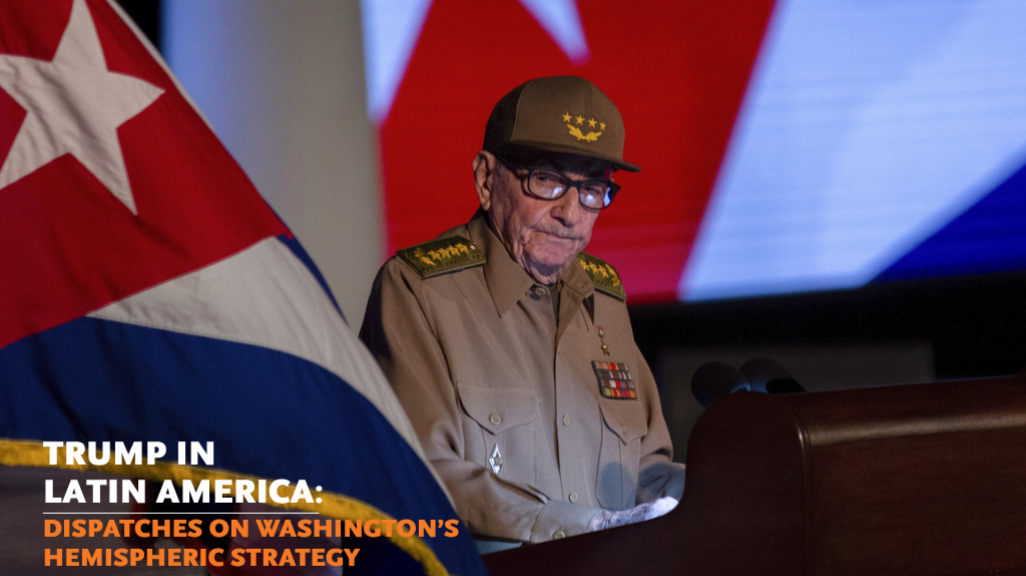
Raúl Castro

Former Cuban President Raúl Castro. (AP)

Trump in Latin America: DOJ Unseals Castro Indictment as Pressure Builds on Havana

By Khalea Robertson

May 15–20: Plus, Venezuela deports a close Maduro ally to the United States and Treasury issues sanctions aimed at Sinaloa Cartel. 

Welcome back to our weekly dispatch of stories on the U.S. role in Latin America. Follow us each week and see previous roundups at as-coa.org/dispatches, or sign up to receive them via LinkedIn

Here’s what to know this week: 

  • Cuba’s Raúl Castro indicted and top officials sanctioned after CIA director’s trip to Havana.
  • Trump administration backs Bolivian President Rodrigo Paz as protests escalate.
  • Top-level U.S. officials speak on hemispheric relations at COA’s Washington Conference.
  • Venezuela hands over Maduro ally Alex Saab to the U.S. government.  
  • Treasury slaps sanctions on a dozen Mexican nationals and organizations linked to the Sinaloa Cartel. 
DOJ indicts Raúl Castro; CIA director visits Havana

“Nations and their leaders cannot be permitted to target Americans, kill them, and not be accountable,” said acting U.S. Attorney General Todd Blanche on May 20 as he announced the unsealing of the Justice Department’s indictment against former Cuban President Raúl Castro. The indictment accuses him of ordering a fatal 1996 attack on two civilian airplanes operated by a Cuban exile group. When asked how U.S. authorities planned to bring in Castro, Blanche replied, “There was a warrant issued for his arrest. So we expect that he will show up here, by his own will or by another way.” The indictment also names five Cuban Air Force pilots in charges that include murder, destruction of an airplane, and conspiracy to kill U.S. nationals. 

The now 94-year-old Castro was defense minister when the Cuban Air Force killed four members of Brothers to the Rescue, a Miami-based organization that airdropped aid to Cubans on rafts en route to Florida and whose regular crossings into Cuban airspace to drop anti-regime leaflets drew threats from the Communist government. The incident was a major flashpoint in U.S.-Cuba relations; Washington responded by increasing sanctions and tightening the embargo on the island.

Thirty years later, the indictment has upped the ante of Washington's current pressure campaign on Havana, which includes a de facto fuel blockade, widening sanctions on Cuban officials, and President Donald Trump’s threats of “a friendly takeover” in February and other times since (see March 19 dispatch).    

CIA Director John Ratcliffe's May 14 visit to the island was another signal of the U.S. push for change. There, he met with Raúl G. Castro, the grandson of the former president, as well as Interior Minister Lázaro Álvarez Casas and the head of Cuba's intelligence agency to reiterate U.S. demands for an overhaul of Cuba’s political and economic system. Ratcliffe is thought to be only the second CIA director to visit since the 1959 Revolution.   

On May 17, Axios, citing classified U.S. intelligence sources, reported that Cuba has procured more than 300 Russian and Iranian attack drones. The report adds, however, that “U.S. officials don’t believe Cuba is [...] actively planning to attack American interests.” Cuban President Miguel Díaz-Canel on Monday denied that Cuba posed a threat but said on X his country “has the legitimate and absolute right to defend itself from a military attack.” On the U.S. side, a CNN analysis showed that U.S. surveillance flights near the island have surged since February.   

In a Spanish-language message to Cubans on May 20, a day the Cuban diaspora and others celebrate as Independence Day, Secretary of State Marco Rubio blamed GAESA, the military-run conglomerate thought to control much of the Cuban economy, for the dire humanitarian crisis currently afflicting the island. He accused it of “hoarding the profits from its businesses for the benefit of a small elite.” He also insisted that “a new Cuba” in which citizens can own businesses and elect their government was possible, concluding, “Currently, the only thing standing in the way of a better future are those who control your country.” 

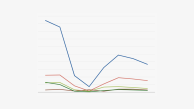
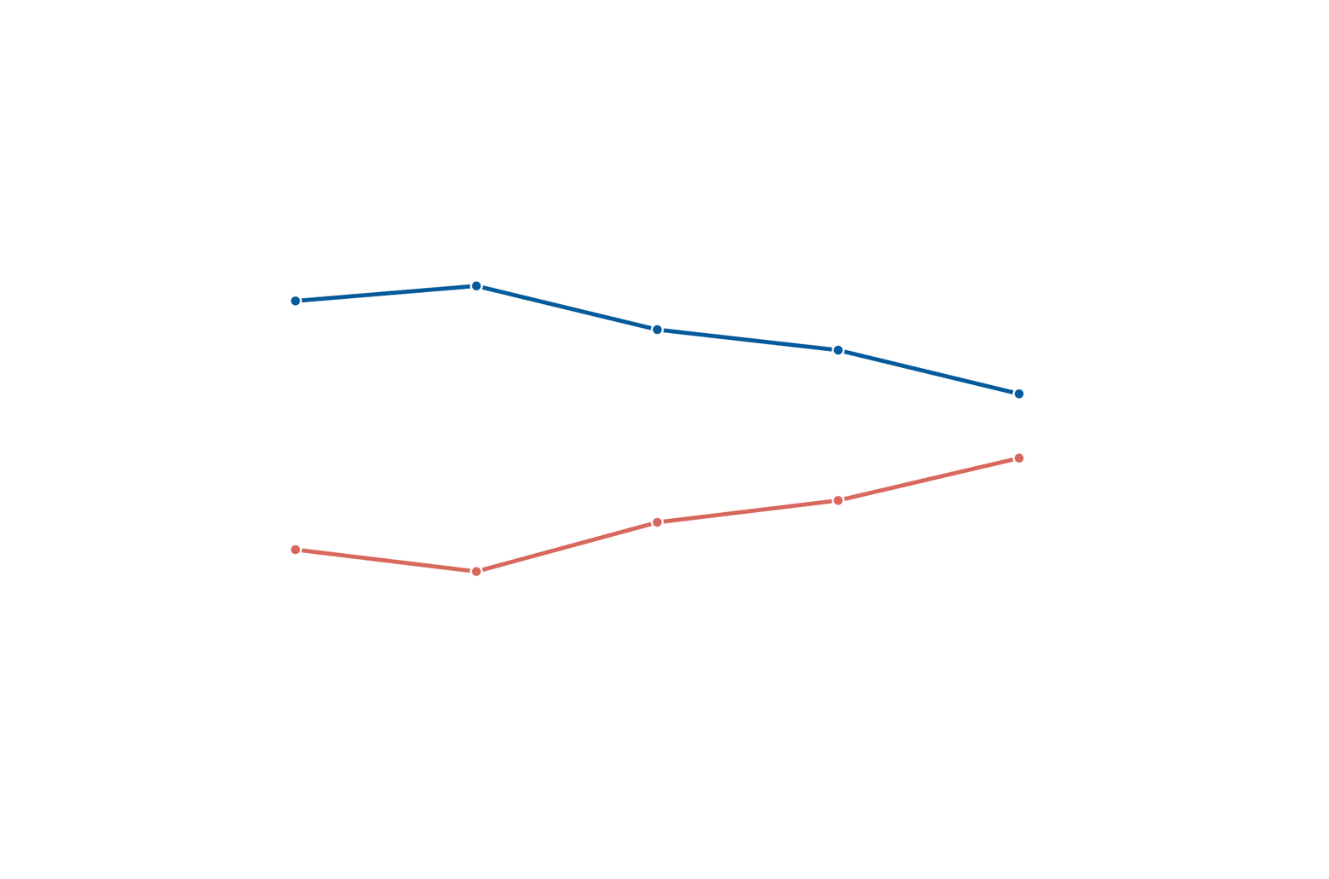
In the meantime, a ship with humanitarian aid from Mexico and Uruguay docked in a Havana port on Monday. The supplies, which include powdered milk, rice, beans, and hygiene products, come at a time of 22-hour blackouts in the fuel-starved Caribbean country (see last week’s dispatch). The deteriorating material conditions in Cuba have sparked concerns of a mass exodus. Cuban immigration to the United States had already picked up in the post-pandemic era, as charted below.  

Headlines of the week

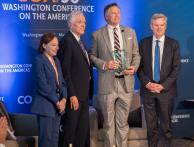
Speaking of Cuba, U.S. Congresswoman María Elvira Salazar (R-FL) previewed the unsealing of the Castro indictment on May 19 during COA’s Washington Conference on the Americas. The annual event, now in its fifty-sixth year and featuring U.S. officials speaking on policy toward the region, also featured U.S. Deputy Secretary of State Christopher Landau, who commented on Bolivia’s escalating protests against the government of President Rodrigo Paz. Landau warned that the events sought to orchestrate “a coup that's being financed by this unholy alliance between politics and organized crime throughout the region.”  Executive Director of the National Energy Dominance Council Jarrod Agen, Deputy U.S. Trade Representative Jeffrey Goettman, and U.S. Development Finance Corporation’s Ben Black were among the other speakers at the conference.  

Alex Saab, a Colombian businessman once part of deposed Venezuelan leader Nicolás Maduro’s inner circle, made his first appearance in a Miami court on Monday to face corruption charges. The Venezuelan government, now under the leadership of Delcy Rodríguez, deported Saab to the United States on May 18. Washington has long alleged that Saab, who stands accused of skimming hundreds of millions of dollars from a government food aid program, acted as a front man for Maduro to move illicit funds.

Homeland Security Secretary Markwayne Mullin travels to Mexico on Thursday, May 21, in his first official trip abroad in the role. Sara Carter, the head of the U.S. Office of National Drug Control Policy, is also scheduled to make a trip on May 25. Mexico’s President Claudia Sheinbaum has said the meetings, which come amid heightened bilateral tensions (see the May 7 dispatch), will focus on security cooperation. Ahead of the meetings, on May 20, the Treasury Department announced sanctions on more than a dozen Mexican citizens and entities it said have links to the Sinaloa Cartel.  

Related

Explore