WCA 2026

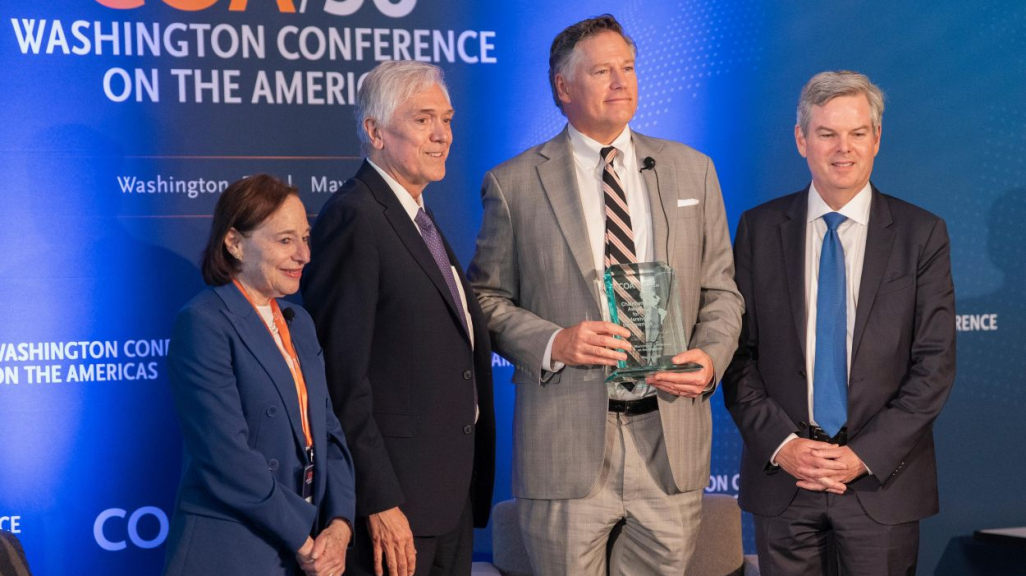
(L-R): AS/COA's Susan Segal, AS/COA's Andrés Gluski, Deputy Secretary of State Christopher Landau, and AS/COA's Kevin Sullivan. (Photo: Mark Finkenstaedt)

Share

U.S.-Latin American Leaders Examine Issues Shaping the Hemisphere at Washington Conference

Deputy Secretary of State Landau and other top U.S. officials spoke at the COA event, which examined energy, trade, and economic shifts in the Americas.

Washington, DC, May 19, 2026 —Council of the Americas held its 56th Washington Conference on the Americas, convening top Trump administration officials, influential leaders, and heads of international financial institutions to debate the dynamics defining U.S.-Latin American relations and the region's economic trajectory.

Held at the Willard Intercontinental Hotel, the conference included a series of high-level discussions on the U.S. administration's energy strategy in the region and Venezuela's role in it, an assessment of the regional macroeconomic outlook, and how agreements like the U.S.-Mexico-Canada-Agreement (USMCA) fit within the current strategy of promoting long-term competitiveness, among other topics.
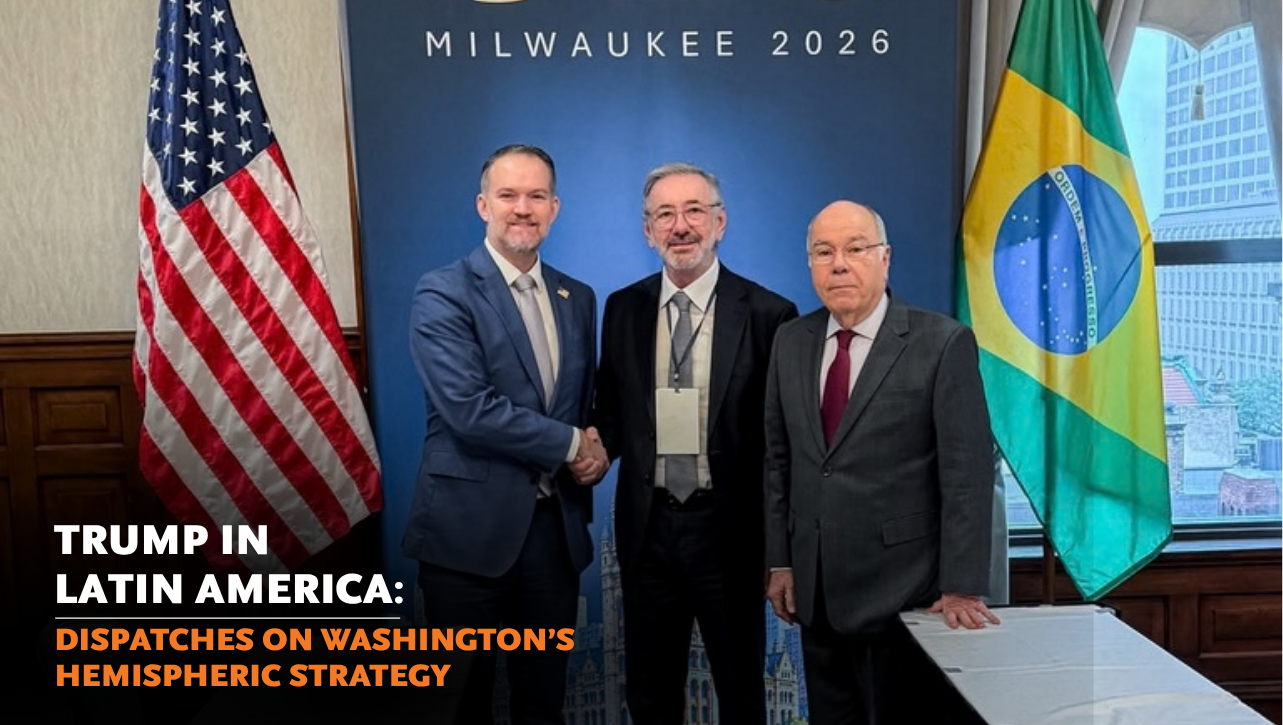
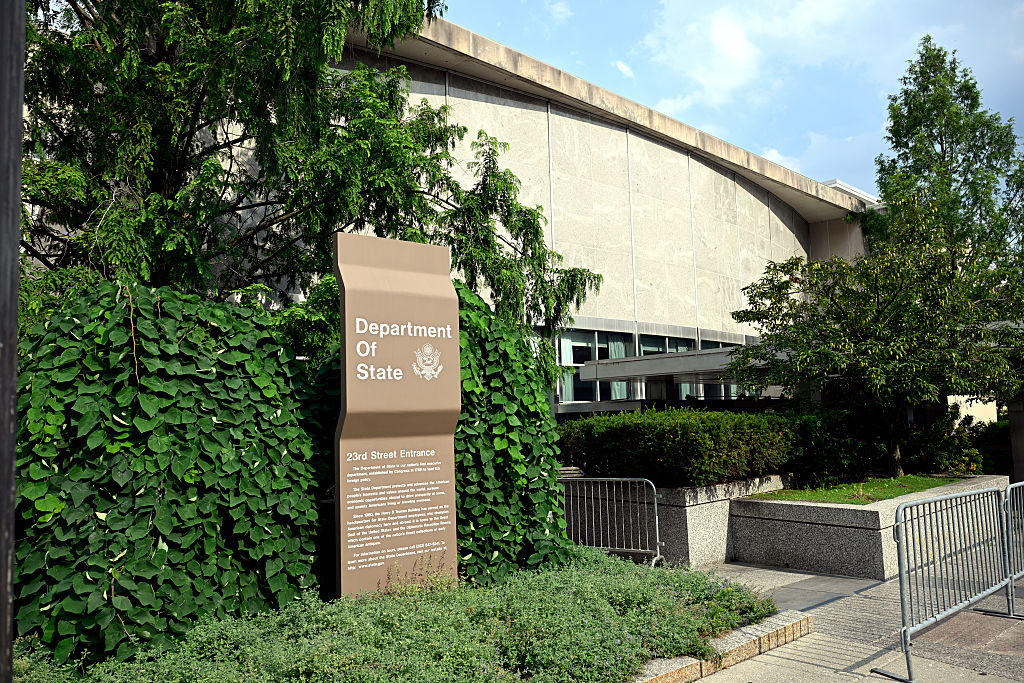
U.S. Deputy Secretary of State Christopher Landau spoke at a fireside chat with Susan Segal, president and CEO of Americas Society/Council of the Americas. He urged U.S. companies to seize investment opportunities in the region, promising government support.

“For the first time, we really have a center of gravity of a lot of like-minded countries—Argentina, Bolivia, Chile, Costa Rica, Dominican Republic, Ecuador, El Salvador, Guyana, Honduras, Panama, Paraguay, Trinidad and Tobago—many countries with leaders who are politically aligned with the United States, and have a shared vision, based on democracy, free markets, free speech, security cooperation," said Landau. "So there's a lot that can be accomplished at this point, and that's the challenge that we have in the State Department: to serve as the connective tissue that makes us stronger working together, rather than in isolation."

Right before that conversation, COA Chairman Andrés Gluski honored Landau with the Chairman's Award for Leadership in the Americas, a recognition given to distinguished leaders who have made meaningful contributions to advancing democracy, economic opportunity, and cooperation throughout the Western Hemisphere.

The conference started with welcome remarks from Segal, who spoke about the importance of everyone in the room working together to confront big challenges and "seize the extraordinary opportunities at this time of great tectonic shifts."

"Across the Americas, we are seeing changes in political preferences, in many cases trending toward the right. We are witnessing the reconfiguration of global trade patterns, shaped by tariffs, geopolitical tensions, and supply chain disruptions. At the same time, technological transformation, particularly the rapid acceleration of artificial intelligence, is reshaping economies and societies at a speed few could have imagined just a few years ago," said Segal. "Understanding these dynamics, and more importantly, understanding how they intersect, is essential."

MCM 2

Venezuelan opposition leader María Corina Machado at WCA. (Photo: Mark Finkenstaedt).

In the first fireside chat of the conference, Venezuelan opposition leader María Corina Machado spoke with Segal about the economic future she would like to see for her country.

"I'm eager and ready to go back home to finish a process that represents so much, not only for Venezuela, for the region, for the Western Hemisphere, and for freedom in the world," said Machado. "This is going to happen and that's what I want to convey to all of you. We need you. We need your strength, your ideas, your energy, your resources, and your support."

Kevin Sullivan, COA vice president and head of the Washington office, also addressed the conference.

"This is a clearly time of dramatic change in the U.S. approach toward Latin America, so we are here in a unique opportunity to better understand the new dynamics reshaping the region,” said Sullivan. “Whether it’s energy policy and transition in Venezuela, the future of trade in North America, or new finance mechanisms to promote investment throughout the region, these conversations create value for public and private leaders as they drive deals and development in the Americas.”

Jarrod Agen, executive director of the White House's National Energy Dominance Council, spoke about how the administration's energy strategy is shaping U.S. economic competitiveness, hemispheric engagement, and regional energy security.

“President Trump is the best friend the Americas could possibly have. He has essentially made the Western Hemisphere the world’s leader when it comes to energy, and you're seeing the steps he has taken to really position the Americas as the driver when it comes to baseload power, energy, critical minerals, and supply chains," said Agen. "What everyone is seeing on the world stage right now is really a story of supply chains. The more we can control the supply chains on energy in the Western Hemisphere, the better it positions America and our allies. So now we're really looking at the whole Western Hemisphere map – how we can streamline not just production but also supply chains and the moving of energy across the entire region." 

Deputy U.S. Trade Representative Jeff Goettman spoke with Segal about U.S. trade priorities for the Americas.

"We are basically repudiating the status quo, the long-term effects of the status quo free trade economics that have resulted in a $1.2 trillion deficit for the United States. We have moved towards a bilateral trade framework, which has resulted in nine different reciprocal trade agreements, and what we like about the bilateral is that it is enforceable and it allows us to be very specific about we want, which is open markets and reciprocity," said Ambassador Goettman.

The Honorable Ben Black, chief executive officer of the U.S. Development Finance Corporation (DFC), spoke at a fireside chat titled "Development Finance and Economic Statecraft in the Americas."

“We see tremendous opportunity for DFC investment across Latin America, especially with new leaders that are eager to work with the U.S. government,” said Black. “Ultimately, our goal is to build industrial capacity, create economic ecosystems for our partners, and bind us together through shared economic strength, growth, and goodwill.”

The conference ended with a conversation between Sullivan and Congresswoman María Elvira Salazar, who shared her view on the congressional priorities in the Western Hemisphere. 

“When America is strong, our hemisphere is strong. Conversations like this one, bringing together the leaders, investors, and policymakers who shape our region, are exactly where that strength is forged,” said Rep. Salazar. “From Venezuela’s transition to democracy, to free elections across Latin America, to modernizing our immigration system so American companies can grow and expand in this hemisphere, the work starts here, and the United States must lead it.” 

Carin Zissis, vice president of content strategy and editor-in-chief of AS/COA Online, moderated a panel with Kate Kalutkiewicz, former special assistant to the president and senior director for International Trade at the National Economic Council; Ildefonso Guajardo, former Mexican secretary of economy; and Steve Verheul, former Canadian USMCA chief trade negotiator.

Regional economic outlook amid global uncertainty was the topic of another panel moderated by Brian Winter, editor-in-chief of Americas Quarterly. Speakers included Laura Alfaro Maykall, chief economist at the Inter-American Development Bank, and Rodrigo Valdés, director of the Fiscal Affairs Department at the International Monetary Fund.

COA kicked off the conference on May 18 with two dinners: one at the Embassy of Brazil hosted by Brazilian Ambassador Maria Luiza Ribeiro, and another at the Embassy of Honduras hosted by Honduran Ambassador Roberto Flores Bermúdez.

On May 19, before the public portion of the conference, COA organized a series of individual private roundtables with key officials. These sessions featured Michael Kozak, senior bureau official for Western Hemisphere Affairs at the State Department; David Copley, special assistant to the president and senior director for global supply chain; David Fogel, assistant secretary of Commerce and director general for the U.S. and Foreign Commercial Service; and Caleb Orr, assistant secretary for economic, energy, and business Affairs. 

Press contact: mediarelations@as-coa.org