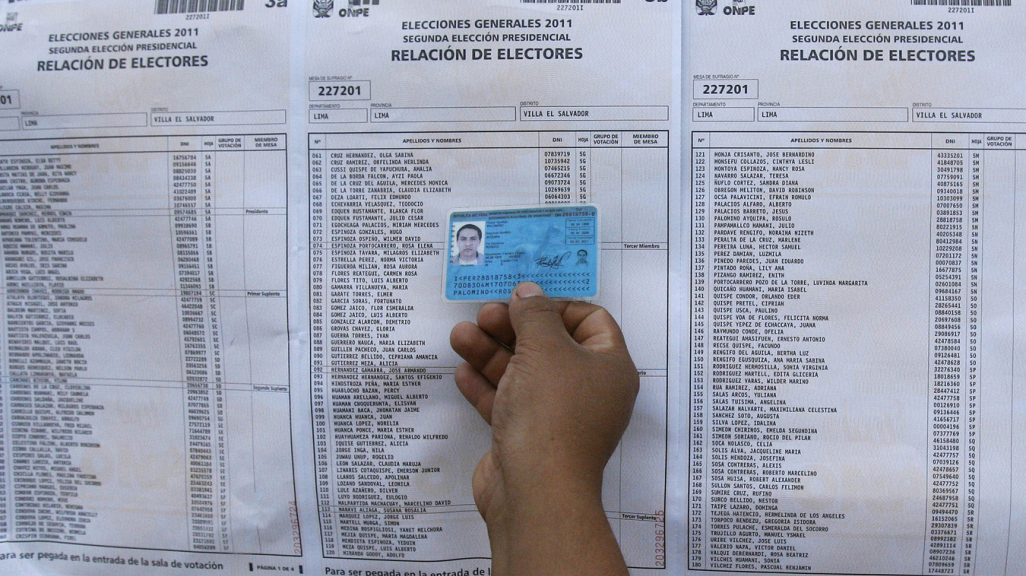
A voter card in Peru. (AP)

A voter card in Peru. (AP)

2026 Presidential Elections in Latin America: A Preview

By Chase Harrison , Luisa Leme , Khalea Robertson and Carin Zissis

Brazil, Colombia, Costa Rica, Haiti, and Peru plan to elect presidents in 2026. Learn about candidates and issues in each country.

One look at Latin American politics serves as a reminder that the pendulum swings both ways. Gone is the talk of a second “pink tide” of leftist electoral winners that arose during the post-pandemic era. Instead, looking to 2026, one question is on observers’ minds: Will the region continue its rightward tilt?

Voters, faced with political polarization, will deliver the answer from the time Costa Rica holds the region's first elections in February to when Brazilians take to the polls in October. Between those two electoral bookends, Peru, Colombia, and Haiti plan to choose new leaders as well.

The ideological shift to the right brings to mind Washington’s role in the hemisphere. After all, Donald Trump already urged voters in countries such as Argentina and Honduras to back his preferred political choices in 2025. In several races, candidates are modeling their policies and campaign styles in the same vein as the U.S. president and other regional right-wing leaders aiming to slash the state’s size.

But outcomes also reflect domestic voter concerns. Citizens frustrated with rising crime could follow the recent paths of Chile or Ecuador, where the electorates chose candidates pledging hardline policies on law and order. Topics like corruption and the economy will no doubt play a role in voter decisions as well.

With these issues in mind, AS/COA Online previews national elections in five Latin American and Caribbean countries choosing presidents in 2026.

Elections are listed in the order in which presidential votes are scheduled to occur.
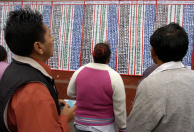
Costa Rica

On the ballot: President, two vice presidents, all 57 national legislators

Election dates:

  • February 1: First-round presidential and legislative elections; potential presidential runoff scheduled for April 5
  • May 8: Presidential inauguration

Election details: 

  • President: To avoid a runoff, a candidate must receive at least 40 percent of the vote. If two candidates exceed 40 percent, the one who received more votes wins. If no candidate exceeds the 40 percent threshold, the top two advance to a runoff. The winner holds office for one four-year term and consecutive reelection is not allowed.
  • Legislature: With seven electoral districts in Costa Rica's unicameral legislature, assembly members are elected via a system of proportional representation. Legislators serve four-year terms and cannot seek consecutive reelection. 

About voting: Voting is mandatory but not enforced. Turnout in the 2022 presidential first round was 60 percent, in line with the average rate. Ticos abroad can vote

Costa Rica’s election comes amid a conflict between President Rodrigo Chaves and the country’s electoral authority, known as the TSE. In October 2025, the TSE requested that the National Assembly vote to lift the president’s immunity so he can be investigated for allegedly breaking electoral rules, including participating in campaign-related activities. A December 16 vote fell short of the two-thirds majority needed to strip Chaves of his immunity. This marks Chaves’ second time surviving such a vote this year after a September vote on investigating the president for alleged corruption also failed.

Though these two votes mark the first attempts in Costa Rican history to remove presidential immunity, Chaves, a center-right economist, remains popular. An October Encuesta CIEP UCR poll gave him a 63 percent approval rating. His party's candidate Laura Fernández, who served as his chief of staff and minister of planning and economic policy, leads voter intention with a pitch to follow his path. 

Other candidates in the field of 20 include Fabricio Alvarado, a far-right national deputy and evangelical singer who is making his third bid for the presidency; Álvaro Ramos, who served in the Chaves government as the head of social security and pensions; and the center-left's Claudia Dobles, a former first lady (2018–2022) known for her environmental advocacy.

Whoever will make it to the finish line is far from certain. An October poll found that 55 percent of Costa Ricans remain undecided. Crime and corruption top voter concerns.

Peru

On the ballot: President, two vice presidents, all 130 members of the Chamber of Deputies, all 60 Senators, and representatives to the Andean Parliament

Election date:

  • April 2: First-round presidential election and legislative elections; a potential presidential runoff is scheduled for June 7
  • July 28: Presidential inauguration

Election details: 

  • President: A candidate needs more than 50 percent of the vote to win in the first round. Otherwise, the top two vote-getters advance. Presidential terms last five years. Reelection is allowed but not consecutively.
  • Senate: Thanks to a 2024 reform, this will be the first election in almost three decades in which Peru will have a Senate. The upper house will have 60 members, half of whom are elected nationally and half of whom are elected from 27 electoral districts, including one for Peruvians abroad. Terms last five years and unlimited reelection is permitted.
  • Chamber of Deputies: The Chamber, previously just called Congress, will retain its structure and electoral rules. Peruvians will elect 130 members from 27 electoral districts from open party lists. Terms last five years and unlimited reelection is permitted, also thanks to the 2024 reform.

About voting: Voting is mandatory for Peruvians 18 to 70 with fines for abstention. Turnout averages around 80 percent, but was 70 percent in the 2021 first round. Peruvians abroad can vote

Whoever wins Peru’s presidential election will become the country’s ninth president in the past 10 years. Current President José Jerí took office in October, following the impeachment of Dina Boluarte (2022-2025), who herself replaced Pedro Castillo (2021–2022), elected in the 2021 vote on a ticket with Boluarte. The frequent turnover is a result of Peru’s powerful but fragmented Congress, which holds impeachment power and has blocked successive presidential agendas.

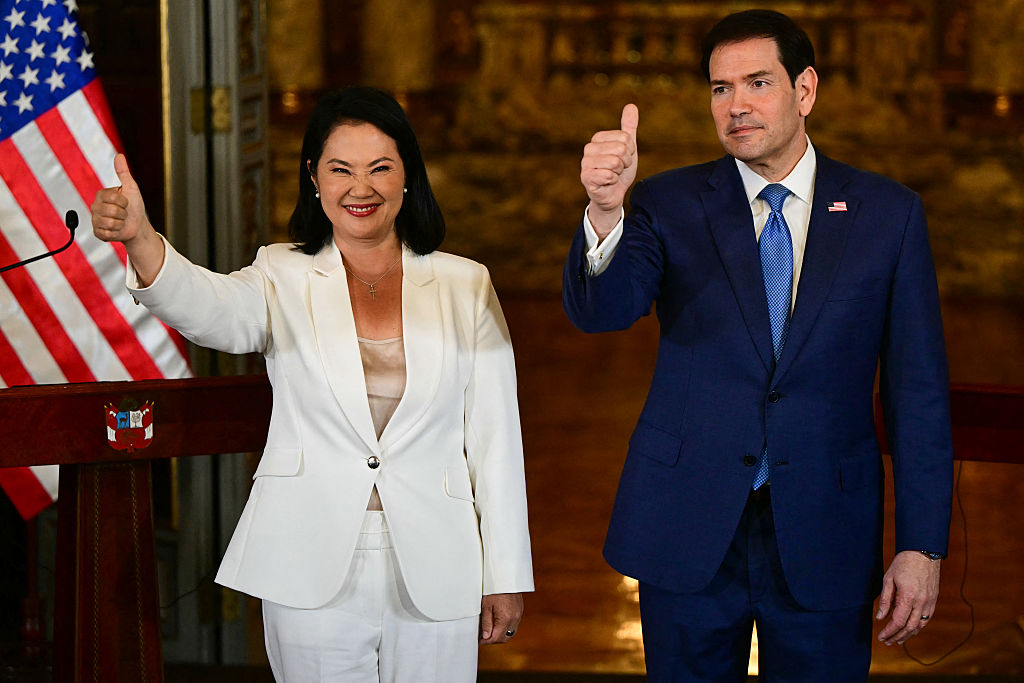
Some 37 candidates have registered to compete for Peru’s presidency. Top contenders include two of the country’s more well-known politicians. One is right-wing Congresswoman Keiko Fujimori, three-time presidential runner-up and the daughter of former authoritarian President Alberto Fujimori (1990–2000). The other is Lima Mayor Rafael López Aliaga, a Trump admirer known for his hardline approach to security. Also polling high is Carlos Álvarez, a comedian and television host who is pitching himself as a political outsider. The winner will govern alongside a bicameral Congress, as Peru prepares to elect a Senate for the first time since 1992.

Peruvians will be looking for their new elected officials to tackle crime and corruption, which an October 2025 Ipsos Peru survey found to be the two biggest concerns. 

Colombia

On the ballot: President and vice president, all 103 seats in the Senate, and all 183 seats in the House of Representatives

Election dates:

  • March 8: Legislative vote and interparty consultations that serve as presidential primaries
  • May 31: Presidential first-round vote with a potential for a June 21 runoff
  • July 28: Presidential inauguration

Election details: 

  • President: A candidate must win more than 50 percent of the vote in the first round to avoid a runoff. In the case of a second round, an absolute majority wins. The victor holds office for one four-year term with no possibility of reelection.
  • Senate: The 2026–2030 Senate will have up to 103 seats, including 100 national senators chosen via proportional representation and two seats representing indigenous communities. In addition, the presidential runner-up can hold a Senate seat. Senators can seek indefinite reelection.
  • House of Representatives: Per a June 2025 decree, the number of seats in the 2026–2030 House will be between 165 and 182 based on census data. This range includes seats filled via a proportional representation system, as well as two representing Afro-Colombians, one for indigenous communities, and one for Colombians abroad. Another 16 seats would represent regions affected by civil conflict. One seat, which could bring the tally to 183, is also offered to the running mate of the presidential runner-up. House members can seek indefinite reelection

About voting: Voting is not compulsory. Turnout averages 46 percent and was 55 percent in the 2022 presidential first round. Colombians can vote from abroad.

At first glance, Colombia seems set for a rightward shift. Its first leftist president, Gustavo Petro, faces disapproval levels hovering around 57 percent as well as a tenure marked by roadblocks to his reform agenda, an ailing peace plan, and resurgent political violence

Moreover, the guerilla-turned-politician's combative relationship with the Trump administration led the White House to decertify Colombia as an antinarcotics ally while sanctioning Petro and his family for alleged organized crime links. Some 81 percent of Colombians say it’s important for their next president to have good ties with Washington, per a November 2025 Invamer poll. 

That may help explain why far-right lawyer Abelardo de la Espriella came in second in that poll. An admirer of Argentina’s Javier Milei, El Salvador’s Nayib Bukele, and the United States’ Donald Trump, he pledges to get tough on crime and slash red tape.

But don’t count out the left. While 37 percent of Colombians lean right, a growing portion—nearly a quarter—now consider themselves leftists. Petro, who can’t run again, still has a solid base of support at 38 percent. In that context, human rights activist and leftist Senator Iván Cepeda led Invamer's polling with 32 percent, well ahead of De la Espriella’s 18 points.

With a record-breaking field of 107 registered pre-candidates, March legislative elections and presidential primaries will serve as a bellwether. But other early poll leaders include Sergio Fajardo, frequent candidate and centrist former mayor of Medellín; Miguel Uribe Londoño, a conservative and father of assassinated Senator and presidential aspirant Miguel Uribe Turbay; and Claudia López, Bogotá’s progressive ex-mayor.

Haiti

On the ballot: President, all 30 seats in the Senate and all 99 seats in the House of Representatives, as well as mayors and local councilors

Provisional election dates:

  • August 30: First-round presidential and legislative elections; potential presidential and legislative runoffs are proposed for December 6
  • February 7, 2027: Presidential inauguration. Haiti’s transitional government still must approve the electoral calendar submitted in November by election authorities. 

Election details: 

  • President: A candidate must earn more than 50 percent of the vote to win in the first round or have at least a 25 percent advantage over the runner-up. If these conditions are not met, the two top candidates advance to a runoff. Presidents serve for five-year terms and can hold power for two non-consecutive terms.
  • Senate and House of Representatives: Legislative candidates require at least 50 percent of the vote to be elected outright in the first round or have at least a 25 percent advantage over the runner-up. If these conditions are not met, the two most-voted candidates advance to a runoff. Senators serve six-year terms and deputies serve four-year terms. There are no term limits for national legislators.

About voting: Voting is not mandatory in Haiti. Turnout in the last four presidential elections—held in 2010, 2011, 2015, and 2016—did not surpass 30 percent

It has been nearly a decade since Haiti last held elections and the country has gone four years without an elected government. With violent criminal groups estimated to control 90 percent of the capital of Port-au-Prince and gaining ground in other regions, skepticism persists over whether the 2026 elections can take place as scheduled

The July 2021 assassination of President Jovenel Moïse (2016–2021), who had been ruling by decree for a year and a half after dissolving parliament, sharply aggravated twin crises of rampant gang violence and political instability. Throughout the three years following Moïse’s murder, Ariel Henry, the acting prime minister, struggled to obtain legitimacy and was eventually forced to step down in 2024 after coordinated gang attacks across the capital prevented his return to Haiti from Kenya, where he had signed a deal to bring Kenyan troops in to support the national police force. The Transitional Presidential Council that replaced him has undergone various iterations, plagued by infighting and corruption scandals. Its mandate is due to end in February 2026, six months before the elections. 

In the event that Haitians elect new leaders in 2026, they will be tasked with solving the security crisis that has seen at least 16,000 people killed since January 2022 and exacerbated internal displacement, poverty, and hunger

Brazil

On the ballot: President, vice president, 54 out of 81 senators, all 513 members of the Chamber of Deputies

Election dates:

  • October 4: Presidential first-round vote with a potential runoff scheduled for October 25
  • January 1: Inauguration day

Election details:

  • President: Candidates must receive more than 50 percent in the first round to win outright. If no candidate does so, the top two candidates head to a runoff. Presidents serve four-year terms and can be reelected for a consecutive second term.
  • Senate: Each of the 26 states plus the federal district will elect two of their three senators, selected by direct election. They serve eight-year terms and can be reelected with no term limits.
  • Chamber of Deputies: Candidates are elected through proportional representation from open party lists in each state. Deputies serve four-year terms and can be reelected with no term limits.

About voting: Voting is compulsory. Turnout was 79 percent in the 2022 presidential first round, in line with the average. Brazilians can vote from abroad.

Latin America’s largest economy will have a familiar name on the ballot. Current President Luiz Inácio Lula da Silva (2003–2011, 2023–present) is seeking his fourth term in the role. The leftist candidate's approval is far from the staggeringly high levels reached at the end of his second term. Still, a public tiff over tariffs with Trump gave him a boost in the fall of 2025, and the octogenarian outpaces all candidates on the right, per a November 2025 survey

But while Lula will make it on a presidential ballot for the seventh time, another well-known figure and political foe, ex-President Jair Bolsonaro (2019–2023), will not appear. The Supreme Court barred the candidacy of the right-wing Trump ally, who is serving a 27-year sentence for his role in a January 2023 coup attempt. However, his son Flávio Bolsonaro, a senator representing Rio de Janeiro, launched his bid as a pre-candidate in December. A poll from the same month puts him second behind Lula in six different scenarios. Current São Paulo Governor Tarcísio de Freitas, a conservative former military officer with market-friendly policies, polls at 10 percent of voter intention.

Lula’s campaign could get a boost from slowing inflation, rising employment, and income tax exemptions for Brazilians earning less than $930 a month. But security woes are likely to be a dominant issue in this election cycle, with 38 percent of Brazilians naming it their biggest worry in a November 2025 Quaest poll. “If the elections are about people’s pockets, Lula has an advantage in winning the race. If the election becomes about security, then Lula might have a problem,” Thomas Traumann, a journalist and political analyst, told AS/COA Online.

Related

Explore