LatAm in Focus: Latin America in the Spotlight in 2026
LatAm in Focus: Latin America in the Spotlight in 2026
Past guests rejoin us to share what to watch in the year ahead. Plus, the OAS’ Gerardo de Icaza covers polarization’s impact on elections.
From the Donroe Doctrine to tariff turmoil to a rightward electoral tilt, 2025 was a year of shifts for Latin America. Now, with Brazil, Colombia, Costa Rica, Haiti, and Peru gearing up for presidential votes in 2026, more change is on the way.
To make sense of what lies ahead, four prior guests based across the region join host Carin Zissis and Executive Producer Luisa Leme to share what they will be watching in the coming year.

Caracas-based journalist and political scientist Tony Frangie Mawad tackles what the Trump Corollary means, given Washington’s ramped-up military activity in the region in Venezuela’s arena. “ I always say that predicting Venezuela is like playing a Tetris game,” cautioned Frangie, “So I think that if a transition actually happens in Venezuela, it won't be as black and white as many people think it will be.” Listen to our past episode with Frangie on Venezuelan elections.
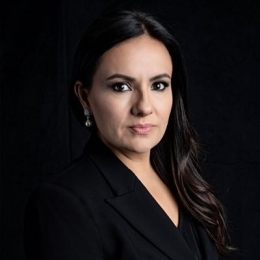
International relations expert Brenda Estefan of Mexico delves into the conditional nature of Washington’s trade deals with Latin American countries and what the China factor means for the upcoming review of U.S.-Mexico-Canada Agreement. “I think the real answer to U.S. concerns of national security regarding Chinese presence in Mexico have to be addressed by a more comprehensive understanding on what is the presence of China in Mexico,” argued Estefan. “That information is not available to the public. It's probably not even known by the Mexican authorities.” Listen to our past episode with Estefan on Mexican foreign policy.

From Brazil, journalist and political consultant Thomas Traumann gives his view of what may be working both for and against President Luiz Inácio Lula da Silva’s chances of winning a fourth term. “If the election is about everyone's pocket, Lula has a great chance. But if the election is about security, then the right—the opposition—no doubt has a good [chance] to win the election,” he outlined. Listen to our past episode with Traumann on Brazilian votes.

Then, Roberta Braga of the Digital Democracy Institute of the Americas surveys what can be gleaned from the online battleground for a silent majority of swing votes as political narratives reach across borders in Brazil, Colombia, and among Latinos in the United States. “The majority of people are not hyperpolarized, even though social media might suggest otherwise,” Braga said, leaving much at stake for political campaigns. Listen to our past episode with Braga on Nayib Bukele’s online reach.
Brazil, Colombia, Costa Rica, Haiti, and Peru plan to elect presidents in 2026. Learn about candidates and issues in each country.
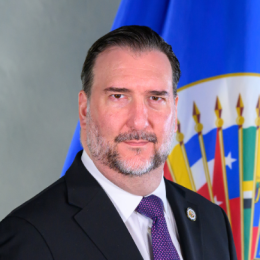
Then, in a conversation with host Carin Zissis, the OAS’ Director of the Department of Electoral Monitoring and Observation Gerardo de Icaza covers the evolving challenges on the ground for election observers. “ When I started 10 years ago in the OAS, perhaps [our teams] had security [details] in five or six countries in the region. Now it's more like we don't have security in two or three countries in the region.” De Icaza, who has overseen more than 100 missions in 27 countries, explains why, as political polarization revs up, the work of electoral observer missions is increasingly dangerous.
Another development to contend with, de Icaza notes, has been the impact of artificial intelligence. He pointed to misuses of AI tools to produce increasingly convincing disinformation and hack into voter databases. But, he also emphasized, “ There are a lot of things that I think electoral management bodies could do better if they used AI. And it would be not only better, it would be cheaper.” If this technology is applied to helping triage voter lists or making vote counts more efficient, De Icaza noted, it could counter “one of the main arguments of populists around the world: that elections are very expensive.”
"We need to get back on the right track, and that means respect for the opposition—even though you don't agree with them."

Subscribe to Latin America in Focus, AS/COA's podcast focusing on the latest trends in politics, economics, and culture throughout the Americas.