Peru ballot

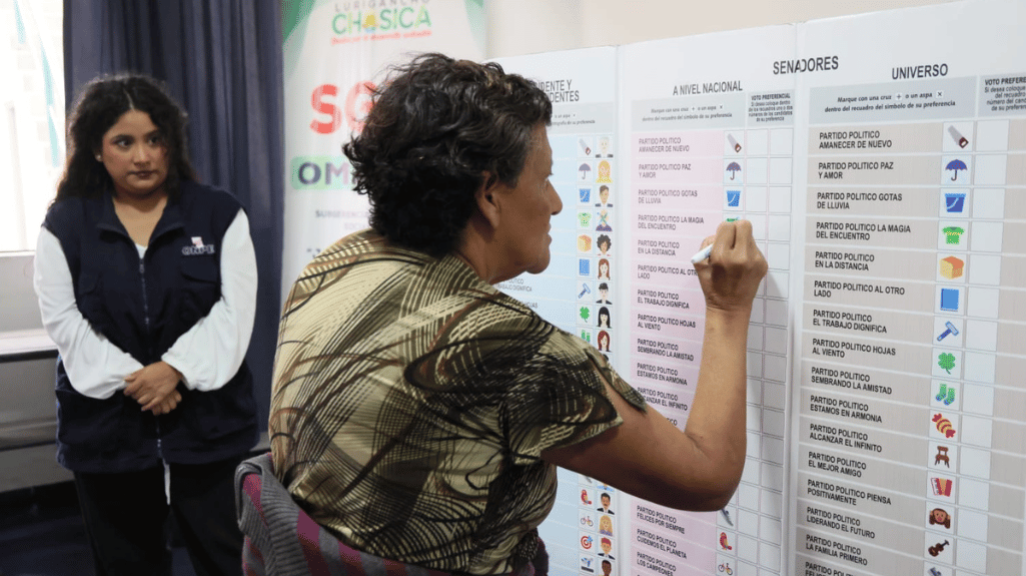
A Peruvian voter. (Peru's National Office for Election Processes on X)

By the Numbers: What’s at Stake in Peru’s 2026 Elections

By Khalea Robertson

Learn about the youth vote, changes to Congress, and top voter concerns as the Andean country readies to cast ballots on April 12.

Peru’s 2026 election will operate at an unprecedented scale. From the historic number of presidential candidates to an electorate that has grown by 65 percent over twenty years, the April 12 elections are already breaking records.

AS/COA Online highlights a few key facts and figures to shed insight into who’s voting, what they’re voting for, and what’s top of mind for voters when they cast ballots. 
17.3 X 16.5 inches

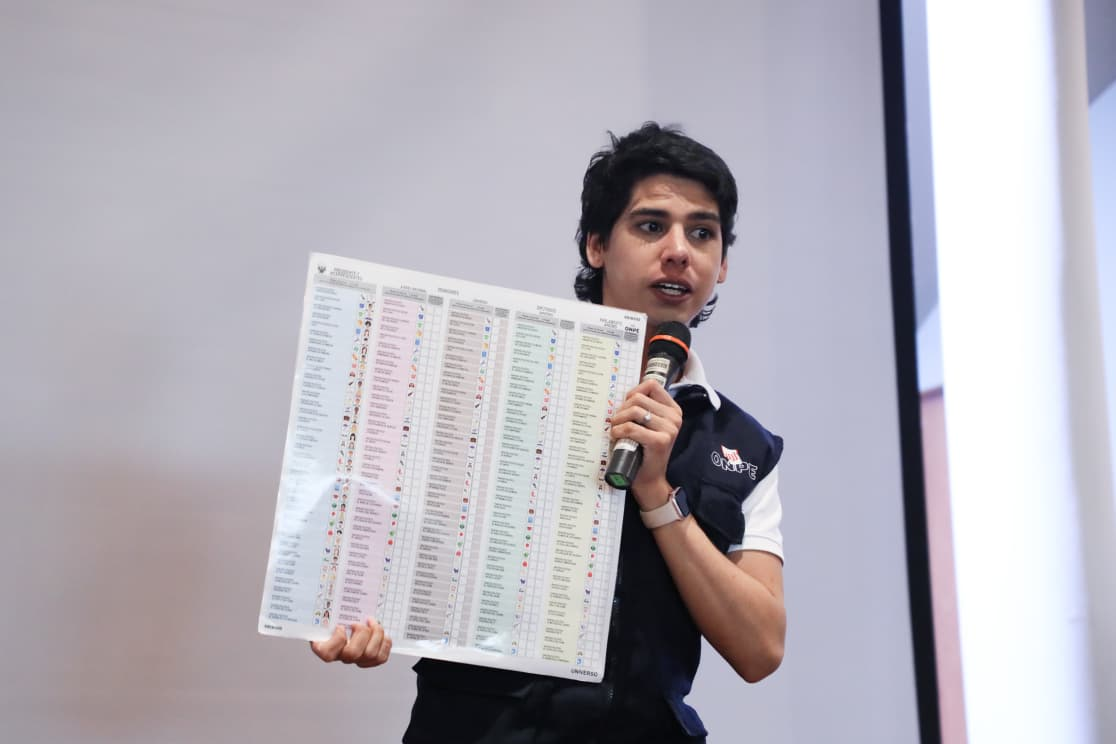
Those are the dimensions of the largest ballots that will be cast in this year’s general elections. The width of the ballot is fixed. It spans the five levels of elections in which Peruvians will participate: president, national senators, regional senators, national deputies, and Andean parliamentarians. The ballot’s length depends on the number of parties competing in a district. Overall, a record 37 parties are battling to fill the 188 national positions up for grabs. Only two of those parties will not take part in the presidential race. 

Peru ballot

An election worker holds a sample ballot. (Peru's National Office for Electoral Processes on X)
The crowded ballot is a tangible representation of Peru’s fragmented political landscape. In the country’s current Congress, there are 12 parties and coalitions, as well as independents, spread across 130 seats. With the electorate able to employ a voto cruzado, a vote for a different party in each of the five elections happening on April 12, the trend may continue.  

“Whenever you have a presidential system with a two-round election, it tends to encourage fragmentation [because] parties have fewer incentives to unite early on,” said electoral analyst Javier Albán on a Latin America in Focus podcast previewing the 2026 election. Plus, he said, legislation approved by Congress in recent years has “lowered the barrier to entry for creating new political parties.” 

60 additional legislators

A constitutional reform approved in March 2024 means that Peru will return to a two-chamber congress this year. The existing 130-seat legislature will become the Chamber of Deputies and voters will elect a 60-seat Senate for the first time since 1992.

Thirty senators will be elected according to votes parties receive at a national level, and the other 30 will be elected according to the distribution of votes in each of Peru’s 27 electoral districts, including one for Peruvians residing abroad. At the regional level, each district will have one senator, except for the city of Lima, which will have four. 

The requirements are twofold for parties to enter Peru’s renewed bicameral legislature. Political groupings must earn at least 5 percent of valid votes nationwide and win at least 5 percent of seats in the respective chamber—in other words, at least three senators or seven deputies. Alfredo Torres, executive president of pollster Ipsos, expects that these requirements will likely limit the new Senate to just five or six parties.  

25 percent of eligible voters are Gen Z

About 6.9 million of Peru’s 27.3 million-strong electorate are between the ages of 18 and 29, the largest generational voting bloc in this year’s election. Around 2.5 million are potential first-time voters. The relative strength of the youth vote is especially relevant in the Amazonian and Andean regions of eastern Peru, where under-30s make up around a third of voters in some electoral districts.

More than two-thirds are concerned by crime and corruption

An Ipsos survey conducted in October 2025 asked respondents to identify Peru’s top five issues. Two-thirds included corruption and crime in their lists.  

Within the last decade, five Peruvian presidents have faced congressional impeachment proceedings, often related to corruption suspicions. Four recent ex-presidents are currently sitting in prison: two on crimes connected with regionwide Odebrecht scandal, one on a bribery charge, and the other for an attempted “self-coup.” In one February poll, 70 percent of respondents said “an honest candidate with no history of corruption” was one of the most important considerations in electing a president.  

In 2025, Peru registered 3,675 murders, the most since at least 2011. One of those cases, the murder of a popular cumbia singer at a concert held on a military compound, appeared to trigger the October impeachment of then-President Dina Boluarte (2022-2025), who was already facing criticisms for a perceived inability to curb rising rates of extortions and violent crimes during her time in office. Her term coincided with an increase in quarterly murder rates, from around 350 when she entered office to consistently over 550 from mid-2024.

From 6 percent to president

Polls since last year have consistently shown former Lima Mayor Rafael López Aliaga (2023–2025) and ex-congresswoman Keiko Fujimori (2006–2011), two right-wing candidates, as the frontrunners to make the presidential runoff. But recent electoral history suggests observers should leave room for surprises.  

In the 2021 election, eventual winner Pedro Castillo was polling at 6 percent less than two weeks out from the first-round vote. He went on to earn 18.9 percent of valid votes, setting up a face-off against second-place finisher Fujimori, whom he then edged out for the presidency in the runoff. The surprise victory of Castillo, a leftist schoolteacher, involved support from historically marginalized rural populations in central and southern Peru, and their apparent rejection of the Lima-centric political elite. The department of Lima, which concentrates more than a third of the population, traditionally selects more conservative candidates.

Ipsos polling from March showed that the option to cast a blank or spoiled ballot is more popular in the country’s interior regions than in the Lima Metropolitan Area—24 percent compared to 14. This rejection of candidates, Ipsos’ Torres told outlet Perú 21, and the fact that two-thirds of voters said in March they could still change their minds, leaves the April 12 vote up in the air.  

Related

Explore