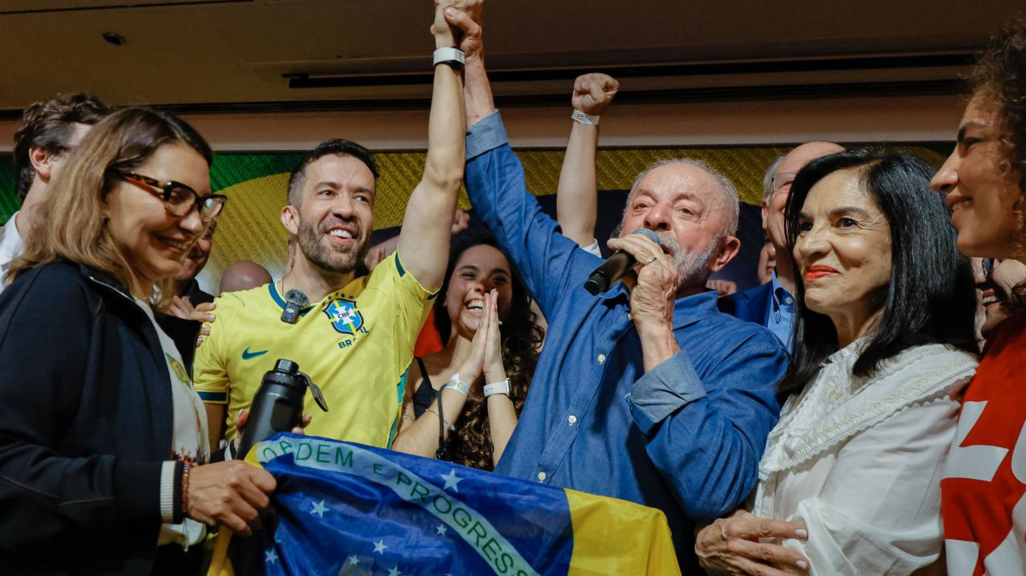
Center: Rep. Janones and President Lula. (PT)

Center: Rep. Janones and President Lula. (PT)

How Lula Won a Surprise Victory and What Comes Next

By Luisa Leme

A digital push helped Brazil's leader notch an October 25 win. But economic and legislative hurdles and difficult U.S. ties lie ahead.

It’s not just that he won that was a surprise, but that he did so by so much. President Luiz Inácio Lula da Silva went from being the underdog in Brazil’s October 25 presidential runoff to beating right-wing rival Senator Flávio Bolsonaro by 4.5 million votes out of more than 128 million cast. It appears Lula’s push to get people to show up worked; voter turnout hit 81 percent, its highest rate in 20 years. 

In a speech on Sunday night, Bolsonaro cried foul and refused to recognize the results, arguing that a Lula-appointed judge’s decision to extend voting hours due to transportation issues and heavy rains was “unacceptable.” But analysts say Bolsonaro faces a steep climb to winning an annulment, given the scale of Lula’s victory and that as few as 35,000 votes were cast during the extended hours. As the leftist leader prepares to kick off his fourth term on January 5, AS/COA Online looks at key takeaways from the election to understand what’s to come in Lula’s continuing presidency.
The octogenarian mobilizes new support online

In his first speech after results came in, Lula acknowledged the country’s divide, pledging to govern for all 215 million Brazilians. Known for being smartphone averse, he promised that he would stay connected online as part of his engagement with the public. “Digital communication will gain a big space in my government...And from now on, I will talk with the Brazilian people many times a day.” 

Lula, who turns 81 on October 27, can thank younger elected officials for launching his campaign into a new, digital era. After he came in second in the October 4 first round, Representative André Janones, 42, spearheaded an initiative to grow a WhatsApp group known as “Lula’s Army” from 60,000 to 11 million people, effectively challenging Bolsonaro’s comparative social media advantage. For his part, Lula promised to get a smartphone once the group hit 5 million, helping turn the effort into a viral campaign initiative.

As Florida International University’s Guilherme Casarões told AS/COA Online just before the election: “Flávio's campaign has always been about social media, and he does it very well. His allies are social media geniuses. But in the second round the Lula campaign has been able to set the tone, and his opponent’s campaign has been reactive."

International recognition rolled in, with some notable exceptions

Even as Bolsonaro rejected the outcome, leaders around the world, from Canadian Prime Minister Mark Carney to Mexican President Claudia Sheinbaum, congratulated him for his win.

Particularly notable were the swift congratulations that rolled in from leaders who are part of the Latin America’s recent electoral right turn, including Bolivia’s Rodrigo Paz, Chile’s José Antonio Kast, Ecuador’s Daniel Noboa, Paraguay’s Santiago Peña, and Peru’s Keiko Fujimori. Colombia’s far-right President Abelardo de la Espriella, a close Trump ally, said: “Lula doesn’t decide for Colombians nor do I decide for Brazilians. THE PEOPLE DECIDE!” before going on to say that, despite profound differences, “Brazil and Colombia need each other.” 

But, as of the time of publishing, neither Argentine President Javier Milei nor U.S. President Donald Trump had recognized the win. On Monday, Trump told reporters: "I didn't take sides, but it looked like another rigged election," adding, “Elections have to be indisputable, and it looked very bad to me." 

During his victory speeches, Lula repeated that Brazil “will not be anyone’s backyard.” He described the elections as a win over foreign intervention carried out “through social media and tech companies” and promised to regulate that sector.

It’s still the economy, stupid

Despite his resounding runoff win, Lula’s next government will face hurdles that dogged him in the first round, such as voter frustration over affordability that led to a disapproval rate of 45 percent in October. His government’s decision in recent days to roll out social welfare benefits for poorer, vulnerable populations appeared aimed to soothe those concerns.

However, markets were less sanguine the morning after the vote. The Brazilian real was down by 11 percent and the Ibovespa, Brazil’s primary stock market index, plummeted 17 percent, marking the benchmark’s steepest intraday drop since the Covid-19 pandemic broke out, reports Bloomberg.  The market’s anxiety about the Lula government’s lack of fiscal austerity has built up throughout this year, when the country’s debt-to-GDP ratio surpassed 80 percent, higher than most Latin American countries. 

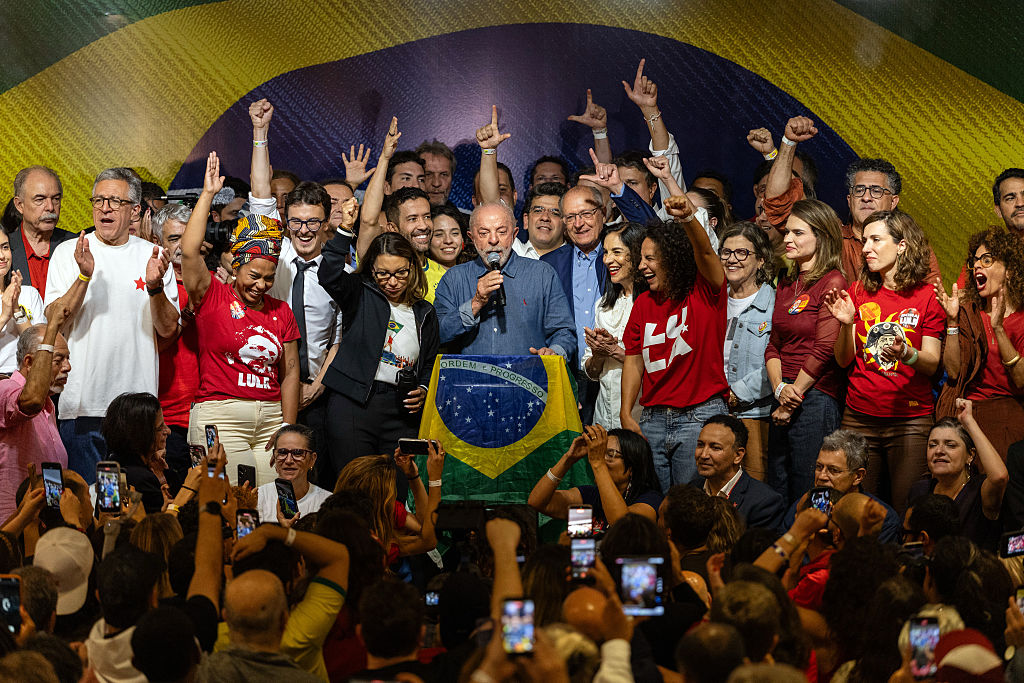
During his victory speech, Lula sought to allay economic fears by starting by handing the microphone to Vice President Geraldo Alckmin, who is viewed as a more moderate hand.

Right-leaning legislative roadblocks ahead

Lula will also face an uphill battle in Congress, which will have its most conservative Chamber and Senate ever elected. Bolsonaro’s Liberal Party will have the largest bloc in each chamber, 121 representatives and 28 senators, creating a challenge for the president’s legislative agenda. It could also mean the potential impeachment of Supreme Court justices perceived as Lula’s allies, such as Alexandre de Moraes, who was responsible for the imprisonment of former President Jair Bolsonaro, Flávio’s father.

Lula will have the opportunity to recommend four justices to the top court but they will need to win Senate approval. 

Related

Explore