Colombia Elects 2026: Ongoing Coverage of the Presidential Race
Colombia Elects 2026: Ongoing Coverage of the Presidential Race
Learn about the background of the race and the victory of right-wing lawyer Abelardo de la Espriella.
Initial coverage was published on March 20, 2026. New content is regularly added.
AS/COA Online covers major votes across the region for presidents, legislatures, municipal votes, and more.
The dates: May 31 first round, June 21 runoff, August 7 inauguration
The details: A candidate must win more than 50 percent of the vote in the first round to avoid a runoff. In a second round, an absolute majority wins. The victor holds office for one four-year term with no possibility of reelection.
Turnout: Turnout averages 46 percent and was 55 percent in the 2022 first round.
The voters: 41.4 million; Colombians can cast ballots from abroad
Criminal defense attorney Abelardo de la Espriella will be the next president of Colombia. He won the runoff narrowly with a quarter of a million votes. This came after he outperformed expectations to take the top spot in the May 31 first round.
The self-described “outsider” has never held elected office but has a high profile in Colombia due to his prominent legal clients, fashion line, and music career. He’s modeled himself after leaders like El Salvador’s Nayib Bukele and Argentina’s Javier Milei with a pitch to be hard on crime and shrink the state, as well as a provocative social media campaign.
The contest’s runner-up was Iván Cepeda, who captured 48.7 percent of the vote in the second round and 40.9 percent in the first. Cepeda is a senator, who pitched himself as the continuation of the presidency of incumbent Gustavo Petro (2022–present). Cepeda eschewed billboards and advertising in his campaign and instead focused on large-scale rallies while running on a platform of negotiation and reconciliation with armed groups and a strengthening of social programs. In the run-up to the second round, he moderated some of his stances in the run-up to the second round.
Candidates who didn’t make the runoff include center-right Senator Paloma Valencia and two centrist former mayors, Sergio Fajardo of Medellín and Claudia López of Bogotá.
- What happened: Colombia’s electoral authority certified Abelardo de la Espriella as the winner of Colombia’s election. His opponent, Iván Cepeda, conceded.
- Why it matters: Both Cepeda and President Gustavo Petro had spoken about irregularities in the vote.
- What to watch next: De la Espriella will make cabinet picks and potential congressional partners before the August inauguration.
On June 24, Colombia’s electoral authority declared Abelardo de la Espriella as the official winner of Colombia’s 2026 presidential race after finalizing the official count of the vote. The scrutiny process revealed minimal discrepencies with the preliminary count, which was available Sunday night.
That same Wednesday, Iván Cepeda conceded the election. On election night, Cepeda had acknowledged de la Espriella’s slim lead in the preliminary count but issued a challenge to about a quarter of ballot boxes and said he would wait for the official results.
Cepeda said he will continue to push for the investigation of irregularities, but, in his concession speech, announced: “At this stage of the vote count, I have decided to accept the result of this process.” Still, he accused de la Espriella of vote buying and criticized U.S. President Donald Trump’s involvement in the race. Per Colombian law, Cepeda will hold a seat in the Senate as the runner-up in the election. Starting June 27, he is touring the country to thank his supporters.
President Gustavo Petro, who had cautioned Colombians against accepting the results until the official tally was completed, said on June 23 that he would be initiating the presidential handover. “The transition will begin, along with my withdrawal and perhaps peaceful resistance,” he wrote on X.
After his strong performance in the first round of Colombia’s presidential race, victory seemed imminent for Abelardo de la Espriella. Sure enough, Sunday’s preliminary results indicate that the far-right lawyer will be the one taking office on August 7. Though his win was not yet official as of the time of publishing, per Colombia’s electoral authority, de la Espriella captured 49.7 percent of the vote to leftist Iván Cepeda’s 48.7 percent, meaning a tighter margin than expected.
Outgoing president Gustavo Petro (2022–2026), the first leftist leader in the country’s history, has said he will wait until the count is concluded to recognize a winner. A review of votes began Sunday night and Cepeda has issued challenges to over a quarter of ballot boxes. A recount seems likely.
De la Espriella’s ascent to the presidential palace would represent a repudiation of traditional political actors. Highlighting a rise in insecurity, de la Espriella campaigned on a hardline approach to crime and narcotrafficking. He also has vowed to implement austerity and invest in the hydrocarbon sector.
The right’s Abelardo de la Espriella won the top spot in the first round to face leftist and ruling party candidate Iván Cepeda in the June 21 runoff.
After months of campaigning, Colombia’s presidential race has concluded its final sprint. The two runoff contenders—Abelardo de la Espriella and Iván Cepeda—had just two weeks after the May 31 first round to make their final pitches to voters ahead of the June 21 runoff, given that the campaign period officially ended on June 14.
Momentum favors de la Espriella, who outperformed first-round polling to capture the top spot. In mega-rallies across the country, the candidate, who calls himself “The Tiger” and got an endorsement from U.S. President Donald Trump, pitched Colombians on his tough-on-crime approach to security. Meanwhile, leftist Cepeda, who is the candidate from the same party as outgoing President Gustavo Petro, is trying to close the gap.
What messages have both candidates relayed during the short runoff campaign?
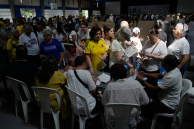
How did the right’s Abelardo de la Espriella and the left’s Iván Cepeda conclude campaigns before the June 21 election?
The Colombian electorate sent a clear message with the two candidates they sent to the June 21 presidential runoff: they are no longer interested in politics as usual. Instead, 85 percent of first-round voters cast ballots for either far-right lawyer Abelardo de la Espriella or leftist Senator Iván Cepeda, with candidates connected to traditional center and center-right parties receding to the background. “[Colombia’s] political and ideological spectrum is now wider than it was before,” says Dr. Sandra Borda, a Bogotá-based associate professor of political science the Universidad de los Andes. In this episode of Latin America in Focus, the prominent political commentator and foreign affairs analyst tells AS/COA’s Carin Zissis that the country’s relatively new left-right divide has brought it closer to polarized political contexts more familiar to much of Latin America.
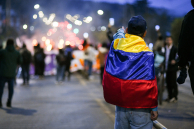
The Bogotá-based political scientist covers what's at stake in the June 21 runoff between the right's Abelardo de la Espriella and the left's Iván Cepeda.
The tiger roars. On Sunday May 31, Abelardo de la Espriella, the far-right candidate who nicknamed himself after the big cat, took the top spot in Colombia’s first-round presidential election, outperforming polling expectations to garner 43.7 percent of the vote. He will face Iván Cepeda, a leftist who captured 40.9 percent of the vote, in a June 21 runoff.
De la Espriella, a criminal defense lawyer who has never held elected office, ran a campaign centered on his hard-right approach to crime and calls for deregulation and austerity. Savvy on social media, de la Espriella dominated the conservative vote, cutting into the margins of center-right candidate Paloma Valencia. Cepeda, meanwhile, is pitching himself as the second stage of the presidency of incumbent Gustavo Petro.
What were the big surprises of the night? What can be expected in the runoff? AS/COA Online covers the big takeaways from the election day.
Left and far-right candidates prevail with little in the middle...

From fraud claims to a deflated centrist vote, find out about the May 31 presidential election ahead of what will be a left-right June 21 showdown.
Colombians vote in the first round of presidential elections on May 31 and polls suggest it comes down to three candidates: Iván Cepeda on the left, Abelardo de la Espriella on the hard right, and Paloma Valencia on the center right. What is the outlook for election day as the clock ticks down?
“What we're seeing now is Cepeda with a comfortable majority and de la Espriella having survived Paloma's hurricane in March before she lost momentum,” said Juan Manuel Santos Arango, CEO of GDP Consultores, a Bogotá-based consultancy. He forecasts a runoff between Cepeda and de la Espriella.
In this interview with AS/COA Online’s Chase Harrison, Santos covers how Cepeda has maintained his lead, why Valencia is struggling to expand support, and how de la Espriella could scramble traditional regional dynamics.
Chase Harrison: The current frontrunner in the race is Iván Cepeda. What has his strategy been going into the final weeks?
Juan Manuel Santos Arango: Cepeda is employing a very unusual strategy, which is avoiding mistakes rather than making huge displays that will gain attention because he's been leading the polls for the past six months with a very comfortable majority.
He’s carefully choreographed. He tends to read his speeches with minimal improvisation. His campaign activities are planned pretty much to the last detail.
- What happened: A wave of attacks in Colombia’s southwest regions have supercharged the debate over security policy.
- Why it matters: Security is the top electoral concern and an area where President Gustavo Petro has low approval.
- What to watch next: This will heighten tensions between candidates, all of whom see these episodes of violence as an indication that their security strategy is the way forward.
A series of fatal bombings from a paramilitary group is coloring an election where security already ranked as voters’ top issue. The recent violence has been concentrated in Colombia’s southwest provinces of Valle de Cauca and Cauca, where the military recorded some 26 attacks staged by guerilla groups from April 25 to 26. That includes two actions from the EMC, a FARC dissident group: an attack on a Cali military base and highway bombing that killed at least 20, which the group called, “a tactical error that lacks any justification.” Analysts note that this spike in violence, which has included a rise in homicides, kidnappings, and threats against politicians, may be the worst since the 2016 Peace Deal and is especially intense in rural areas.
Through his Total Peace Plan, Petro has been attempting to broker ceasefires and negotiate with Colombia’s remaining paramilitary groups, like the EMC, that didn’t sign the 2016 Peace Deal. Frontrunner Cepeda, a supporter of the Total Peace program, said in an April 27 speech that the attack intended to “generate the feeling that it is necessary to return to the oft-failed formulas of militarizing territories to the extreme.” His security plan includes fully implementing the 2016 Peace Deal and investing in related preventative efforts such as health, education, and job opportunities.
Meanwhile, Valencia visited Cauca after the attacks, where she lambasted the Total Peace Plan. Her strategy centers on hiring 60,000 military and police officers and raising the security budget. In her speech, Valencia also said she was recently informed by members of Petro’s cabinet of a planned assassination plot against her, a charged revelation for an election that already saw one candidate, Miguel Uribe, slain in an act of political violence in 2025 at the start of the precampaign season. Defense Minister Pedro Sánchez, however, said he did not believe the plot constituted a credible threat. Valencia also announced she is taking legal action against Cepeda’s running mate, Aída Quilcué, for making statements that blamed the attack in Cauca on Valencia announcing she would include former President Álvaro Uribe in her government.
For his part, de la Espriella blamed the violence on Petro, Cepeda, and the Total Peace Plan. He called the dissident FARC groups “the legitimate offspring” of the current government. His security plan would halt negotiations with paramilitary groups, eradicate coca crops, and reform the prison system.
In an April poll published by Semana, runoff match-ups between Cepeda and the two other leading candidates found that voters have more confidence in Valencia and de la Espriella when it comes to battling crime and narcotrafficking.
By Chase Harrison
- What happened: Poll leader Iván Cepeda, who had sworn off debates, has challenged top rivals Paloma Valencia and Abelardo de la Espriella to hold one.
- Why it matters: The debate would frame the contest between the three top contenders in a 13-candidate field.
- What to watch next: The three candidates’ camps will agree to details and debate topics.
Colombia’s presidential candidates have faced off in debates hosted by various media outlets. But the three poll leaders have, thus far, not come together in any such forum. There are no official debates, though, and candidates are not obligated to participate in a given exchange. Since the start of the race, frontrunner Iván Cepeda, had refused to participate in debates., arguing in February debates devolve into “slander, insults, rudeness.” Critics noted that he publicly called out candidate Rodolfo Hernández, the runner-up in the country’s 2022 election, for refusing to debate in that cycle.
Cepeda’s debate rejection was a topic of conversation at an April 16 presidential forum held during the annual Naturgas conference in Cartagena. Not only did Cepeda skip this forum, so did Abelardo de la Espriella, who claimed he had scheduling conflicts. De la Espriella, it should be noted, has challenged Cepeda to debate several times.
Days after the Cartagena forum, on April 18, Cepeda reversed his stance when he challenged just two candidates—de la Espriella and Paloma Valencia—to a debate. Why just the two? “We need to show the country two clearly opposing positions that represent radically different visions,” Cepeda said, calling de la Espriella and Valencia “far right” and noting that he could have “dialogues and conversations” with centrist candidates such as Claudia López and Sergio Fajardo instead.
In his challenge, Cepeda said he would appoint delegates to determine the format of the debate. Both de la Espriella and Valencia gave indications they are eager to debate but criticized the exclusion of other candidates and voiced their concern that Cepeda’s team will try restrict the topics. As of April 22, Cepeda’s team has not publicly announced the specifics of the debate proposal.
By Chase Harrison
- What happened: Electoral authorities finalized the first-round ballot.
- Why it matters: In a crowded field, ballot order can help—or harm—contenders.
- What to watch next: Cepeda’s poll lead has deepened the battle between leading candidates on the right to make the runoff ballot.
On March 25, Colombia’s electoral authorities unveiled the official ballot for the first round. The order was determined by lottery and placement matters. With 14 candidates, the 2026 ballot will include the largest number of candidates since the 1994 election—and nearly double the number on the 2022 ballot. On that front Iván Cepeda won the luck of the draw, appearing first in the order. As far as other frontrunners go, Abelardo de la Espriella took the first spot in the second row, while Paloma Valencia sits lower down the paper in the twelfth spot.
Así quedó la posición de candidatos en la tarjeta electoral para las elecciones presidenciales del 31 de mayo. #Elecciones2026🗳️ #YoConfíoEnElProcesoElectoral pic.twitter.com/29PpFVuPjt
— Registraduría Nacional del Estado Civil (@Registraduria) March 25, 2026
Cepeda, the governing party candidate, is benefiting from more than ballot placement. A new Atlas Intel poll has Petro’s approval rising nearly two points to 42 percent. While that level may seem low compared to the popularity of Latin American leaders like Nayib Bukele or Claudia Sheinbaum, it marks the pollster’s highest approval levels for the Colombian leader since the start of his term, and well above the rates in the latter half of the term of his center-right presidential predecessor, Ivan Duque (2018–2022). So far, Petro’s approval appears to be a boost to Cepeda, whose poll numbers place him in the race’s lead. The candidate, meanwhile, is seeking to solidify his support by expanding his political committee with the goal of winning over allies beyond the left’s base to secure his spot on a June 21 runoff ballot.
At the same time, the competition on the right is only heating up between De la Espriella and Valencia. Although her placement on the first-round ballot may not help, center-right Valencia has been rising in polls to the detriment of hard-right De la Espriella. That’s meant rising tensions within the right, even as an endorsement from whoever doesn’t make the second round would be key to challenging Cepeda.
By Carin Zissis
- What happened: Post-primaries, presidential candidates selected their vice-presidential hopefuls.
- Why it matters: Both right-wing frontrunners made selections demonstrating a play for the center, while Cepeda’s choice doubled down on his leftist base.
- What to watch next: Can the Valencia and Oviedo ticket win over their rivals’ supporters, or will their differences harm their chances with the anti-Cepeda vote?
More than a hundred candidates threw their hats in the presidential ring at the start of the race. Back then, Colombia Risk Analysis’ Sergio Guzmán told AS/COA Online’s Latin America in Focus podcast: “There needs to be a strong period of reflection in our body politic about the future...That can't happen when you lift a cup and there's a Colombian presidential candidate announcing that they're running.” In sum, he said, “The Colombian electorate doesn’t yet appear to know what it’s looking for in a successor.”
Nearly six months later, the crowd has been whittled down to a field of 14 on the official ballot, and “undecided” voters are steadily shrinking. Plus, days after the primaries, candidates locked in their running mates in the hopes that their choices can secure their bases—or win over rivals’ supporters.
Looking at the three poll leaders, Cepeda appeared to follow the former strategy by selecting Senator Aida Quilcué of Cauca, a historically conflict-ridden region in the country's southwest. Quilcué, who has held various national and international leadership roles related to indigenous rights, personally felt the impact of that violence in 2008 when soldiers opened fire on her husband’s car, fatally injuring him. Cepeda and Quilcué will officially launch their campaign with a March 20 indigenous ceremony in Cauca.
De la Espriella, meanwhile, a made a play for moderate voters in his selection of José Manuel Restrepo, who served first as trade minister and then finance minister during the administration of center-right President Iván Duque (2018–2022). Restrepo, a long-time academic, would likely focus on fiscal discipline and marks a sober choice alongside de la Espriella’s populist style.
But perhaps no other running-mate choice has drawn more attention than Valencia’s pick of economist Juan Daniel Oviedo, a technocrat centrist who defied polls to place second in the primaries. Oviedo, who ran Colombia’s statistics agency during the Duque administration, won over voters thanks to social media success and a unifying message about his own life struggles, having suffered a childhood accident that left him with a speech impediment, acknowledging “we all have scars.”
The question now is whether the ticket can unify the right and center behind Valencia’s candidacy, given substantive policy differences with her running mate. Oviedo has rejected Valencia's criticism of key aspects of the country’s 2016 peace agreement. Valencia opposes adoption by same-sex couples while her openly gay running mate disagrees with her. Oviedo believes Gaza is facing a genocide; Valencia says she would not qualify it as such.
The two do agree on many major problems facing the country, however: the fiscal deficit, an energy crisis, and weak productive investment.
Will voters back the ticket despite the differences? Valencia has said they shouldn’t expect either side to change. “Neither Juan Daniel Oviedo nor I will abandon our convictions. We can build from our differences.”
By Carin Zissis.

Sergio Guzmán of Colombia Risk Analysis speaks on the bilateral relationship as the Andean country’s 2026 elections approach.
- What happened: Paloma Valencia won the center-right consultation, Claudia López won the centrist contest, and Roy Barreras won the leftist primary.
- Why it matters: Valencia’s coalition won four out of five votes cast in presidential primaries, but frontrunners Cepeda and de la Espriella didn’t compete.
- What to watch next: Which candidates can turn primary victories into cross-bloc support as the field narrows?
There’s one thing we know for certain about Colombia’s 2026 electoral process: President Gustavo Petro can’t run again. But, as the March 8 presidential primaries showed, polls thus far may not be a safe indicator of who will take his place.
In the Sunday vote, Colombians cast ballots in an inter-party competition to select the presidential candidates representing three coalitions: one each for the left, center, and center right. Not only did conservative Senator Paloma Valencia exceed polling expectations, but her center-right coalition’s results proved voters may be looking for less polarizing options. Given that two of the top contenders, Iván Cepeda on the left and Abelardo de la Espriella on the far-right, skipped the primaries to go right to the May 31 first-round competition, will Valencia’s resounding victory end up resetting the race?
On the same day as the primaries, voters also selected their next Congress, and the fragmented result means the next president will need to build alliances. While Petro’s party won the most seats in the Senate, the lower house's makeup was unclear and the time of this report, and no party was close to having a legislative majority.
1. Paloma Valencia’s win changes the electoral balance….
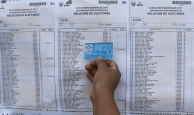
Brazil, Colombia, Costa Rica, Haiti, and Peru plan to elect presidents in 2026. Learn about candidates and issues in each country.