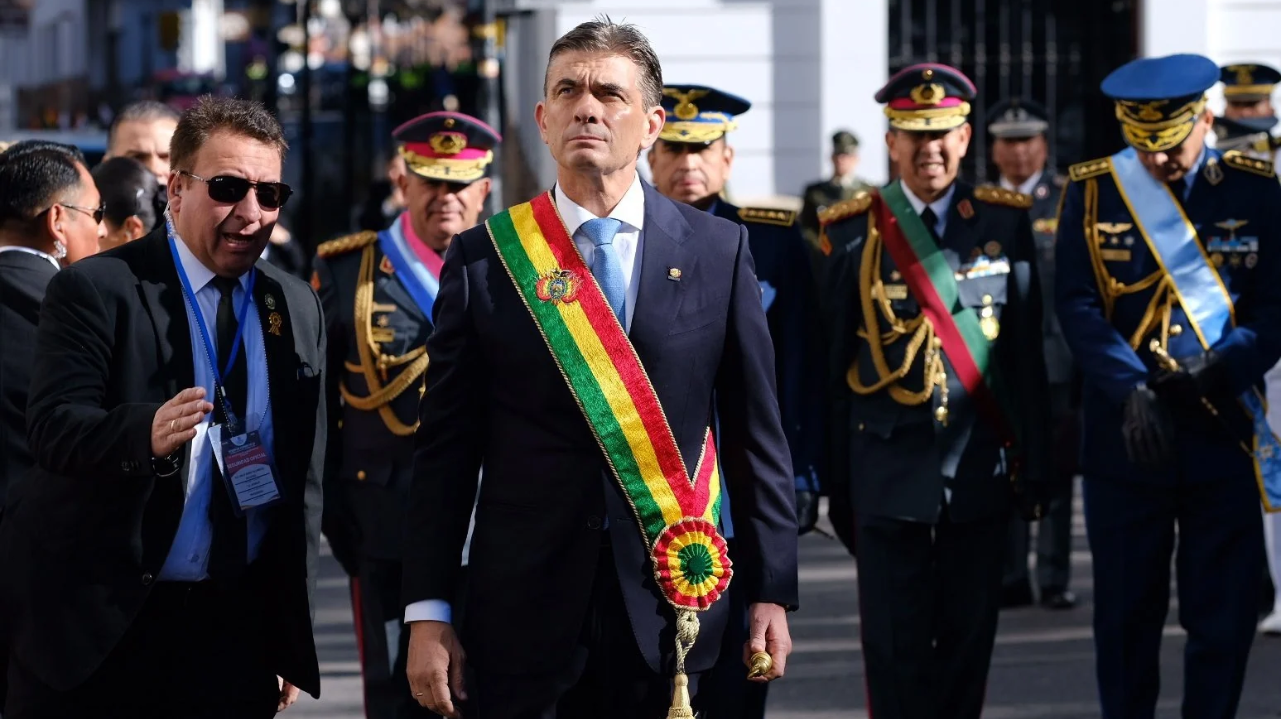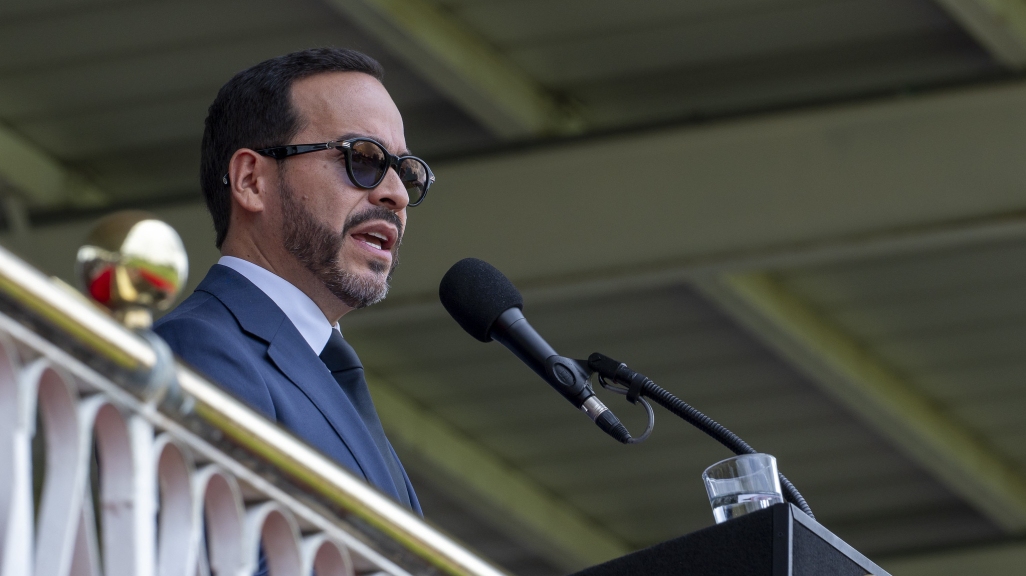
President Abelardo de la Espriella. (Colombia Presidencia)

President Abelardo de la Espriella. (Colombia Presidencia)

Colombia's ADLE Presidency at 100 Days: Economy, Security, and U.S. Ties

By Chase Harrison

Abelardo de la Espriella’s term started with an earthquake. What policy path has the right-wing leader set during his presidential honeymoon?

In his August 7 inaugural address, Colombian President Abelardo de la Espriella promised not only a policy sea change but also the building of new nation, one he calls “the Miracle Homeland.” The invocation of miracles has become a signature for the right-wing leader, who won a narrow victory in Colombia’s June runoff with a pledge to pivot from the leftist leadership of his predecessor Gustavo Petro (2022–2026).

In his first 100 days, de la Espriella has taken swift action, passing a budget and a security law through Congress, as well issuing hundreds of decrees and managing the response to the August 10 earthquake. CB Global Data measured the president’s approval rating at 47 percent in early November, compared with 54 percent at the start of his term.

AS/COA Online zooms in on three focus areas of de la Espriella’s presidency so far: economy, security, and U.S. ties.

Economics

De la Espriella entered office with the goal of growing Colombia’s economy while fixing Colombia’s steep fiscal deficit. At close to 8 percent, it stands among the highest in the region. 

Then, within days of his inauguration, Colombia was hit by an earthquake, which his government estimates generated $9.6 billion in economic losses. De la Espriella announced the creation of a $190 million Miracle Fund to rebuild. The Fund has come under congressional scrutiny over concerns of high salaries for its administrators despite the president's austerity pledges. 

In September, de la Espriella opened talks with the International Monetary Fund (IMF) over Colombia’s fiscal situation. Reports indicated that the organization could provide up to $16 billion in funding if Colombia complies with fiscal requests. This would mark another reversal from Petro, who clashed with the IMF, leading to the Fund pausing an $8 billion credit line to the country in April 2025.

But passing a budget then presented a new challenge last month. Despite de la Espriella’s campaign promises of cuts, the 2027 budget will see government expenditure increase by 16 percent. The Senate and the House of Representatives approved different versions of the budget and didn’t reconcile before the October 20 deadline, leading de la Espriella to pass the budget by decree. Soon after, de la Espriella replaced his interior minister, the official in charge of managing congressional relations.

The president’s relationship with Congress will determine the future of his proposed fiscal reform bill. That legislation, which was warmly received by the IMF, would grant the president powers to cut government spending by decree. The bill would also see a lower corporate tax rate and a 20-percent reduction in the salaries of government employees, excluding security forces. The bill is making its way through Congress, where the president has pushed to decrease the value-added tax and dropped a proposed expansion of sales tax on certain consumer goods. 

Nationwide protests on October 14, though, saw demonstrators rally against potential cuts to government programs.

Security

On the campaign trail, de la Espriella pledged to recover “lost territories” controlled by armed groups within his first 90 days in office. Later, he clarified that was the deadline for implementing a “shock plan” involving escalated military operations, arrests of criminal leaders, and drug seizures. And after a period when the federal, regional, and local governments lacked coordinated responses in their security policy in conflict-intensive locales, the president has restored dialogue, researcher Jorge Mantilla told El País. 

In early November, the president notched a win when Congress, in a 90-44 vote, passed his Submission Act, marking a departure from Petro’s Total Peace strategy that pushed for negotiations, ceasefires, and disarmament with armed groups. The new legislation does not recognize the political status of these groups, thus forbidding negotiations or peace deals. However, the law establishes a pathway for groups to disarm and incentives for combatants to turn themselves in for reduced sentences. In tandem, de la Espriella has also defunded aspects of the 2026 peace agreement, such as tribunals that investigate crimes committed related to armed conflict. The constitutional court rejected this move and called for the president to correct his actions. 

De la Espriella next seeks passage of a security law that empowers the government to classify groups as terrorists or collaborators without those groups having prior convictions or judicial investigations into their activities. That would subject groups to criminal and financial sanctions. However, Supreme Court justices have questioned the legality of such measures. 

Relations with the United States

De la Espriella, who was endorsed by Trump, campaigned on correcting what was a rocky U.S.-Colombia relationship during the Petro years, although the United States remained Colombia’s top trade partner. Washington sent early signs of its support for de la Espriella, pledging $1 billion in security assistance the day of his inauguration. Within the first week of de la Espriella’s presidency, Colombia joined the U.S.-led Shield of the Americas initiative. 

U.S. Secretary of Defense Pete Hegseth said, at the time, that Trump had authorized Washington to undertake joint military operations in Colombia. Though there hasn’t been any joint active combat in Colombia, there has been renewed security cooperation, including an uptick in extraditions of suspected criminals to the United States, joint exercises between troops in Colombia, and the imposition of U.S. visa restrictions on Colombian individuals. 

In September, U.S. Secretary of State Marco Rubio traveled to Colombia, where he met with de la Espriella to celebrate the renewed security partnership and sign agreements on mining and nuclear energy, known as the Barranquilla Accords. 

Related

Explore