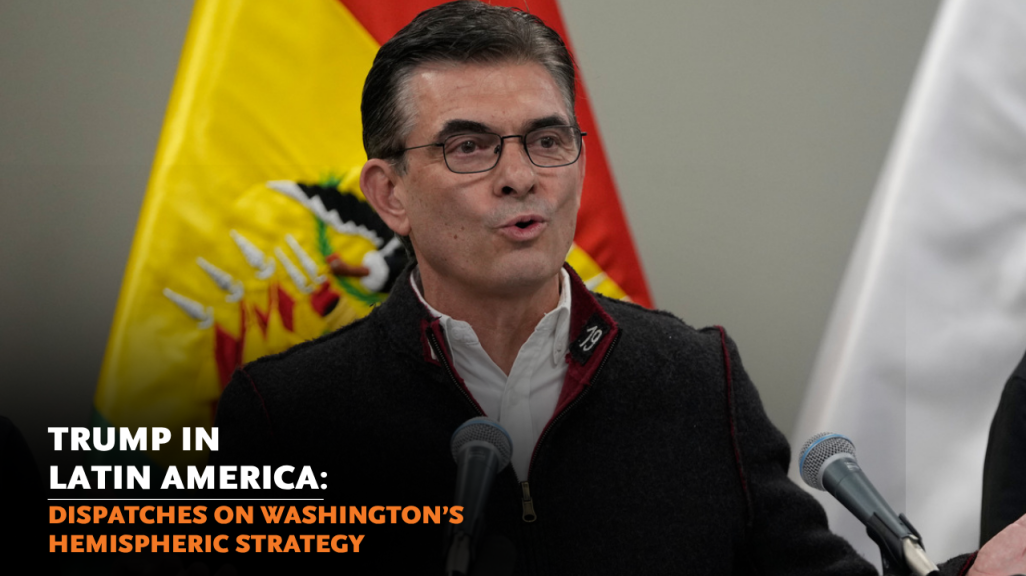
Bolivian President Rodrigo Paz. (AP)

Bolivian President Rodrigo Paz. (AP)

Trump in Latin America: Shield of the Americas Backs Paz in Bolivia; Flávio Visits Trump

By Chase Harrison

May 21–27: Bilateral USMCA negotiations between Mexico and the United States are set to begin.

Welcome back to our weekly dispatch of stories on the U.S. role in Latin America. Follow us each week and see previous roundups at as-coa.org/dispatches, or sign up to receive them via LinkedIn

Here’s what to know this week: 

  • Shield of the Americas countries condemn violence in Bolivia.
  • Trump meets with Brazilian presidential candidate Flávio Bolsonaro at the White House.
  • The United States and Mexico ready for first official USMCA review meeting.
  • Get to know the individuals at the center of a new era of U.S.-Venezuela relations.
  • Ecuador’s Noboa trumpets U.S. security cooperation in state of the union.
Shield of the Americas expresses concern over Bolivia demonstrations

Bolivia has been embroiled in political unrest for over a month in a situation sparked initially by demonstrations involving teachers pushing for higher wages and farmers opposed to agrarian reform. Per an article published by Americas Quarterly, these movements have sparked protests against the government of President Rodrigo Paz amid ongoing economic challenges and tensions with Vice President Edman Lara. Many parts of the country have been frozen by roadblocks.

On May 21, the United States, in tandem with 12 countries under the banner of Trump’s Shield of the Americas Initiative, released a statement expressing "concern with the protests and road blockades aimed at subverting the constitutional order and destabilizing the democratically elected government of Bolivia,” condemning violence, and noting that it will provide humanitarian aid. On May 23, U.S. State Department said via X the United States was providing food assistance and medicine

Trump meets Flávio

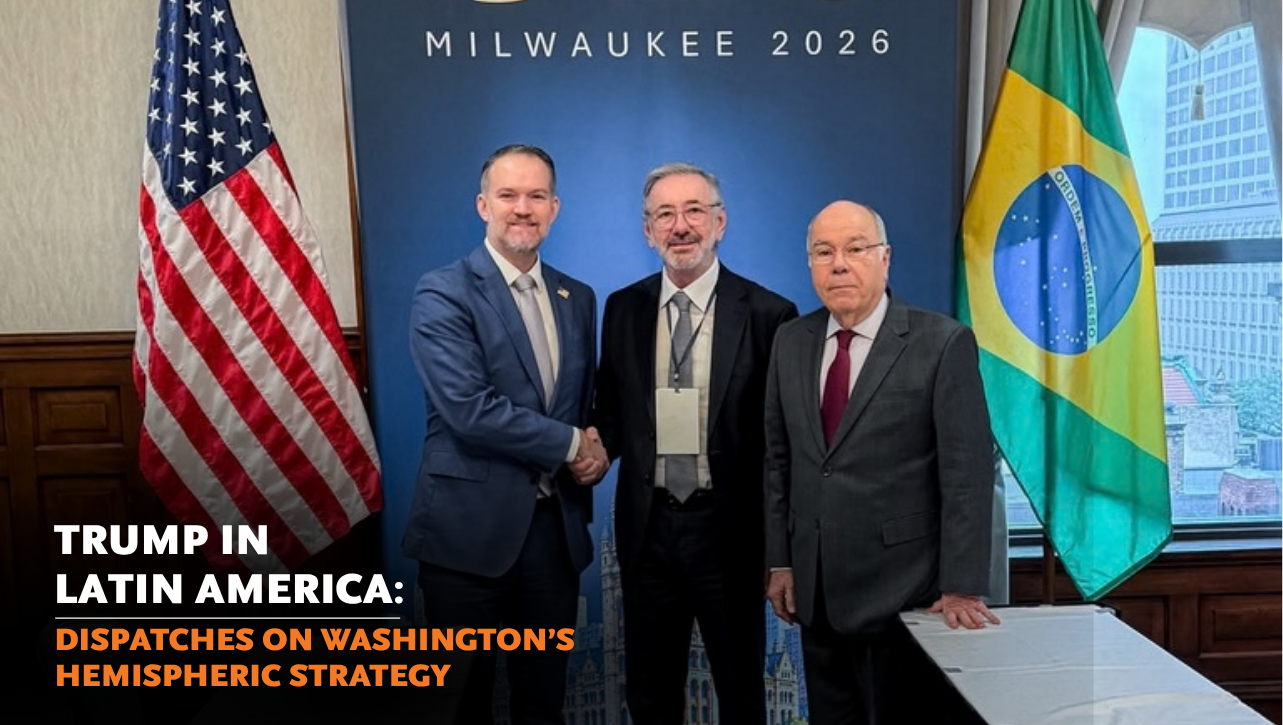
Just over two weeks after meeting with Brazilian President Luiz Inácio Lula da Silva, U.S. President Donald Trump hosted one of his top electoral rivals, Flávio Bolsonaro, to the White House on May 26. The meeting lasted just under two hours and included a discussion about designating Brazil-based crime groups as terrorist organizations and an exchange on the health of Flávio’s father, ex-President Jair Bolsonaro. El País reports that Secretary of State Marco Rubio helped broker the meeting. 


At the time of publishing, the White House had not released a statement on the meeting. Still, it comes at a sensitive time for Flávio Bolsonaro, who has seen his support in polls dip since audio was released of him asking a disgraced Brazilian banker for money to finance a film about his father. 

U.S. and Mexico set USMCA review meetings

The Office of the U.S. Trade Representative announced the details of the official start of the 2026 USMCA review: three rounds of bilateral trade talks between the Unites States and Mexico. Here’s the schedule:

  • May 28-29: A U.S. delegation led by Deputy U.S. Trade Representative Jeff Goettman will meet with Mexican counterparts in Mexico City to speak about economic security and rules of origin.
  • June 16-17: Parties from both countries will meet in Washington for a discussion with an agricultural focus.
  • Week of July 20: Delegations meet once more in Mexico City.

At COA’s 56th Washington Conference on the Americas, Goettman explained the Trump administration's goals for the trade deal. "The main focus is improving rules of origin," he explained. 

In a separate May 26 event, U.S. Trade Representative Jamieson Greer said Washington intends to maintain tariffs on products from Mexico and Canada as long as there is a trade deficit. He also said that the United States has "significant" trade issues with Canada.

Headlines of the week

The Wall Street Journal reports on how Venezuelan Interim President Delcy Rodriguez became the Trump administration’s preferred partner in Caracas by helping facilitate the flow of investment into the energy sector and keeping the country calm.

Who’s driving the Trump administration’s policy toward Venezuela? The Washington Post writes about the role played by Mauricio Claver-Carone, who once officially served as Trump’s special envoy to Latin America but currently holds no government position.

Ecuadorian President Daniel Noboa delivered his state of the union on May 24, emphasizing his U.S.-backed approach to crime, including the extradition of criminals to the United States.

Meanwhile, U.S. Ambassador to Mexico Ron Johnson released a list of bilateral achievements to mark the conclusion of first year in the position, including deterring migration, clamping down on fentanyl production, and executing operations against cartels. 

Related

Explore