Peru: Who's Who in Keiko Fujimori's Cabinet?
Peru: Who's Who in Keiko Fujimori's Cabinet?
Learn about the background and goals of the ministers supporting the new president, including Prime Minister Galarreta and Finance Minister Cuba.
This article was originally published on July 28 and has since been updated.
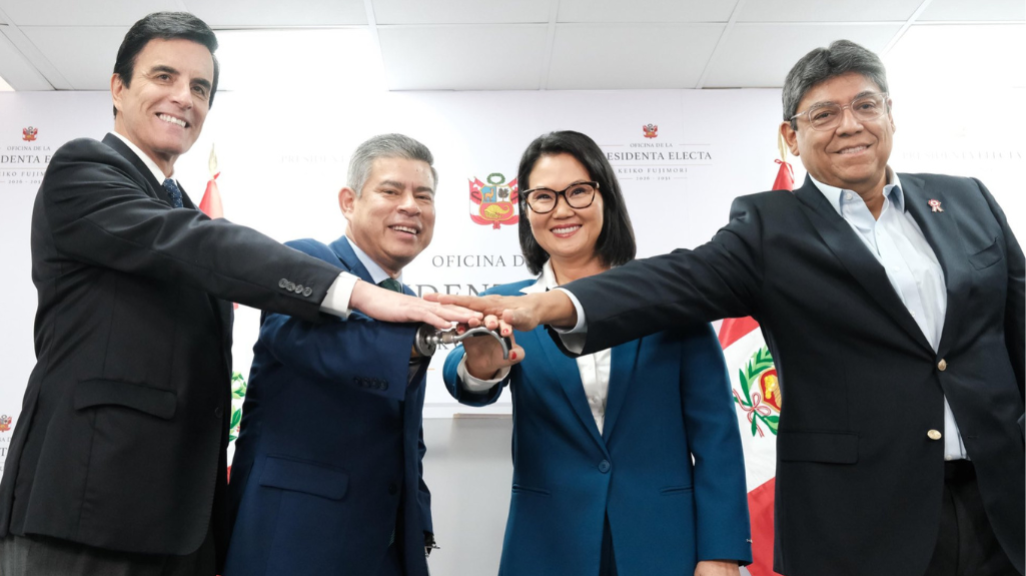
President Keiko Fujimori Higuchi kept her cards close to her chest when it came to revealing her cabinet. She announced the first names just one day before she took her oath of office on July 28, Peru’s Independence Day. Fujimori takes over from interim President José María Balcázar, entering the presidential palace for a five-year term as Peru’s tenth president since 2016 and the first woman elected to lead the Andean country. She pledged to assemble a cabinet that “prioritizes experience and technical capacity” and is open to members of political groups other than her own Popular Force.
Peru’s Constitution mandates that the president must designate a prime minister before any other portfolios are defined. She named her prime minister—along with the economy and foreign ministers—at a July 27 press conference. She announced the rest of her cabinet on inauguration day, when all 19 ministers were also sworn in. Only two are women, a proportion similar to other cabinets of recent years. Within 30 days of taking office, the prime minister must present the government’s agenda for congressional approval through a vote of confidence.

Keiko Fujimori emerged from the runoff with a razor-thin victory. Her term begins on July 28. Learn about her campaign and key moments of a tight election.
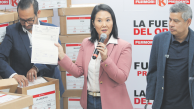
A politically active figure for over 35 years, 55-year-old ex-congressman Luis “Lucho” Galarreta takes on his most high-profile role yet: coordinating the work of Fujimori’s cabinet. Galarreta is also Fujimori’s first vice-president, making him first in line for the presidency should she be temporarily or permanently removed from the top spot.
“I see in Lucho a loyal and hardworking man, deeply committed to Peru,” said Fujimori while announcing Galarreta as her prime minister. Despite his prior criticisms of corruption within fujimorismo, Galarreta joined Fujimori’s Popular Force party in 2016 and made his way into the inner circle of the now-president. At the June 27 press conference, he outlined the government’s priorities of reducing insecurity, attracting investment, and creating jobs as part of a “second-generation reform delayed for more than 20 years.”
Galarreta’s earlier political trajectory involved multiple parties on Peru’s right. In 1989, he joined the Freedom Movement, the short-lived electoral vehicle of Nobel Prize-awarded author Mario Vargas Llosa. He earned his first elected position in 2003 as a municipal councilor in Lima under National Renewal, a now-defunct Christian Democratic party. His 14-year stint representing Lima in the national Congress began in 2006 and included a switch to the Christian People’s Party in 2010. As a congressman, he was a ranking member on several legislative commissions and headed commissions on ethics and finance. From 2017 to 2018, he served as president of Congress, becoming the first to do so with a physical disability. (Both of Galarreta’s hands were amputated at three months old and he uses prosthetics.)
During his time leading the legislature, he oversaw the two impeachment votes that preceded the resignation of then-President Pedro Pablo Kuczynski (2016–2018). Galarreta also presided over the suspension of three congressmembers, including Fujimori’s younger brother, Kenji, for attempted vote-buying to keep Kuczynski in power.
The former Peruvian finance minister analyzes the social, political, and foreign policy tensions awaiting the new administration.
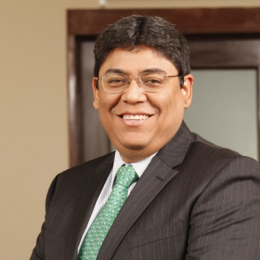
Economist Elmer Cuba, who served as a Central Bank director from 2016 to 2021, will lead the economy and finance ministry. At the June 27 press conference, Cuba defined goals to maintain Peru’s macroeconomic stability and ensure that all Peruvians benefit from the country’s economic growth in “the form of better jobs, salaries, and public services.” Other priorities, he said, would involve “closing the infrastructure gap” and cracking down on tax evasion.
An immediate challenge for Cuba will be preparing Peru’s finances for the impact of the El Niño climate phenomenon. This season’s El Niño is expected to produce severe flooding and increased heat that will damage infrastructure, as well as fishing and agricultural harvests, potentially generating losses equivalent to more than 1 percent of GDP, per forecasts from a major Peruvian investment company.
Apart from serving as Fujimori’s economic advisor during her 2016 presidential campaign, Cuba has had limited involvement in electoral politics and instead has experience working in global finance organizations. He was most recently a partner at a private consulting firm but previously worked with various multilateral organizations, such as the World Bank, Inter-American Development Bank, UN Economic Commission for Latin America and the Caribbean, CAF – the Development Bank of Latin America and the Caribbean, and International Labor Organization.

Presidents-elect Keiko Fujimori and Abelardo De La Espriella face risks of disaster and instability in their first months in office.
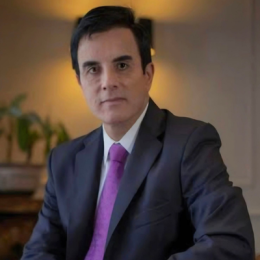
Fujimori’s pick to lead the foreign ministry has already racked up years of experience in diplomacy. From 2008 to 2023, Carlos Espá served as communications director in the press and culture department of the U.S. Embassy in Lima. Among his priority aims, he said, is to “put the state at the service of Peruvians” both in and outside of the country.
Just months ago, however, Espá had hopes of doing that as Peru’s president. He competed against Fujimori in this year’s presidential election under the banner of his own Yes, I Believe party. As a presidential candidate, his platform centered on tackling corruption in Congress, taking a hardline approach to crime, and reducing taxes. He finished ninth in the first round, earning 3.4 percent of valid votes.
One of Espá’s early tasks as foreign minister will be to repair relations with Mexico, a reconciliation both Fujimori and Mexican President Claudia Sheinbaum have signaled they would like to see happen. Diplomatic relations between the two countries ruptured in November 2025 after years of tension. In 2022, Mexico’s government labeled the impeachment of ex-President Pedro Castillo (2021–2022) a conservative “coup” and then gave Castillo’s Prime Minister Betssy Chávez asylum through its embassy in Lima. When asked if Peru’s new administration would offer Chávez safe passage out of the Embassy, Espá said they “believe in the rule of law” and that the cabinet would discuss the issue.
Like Galarreta, 65-year-old Espá was associated with Vargas Llosa’s Freedom Movement but most of his early professional career was spent commenting on politics as a TV journalist and print columnist.

AS/COA Online covers major votes across the region for presidents, legislatures, municipal votes, and more.
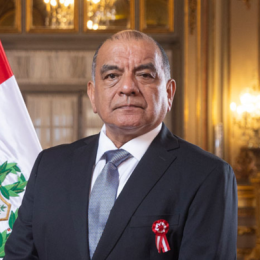
Fujimori has assigned retired army General César Astudillo the mission of delivering one of her central campaign promises: clamping down on crime with a mano dura.The former head of the Armed Forces Joint Command (2018–2021) now leads the ministry responsible for public safety in a country that has faced rising rates of extortions and murders in recent years. Astudillo also won election as one of Popular Force’s representatives in Peru’s newly restored Senate for the 2026 to 2031 period.
Fujimori’s choice of an ex-servicemember aligns with her intention to increase the military’s role in domestic law enforcement. At her July 28 inauguration, for example, she announced that the armed forces would "temporarily take the lead in security operations” during states of emergency, with support from the police. And on the campaign trail, Fujimori pitched plans to boost military presence in prisons, as well as along the country’s borders to address unauthorized migrant entries.
Throughout his decorated, four-decade military career, Astudillo participated in special forces missions that targeted armed guerrilla and terrorist groups, as well as drug traffickers.
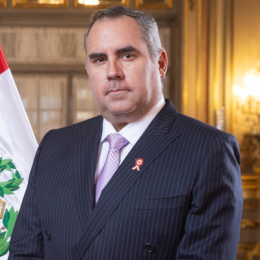
Expected to work closely with Astudillo is Defense Minister Rafael Belaúnde, whose portfolio puts him in charge of national security in coordination with the armed forces. Among his responsibilities will be overseeing military patrols of Peru’s streets and transport hubs, which Fujimori announced on August 2 on social media.
Belaúnde does not have a military background. His private-sector career focused on real estate and land management, while his prior public-sector experience included work on property rights and regional development in various state agencies. In 2020, he served one month as energy and mines minister during Martín Vizcarra’s administration (2018–2020). He has regularly written newspaper columns about that sector, as well as other economic and political issues.
Belaúnde comes from an established political family. This includes his father, also called Rafael, who was a senator, and his late grandfather, two-term ex-President Fernando Belaúnde Terry (1963–1968, 1980–1985). The new defense minister attempted to follow in his grandfather’s footsteps: He competed in the 2026 presidential election under his own center-right Popular Freedom party, placing twenty-seventh out of 35 candidates in the first round.
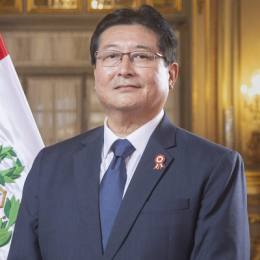
Mechanical engineer Guillermo Shinno returns to the ministry in which he served as vice minister for mines from 2012 to 2017, during the presidency of Ollanta Humala. He brings decades of experience in both public- and private-sector management of electricity generation and mining.
Shinno is tasked with attracting more investment to a mining sector that contributes around 10 percent of Peru’s GDP, 20 percent of its tax revenue, and more than 60 percent of the country’s exports. High prices for gold and copper, Peru’s two most valuable exports, drove relatively strong economic growth of around 3.5 percent in 2025 and have continued into 2026.
He has also inherited a lawsuit rural and Indigenous communities in Peru’s Amazon region filed in the Andean Court of Justice that accuses the government of failing to curb illegal mining, a longstanding issue in Peru. The case relates to a controversial program that grants temporary legal cover to small-scale miners who agree to formalize their operations. Critics say the initiative’s repeated extensions have undermined its objectives, and Shinno himself, before joining the new administration, called for a new legal framework to replace the formalization program.
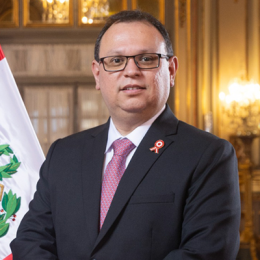
Marco Vinelli, who helmed Fujimori’s transition team and presidential campaign, now leads the agriculture ministry. Vinelli is an economist specialized in agroindustry and climate financing and will play a key role in the government’s response to El Niño.
In her inauguration speech, Fujimori identified preparations for the climate event as one of her administration’s immediate priorities. As part of what she termed a “national contingency plan,” she promised financial and technical support to farmers and said she would ask Congress to grant the executive branch legislative powers to enable the quick deployment of the “extraordinary resources” needed to address the impacts of El Niño.
As Vinelli begins work on formulating relevant policies and programs for the contingency plan, he can draw on previous public sector roles that include stints managing agro-entrepreneurship programs, leading the agribusiness division at the agriculture ministry, and serving on the board of directors at the state-owned agricultural development bank. Moreover, as an academic, he has written papers and taught courses on public investment in the agricultural sector, financing for small producers, sustainable development, and agribusiness management. He was most recently the general manager of Peruvian agroexport firm Allpu.