LatAm in Focus: Alfredo Thorne on What Lies ahead for a Keiko Fujimori Presidency
LatAm in Focus: Alfredo Thorne on What Lies ahead for a Keiko Fujimori Presidency
The former Peruvian finance minister analyzes the social, political, and foreign policy tensions awaiting the new administration.
Keiko Fujimori is readying to ascend Peru’s presidential throne. With 99.8 percent of votes counted on June 23, the numbers finally confirmed that the outstanding ballots aren’t enough for Roberto Sánchez to overcome Fujimori’s lead in the June 7 runoff. The difference between them at the time of publishing stood at around 45,000 votes—or a quarter of a percentage point.
The almost even split has become a feature of recent presidential elections in Peru. “Our country is very divided,” says former Peruvian Finance Minister Alfredo Thorne on this episode of Latin America in Focus, highlighting, among other reasons, a longstanding rift between the rural highlands of Central and South Peru and the historically conservative capital of Lima.
Fujimori, who was on the losing side of the last three runoffs, overcame voter rejection associated in part with her name; her father, ex-President Alberto Fujimori (1990–2000) died in 2024 after spending 16 years in prison for human right abuses committed during his tenure. During her campaign, the younger Fujimori leaned into her father’s strongman legacy, tapping into voter frustrations about violent crime. But a challenge for the right-wing former congresswoman when she takes office on July 28 will be overcoming the country’s divide, particularly if Sánchez refuses to accept the electoral results and rallies supporters into protests.

Keiko Fujimori emerged from the runoff with a razor-thin victory. Her term begins on July 28. Learn about her campaign and key moments of a tight election.
Fujimori will also have to work with a multiparty, bicameral Congress that will include a restored Senate for the first time in three decades. The fact that no party holds a majority means she will need to reach across party lines to accomplish her legislative agenda. For Thorne, that means “the true embryo of democracy is in that Congress.”
Still, while Latin American electoral trends have drawn attention to the region’s left-right divide, a moderate named Jorge Nieto could end up being a major political powerbroker in Congress, where his party will occupy 25 seats across both houses. After finishing fourth in the first round, Nieto refused to endorse either Fujimori or Sánchez, a choice Thorne says now proves useful: “He’s a very shrewd politician [and] is going to, in the end, tilt the balance in one direction or the other.”
On the trade front, the former World Bank senior economist predicts that Fujimori’s administration is unlikely to break from Beijing even as it seeks to “keep fluid relations with Washington.” As for the crucially steadying role of Peru’s Central Bank, Thorne remains confident in its institutional strength, even with the potential departure of its widely lauded chief, Julio Velarde.
Our guest
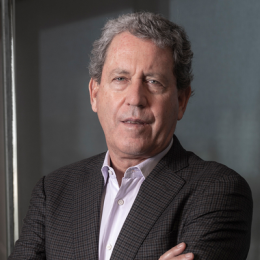
Alfredo Thorne is the founder and principal director of Thorne & Associates, a financial advisory firm. He previously served as finance and economy minister of Peru (2016–2017) and worked as a senior economist at the World Bank. One of Latin America’s top economists, he also held managerial positions at JP Morgan and Mexico’s Banorte-Ixe Financial Group.
Thorne holds a DPhil in Economics from Oxford University, an MPhil in economic development from Cambridge University, and BA in economics from the Catholic University of Peru.

Subscribe to Latin America in Focus, AS/COA's podcast focusing on the latest trends in politics, economics, and culture throughout the Americas.
This episode was produced by Executive Producer Luisa Leme and Associate Producer Khalea Robertson. Carin Zissis is your host. Article text by Khalea Robertson.
See AS/COA Online’s ongoing coverage of Peru’s 2026 election. And bookmark our election guide to keep up with all the key races this year in Latin America: https://www.as-coa.org/2026
Plus, read more of Alfredo Thorne’s analysis on Peru’s politics and economy in Americas Quarterly.
Share and subscribe at Apple, Spotify,YouTube, or wherever you get your podcasts. Access other episodes of Latin America in Focus and send us feedback at latamfocus@as-coa.org.
The music in the podcast is "Inti Raymi" by Curi Cachimuel and “Tempestad” by Las Tipas, both performed for Americas Society. Find out about upcoming concerts at musicoftheamericas.org. Share your love for Latin America: Join Americas Society.
Opinions expressed in this podcast do not necessarily reflect those of Americas Society/Council of the Americas or its members.
[MUSIC]
Carin Zissis: Hi, this is Carin Zissis of AS/COA Online.
It looks like Keiko Fujimori will finally take Peru's top seat in her fourth presidential bid.
[News clip: “Keiko Fujimori se perfila como nueva presidenta del Perú.”]
Zissis: That'll make her Peru's tenth president in a decade filled with impeached and interim leaders. A former congressmember and a savvy political power broker, her campaign leaned into the strongman legacy of her father, now-deceased ex-President Alberto Fujimori, and she tapped into voter concerns about rising extortion and violence.
Although the race hadn't been called at the time of this recording, the official vote count shows Fujimori with an insurmountable, albeit narrow, lead of a quarter of a percent, and she's already looking ahead to the challenges of her new job.
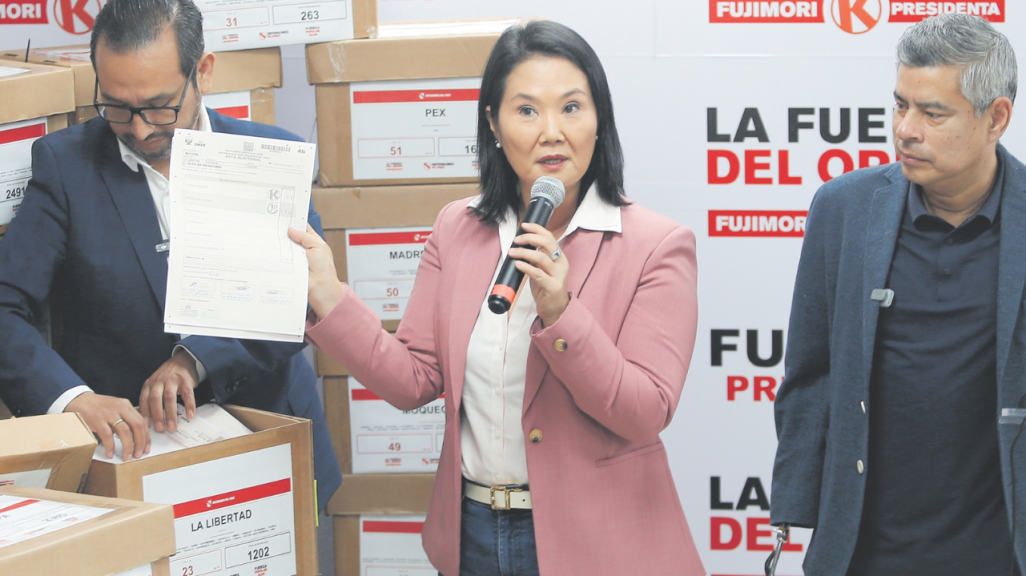
[Clip of Keiko Fujimori press conference: “Se vienen cinco años de grandes retos. Pero yo estoy segura que sobre todo con el trabajo y la unidad de todos los peruanos, vamos a salir adelante.”]
Zissis: Still, her opponent, Roberto Sánchez, has refused to accept defeat, with his party submitting multiple requests to discount votes from polling sites in Lima and abroad, where traditionally conservative electorates have favored Fujimori in the runoff.
[Clip of Roberto Sánchez: "En esas condiciones de transgresión a las normas, nosotros no reconoceremos el gobierno de la señora Fujimori."]
Zissis: Just five years ago, it was Fujimori who contested her loss in another tight election. Her opponent then? Sánchez's mentor, Pedro Castillo, a leftist schoolteacher who clinched the presidency in 2021 with the support of rural populations in central and southern Peru. Now in prison for an attempted self-coup that led to his 2022 impeachment, Castillo is still impacting Peru's polarized political landscape.
Alfredo Thorne: There are certain issues that divide us deeply. For instance, the issue of Pedro Castillo, what to do with Pedro Castillo. He represents the Indigenous population, and somehow, we will have to reconcile with the Indigenous population and, with some gesture, indicate [to] them that Fujimori is not against that population.
Some people, for instance the centrist people, say that she will have to pardon Castillo. That's a difficult one, no?
Zissis: That's our guest, Alfredo Thorne, a former Peruvian finance minister and World Bank senior economist who now leads his own financial advisory firm. In our conversation, Alfredo breaks down the challenges Fujimori faces to unite her country, the need for Lima to keep up relations with Washington and Beijing, and the role of Peru's newly bicameral Congress.
Thorne: For me, the most positive thing about this election is Congress. Neither what they call the left nor the right is going to have a majority. Fujimori will have to reach out to the left in order to pass her legislation. And to me, that means that the true embryo of democracy is in that Congress.
Zissis: Thank you for joining us. And whether you're listening in Querétaro, Queens, or Quebec, don't forget to subscribe to and share Latin America in Focus on Apple, Spotify, or wherever you get your podcasts.
[Show intro: You're listening to Latin America in Focus. Latinoamérica en Foco. América Latina em Foco. A podcast by Americas Society/Council of the Americas on politics, economics, and culture in the region.]
[MUSIC]
Zissis: Alfredo Thorne, I want to thank you very much for joining us for this podcast today from Peru and sharing your perspectives with us on Latin America in Focus.
Thorne: No, thank you.
Zissis: So let's start with this election, which has been incredibly close. At this time that we're talking, Keiko Fujimori has a slight advantage, 51.1 percent to Roberto Sánchez's 49.9 percent. This has not been officially called at this time, but it's more or less being accepted that this is going to be a Keiko Fujimori victory.
And while for many observers this type of tight race is remarkable, we know that in Peru this has almost become the norm. In fact, in the last two presidential elections, we saw a difference of about 0.25 percent. Keiko Fujimori lost those two elections, both in the 2016 and 2021 runoffs. Peru has three of the top ten spots of close races of the past 25 years, just to give an idea to our listeners.
What's behind this divide in Peru?
Thorne: There are three reasons that we can sort of throw in.
One has to do with the perception of the anti-Fujimorismo, you know? Every time we have had an election and Keiko, or her father for that matter are running for that election, all the rest of the country, all the rest of the electorate, somehow unites against her, you know? And that has to do with the past of Alberto Fujimori when he was president. Remember, he was president three times. In the end, he was sentenced, he was in jail, he went to Japan. But in any case, he is a complicated person, no?
The second has to do with our electoral law. Our electoral legislation is not that clean. For instance, in this election, we had 35 parties running for the election, but our parties are not parties. Our parties are not well embedded in the grassroots of the population. It is not a system that you can call a system of representation. You can set up a party with very few conditions. For instance, in this election there was a proposal to have primary elections, but that was turned down in Congress, mainly because the parties didn't want to expose themselves to voters' scrutiny, no? And they feel that the best thing for them is to have a party where they can do whatever they like, no? And that goes against a representative party, a party that really has a basis, an ideology, et cetera, et cetera.
And the third has to do with our country. Our country is very divided. You've seen the results of the election. You've seen that mainly the Andes voted for Roberto Sánchez, and then the coast usually takes sides, in this case, with Keiko. But, for instance, in 2016, when we were running for election, it was Kuczynski. So there is a big divide between, I will say, our legacy of Indigenous population that has not been incorporated into society. They feel left out. They feel that all the benefits accrue to Lima and to the coast and the coastal cities and that they are left behind.
People say that this has to do with poverty. We've done a study where we looked district by district, and we also looked at how every district has voted between Keiko and Sánchez, and we related that to a hundred socioeconomic indicators. And what comes out is that Sánchez is very much linked to our informal economy, where there's no legislation, there's no rule of law, and it's an emerging population that essentially wants to break in but wants to do it at its own will, without any parameters like a modern constitution, which is what we have, no?
Zissis: We've been seeing many close elections in Latin America, and we've been seeing a divide between the left and the right in a lot of the region. But it seems to me as though what you're describing… First of all, in Peru, this has been a division that's been going on for much longer. How do you think Peru compares to the left-right divide that we're seeing in other parts of the region?
Thorne: I want to sort of challenge you on that. I don't think it's a divide between left and right.
When you look at Sánchez, he takes the position of being a leftist, no? But it's not that he's a Marxist or that he's a Leninist in the true sense, no? And, for instance, when you look at Castillo, when Castillo was in government, it was very much a model like Venezuela or like Bolivia. Sometimes it was like Argentina when the Kirchners were there.
And I think these are two models: between a modern state and, I will say, a crony state, no? Where people essentially take advantage of their positions in the civil service and appropriate rents from the government. I don't think it's left and right. It is a patrimonialistic type of model, and the other is a liberal democracy. I don't want to say that Keiko necessarily is a liberal democracy, but it's probably closer to liberal democracy than Sánchez is, no?
They feel that the constitution is a mechanism to distribute wealth in the country, which it is not. It is the state, it is the budget, that actually allows us to make those distributions. When they say, "We want to expropriate our gas facilities in the south," I don't think they have an idea that with that they are going to benefit the poor. My sense is that they are going to move toward an autocracy.
And I think at the moment I will call us like a hybrid political system. We are neither right nor left. We're not fully liberal democracy nor the other. So my sense is that they want to be Chávez, and that is not necessarily left, no?
Zissis: And in the case of Keiko Fujimori, you yourself are very familiar with having her in the opposition because you were part of the cabinet during the government of Pedro Pablo Kuczynski. During his presidency, her political party was instrumental in his impeachment and in the impeachment of members of his cabinet.
So we have some of this complicated history that is the backdrop of Peru's political instability over the past decade that, to some degree, she's been a part of. But now, as she's coming into office, it seems as though a challenge for her going forward will be uniting these divides.
How do you think she can reconcile these two sides as she takes office?
Thorne: Well, I think it's not going to be an easy task for her, because Fujimorismo is a very well-organized party. They like to work by themselves. They don't typically invite people from other parties or from other groups, no? And my sense is that she will have to break that myth, and she will have to reach out to people who probably are her rivals, even people from the left. I would say in Peru we have the radical left, which is this Evo Morales, Chávez, et cetera. And then we have the sort of social democrats, whom we call caviares, no? She may have to reach out to them.
Then there are certain issues that divide us deeply. For instance, the issue of Pedro Castillo. What to do with Pedro Castillo? Pedro Castillo is in jail. He represents the Indigenous population, and somehow we will have to reconcile with the Indigenous population and, with some gesture, indicate to them that Fujimori is not against that population. They have their own rules. They vote by rais[ing] hands. They don't vote like an electoral process. For them, the constitution is not what the constitution is for us. The rule of law and the judiciary, they feel serves only the modern part of the society. So I think she will have to break those ideas.
For instance, there was a confrontation in the south when Castillo was overthrown, was impeached in December 2022. My sense is that one of the first things she has to do is she will have to call a commission or a group to investigate what really happened there, no?
Some people, for instance the center people, say that she will have to pardon Castillo. That's a difficult one, no? Because Castillo did commit a coup. He was not sentenced on a coup; he was sentenced on rebellion. But that really goes against our constitution. But in any case, she will have to do things like that.
And the third thing is that she will have to do a massive program—not of poverty alleviation. I think where we are stuck is that we were very successful in reducing poverty. When Fujimori reached the country, the poverty rate was 52 percent. Today it's 25 percent, but the lowest was 21 percent. The problem is that we have what the World Bank calls the vulnerable population, the population that cease to be poor but still has not joined the labor force.
And that has to be done with formalization. We have very few roads that link the Andes to the coast. So we have to believe in connectivity, and I think that means a big program of infrastructure, giving them hospitals, giving them roads, schools. The schools are a mess. In the budget, education is our largest allocation. We have like $10 billion allocated to education, yet you go to the schools and they don't have a bathroom. They don't have internet. And you ask yourself, where the heck did the money go, no? Obviously, Castillo, being a teacher, gave all the money to raise salaries for his fellows.
But I think we have to be more accountable in how we use our money and how we reach out to that population, no?
Zissis: And one way to do that is going to be through Congress. And we've been talking about how close the presidential race was, but we also had to wait a long time to find out the congressional results.
And there's a very important change that's coming to Peru, which is that Peru is going to have a Senate. We know that Keiko Fujimori's party in the Senate is going to hold 22 out of 60 seats, and with the party of third-place finisher Rafael López Aliaga, this would give the parties on the right half of the Senate. If we look at Congress and the lower chamber, the right is going to have about 56 out of 130 seats.
So I'd love to hear two things from you. First of all, how is having a Senate going to change the political outlook for Peru? And also, is Keiko Fujimori going to be able to build alliances, or is there the potential that she could run into roadblocks in Congress?
Thorne: That's interesting. For me, the most positive thing about this election is Congress. Not only that we are going to have a Senate, but the precise composition of that Congress. None, neither what they call the left nor the right is going to have a majority.
I think in the Senate, if Keiko makes an alliance with López Aliaga, probably they will reach the 30 senators, but that won't be enough to make any changes. It won't be enough to impeach anybody. And something similar happens in the lower house. So they are forced to negotiate.
There is one party which is the one that is going to give us a lot to talk about, which is called El Buen Gobierno. That is from a guy called Jorge Nieto. He was a cabinet minister together with me. And it's interesting, if you follow the Peruvian election, that he said he was not going to vote for either candidate, that he was going to maintain his neutrality. A lot of people criticized him. I think he did the right thing because, in the end, he's going to be the power broker in that Congress. He's the one that can give the votes to the right or to the left, and he's a very shrewd politician. Of all of them, probably he's the only party leader that has been a full-time politician since he was 19 years old. So he's a person that is going to, in the end, tilt the balance in one direction or the other.
I don't think we're going to repeat the story of having, what, four presidents per term instead of one. There are no votes for impeachment. There are no votes for changing the constitution, because you need two-thirds of the votes in both chambers, in the Senate and in the Congress. So I think either of the two groups will have to reach him, no? That's number one.
Number two is the Senate. The Senate is going to be key because the Senate is going to elect the members of the Constitutional Tribunal and the members of the Junta Nacional de Justicia, which appoints and dismisses judges and attorneys. It is going to appoint the president of the central bank. It is going to be the main decision-maker. That Senate is going to approve legislation. It's not a case like in other legislatures, where the lower house moves the legislation to the Senate, the Senate makes comments, and then they send it back to the lower house for approval. No, this Senate is going to approve the legislation. And there's no one that has the majority to do that.
Now, let's go to the alliances. You say, well, Renovación Popular and Keiko will ally. I think that's a big if. Remember that López Aliaga made a campaign against Keiko Fujimori.
And on the left it's even worse because you have this bunch of parties that obviously, in the end, they grouped themselves, but they don't have anything in common. For instance, the group of Sánchez has like nine congressmen from Antauro Humala. Antauro Humala is a former military officer who led an uprising in Andahuaylas and has nothing to do with the way Sánchez thinks. Actually, in the second round, Sánchez tried to hide Antauro Humala. Then you have the group of the Castillistas that are the family of Castillo. They have their own views as well. And then you have the guys from Movadef. Movadef is a party that was built by Sendero Luminoso, the former guerrilla group, but these guys essentially want to take power by force.
So I think your point is well taken that whoever is in power will have to make alliances in that Congress, and it's not going to be easy. Fujimori will have to reach out to the left in order to pass their legislation, and to me that means that the true embryo of democracy is in that Congress.
Zissis: That's going to be an exciting new era. There are other ways that we're looking at new eras in Peru, because you mentioned briefly the central bank. One thing that many observers say is that despite the fact that Peru has had so many presidents over the past decade, it has managed to have a rather stable economy and very well-performing economy, and many people credit the leadership of Julio Velarde at the head of the central bank. Throughout this political instability, he's been able to steer the economy through some rather secure waters. We know that he's up for renewal, but he's also reaching an age that, at a certain point, he will have to exit his position.
As Keiko Fujimori takes office, what do you see as the future of that relationship with the central bank? Do you think we'll finally see an end to this decoupling between Peru's economy and Peru's politics?
Thorne: Look, I never felt that there was a delink there between politics and economics. The problem is that we, the economists, don't look at those things carefully. But beyond that—yes, there is going to be a point when Velarde retires, and my sense is that we are very close to that. I'm not so sure that he is going to accept a position with Keiko Fujimori. He's old, he's tired. He has been there 20 years. He has no rush to leave either, no?
But there are three things that I will put forward. One is the constitution. Our constitution is very, very, very modern with respect to the central bank. It's one of the few constitutions that grants absolute independence to the central bank, and there's no way the central bank can finance the treasury. The bank has only one objective, which is to keep inflation low, no? And obviously, that has helped Velarde.
It's true that our previous constitution had something like that, but if you add to that the fact that our fiscal position has been relatively good and that people have adhered to fiscal discipline—once you have both of them working together, that's when you have price stability.
And the population, my sense is that they learned the story of the 1980s, when we had rampant inflation, and they don't want to go back to that.
The second is that we have to give some credit to the institutional change that has taken place in the central bank. Today, the people that trade FX or that trade the debt are people that have PhDs in mathematics… I worked at JPMorgan, and I think it's exactly the same as the traders that you see on the other side in JPMorgan, Goldman Sachs, or the others. So that institutional change means meritocracy and competition, and it means that they all know what the central bank should do.
And the third, I think we do have very good economists that can replace Julio Velarde. Obviously, at the beginning—and anyone that has followed markets for a time knows that when there's a change, markets try to test the new person. But my sense is that the Senate, which has to appoint the governor and the board, will appoint a relatively good board. So I don't think it will be an issue there, no.
Zissis: Mm-hmm. And let's talk a little bit about foreign policy. Peru, over the past decade, has seen its trade with China grow. Meanwhile, its trade with the U.S. has somewhat stagnated. I would be interested in hearing your perspective on the future of the relationship and this tension between Washington and Beijing over relations with Peru.
Thorne: Look, I don't think we have any option. We are a very small country. We are looking at the Pacific. We're price takers. We cannot influence anything, to be honest with you. And our policy has been a fully multilateral policy, and that's the reason why we have so many free trade agreements with so many diverse countries in the world. And I think, as long as we can keep that, we are going to do well as a country.
And even in the worst situations—for instance, when Dina Boluarte invited Xi Jinping to inaugurate the Chancay Port—at that time we all felt that we were inclined toward China. We couldn't! And the reason, to be absolutely blunt, is that we export rocks to China. We don't bring any new technology from China. All of our new technology comes from the U.S. So if we break our links with the U.S., we're going to be in dire straits, no?
So my sense is that whoever believes that they can tilt the balance in one direction or the other it's absolutely wrong, because that's going to hurt Peru directly. I think the big problem is that China and the U.S. are fighting, and that fight has nothing to do with us. It has to do with their own policies.
But, for instance, when the Trump administration complains about the Chancay Port, the U.S. has three ports. We have 20 ports. But they have investments in three, and they are coming to the fourth port. And the Chinese will have two ports, no? So it's not the case that we are sort of giving a port to China and that this is turning us closer to China.
But, for instance, of our copper production, China owns around 30 percent of the copper mines, no? And for China, having that is critical, no? Beyond the Chancay Port.
When you look at the U.S. presence in terms of companies and the Chinese presence in terms of companies, the U.S. had many high-profile companies that owned electricity, owned mines, et cetera. Most of the firms that the Chinese bought were former U.S. firms, no? Moreover, we don't have a single U.S. construction company involved in Peru. A single.
So I think that decision of China taking a stronger presence in Peru had to do also with the decision of the U.S. essentially retreating from Peru, no? And that's something that has been said to many former presidents, has been said to Biden, has been said to Trump, et cetera. And they say, "Well, it's very risky to contract with Peru." Well, but we have the Australians, we have the New Zealanders, we have the U.K., et cetera. Somehow I think this decision has two sides, no? And I think the U.S. has to decide whether it wants to be a long-term partner of Peru or not. No?
Zissis: How do you think the relationship will develop between Lima and Washington? Do you think that Peru could be joining the Shield of the Americas, for example?
Thorne: I think in the case of Fujimori, certainly she wants to keep fluid relations with Washington, and she will keep fluid relations. But she was not Trump's candidate in Peru. Trump's candidate was López Aliaga. He was the one who had been invited to Trump's inauguration, et cetera, et cetera. And I think we have to be grateful to Trump for not endorsing any candidate during these elections because that candidate would have lost. And I think Keiko probably was very grateful for that.
To be honest with you, the U.S.—whether with Trump, with Biden, or being with Reagan—is very important in terms of the business side, no? And they play a key role, no? I think whatever the ambassador of the U.S. to Peru says has a lot of weight.
Zissis: We've talked foreign policy, we've talked Congress, we've talked the election. I want to talk to you about the future in our final question.
You mentioned infrastructure. You mentioned education. What should our listeners be watching for as the next president takes the reins in Peru? What are some of the big challenges or things that you're looking forward to?
Thorne: To me, the most important decision for Fujimori is uniting the country. And I think that's something that she has to work on. I think her greatest challenge is to become the president of all Peruvians.
Zissis: Alfredo Thorne, thank you so much for being on Latin America in Focus. It was such a pleasure to have you with us.
Thorne: Thank you. Thank you very much.
[MUSIC]
Zissis: Thanks for listening. I'm your host, Carin Zissis. This episode was produced by our associate producer, Khalea Robertson, and executive producer, Luisa Leme.
You can find other episodes of Latin America in Focus at www.as-coa.org/podcast or write us an email telling us what you think at latamfocus@as-coa.org. Share, write us a review, and subscribe at Apple, Spotify, YouTube, or wherever you get your podcasts.
Check the episode notes for links to AS/COA Online's coverage of elections in Peru and around the region, and find more of Alfredo Thorne's analysis in Americas Quarterly.
The music in the podcast was performed for Americas Society. Find out about upcoming concerts at musicoftheamericas.org. And if you like the soundtrack of this podcast, consider becoming an Americas Society member for preferential access to all performances at 680 Park Avenue in New York City, as well as art exhibitions, book talks, and more exciting events.
[MUSIC]
Opinions expressed in this podcast do not necessarily reflect those of Americas Society/Council of the Americas or its members. Thank you.