Peru Elects 2026: Ongoing Coverage of the Presidential Race—Fujimori About to Take Office
Peru Elects 2026: Ongoing Coverage of the Presidential Race—Fujimori About to Take Office
Keiko Fujimori emerged from the runoff with a razor-thin victory. Her term begins on July 28. Learn about her campaign and key moments of a tight election.
Initial coverage was originally published on March 25, 2026. New content has been regularly added.
AS/COA Online covers major votes across the region for presidents, legislatures, municipal votes, and more.
The dates: April 12 first round, June 7 runoff, July 28 inauguration
The details: Given that no candidate earned more than 50 percent of the vote to win outright in the first round, the top two finishers advanced to the runoff, where an absolute majority wins. A presidential term lasts five years. Reelection is allowed but not consecutively. Fujimori will replace interim President José María Balcázar, who entered office on February 18 as Peru’s ninth president in 10 years.
Turnout: Turnout averages 81 percent, but was 72 percent in the 2026 second round.
The voters: 27.3 million; Peruvians living abroad were able to vote.
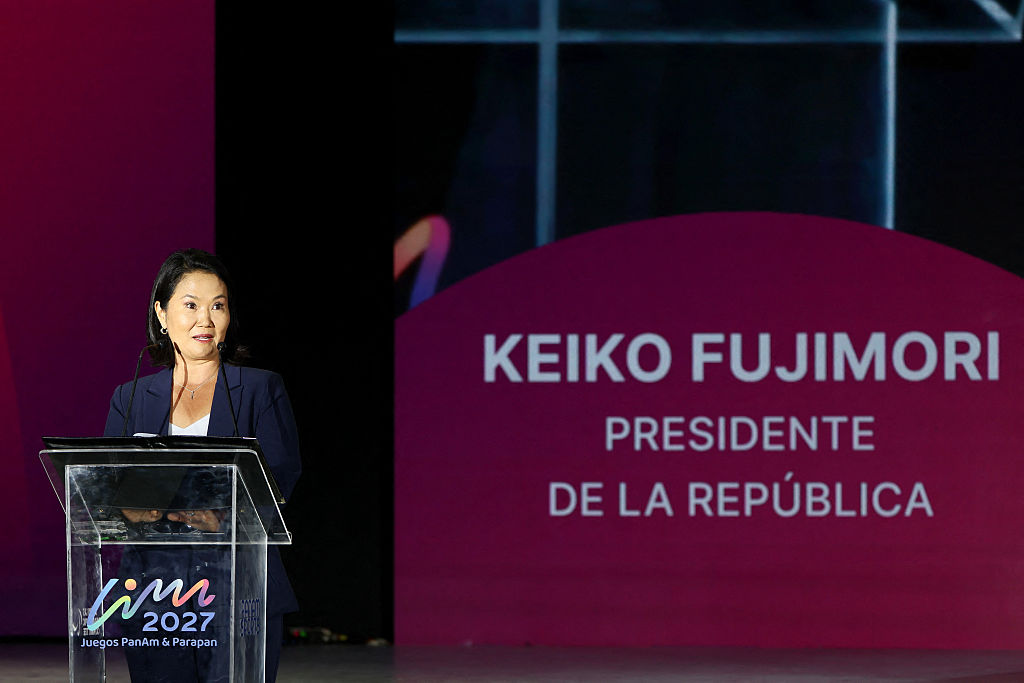
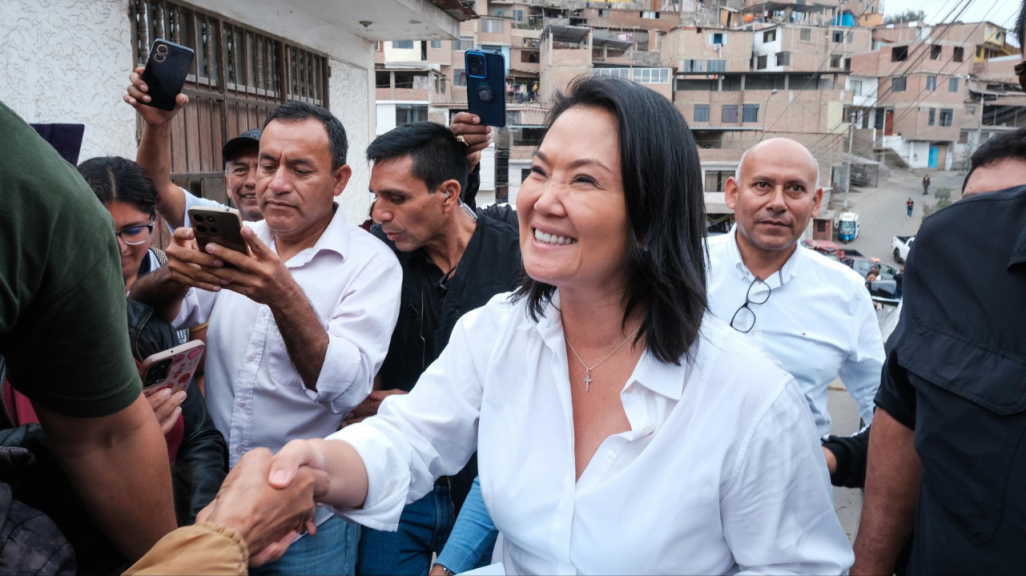
Right-wing former congresswoman Keiko Fujimori (2006–2011) will be Peru’s next president. She won the 2026 second round, her fourth consecutive runoff, with 50.1 percent of valid votes—just a quarter of a percentage point ahead of her opponent. The daughter of autocratic ex-President Alberto Fujimori (1990–2000), she held sway in Peru’s Congress even while out of office through her leadership of the People’s Force party.
She defeated an opponent on the opposite side of the ideological spectrum: Congressman Roberto Sánchez of Together for Peru. Sánchez previously served as foreign trade and tourism minister for leftist ex-President Pedro Castillo (2021–2022), who is currently in prison for an attempted “self-coup.” Sánchez was endorsed by his former boss, Fujimori’s opponent in the 2021 presidential runoff.
Keiko Fujimori and Roberto Sánchez will compete in the June 7 runoff that pits right versus left.
Key takeways:
- Only formalities remain on Keiko Fujimori’s path to a July 28 inauguration after the conclusion of the runoff vote count.
- Although her runoff opponent maintains claims of election fraud, fellow right-wing leaders across the region have already recognized Fujimori as Peru’s president-elect.
It took Peru’s election authorities three weeks to conclude the vote count of the June 7 presidential runoff. With the final tallies reviewed on June 29, the numbers confirmed right-wing Keiko Fujimori as the next president, having won 50.1 percent of valid votes.
She bested leftist congressman Roberto Sánchez by less than 50,000 votes, a slim margin to which she alluded in remarks to the press, saying, “We receive this result with great responsibility, especially knowing that our country is practically divided and we have a big responsibility to listen to both sides.” Narrow victories have become a defining feature of Peru’s recent presidential elections, the last four of which Fujimori contested.
While emphasizing that she awaits the election board’s official declaration of her victory, which is expected on July 3, Fujimori defined her first priorities heading into office as “recovering order” and preparing for the El Niño climate phenomenon. Climate scientists are anticipating a strong El Niño season in which Pacific Ocean temperatures may approach record highs and set off severe flooding and landslides in Peru over the coming months.
Fujimori, who will be the first woman elected president in Peru, has received congratulations from around the region. A June 30 statement from U.S. Secretary of State Marco Rubio says his government “looks forward to deepening collaboration” on security and trade. Right-of-center Latin American presidents including Javier Milei of Argentina, Rodrigo Paz of Bolivia, José Antonio Kast of Chile, Luis Abinader of the Dominican Republic, Nasry Asfura of Honduras, and Santiago Peña of Paraguay also offered public congratulations, as did the heads of the Organization of American States and the Andean Community.
Sánchez has so far refused to accept defeat and on June 30 said he would submit a complaint to the Inter-American Commission on Human Rights about alleged election irregularities.
Keiko Fujimori is readying to ascend Peru’s presidential throne. With 99.8 percent of votes counted on June 23, the numbers finally confirmed that the outstanding ballots aren’t enough for Roberto Sánchez to overcome Fujimori’s lead in the June 7 runoff. The difference between them at the time of publishing stood at around 45,000 votes—or a quarter of a percentage point.
The almost even split has become a feature of recent presidential elections in Peru. “Our country is very divided,” says former Peruvian Finance Minister Alfredo Thorne on this episode of Latin America in Focus, highlighting, among other reasons, a longstanding rift between the rural highlands of Central and South Peru and the historically conservative capital of Lima.
In a conversation with AS/COA's Carin Zissis, Thorne analyzes Fujimori's challenge to unite the country's divide while needing to reach across the congressional aisle to advance her legislative agenda. On the trade front, the former World Bank senior economist predicts that Fujimori’s administration is unlikely to break from Beijing even as it seeks to “keep fluid relations with Washington.”
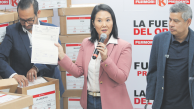
The former Peruvian finance minister analyzes the social, political, and foreign policy tensions awaiting the new administration.
Key takeaways:
- Fujimori looks set to become president as disputed ballots from Lima and abroad fall in her favor.
- Her party will have the most seats, but not a majority, in a fragmented legislature that returns to having two chambers.
Keiko Fujimori appears on track to win the presidency on her fourth attempt. She regained her lead over Roberto Sánchez as Peru’s election authorities began public recounts of some of the more than 1,600 disputed vote tally sheets on June 11, days after presidential runoff vote. Most ballots under review are from polling sites in Metropolitan Lima, Callao, and abroad, all of which are conservative strongholds where Fujimori bested Sánchez by almost two votes to one.
With almost 99 percent of ballots counted on June 15, Fujimori was ahead by around 22,500 votes, an advantage of just 0.1 percentage points. Fujimori has rejected her opponent’s call to submit a joint request for a complete recount, pointing out that electoral law stipulates that only certain contested tally sheets can be submitted to a recount and these are determined by electoral officials (see April 20 entry). Sánchez’s Together for Peru has also been collecting donations to support legal efforts to annul votes from over 1,700 polling sites in Lima and districts in northern Peru, claiming vote manipulation in favor of Fujimori and her Popular Force party.
In the meantime, on June 13, electoral authorities completed the vote count for the congressional elections, two months after the vote that held simultaneously with the April 12 first-round presidential election. The results confirm that Fujimori’s right-wing Popular Force will occupy the most seats in both houses of Peru’s newly bicameral legislature, but won’t hold a majority in either. In the 60-seat Senate however, analysts like previous Latin America in Focus guest Javier Albán point out that Popular Force’s 22 senators will be enough to block the two-thirds majority needed to pass major legislative actions, such as impeachments.
The new Congress will be inaugurated for a five-year term on July 28 alongside the incoming president.
Among the notable names in the Senate is José Mercedes Castillo, the brother of imprisoned ex-President Pedro Castillo (2021–2022). A member of Sánchez’s Together for Peru, he joins the upper house as the second-most-voted senator. Ex-Lima Mayor Rafael López Aliaga (2023–2025), who finished third in the presidential first round, will not be joining. Since missing out on the runoff places, López Aliaga has insisted he won’t take up the senate seat he ran for simultaneously (an option offered to presidential candidates) and later announced his run for deputy mayor of Lima in October’s local elections. Peru’s constitution bans consecutive mayoral reelection.
Key takeaways:
- Early results indicate a razor-thin margin between Keiko Fujimori and Roberto Sánchez, which could prolong a closely scrutinized vote count.
- Peruvians could be left to wait for at least a month for official confirmation of their next president.
Peru’s next president will likely be decided vote by vote. But on the night of the June 7 runoff election, the mood at Roberto Sánchez’s gathering was more celebratory than that of his rival. That’s because a quick count conducted by pollster Ipsos and local democracy watchdog agency Transparencia showed him with 50.3 percent of the vote compared to Keiko Fujimori’s 49.7 percent.
The heads of both Ipsos Peru and Transparencia emphasized that the preliminary results showed “a technical tie” between the contenders, with just 0.6 percentage points separating the two. Moreover, exit polls from Ipsos as well as Datum, another polling firm, had Fujimori with a slight advantage over Sánchez. With over 94 percent of the vote counted, official results at the time of publication show Sánchez Fujimori ahead by around 16,000 votes, with ballots from rural regions helping him overtake Fujimori’s earlier lead. However, the processing of votes from abroad, which are expected to favor Fujimori, has barely begun.
Still, Sánchez—dressed in his customary white shirt and wide-brimmed hat—declared to a gathering of Together for Peru supporters on election night that the quick count proved “the certainty of the popular movement’s support." Standing on a balcony overlooking Lima’s San Martín plaza, he thanked the leaders of political parties that joined his alliance, including former presidential hopefuls Alfonso López-Chau and Ricardo Belmont.
At a press conference a little later in the night, Fujimori called for patience until the official vote count is complete, which she said could take “long days.” She added that, given the technical tie, “it would be irresponsible to define the result based on a sample,” noting that the quick count depended on a review of around 1,000 tally sheets of more than 90,000 in total. She urged her party’s observers to be even more vigilant throughout the official count and said she would respect whatever the result was, calling on Sánchez to do the same.
Speaking to state media a day before the runoff vote, the head of Peru’s election supervision agency estimated that the official proclamation of results could arrive by mid-July, taking into account the review of disputed ballots and a potential recount. The presidential inauguration is scheduled for July 28. Election observers from the Organization of American States and the European Union described an election day free of major disruptions. (See previous entries on delays and logistical failures during the April 12 first round.)
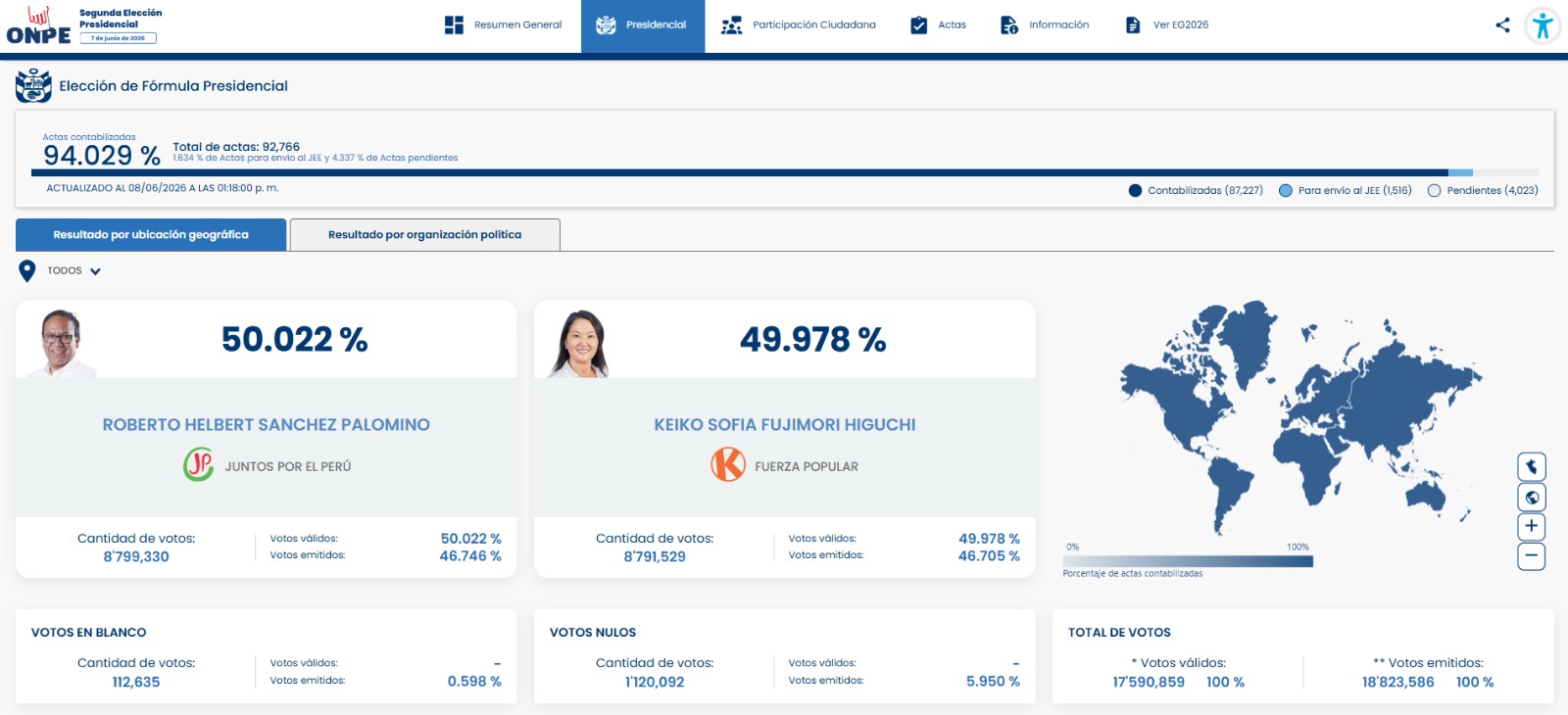
Results of the runoff vote count as at 2 pm on June 8. (ONPE on X)
Key takeaways:
- With several endorsements, Roberto Sánchez has formed a left-leaning alliance that stretches to the center.
- Rafael López Aliaga, Keiko Fujimori’s main right-wing competition in the first round, didn’t formally endorse her, but seemed to direct support her way.
More than 70 percent of valid ballots in the April 12 first round went to candidates other than runoff contenders Keiko Fujimori and Roberto Sánchez. Now, some defeated hopefuls—but not all—have made endorsements in the second round.
Former Central Bank Director Alfonso López-Chau Nava (2006–2012), who finished seventh with more than 1.2 million first-round votes as the presidential candidate of the Now Nation party, was among the first to indicate support for Sánchez, appearing alongside him at a May Day march. His party formalized their endorsement on May 23, about a week after it was confirmed that Sánchez had advanced to the runoff. On May 26, the Civic Works Party (OBRAS) of fifth-place Ricardo Belmont, who earned almost 1.7 million votes, followed.
OBRAS and Now Nation, along with two smaller left-leaning parties, collaborated with Sánchez’s Together for Peru party to revise the leftist candidate’s packet of proposed policies. The updated plan, which Sánchez presented on June 1, appears to moderate his economic agenda, describing a vision for a “free-market economy state that respects international free trade agreements and has norms friendly to internal and external investment.”
Fujimori has not received explicit endorsements from any major first-round candidate. But, third-place finisher Rafael López Aliaga, who was around 21,000 votes shy of a runoff spot and has maintained allegations of fraud, has come the closest. “With the imminent risk of falling in the hands of the radical left or communism ... no to blank votes, no to spoiled votes, no to votes for radical left communism,” he and his conservative Popular Renewal Party declared on May 25, urging a rejection of Sánchez while avoiding a full-throated backing of Fujimori. Almost 2 million ballots were cast for López Aliaga in the first round.
Among other top finishers, Jorge Nieto of the centrist Good Government Party, who finished fourth with 1.8 million votes, told his supporters to cast blank or spoiled ballots. Country for All, the party of right-wing comedian and sixth-place finisher Carlos Álvarez, did not endorse either candidate, suggesting that supporters vote according to their conscience. More than 1.3 million Peruvians voted for Álvarez in the first round.
Key takeaways:
- Keiko Fujimori pitched herself a tough-on-crime, fiscally responsible leader who is seeking to stimulate the private sector but remains attuned to the needs of disadvantaged segments of the population.
- Roberto Sánchez leaned into his “man of the people” image, while moderating his economic plans in an outreach to the political center.
Things got tense in the first and only head-to-head debate between Keiko Fujimori and Roberto Sánchez on May 31, as the runoff rivals competed to promote their visions of governance just one week before the June 7 second-round vote.
Fujimori, a former first lady and ex-congresswoman, sought to position herself as the more experienced candidate. “This election is not about me or generating division. It’s about which team is better equipped to bring order to the country,” she emphasized. On crime, the main issue concerning voters, she presented plans to deploy a 24/7 military and police presence at transport hubs, ramp up border patrols, and empower a rapid-response unit connecting the justice ministry, attorney general’s office, and national police to speed up convictions. As part of her economic agenda, she proposed raising cash for social programs by diverting funds away from Petroperú, the state-run oil company she accused of funneling “millions of soles in bonds to Mr. Sánchez’s friends” in reference to influence peddling investigations against ex-President Pedro Castillo (2021–2022), in whose cabinet Sánchez served.
For his part, Sánchez introduced himself in Quechua, a nod to the Indigenous sectors of his base in the highland regions of southern and central Peru, as he laid out a vision for a decentralized and “intercultural state.” His security proposals included improving police pay, training, and equipment, as well as providing military reinforcement to combat crime. The debate stage also provided an opportunity for Sánchez to signal a shift towards the center on some of his earlier economic proposals. “We’re not communists,” he stressed, promising to respect the independence of the Central Bank and backing off prior suggestions that he would oust its president, Julio Velarde. He did, however, add that “a deep tax reform with a vision of solidarity” was needed to fund social programs and proposed phasing in free and universal university education.
Peppered throughout the debate were accusations about who was to blame for the institutional “chaos” that has brought the country eight presidents over the last decade. Sánchez labeled Fujimori and her Popular Force party “coup plotters who ruptured the separation of powers,” while Fujimori spotlighted Castillo’s 2022 attempted “self-coup” as the turning point. But the tensest moment of the night arrived when Fujimori condemned her opponent’s repeated allusions to her allegedly strained relationship with her family.
Key takeaway:
- The two finalists, Keiko Fujimori and Roberto Sánchez, had a combined share of just 29 percent of valid votes in the first round. They will have three weeks to jockey for endorsements and attempt to convince a highly fragmented electorate of their vision for Peru.
On May 17, over a month after the first-round vote, the National Elections Board declared that Keiko Fujimori and Roberto Sánchez will compete head-to-head in the June 7 presidential runoff election. The Elections Board, or JNE, certified a vote count that showed Fujimori, leader of the conservative People’s Force party, as the first-round winner with 17 percent of valid ballots. Together for Peru’s Sánchez, a leftist, was more than 860,000 votes behind her, a difference of about 5 percentage points.
Rafael “Porky” López Aliaga, the right-wing ex-mayor of Lima who, along with Fujimori, led polling for much of the year leading up to the election, missed the runner-up position by just 21,000 votes. Following the official declaration, he repeated his allegations of fraud and accused the country’s electoral agencies of “committing a coup d’etat.”
A day after confirming the results, the head of the JNE announced the runoff debate between Fujimori and Sánchez will take place May 31.
To learn more about the candidates and their platforms, read our explainer.

On her fourth try, conservative Keiko Fujimori faces off against leftist Roberto Sánchez after a first-round vote marred by mishaps.
Key takeaways:
- Scrutiny of ONPE’s handling of the April 12 election continues to widen with an audit of election software.
- Peru’s authorities are engaged in multiple review and investigation processes as they seek to improve voter confidence in the electoral system ahead of the June 7 presidential runoff.
In response to an array of concerns about the running of April 12 vote, Peru’s election supervision authority announced on May 2 “an exhaustive and holistic IT audit” of the systems used to transmit, process, and present votes. The National Election Board (JNE) said an independent Academic Committee, made up of experts in technology, cybersecurity and systems auditing, would conduct the audit, leveraging a mechanism created by a November 2025 law to support legal and technical reviews of elections.
The measure seemed to cause friction with the country’s other main electoral agency. The National Office for Electoral Processes (ONPE), which has come under fire for its mismanagement of this year’s vote, released a statement the same day asserting that an independent audit before the election had proven “a stable functioning” of these systems. However, on April 23, the ONPE confirmed that it would not reuse an electronic vote processing system set up mostly in Metropolitan Lima for the June 7 second-round presidential election due to installation and printing issues in the first round.
There has been no timeframe set for the IT audit, an issue raised by presidential candidate Rafael López Aliaga. López Aliaga’s Popular Renewal party issued a statement saying that the JNE should not declare first-round results until “an independent audit done by an international company is carried out” and implying that the agency had a partisan bias.
As a separate review process of contested vote tally sheets continues (see April 20 entry), López Aliaga is currently in third place, around 25,000 votes behind second-place Roberto Sánchez in the race for the June 7 runoff against leading candidate Keiko Fujimori. The JNE set May 7 as the deadline for vote recounts.
- What happened: Just over a week after an election day beset by logistical challenges, the head of the election organizing agency resigned.
- Why it matters: Peru’s election agency is currently engaged in reviews of voting records from the April 12 elections as they prepare for the upcoming presidential runoff.
- What to watch for next: The incoming head of the agency will be under the microscope on June 7 when Peruvians again turn out to vote in the second round of the presidential election.
Piero Corvetto, who led Peru’s National Office of Election Processes (ONPE) since 2020, announced on Tuesday his decision to step down from his post. ONPE is the agency in charge of organizing and executing elections.
In his public resignation letter, Corvetto said he made the decision in the interest of the June 7 presidential runoff being carried out “in a context of greater public confidence in the ONPE.” Although he acknowledged there were problems in the distribution of election materials on April 12 (see previous entries) and that he was willing to respond to questions about ONPE’s role, he added that there are other questions that don’t have anything to do with ONPE’s logistics chain and which should be subject to “an impartial and exhaustive investigation.”
Corvetto faced intense criticism from major presidential candidates for delays in the opening of many polling sites in Lima on election day. Scrutiny on Corvetto intensified on April 16 when a news outlet reported on the discovery of four boxes of ballot papers on a street in Lima. ONPE officials later said the boxes had been forgotten in a taxi but asserted that the ballots in them had already been processed.
Corvetto faces a legal investigation from Peru’s National Board of Justice (JNJ) related to the issues in the April 12 election. The JNJ is also the institution to which Corvetto submitted his resignation. Less than half an hour after Corvetto published his resignation letter on social media, the board issued a statement saying it had unanimously agreed to accept it.
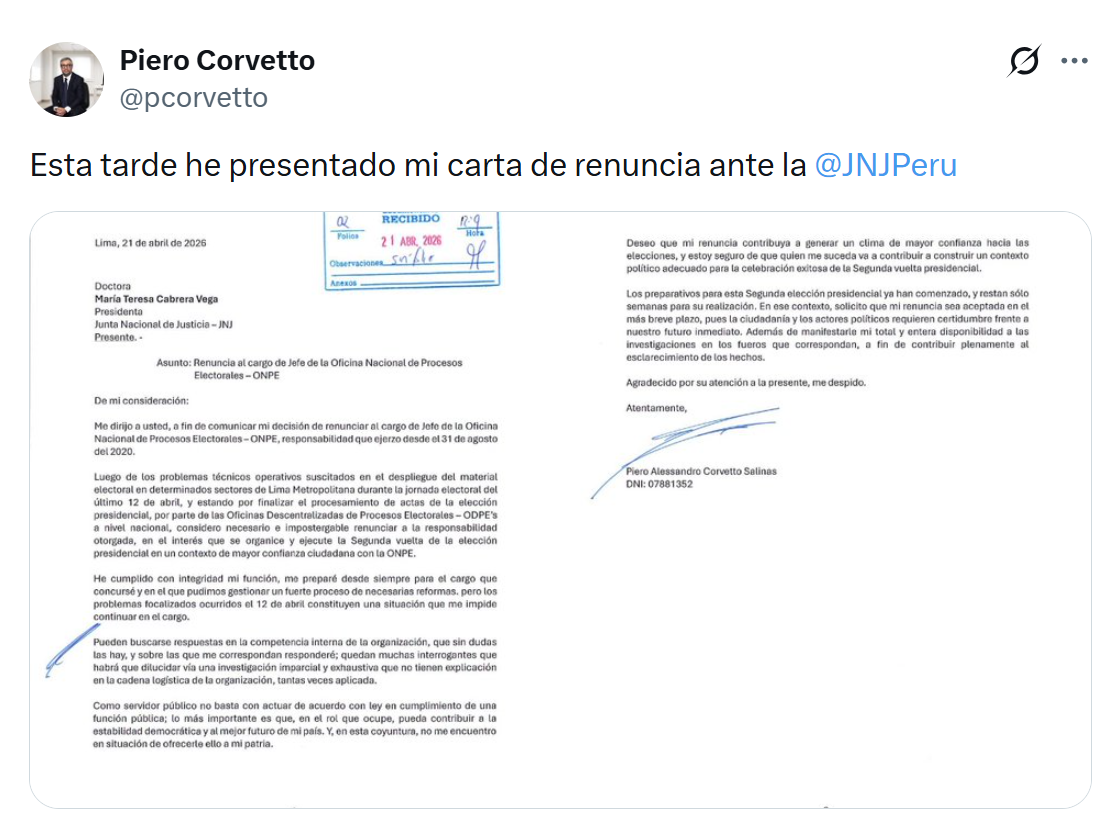
Piero Corvetto, former head of ONPE, posts his resignation letter. (X)
- What happened: Special electoral boards around the country began their review of voting records flagged as having errors or inconsistencies.
- Why it matters: Election authorities say that this review, which includes ballot recounts for the first time, could see confirmation of presidential runoff contenders happen in mid-May.
- What to watch for next: About a third of disputed vote records come from polling stations in Lima and abroad, districts where López Aliaga has received six and ten times more votes than Sánchez, respectively.
“We expect to have the results of at least the presidential election by mid-May,” Yessica Clavijo, the general secretary of Peru’s National Election Board, told a local news outlet over the weekend. On April 20, an important step toward finalizing those results began: the review of over 5,800 disputed presidential vote tally sheets. Each tally sheet sums up between 250 to 300 votes, meaning that around 1.5 million votes are in play. With 93.6 percent of ballots processed, Roberto Sánchez leads Rafael López Aliaga by just 14,000 votes in the race to compete against first-place finisher Keiko Fujimori in the June 7 runoff.
Reasons a tally sheet could have been sent for review include a missing signature from an election supervisor, mistakes in adding votes, or illegible information. Thanks to a law approved in 2025, election review committees can now conduct a manual recount of ballots when deemed necessary to resolve discrepancies between the various copies of voting records under dispute. In previous elections, the tally sheet was simply voided when a review process could not resolve an issue.
As of noon on April 20, the website of Peru’s National Election Board, a supervisory body, showed that 276 of the 5,180 presidential vote tally sheets it had received are earmarked for recounts. Representatives of political parties and officials from the national Prosecutor’s Office can observe the public recounts.
- What happened: The sum of votes that won’t count toward the presidential race is more than any candidate has received.
- Why it matters: It suggests a significant degree of voter frustration in a highly fragmented and polarized political landscape.
- What to watch next: Will the two candidates who advance to the runoff be able to attract these disaffected voters?
Peruvians had 36 names to choose from in the first round of the presidential election. And yet, with just over 93 percent of the votes counted, blank and null votes add up to almost 17 percent of all ballots cast. Keiko Fujimori, the leading candidate, has received just over 14 percent, a difference of more than 455,000 votes.
Null ballots, which can signal a protest vote, may also include those with unintentional errors in marking one’s preference that invalidate the vote. However, even looking solely at blank ballots, those nearly 2.2 million invalid votes—11.6 percent of total votes—would be enough to secure a runoff place for a candidate.
In an AS/COA Online Q&A with Datum CEO Urpi Torrado of DATUM before the election, the pollster noted that in vote simulations in the days before the election, around 26 percent of votes for president were invalid, in part due to the historically large and complex ballot Peruvians had to fill out.
This continues a trend seen in the first round of both the 2016 and 2021 presidential elections, when blank and spoiled ballots concentrated over 18 percent of all votes.
- What happened: The number of vote tally sheets heading for extra review is growing as the distance between leftist candidate Roberto Sánchez and right-wing Rafael López Aliaga shrinks.
- Why it matters: Results—and the candidate who will dispute the second round with Keiko Fujimori—will likely not be confirmed soon.
- What to watch next: The distribution of votes from pending tally sheets, as well as those sent for review, will be key to who advances to the runoff.
The margins have narrowed in the battle between Roberto Sánchez and Rafael López Aliaga to face off against Keiko Fujimori in the Peru’s June 7 presidential runoff. With 93 percent of votes counted four days after the vast majority of ballots were cast on April 12, second-place Sánchez is fewer than 7,000 votes ahead of his conservative rival.
An already sluggish vote count will be further slowed by the fact that almost 5,400 tally sheets, possibly containing close to one million votes, have been marked for review. These are sheets identified as having possible errors or inconsistencies. About three-quarters of sheets to be reviewed are from polling sites in more rural, left-leaning areas where Sánchez outperforms López Aliaga.
In the meantime, both Sánchez and Fujimori denounced López Aliaga’s calls for a “civil insurgency” to protest the election, saying that it would generate “chaos." On Thursday afternoon, López Aliaga erased a social media post in which he offered a reward of up to $5,800 to anyone who found evidence of electoral fraud. López Aliaga’s Popular Renewal party also submitted a new request to two election review boards in Lima on April 15 asking electoral authorities to void votes cast at polling stations that opened after the constitutionally set noon deadline on April 12. (See previous entries for details on voting delays and extensions.)
- What happened: After voting delays triggered concerns, election observation missions released preliminary reports on how election day unfolded.
- Why it matters: Major conservative candidate Rafael López Aliaga, in contention to make the runoff, has consistently alleged fraud and called for the vote to be annulled.
- What to watch next: Investigations against election authorities are underway, and López Aliaga has signaled intentions to dispute the election results.
In their first reports on Peru’s vote, released on April 14, the election observation missions of the Organization of American States (OAS) and the European Union (EU) seem to agree: there were issues setting up polling stations, but the vote was largely orderly and allegations of fraud have not been substantiated.
The international observers noted that absent or underprepared poll workers and the late arrival of election materials delayed the opening of many voting centers, especially in Metropolitan Lima. The OAS mission stated that these delays “fed fraud narratives that some political sectors were spreading since before the election.”
While acknowledging that over 55,000 Peruvians—around 0.2 percent of the electorate—could not vote on April 12 (see previous entry), the missions applauded the national electoral authorities’ decision to extend voting an extra day at polling sites that did not open.
Nevertheless, conservative candidate Rafael López Aliaga filed an appeal with the National Elections Board (JNE) on April 15 claiming that more than 600,000 limeños were unable to vote because of the problems. He also called for the arrest of Piero Corvetto, the head of ONPE, the agency in charge of organizing elections. Corvetto and three other top ONPE officials, as well as the private company contracted to deliver the election materials, are also the subject of a criminal complaint the JNE filed on April 13 concerning the logistical problems on election day.
López Aliaga has fallen from second to third place in the presidential race with over 90 percent of the vote counted. Roberto Sánchez, the leftist candidate now in second place behind Keiko Fujimori, attracts strong support from the rural areas whose votes are historically among the last to be tallied.
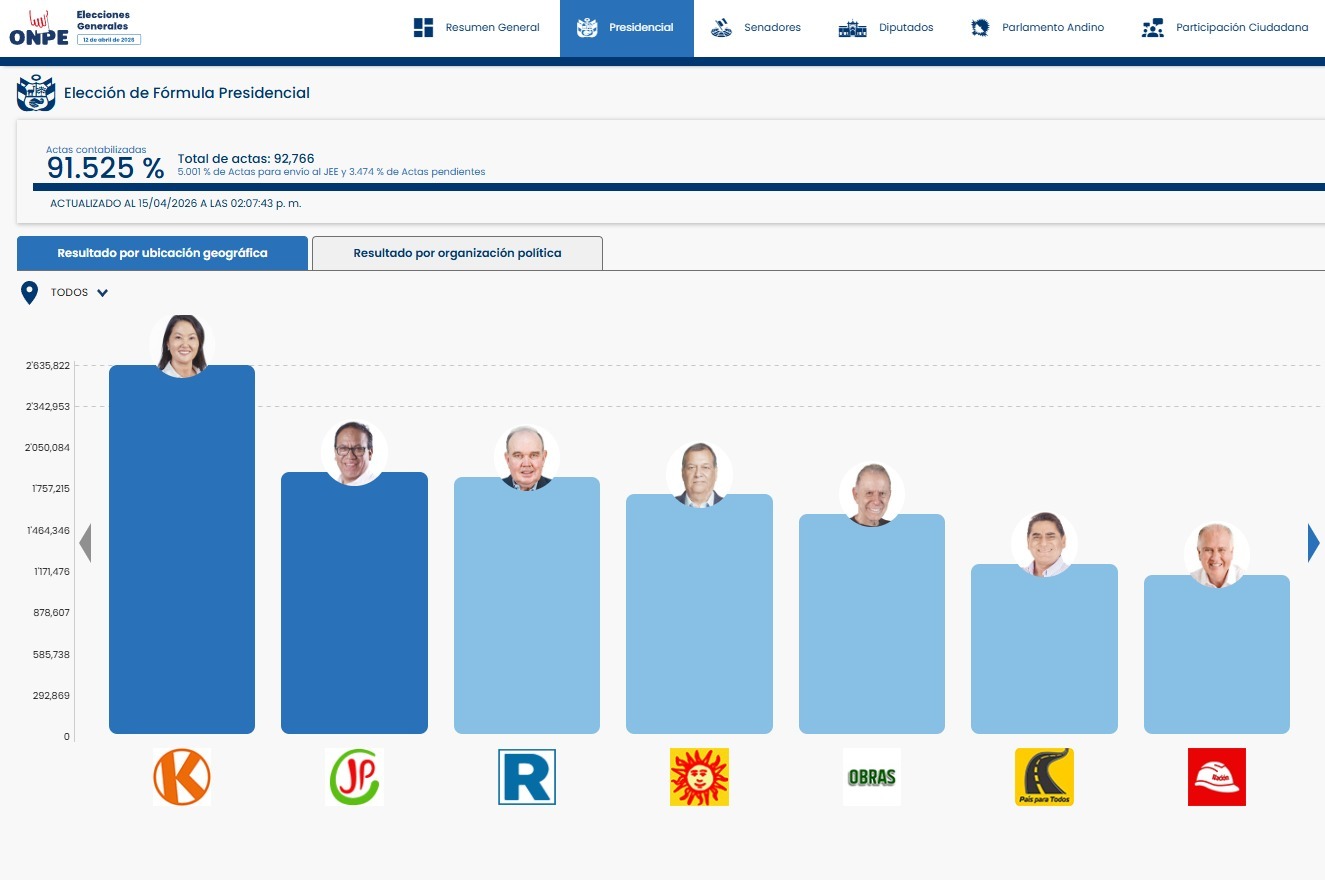
Results of the vote count as at 2 pm on April 15. (ONPE on X)
- What happened: Peru has an extra day of voting at a dozen polling stations in Lima that did not open on election day, affecting over 55,000 of Peru’s 27.3 million-strong electorate.
- Why it mattered: Major presidential candidates accused the national electoral agency of fraud as quick counts showed a tight race for the runoff against Keiko Fujimori.
- What to watch next: All voting ends at 6 pm local time on April 13, by which time there could be a clearer indication of which two presidential candidates advance to the June 7 runoff.
Over 55,000 Peruvian voters could not cast a ballot on April 12 because their polling station did not receive election materials in time to open. The result? Peru's national electoral tribunal made the unprecedented decision to extend voting by an extra day at the polling stations that remained closed on election Sunday. The order applies to 13 voting sites in Lima, as well as a few polling stations at Peruvian consulates in the U.S. cities of Paterson, NJ, and Orlando, FL, where there were staffing issues.
ONPE, the government agency that organizes elections, blamed the private company hired to transport election materials for Sunday’s logistical challenges that forced the agency to push the deadline to open polling stations from 12 to 2 pm and extend voting an extra hour to 6 pm. ONPE announced it would take charge of delivering election materials on Monday. The head of ONPE stressed that these issues did not constitute electoral fraud and a statement from the Organization of American States electoral observation mission expressed support for the decision to allow voting on Monday, adding that apart from delays, voting had been “peaceful and orderly.”
Major candidates including Keiko Fujimori and Jorge Nieto expressed concerns about disruptions to the voting process. Others, such as Rafael López Aliaga and Ricardo Belmont, alleged that election fraud was underway. Quick counts released by polling firms Datum and Ipsos on April 13 show that less than 3 percentage points may separate the four candidates behind Fujimori, who include López Aliaga, Belmont, Nieto, and Roberto Sánchez.
In the week leading up to Peru’s April 12 elections, pollsters are legally barred from releasing voter intention data. But that also happens to be when around a third of the country’s 27.3 million voters are likely to make their decision.
“We have 14 percent of people saying that they decide the same day as the election,” said Urpi Torrado, CEO of polling firm Datum, “Even the candidate with the highest voting intention doesn't have 14 percent. So 14 percent deciding the day of the elections can change everything.”
In this interview, Torrado covers the challenges of polling across Peru’s diverse geography and population, late surges in candidate popularity, and why there might be a high percentage of invalid ballots.
AS/COA Online: There are a record 35 candidates competing to be president and five elections happening on April 12. Voters have a very large ballot to fill out! What challenges does that present for you as a pollster?
Urpi Torrado: The challenge, more than the ballot, is the country. Peru is divided into five different regions. One is Lima, the capital city, and then we have north, the jungle, the highlands, and the south of the country. And each region has its own challenges...
Read the full Q&A with Torrado, the head of one of Peru's top pollsters.
- What happened: Candidates addressed crime and corruption, top voter concerns, in the first round of a marathon debate schedule.
- Why it mattered: A notable debate performance could help a candidate emerge from the crowded field trailing frontrunners Keiko Fujimori and Rafael López Aliaga.
- What to watch next: Economy and education will feature as the focus of the second round of debates from March 30 to April 1.
With 35 candidates in the running for president, Peruvians wanting to hear from all their options must sit through at least 15 hours of debate spread across two three-day blocks. A random draw determined the split of the candidates into groups of 11 or 12 that meet on the debate stage each day. These are then further divided into four groups of three who directly debate each other on the topic at hand.
¡Llega el gran ciclo de Debates Presidenciales!
Los candidatos a la Presidencia de la República se encuentran frente a frente para exponer sus planes de gobierno. Es el momento de escuchar, contrastar y decidir.
📍Anota las fechas:
📅Primera jornada: 23, 24 y 25 de marzo. pic.twitter.com/bs8SWl4cKw— JNE Perú (@JNE_Peru) March 17, 2026
The first thematic block of debates, from March 23 to 25, tackled the two top voter worries: crime and corruption. But concrete proposals were scant as candidates spent much of their allotted time exchanging insults and accusations.
Keiko Fujimori was a popular target. Participating on the last day of the first block, her competitors brought up corruption cases connected to the authoritarian administration of her father, ex-President Alberto Fujimori, for whom she served as first lady. And as head of the Popular Force party that leads a right-wing bloc in Congress, they also blamed her for a decade of political turbulence in which impeachment proceedings have truncated the terms of five presidents.
The other frontrunner, Rafael López Aliaga, came under fire for being the subject of multiple investigations into possible crimes committed during his time as Lima’s mayor. Most recently, Peru’s public ministry opened a case earlier this month into whether he illegally issued municipal bonds worth more than $1.1 billion.
In terms of actual policy proposals, candidates spoke of the need to for more police funding, as well as better technology, to combat rising rates of extortions and violent crimes. Candidates, including López Aliaga and comedian Carlos Álvarez, also suggested that Peru withdraw from the Inter-American human rights system in order to reinstate the death penalty. Fujimori proposed bringing back masked judges in courtrooms, as was done under her father’s government, an idea also supported by López Aliaga.
Peru’s 2026 election will operate at an unprecedented scale. From the historic number of presidential candidates to an electorate that has grown by 65 percent over twenty years, the April 12 elections are already breaking records.
AS/COA Online highlights a few key facts and figures to shed insight into who’s voting, what they’re voting for, and what’s top of mind for voters when they cast ballots.
17.3 X 16.5 inches. Those are the dimensions of the largest ballots that will be cast in this year’s general elections...
Bloomberg’s Marcelo Rochabrún and Universidad del Pacifico’s Javier Albán analyze what to expect a year ahead of the presidential vote.