LatAm in Focus: Mercosur, EU, and the New Frontiers of Free Trade
LatAm in Focus: Mercosur, EU, and the New Frontiers of Free Trade
Trade expert Kellie Meiman Hock returns to explain how the EU-Mercosur deal fits a pattern of countries seeking to diversify in a shifting trade context.
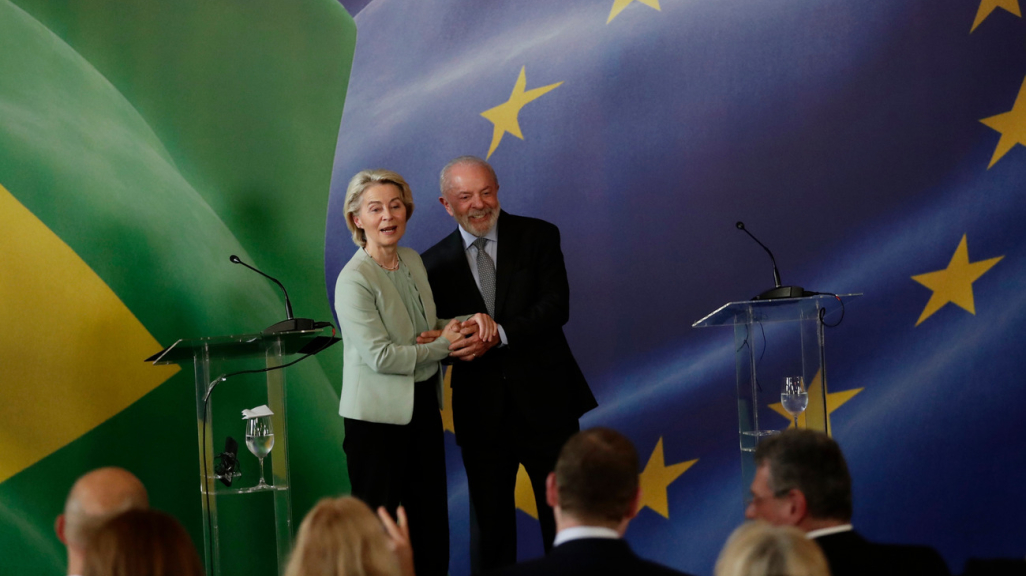
After more than 25 years of off-and-on negotiations, on May 1, Mercosur and the European Union will finally implement their long-awaited trade agreement. It’s a transatlantic trade deal spanning 31 countries and over 700 million people that some thought would never materialize. So, what finally convinced the two trade blocs to get this over the dotted line?
“ The reality is that today, given the approach that the United States is taking on trade policy, it really is nudging countries [...] to go ahead and take those risks. Because the risk of doing nothing is much higher than the risk of doing something," says trade expert Kellie Meiman Hock, a senior counselor at McLarty Associates. In a conversation with AS/COA Online’s Luisa Leme, Meiman Hock explains how the Trump administration's tariffs and trade investigations have spurred Mercosur, and other countries across the hemisphere, to deepen relationships with an expanded pool of partners.
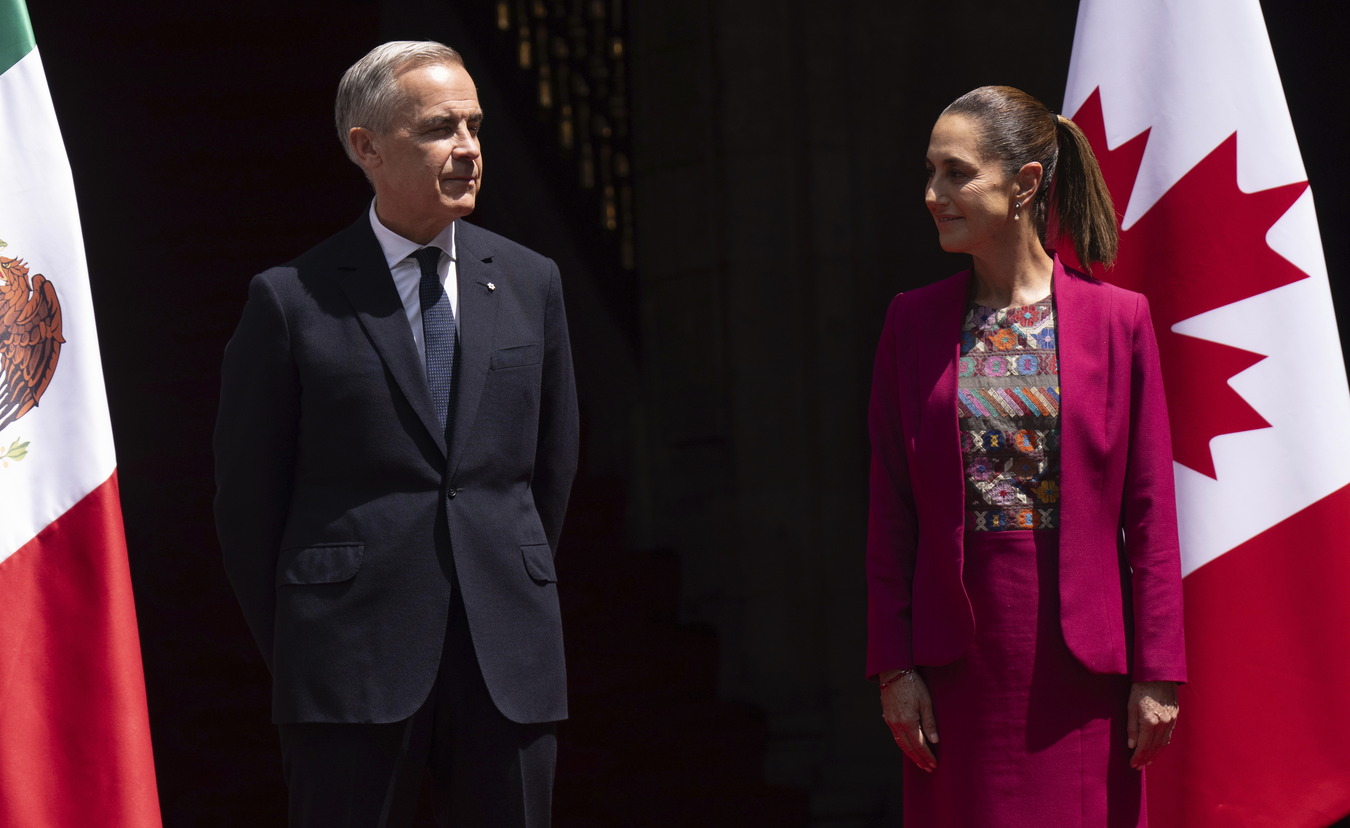
For Mercosur, whose four founding members—Argentina, Brazil, Paraguay, and Uruguay—ratified the EU agreement in quick succession from late February to mid-March, plans are already in motion to secure more signatures, and soon. A Mercosur deal with Canada, negotiations for which began eight years ago, could be signed by this fall, officials from both ends of the hemisphere said earlier this year. "Canadian trade negotiators are not gonna be getting a lot of sleep. They have a very ambitious trade agenda right now, and so I imagine they'll be negotiating on all fronts," notes Meiman Hock.
It’s all part of what she observes as an effort by countries around the region “to have as many solid trading partners right now as possible,” particularly in the context of U.S. pressure to weaken economic ties with China.
Another possible market for Latin American countries? Each other. “I think that having the region looking at its trading relationships among each other, through a prism that isn't necessarily U.S.-centric, I view as a positive,” says Meiman Hock. “I don't see that as being at odds with U.S. interests at all. More trade liberalization is better.”
A deal twenty-five years in the making becomes a reality on May 1 despite a looming court case.
Our guest
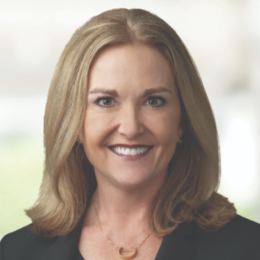
Kellie Meiman Hock is a Senior Counselor at McLarty Associates, where she founded the firm’s trade and Brazil/Southern Cone practices. Prior to joining McLarty, she served for almost a decade as a U.S. Foreign Service Officer at the Department of State, serving in Colombia and Brazil, as well as at the Office of the U.S. Trade Representative.
Kellie is also an adjunct professor at School of Foreign Service at Georgetown University and serves as an advisor on COA’s Trade Advisory Group. For over three decades, Kellie has worked on Latin America and on various aspects of trade, investment, and technology policy, helping companies to manage geopolitical uncertainty and industrial policy, from local content requirements to data localization and trade remedies.
Subscribe to Latin America in Focus, AS/COA's podcast focusing on the latest trends in politics, economics, and culture throughout the Americas.
This episode was produced by Luisa Leme and Khalea Robertson. Carin Zissis is the host.
Share and subscribe at Apple, Spotify,YouTube, or wherever you get your podcasts. Access other episodes of Latin America in Focus and send us feedback at latamfocus@as-coa.org.
Listen to our previous episode with Kellie Meiman Hock on the impact of the Trump administration’s tariff policy on Latin America. And for more on U.S. trade policy, listen our recent episode with CSIS’ Diego Marroquín Bitar.
The music in the podcast is Paulo Moura's “Tarde de Chuva” performed by the Cliff Korman Ensemble for Americas Society. Find out about upcoming concerts at musicoftheamericas.org. Share your love for Latin America: Join Americas Society.
Opinions expressed in this podcast do not necessarily reflect those of Americas Society/Council of the Americas or its members.
[MUSIC]
Carin Zissis: It’s one of the largest trade deals in the world, spanning 31 countries, over 700 million consumers, and a quarter of the world’s GDP.
Ninety-two percent of exports from Mercosur to the European Union are about to become tariff free. In the case of Brazil alone, tariffs on 5,000 products headed for Europe will end on day one.
That’s a lot of free trade in a world where tariffs have been, well, in vogue.
Hi, this is Carin Zissis, of AS/COA Online. Welcome back to Latin America in Focus.
The EU-Mercosur agreement goes into effect on May 1. It’s taken since 1999 to make this pact happen and still, not everyone is happy about it.
[MUSIC]
[CLIP of French farmers protesting in Paris and President Emmanuel Macron: “En substance, pour la France, c’est une surprise, une mauvaise surprise.”]
Zissis: Many people thought this transatlantic deal would never come to fruition. But then U.S. trade policy shook up the world. And a deal uniting the EU and South American economic blocs became possible.
Kellie Meiman Hock: The reality is that today, given the approach that the United States is taking on trade policy, it really is nudging countries in the other direction, to go ahead and take those risks. Um, because the risk of doing nothing is much higher than the risk of doing something.
Zissis: That’s our guest, Kellie Meiman-Hock. She's a senior counselor at McLarty Associates, an adjunct professor at Georgetown, and, we’re happy to say, an advisor for AS/COA’s Trade Advisory Group.
You heard Meiman Hock before on the podcast, days before Liberation Day in April 2025. In that interview, she not only predicted the EU-Mercosur deal would finally become a reality but she also gave us a big picture forecast: countries in the region would start diversifying.
Now, a year later, Meiman-Hock sat down with us again to go over how the trade picture is changing.
Meiman Hock: I feel like the longest decade of my life has been the last year.
Zissis: In this conversation with my colleague Luisa Leme, she explains what led to the EU-Mercosur deal finally getting signed and lingering sticking points. And we’ll hear how other countries—from Canada, to Central America, and even inside Mercosur—are dealing with a trade policy game she calls “completely unexplored territory.”
Thank you for joining us. And whether you’re listening in Montevideo, Montreal, or Manaus, don’t forget to subscribe to and share Latin America in Focus on Apple, Spotify, YouTube or your podcast platform of choice.
[SHOW INTRO WITH UPBEAT MUSIC – Latin America in Focus Podcast]
VOICE OVER: You’re listening to Latin America in Focus.
VOICE OVER 2: Latinoamérica en foco
VOICE OVER 3: América Latina em foco
VOICE OVER 1: A podcast by Americas Society/Council of the Americas on politics, economics, and culture in the region.
Luisa Leme: Kellie, thank you so much for joining us again in the show.
And thinking that the last time you've been on the show, you called, at that interview, that countries would diversify more, and more aggressively. And that deals like this Mercosur-EU...you said something like “maybe my grandchildren would see that deal, but now it could happen.”
If you think about this past year, we've seen this rearranging of global trade happening. How does the Mercosur-European Union deal fit into this context?
Meiman Hock: Great question. I mean, I'm happy to report I'm not a grandmother yet. But I'm even happier to report that we do have an EU-Mercosur deal. And just setting that upon the backdrop of the trade architecture: I mean, these negotiations started in 1999. It was a very, very different time. China hadn't acceded yet to the WTO. We hadn't launched the Doha development round. We hadn't, in the United States, started our era of what we called competitive liberalization, right? Where we were doing trade deals, especially in Latin America, but all over the world. And so it was a time where, I would say, there just wasn't the urgency that we have now with respect to trade diversification.
And look at today: you've got the WTO really struggling, dispute settlement not functioning. You've got the entire planet struggling with Chinese overcapacity and hyper subsidization and the competitive threat that that's creating in our countries. And you've got the U.S. reaction to that reality being a real break with the rules-based trading system.
So all of those indicators have really pushed U.S., Luisa, in the direction of trade diversification and, made it really a critical part of so many countries’ strategies, in the hemisphere, to be sure, but also globally.
We've got the Comprehensive and Progressive Trans-Pacific Partnership (TPP)—which the U.S. is no longer a part of—warming up to the EU. Not necessarily a full integration, but certainly, talking more.
We've got the Canadians negotiating like crazy, right? They launched a consultation back in December for trade negotiations that are ongoing. They've relaunched their trade negotiations with India, but they also did consultations with respect to Thailand, with respect to UAE, and also Mercosur in our hemisphere, right?
So that's something I've worked on for a long time. Oh gosh. When I was going down to Brazil a lot back in the day for Blackberry, if we remember our Blackberries before the iPhone, we were really encouraging that, you know? “Come on, let's do an agreement.” And again, in that environment, priorities could fall by the wayside. And today there's this sense of urgency, right?
And, outside of the hemisphere, the EU completing their agreement with India, completing their agreement with Indonesia. These are not easy countries to negotiate with. So the fact that they've been able to seal those agreements is very important.
The Future of Investment and Trade Partnership is a new initiative that includes a number of our hemispheric trading partners: Chile, Costa Rica, Panama, Uruguay, Paraguay. We're just seeing so many different initiatives around the world that it's important to look at the EU -Mercosur agreement upon that backdrop.
Leme: You say that there is a sense of urgency. Can you tell U.S. why now?
Meiman Hock: Well, we met last time right before Liberation Day, right? Before April 2nd last year. Obviously, the tariff burden that that brought about was significant for a number of U.S. trading partners.
The recent launch of 301 investigations, a different part of U.S. law. Investigations are being held at USTR. One of them is linked to whether or not countries have adequate legislation and policies to fight forced labor. And then the other one is linked to whether or not countries are part of the problem when it comes to structural excess capacity.
We've got the EU, we've got Mexico as targets of that investigation. The 301, the two 301 investigations that were filed subsequent to the application of the 122 tariffs post the Supreme Court determination on IEEPA. That's on top of the 301 that was already launched last summer on Brazil, which is one of the broadest 301s … was last summer at least, one of the broader 301s that had ever been filed.
So all of that means, despite what the Supreme Court said, and there are legal challenges to be clear, all of this is just creating additional pressure and, frankly, just additional proof points for countries that they need to diversify and that the United States is not a reliable training partner, unfortunately. But this is the philosophy of the Trump administration. We have to see life as it is and be realistic. And I think that that's what most countries are doing.
Leme: You were the first guest to talk to U.S. about IEEPA and then there's an episode with Diego Marroquín in which he goes through different mechanisms, such as the 301 investigations.
Meiman Hock: Sixty different economies are covered by the forced labor one. So it's a lot. You think of the swath of global trade flows, it really covers the vast, vast majority.
Leme: With those details, you explained to U.S. why it’s so urgent to be diversified. [LAUGHS]
Hock: It does. It does. And the reality is the U.S. consumer market is so significant. It's not just about consumers too, right? It's about U.S. production. It's about our very competitive services and technology sector that needs a lot of imports, right? For all those data centers, et cetera. It's about our factories that need inputs for U.S. production. I wish we would talk more about inputs than imports. But that's not where the political framing is, at least right now.
And it does, to your point, Luisa, kind of force the argument for diversification, even though it's painful for countries. Let's be honest, there's a lot of countries and a lot of companies that have benefited from the fact that the United States buys a lot of stuff.
Leme: Yeah. So we can't really ignore the size, the symbolism of this EU-Mercosur deal, right? We're talking about 25 percent of the GDP of the world. Things are not so simple when they get to be really big. There has been resistance to this deal, and we are entering the interim trade agreement now on May 1st. So, there's a still Supreme Court case in Europe about this deal.
Can you talk a little bit about the sticking points here? What is difficult in an implementation of a deal of that size?
Meiman Hock: It is very complex. I think it's important to highlight that there are two agreements here, right?
There's the EU-Mercosur partnership Agreement, which actually goes beyond, just trade, right? This includes multilateral concepts [and] commitments. It includes peace and security. So think of that as a broader geopolitical agreement.
What we're talking about going into provisional effect on May 1 is not the broader agreement, but it is the interim trade agreement, right? It's very ambitious to be honest. A number of very broad chapters. You know, you've got all the trade in goods, the rules of origin. It covers 91 percent right, of EU-Mercosur trade, which is a lot. Not all of it will go tariff free immediately. Most of it will. Some of the more sensitive items will have 10-year phase-in periods.
Leme: Just to give it a sense …
Meiman Hock: Yeah.
Leme: Mercosur exports mostly go to China, like it's almost near 30 percent to China. But then the second one there is the EU with 15 percent, and then the U.S. with around 12 percent. The imports follow the same ranking. So there's a huge volume of trade that already happens, right?
Meiman Hock: There's a huge volume of trade and the idea is to grow that pie, right? And of that percentage, over 80 percent of Mercosur’s exports to Europe are from Brazil. About 14 percent are from Argentina. So you can guess who was advocating for this deal, right?
[CLIP of Brazil President Lula da Silva: “Da parte do Mercosur, tá tudo resolvido.]
Meiman Hock: It wasn't easy.
[CLIP of Brazil President Lula da Silva: “O Mercosul está 100 por cento disposto a fazer o acordo.”]
Meiman Hock: It wasn't easy, just given some of the competitive forces at play.
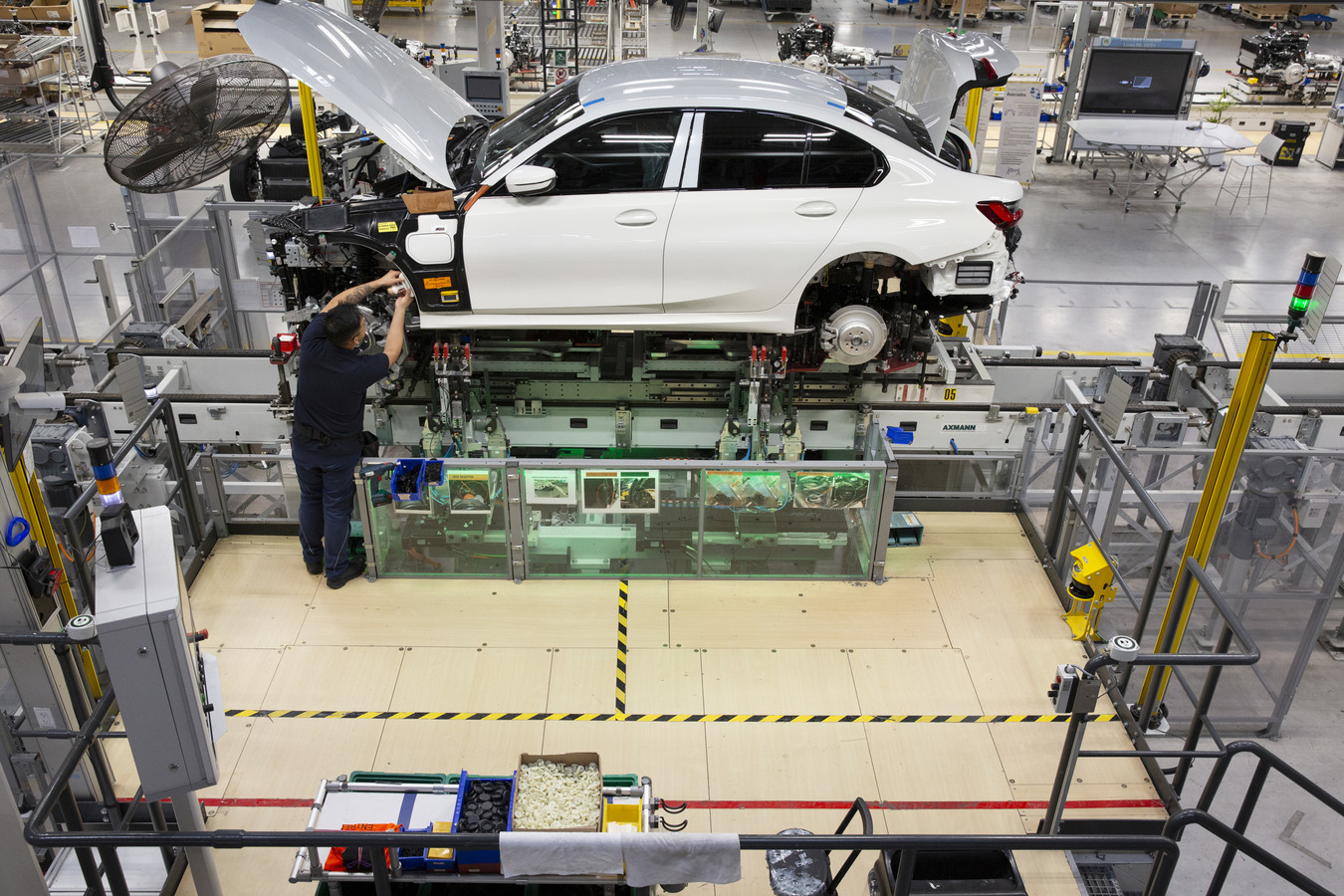
But, you know, I think that it's significant though because, you know, Europe was facing some pretty significant tariff peaks in Mercosur. Autos were 35 percent; wine was, I think, 27; machinery, which also increases the costs of factories in Argentina and in Brazil that need that machinery, was 20 percent, right? So, you know, all of these will be going to zero. So that is going to be, I think, incredibly significant.
And I thought it was really creative too, the way that they handled some of the more sensitive items. And by sensitive, I mean agriculture. There are issues where there's a huge disconnect between Mercosur and Europe. Agriculture and biotech being one of them. You know, GMOs, genetically modified organisms, and such. These are things that Mercosur and the EU don’t see eye to eye on, probably won't see eye to eye on.
And so, in those items, they actually have an actual chapter in the agreement. It's called “Dialogues on Issues Related to the Agrifood Supply Chain.”
Leme: They're already saying, “we have a lot of sticking points.”
Meiman Hock: Well, they're saying, “You know what? We gotta talk.” They're saying, “We need to talk about this stuff,” and they're actually setting up dialogues.
Maybe there's an agreement that's had that sort of chapter before. I don't remember one. But basically, [it’s] saying, “This is tough stuff and we're gonna talk about these things,” and includes animal welfare, agricultural biotech, antimicrobial resistance, and food safety and plant health. Those are the four buckets. So those discussions will be ongoing.
You know, the other aspect of the agreement that was very important to allowing for it to go into effect and to be passed is, and this is on both sides of the Atlantic, is very robust safeguards, right? So safeguards basically allow a country to increase their tariffs if there is a surge in imports that potentially threatens or actually damages, domestic industry, right? Injures domestic industry.
Virtually, you know, all countries have safeguards. There's a safeguards agreement at the WTO, but there's special safeguards that are included in this agreement that make it very clear that if there is a huge surge in imports in, let's say, German cars to Mercosur, that Mercosur can implement these safeguards.
And the interesting thing about safeguards versus other types of trade remedies—anti-dumping duties or countervailing duties where, you know, you're trying to attack subsidies—the other country in safeguards doesn't have to have done anything wrong. It doesn't mean that Europe is dumping its cars into Mercosur for you to apply a safeguard. What it means is that there's a surge in imports that injures domestic industry or threatens to injure domestic industry. And the same thing on the other side of the Atlantic with respect to agriculture, right?
Those were key sticking points. That, and some environmental issues, which actually environmental concerns was the key motivation for the European Parliament to refer this case to the European Court of Justice, which is where it sits right now. Which is why this provisional implementation of the interim trade agreement is where we're at, not full implementation. It’s because of that referral of the Parliament, which, again, is controversial. When, von der Leyen stated that Europe, once Mercosor approved the agreement, was going to go ahead with implementation, the French in particular, uh, had some choice words.
Leme: Macron.
[CLIP of France President Emmanuel Macron: “En substance, pour la France, c'est une surprise et une mauvaise surprise.”]
Meiman Hock: He called it, “It's a surprise, a bad surprise.” Tough for them to swallow and not just for France, but … There was a letter over 170 environmental groups and labor groups, you know, signed this letter saying, “What are you guys doing?” Because there was a concern about going forward with it.
Again, there's risks. There's always risks when you enter into a trade agreement, right? You think that you're entering into a trade agreement to create stable rules of the road, for companies, for workers. Nowadays, thank goodness, we put in environmental protections, all of that, but more than anything, when you're opening up your market to increased competition, there's always gonna be risks, right? And the politics around that can be very difficult.
But again, kind of hearkening back to the beginning part of our conversation, the reality is that, today, given the approach that the United States is taking on trade policy, it really is nudging countries in the other direction, to go ahead and take those risks. Because the risk of doing nothing is much higher than the risk of doing something.
Leme: Right. Diversification has been happening before Liberation Day. You explained that this has been happening in the region, in the Western Hemisphere, but with China, right? China is the top trading partner in many places.
So now, let's say that all these points that we were talking about between the European Union and those environmental labor laws, the regulations, that they are figuring it out. The Mercosur countries are listening and people are working for this deal to materialize in a scale, like you said, that [the] pie does change. Can this potentially really change the region's trade relation to China's influence? This is now a problem for economies in the region. Sometimes they have to choose between the relationship with the U.S. and China.
So my question is, basically, can this EU deal transform this love triangle that happens in Latin America into a square, where countries have a more balanced position because they don't have to choose between China or the United States because they have the Europeans?
Meiman Hock: Yeah… I mean, I think better than a love triangle to a square, I think what countries are trying to do is [change] a love triangle to a heptagon. So as many sides as possible, I don't know how high those go! But, I think to have as many solid trading partners right now as possible is really the goal.
And, you know, I'll highlight that Europe has its own challenges with its relationship with China, but I have not seen the Europeans framing the EU-Mercosur deal as some kind of a hedge with respect to China. I don't think their objective is to push out China. It's just not… it's not realistic.
And I think that we are seeing China's presence in Latin America as a big motivator when it comes to U.S. policy. And not just trade, right? We had the national security strategy drop last November, and you saw Latin America, the Western hemisphere, as being a top priority with this revival of the Monroe Doctrine. Latin America appeared on page five of the national security strategy. Guess where China was? Page 19. So…
Leme: Interesting.
Meiman Hock: Interesting! But a lot of it is like taking on the China threat, but in third markets is what my observation is.
And you see this in the agreements on reciprocal trade as well, where there are very robust sections on economic and national security that address non-market economy presence. And this isn't just Latin America. But in Latin America, the countries that have signed agreements on reciprocal trade are El Salvador, Guatemala, Argentina, and Ecuador. Those are the four that have signed them, and there's some pretty robust commitments in there with respect to aligning on trade remedies, those anti-dumping countervailing duties, safeguards, that we were talking about before, addressing unfair practices of Chinese companies operating in the region, looking at inbound investment, restrictions and or evaluations, export controls, transshipment, all of those issues.
And by the way, all those issues are being addressed in the USMCA review as well. But they're in the agreements on reciprocal trade because addressing China's presence in the hemisphere is such a goal for the U.S.. I would posit that it's going to be tough.
And I do think that what we see with the Europe agreement and the fact that, yeah, Mercosur is talking to Canada now, and talking to other trading partners, it's really an effort, I think, to just be sure that—if we're talking about Mercosur as we are here today—that they have as many options as possible.
And I think as a long time Brazil hand, it's super consistent with where Itamaraty always was on trade, right? I mean, speaking of someone that tried to convince them back in the day that the Free Trade Area of the Americas was a good idea, and they kind of pat me on the head and say, “No.” [LAUGHS] “We're not that into it.” And why? “Because we want to keep our options open,” right? So that's a very Brazilian approach to not just trade policy, but foreign policy. And so I think that what we're seeing now is rather than, when it comes to trade, it just being rhetoric … because Brazil, let's be honest, put a lot of its chips on the WTO over the years, right?
Leme: Right.
Meiman Hock: We're seeing a real, what I view as a serious effort towards diversification.
Leme: And this is very ambitious, because it goes not just on the trade side, but as you said, there's a geopolitical side. It's a big market for the EU to gain easier access to, right? So tariff-free access. But then there's countries that hold a big percentage of critical mineral reserves such as Argentina, in the future Bolivia.
Meiman Hock: And Brazil, yeah.
Leme: And Brazil. Rare earths in Brazil. Right. How do you see this as a new strategic goal for European Union?
Meiman Hock: When the EU announced the deal, just in their kind of fact sheets, they highlighted specific critical minerals that go into industrial magnets, that go into EU manufacturing. They called them out by name. I thought that was really interesting. So certainly, the sourcing of critical minerals is one motivation.
I think it's been interesting to see what Brazil has done recently in starting to draw a line in the sand that “we expect you to be processing these critical minerals here as well.” I think that could be an interesting space vis-a-vis potential investment. We'll see.
But I wouldn't undersell the enthusiasm for selling more to Mercosur when it comes to the EU. In their initial press release, they stated that they were seeking to increase exports to Mercosur 39 percent annually, which is a lot! It's a lot. So if they succeed in that, it will make that relationship much more important for Europe. Point number one.
Point number two: remember those safeguards I was talking about before? If there's a surge in European exports to Mercosur that threatens to injure domestic industry in Brazil or Argentina or anywhere… How that's handled? Are safeguards pursued? How does Europe react to that? I think that all will be very interesting. In particular, given what we were talking about before, that, you know, there's still a number of stakeholders in Europe who aren't too thrilled that this is being applied in a provisional fashion, right? So the politics around that could be complicated, and I think will be super interesting to follow.
Leme: And when you talk a lot about like biotech and health and health regulations…
Meiman Hock: Yeah, they're gonna be hard.
Leme: Those are gonna be really hard. Like how much homework does the private sector, the industries in countries, Mercosur countries or Latin American countries, how much homework do they have to do?
Meiman Hock: Well, I mean, for some of the issues that you highlighted that are in that dialogue, chapter seven, those are going to be hard, right? I mean, agriculture is incredibly sensitive, so I, I, I wouldn't necessarily be speaking to those issues. But I do think that this moment, where kind of all the cards are in the air, right? When it comes to global trade policy, it's a moment that I hope countries everywhere will take advantage of to make their countries more attractive to investment.
Back in the day, kinda like I was saying before, I feel like we would do free trade agreements with countries and it was considered to be kind of a good housekeeping seal of approval that then companies felt comfortable going in. You know, that doesn't exist anymore. And so what countries need to do in my assessment is to look at their regulatory systems, look at their taxation systems, to figure out how can I make my country attractive for foreign investment because of steps I'm taking domestically, right?
And I think that, for me that's an imperative, maybe even more so than the trade diversification piece. I think that being sure that you're creating an environment in your country that is hospitable to foreign investment in this dynamic trade environment, I would say is mission critical.
Leme: You already talked a little bit about, outside of Mercosur, we've seen in Latin America other countries aligning with the United States, signing new trade mechanisms. One of them was actually with Argentina, which is in Mercosur!
Meiman Hock: It is!
Leme: How can we talk about this? Because it's a hard relationship question. [LAUGHS]
Meiman Hock: I think countries are kind of playing things from a variety of different sides, right?
Leme: How do you evaluate those side deals?
Meiman Hock: The agreements on reciprocal trade? Yeah. I mean, there's different buckets of types of agreements that we've gone into. There's the agreements that are fairly broad, but we don't necessarily have text for with the EU, Japan, Korea, the UK, some of our kind of biggest, longest standing allies, right?
Then we have framework agreements. Many of the framework agreements have morphed into more formalized texts, which are these agreements on reciprocal trade. That's the Guatemala, Ecuador, Argentina, El Salvador agreements. The countries that have engaged with the United States that have done these agreements on reciprocal trade that USTR has been negotiating. They're really just, you know, trying to come to some sort of an accord with the United States to stabilize in some way, shape, or form their tariff situation.
I will say though that a number of the agreements on reciprocal trade, most of them, were agreed to before these 301 tariffs were threatened, before the investigations were launched at USTR. And we did not see that countries that already had agreements on reciprocal trade, they weren't exempted, right, from these investigations at all.
Leme: These deals that were forged didn't really protect them.
Meiman Hock: Didn't get 'em off the hook. So how sticky is that commitment? Open to question. So I… my sense is that countries are just wanting to engage with the United States in a way that is productive as possible at a challenging time in order to kind of, you know, live to fight another day.
I do think that it's interesting you highlighted the Argentina agreement on reciprocal trade. It’s in this agreement on reciprocal trade, and in virtually all agreements on reciprocal trade, to not respect geographical indications, that's a big finger in the eye to Europe. Think about champagne. Think about Parmesan cheese, right?
On the flip side, there are commitments to respect geographical indications in the EU-Mercosur agreement. So how does this all work out?
Leme: But Kellie can, does this happen? Is this normal? Like, is this something that we've seen in the past?
Meiman Hock: No, none of this is normal. No, no, no. I think it's fair to say that when it comes to trade policy, right now we are in completely unexplored territory. And I think that the way that countries are managing that, you know, it varies, but it's challenging. And, just, I think trying to not pick sides, but stay engaged with as many of your critical interlocutors—be it China, be it the U.S., be it your neighbors, Europe. That's really what I've observed as most countries' goal which makes perfect sense.
Leme: Yeah, so let's talk about what I'm calling the elephant in the room here, between you and me, because we cannot go very into USMCA, and we would need another whole episode to talk about this. So we're not going to go deep in it.
Meiman Hock: At least, yeah.
Leme: Yeah. But as we were talking about diversifying, we do see a growth in total bilateral trade between Brazil and Mexico, for example. It nearly doubled in the last decade. I think it's about a 90 percent increase in total trade between Brazil and Mexico. It peaked in 2023.
Canada is also to trying to diversify. You just talked on the top of our conversation. There are rumors even this week that there are negotiations between Canada and Mercosur. Maybe you're gonna call that deal again for us!
Meiman Hock: [LAUGHS] I'd love to see it.
Leme: And we see Carney making an effort to be less dependent on the U.S., right? It's very clear that this is a goal for him.
Can Canada and Mexico find some relief in Latin America or in Mercosur? Can Canada and Mexico find partners to their exports beyond the United States in its own region?
Meiman Hock: Yeah. I love that you're highlighting intraregional trade because I do think that that is a very interesting and underreported point when we're looking at trade in the Americas. That yes, when countries are looking to diversify their trade partnerships, often it's in Asia or it's in Europe.
But right here at home in the Americas, I thought it was very interesting that at the beginning of the year, we saw the Canadians sent the largest business and trade delegation in history to Mexico City. A level of outreach and commitment that, that we just hadn't seen before. And I, I think that's positive. I think that, to have the region looking at its trading relationships amongst each other through a prism that isn't necessarily U.S.-centric, I view as a positive. And, and I would hope that dynamic would continue. I don't see that as being at odds with U.S. interests at all. More trade liberalization is better.
Leme: So we could see, let's say, a deal between Canada and Mercosur, trying to be, like, being drafted even while U-S-M-C-A negotiations are ongoing.
Meiman Hock: For sure, yeah. And there's nothing in USMCA that would restrict that. There are commitments in USMCA to not do a free trade agreement with non-market economies, but Mercosur… every country's a market economy, so there's no restrictions there.
And Canadian trade negotiators are not gonna be getting a lot of sleep. I mean, they have a very ambitious trade agenda right now, and so I imagine they'll be negotiating on all fronts.
Leme: You're talking about this uncharted territory, this unexplored territory on trade agreements and negotiations, but also the need for countries to make moves for industries to regulate in the terms that they would be attracted to investment.
What are also your advices? Like what do you think from now on what countries should be keeping in mind when they're talking about attracting investment and growing their industry?
Meiman Hock: The formula is not hard, right? I mean, I think having transparent, reliable regulatory systems is incredibly important.
And, you know, the agreements on reciprocal trade that we were talking about before, I think it's interesting that, folks are, saying, oh, the U.S. is stepping away from the WTO. There's actually a lot of WTO content in those agreements on reciprocal trade. If you're talking about technical barriers to trade, if you're talking about sanitary and phytosanitary obligations, intellectual property.
So, the formula of how to be an attractive venue for investment is, is hard to implement, but I think the roadmap's there.
Leme: That was great. Kellie, thank you so much for coming again to Latin America in Focus. We appreciate you coming and, and talking to us every time.
Meiman Hock: No, it was a lot of fun. It was a lot of fun. Thank you so much.
[MUSIC]
Zissis: Thanks for listening. I’m your host Carin Zissis. This episode was produced by our associate producer Khalea Robertson and executive producer Luisa Leme.
Check out the podcast notes for our prior episode with Kellie Meiman-Hock.
You can find other episodes of Latin America in Focus at www.as-coa.org/podcast or write us an email telling us what you think at latamfocus@as-coa.org.
If you like this episode, share, write us a review, and subscribe at Apple, Spotify, YouTube, or wherever you get your podcasts.
The music in the podcast was performed for Americas Society. Find out about upcoming concerts at musicoftheamericas.org. And consider becoming an Americas Society member for preferential access to all performances at 680 Park Avenue in New York, as well art exhibitions, book talks, and more exciting events.
Opinions expressed in this podcast do not necessarily reflect those of Americas Society/Council of the Americas or its members.