Mercosur–EU Free-Trade Agreement: What's in It and What's Next?
Mercosur–EU Free-Trade Agreement: What's in It and What's Next?
A deal twenty-five years in the making becomes a reality on May 1 despite a looming court case.
This article was originally published on December 17, 2024, and has since been updated.
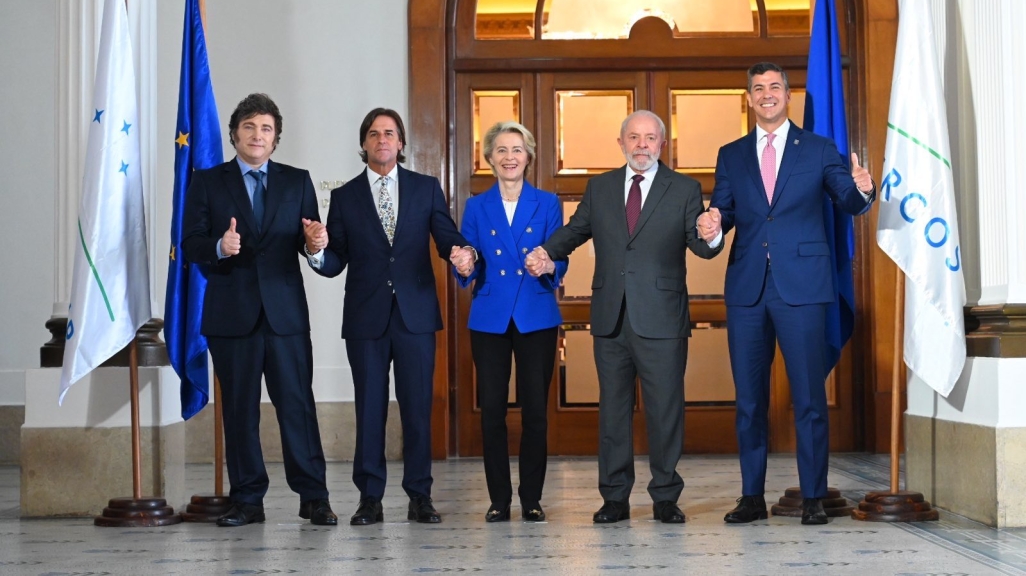
After more than 25 years of talks, a landmark agreement between Mercosur and the European Union (EU) will finally come into effect on May 1, 2026. Despite the European Parliament voting on January 21 to send the recently signed deal to the European Court of Justice for legal review, the European Commission announced on February 27 that it would forge ahead with enacting the commercial aspects of the deal through an interim trade agreement.
“I have said before: when they are ready, we are ready,” asserted European Commission President Ursula von der Leyen as she communicated the decision to apply the trade deal provisionally. Legislatures in Argentina and Uruguay had already ratified the deal a day earlier with minimal opposition. Brazil followed on March 4 and Paraguay’s sign-off on March 17 completed Mercosur’s approval process, starting the countdown to implementation.
It’s been a long road to this point. Negotiations for a Mercosur-EU FTA formally kicked off in 1999. In 2019, the blocs announced an agreement “in principle” that was soon derailed by environmental concerns raised by the EU about the rate of deforestation in the Amazon. Propelled by the diplomatic efforts of Brazilian President Luiz Inácio Lula da Silva (2003–2011, 2023–present), the two blocs revamped negotiations in 2023, which finally concluded in December 2024.
The following milestone occurred on January 9, when the European Council approved the deal, despite opposition from France and other member states with influential agricultural interests. In a statement released on social media that day, Lula called it a “historic day for multilateralism” given “an international context of growing protectionism and unilateralism.”
So what’s in the agreement? AS/COA Online explains.
AS/COA Online looks at the origins, structure, and debates defining one of Latin America’s largest trade blocs.
With Spain helming the EU, the Madrid-based journalist and long-time Latin America observer covers the state of interregional ties.