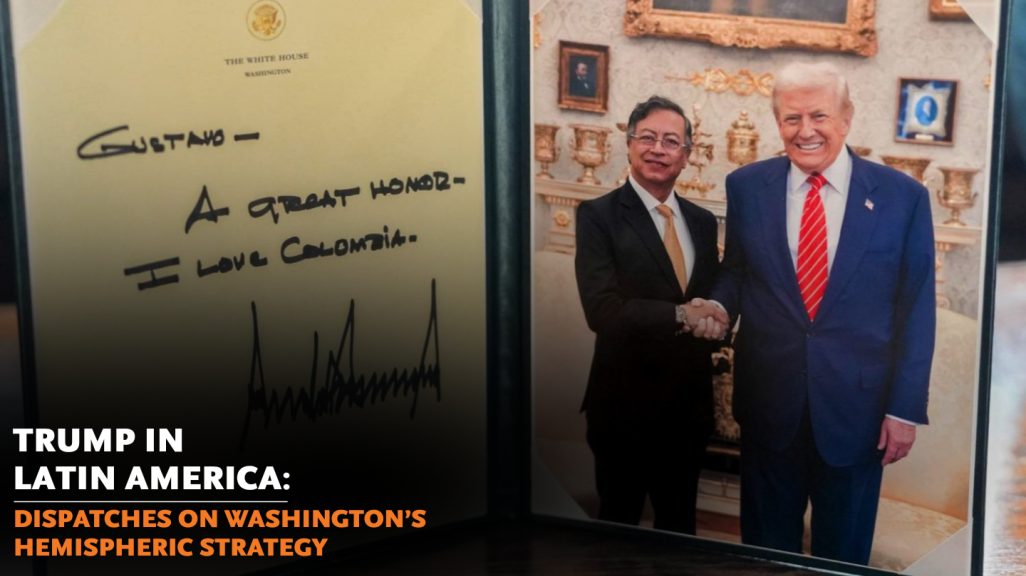
A keepsake U.S. President Donald Trump gave to Colombian President Gustavo Petro. (Petro's X Account)

A gift U.S. President Donald Trump gave to Colombian President Gustavo Petro. (Petro's X Account)

Trump in Latin America: A Petro Meeting, a Mineral Ministerial, and a Prayer Session

By Carin Zissis and Chase Harrison

Jan 29–Feb 5: The Trump administration kept up pressure on Cuba, made resource deals with Mexico, and hosted the presidents of Colombia and El Salvador.

Welcome back to our weekly dispatch of stories on the United States in Latin America! These week saw high-level meetings, a multi-country ministerial in Washington, and White House deals on trade and critical minerals with Latin American countries.

Follow us each week and see previous dispatches: as-coa.org/dispatches 

Throughout the first year of the Trump administration, we tracked the White House policy on trade, immigration, security, and more. Catch up on what happened in our year-one guide.  
Tension tamer tête-à-tête

On February 3, U.S. President Donald Trump and Colombia President Gustavo Petro finally met in the White House after a January 9 phone call in an attempt to smooth a relationship that veered into antagonism in the last few months. After the two-hour meeting, Trump said they “got along very well” and Petro came away saying he felt “optimistic and positive.” 

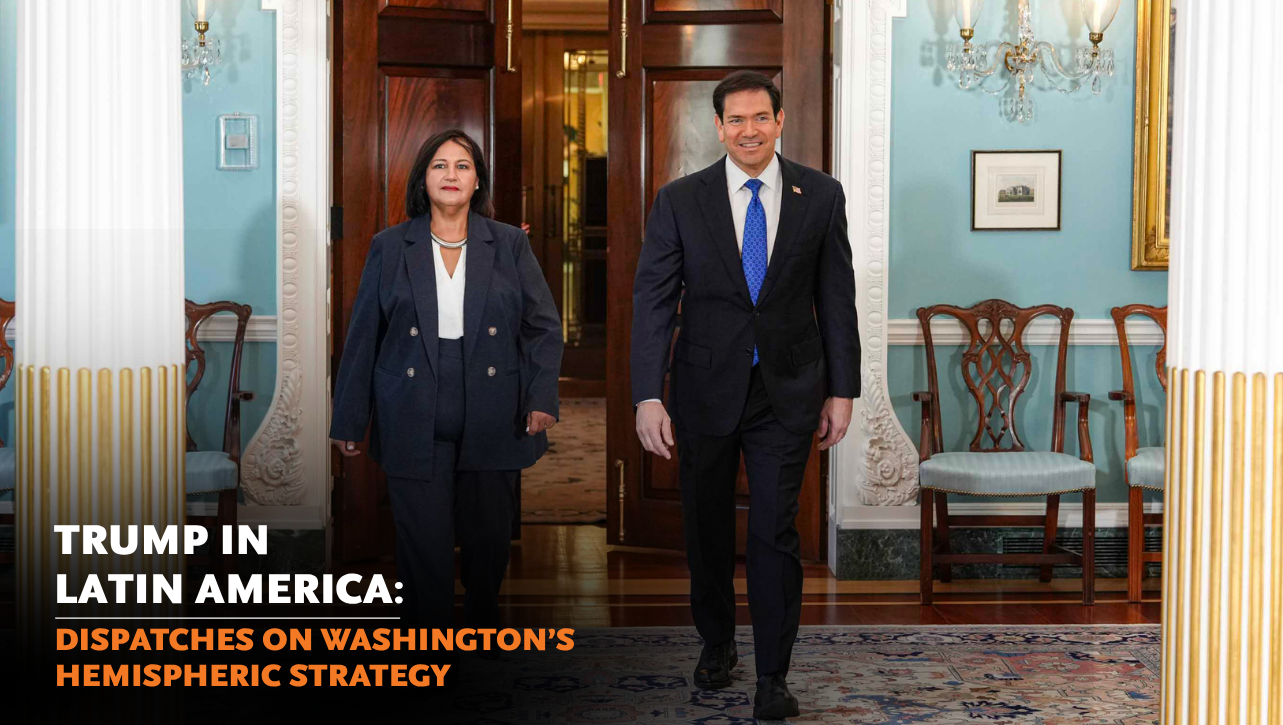
A major focus of the meeting—attended by Vice President JD Vance, Secretary of State Marco Rubio, and Colombian-American Senator Bernie Moreno (R-OH)—was combatting narcotrafficking. Trump criticized the Colombian leader in the past for failing to battle drug cartels. Just before the meeting, Colombia extradited a cartel leader to the United States. At the meeting, the two leaders agreed to joint military and intelligence actions focused on combatting narcotrafficking. A December poll from Invamer shows that Colombians rate insecurity as the country’s principal problem ahead of this year’s elections. They are also concerned with how a new president would maintain strong Colombia-U.S. ties

At a post-meeting press conference in the Colombian Embassy, Petro said he requested a reexamination of counternarcotic efforts and urged Trump to focus on targeting drug kingpins, many of whom he says live outside of Colombia. 

The day after the meeting, one of Colombia’s most powerful drug cartels, the Gulf Clan, announced it would be walking away from peace talks with the Petro government.

Petro leaves office when his term is up in August, but the Trump meeting reset the conversation—for now. "It definitely got over the difficulties and misunderstandings that have occurred up until now,” AS/COA Vice President Kevin Sullivan told ABC News. “But all this is going to require some detailed follow-up, which is going to be the job of diplomats on both sides—to keep those channels open and keep the tone respectful."

Make Americas Great Again

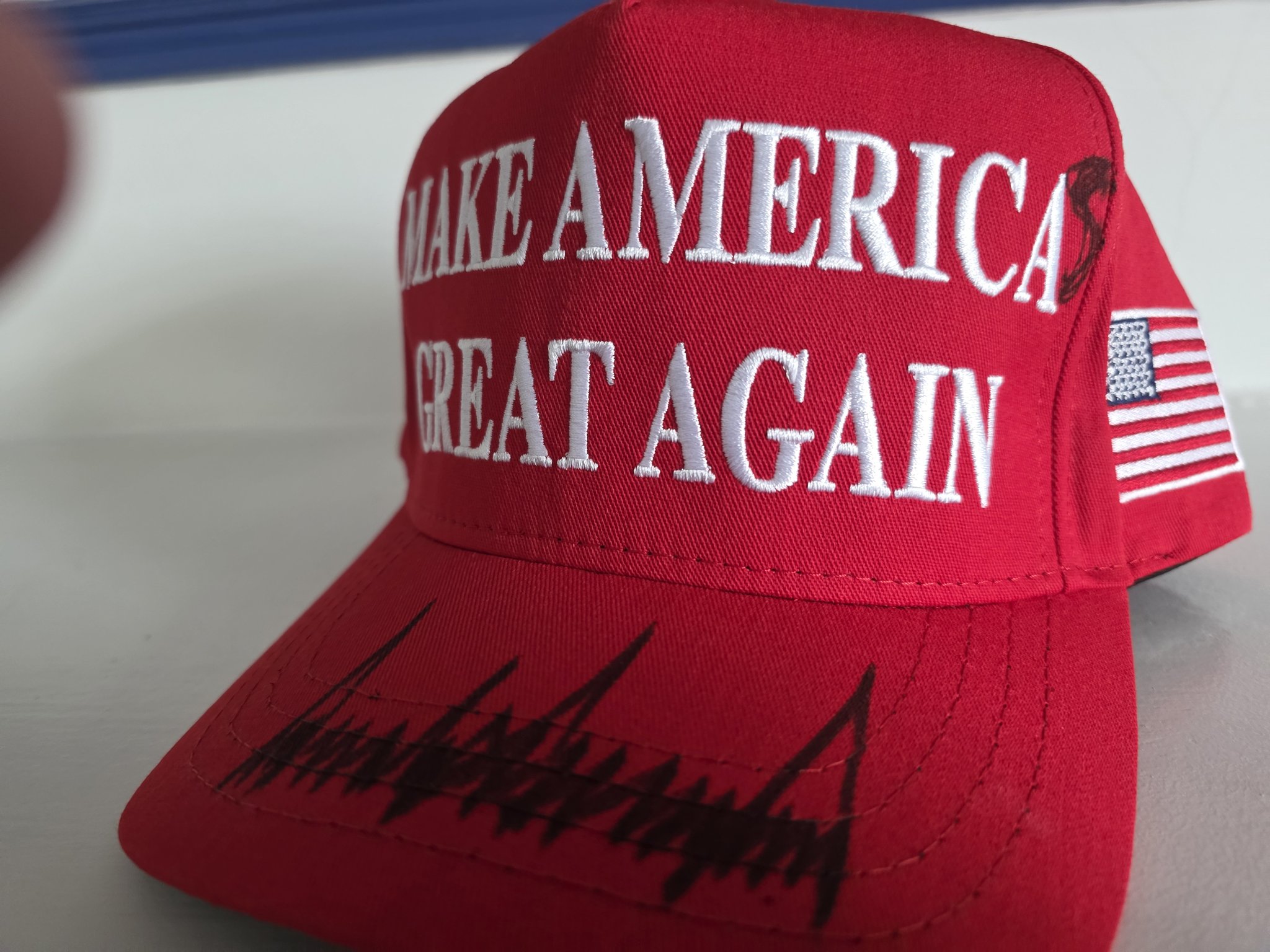
At the meeting, Trump gifted Petro a copy of his book and a “Make America Great Again” hat, on which Petro penned in a “S” to make it “Americas.” For his part, Petro invited Trump to visit Cartagena, Colombia. 
 

Cuba’s crude crisis

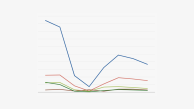
With a January 29 White House Executive Order threatening tariff action against any country supplying oil to Cuba, the island runs the risk of running out of oil within two weeks. All of this comes as the country experiences cold weather sparking its first freeze in recorded history and a partial collapse of the electrical grid on Wednesday that left broad swathes of Eastern Cuba in the dark for more than 12 hours. On Tuesday, the U.S. Embassy in Havana issued a security alert warning of widespread energy and water supply outages, as well as U.S.-targeted protests. 

What comes next for the island? After Nicolás Maduro’s capture, which led Cuba to lose a major oil-supplying ally in Venezuela, the Trump administration has turned its attention to the island’s regime and suggested economic woes will lead to its demise. In a February 5 press conference, Cuban President Miguel Díaz-Canel pushed back against descriptions of an economic collapse, saying instead that the island has been the subject of “financial and energy persecution.” And while insisting that Cuba does not present a threat to Washington, Díaz-Canel added, “We are preparing ourselves in case we have to move to a state of war." 

Over the weekend, Trump indicated Washington “is starting to talk to Cuba.” In a February 4 CNN interview, Cuba’s Deputy Foreign Minister Carlos Fernández de Cossio said formal bilateral talks had not yet begun, but that messages had been exchanged at “the highest levels.” A day earlier, De Cossio rejected the notion of intermediaries, such as Mexico or the Vatican, in talks.

Mexico in the middle

For readers of last week’s dispatch, doubts continue about the future of Mexico’s oil supply to Cuba. Following the aforementioned executive order, Mexican President Claudia Sheinbaum announced on February 1 that the “shipping of oil to Cuba would be resolved by diplomatic means” and that her country would send humanitarian aid to the island for now.  And although a day later Trump told reporters that Mexico, Cuba’s top oil supplier last year, would cut off its supply, Pemex’s CEO on February 4 said that Mexico’s state-owned oil company would continue to fulfill its contract with the island

Washington and Mexico City came to agreements this week on other resources: water and critical minerals. In December, Trump threatened to slap 5 percent tariffs on Mexico if it didn’t up its water supply in line with a 1944 treaty. On February 3, the two countries announced that Mexico will send at least 350,000 acre-feet of water to its neighbor annually during the current five-year cycle. The deal marks a shift from the 1944 agreement, under which Mexico had to supply 1.75 million acre-feet over a five-year period, averaging 350,000 per year, but with no set yearly minimum. Washington has argued that Mexico, which has faced significant droughts in recent years, builds up a “water debt” early in any given cycle. 

On February 4, U.S. Trade Representative Jamieson Greer announced that the United States had inked a deal with Mexico—as well as with the European Union and Japan—to build partnerships around critical minerals. The Mexico deal involves a 60-day action plan to coordinate trade policies and implement price floors for critical minerals in the context of the USMCA Joint Review taking place this year.

The building bricks of a mineral bloc

The U.S.-Mexico deal on critical minerals came as part of a larger ministerial meeting, held in Washington, about critical minerals. Among the 54 countries in attendance were Argentina, Bolivia, Brazil, the Dominican Republic, Ecuador, Mexico, Paraguay, and Peru. With a focus on shifting the global supply of critical minerals away from China, the Trump administration proposed the creation of a critical minerals trading bloc and said that Washington would be seeking bilateral deals with countries to secure a critical minerals supply. On the sidelines of the ministerial, Washington penned a bilateral supply deal with Argentina. 

Defrosting relations

On February 2, Interim Venezuelan President Delcy Rodríguez met with a U.S. Chargé d’Affaires for Venezuela Laura Dogu in Caracas’ Miraflores Presidential Palace to discuss issues such as energy and trade. The meeting came shortly after Dogu arrived in Caracas with the task of reestablishing a U.S. mission in Venezuela, seven years after Washington withdrew diplomatic personnel from the country. Meanwhile, Rodríguez named career diplomat and chavista Félix Plasencia as her government’s representative in Washington. 

The two governments also reportedly collaborated on an operation in Caracas to arrest Alex Saab, a Colombian-Venezuelan businessman who had aided Nicólas Maduro in his financial operations

Over that weekend, Rodríguez announced the closing of El Helocoide, a prison used as a torture site, and that she would be supporting an amnesty bill that would free hundreds of political prisoners. 

Venezuelan oil exports are recovering from just under 500,000 bpd in December, the month the United States placed a blockade on Venezuela, to 800,000 bpd in January. This week also saw Venezuela make its first shipment of liquified petroleum gas in its history. The destination? Providence, Rhode Island


Signed, sealed, almost delivered

Two months after announcing trade frameworks, Washington announced it had signed bilateral trade agreements with El Salvador on January 29 and with Guatemala on January 30. Once the agreements come into force, Washington will eliminate tariffs on certain products, like pharmaceuticals, agricultural products, and aircraft parts, from both countries will be dropped as the three countries work to eliminate trade barriers.

Deals have yet to be finalized with Argentina and Ecuador, two other Latin American countries who in November signed U.S. trade frameworks that outlined principles and goals for trade negotiations. 

Together in prayer

At the February 5 National Prayer Breakfast in Washington, Trump praised Salvadoran President Nayib Bukele for accepting deportees from the United States in El Salvador’s CECOT megaprison and calling him “one of [his] favorite people.” The Trump administration deported more than 250 Venezuelan and Salvadoran immigrants to CECOT in March 2025 as part of $6 million deal, before returning the Venezuelans home as part of a prisoner exchange. 

In his own remarks, Bukele touted a divine influence on his country’s drop in violence, saying, "We won the spiritual war first, and that reflected in our physical world." 

Just last month, the Central American president inaugurated El Salvador’s first National Prayer Breakfast. Visitors from the United States included Congressmen Tom Suozzi (D-NY) and John Moolenar (R-MI). 

Related

Explore