Nasry Asfura

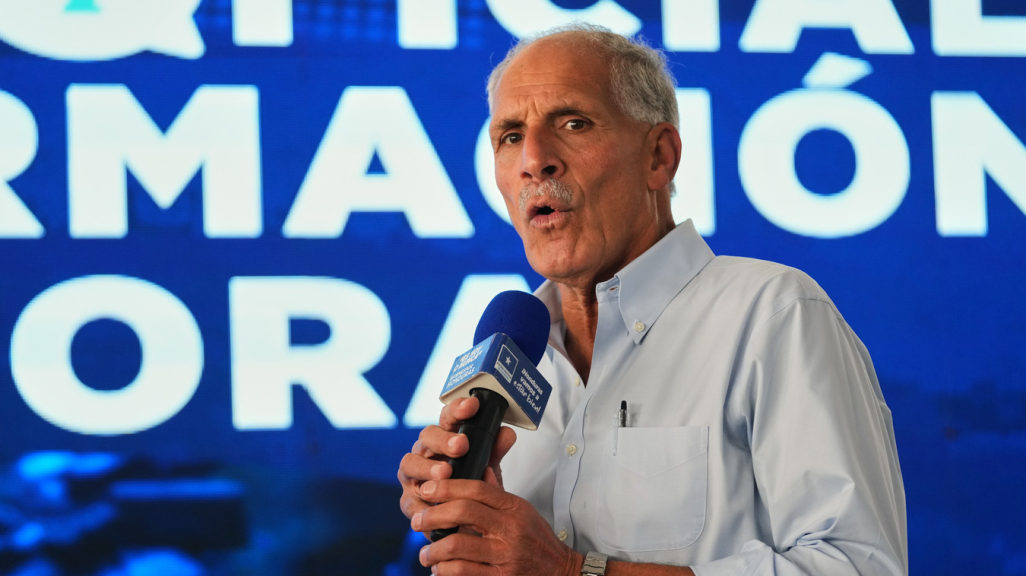
Nasry Asfura, Honduras' incoming president, at a campaign event. (AP)

Nasry Asfura Prepares to Take Honduras’ Presidency in New Direction

By Khalea Robertson

The Trump-endorsed politician was declared victorious after a tumultuous vote. He’s banking on closer U.S. ties to push his infrastructure-focused agenda.

“Honduras, I am prepared to govern. I will not fail you,” said Nasry “Tito” Asfura on X after being proclaimed president-elect on Christmas Eve. Confirmed results of Honduras’ single-round presidential election came almost a month after the November 30 vote following allegations of fraud from various political quarters, infighting within the country’s electoral agency, and technical hiccups that prompted a partial recount and delayed the official declaration.   

This was a tight electoral outcome. Asfura, of the conservative National Party, won with 40.3 percent of the vote share compared with the Liberal Party’s Salvador Nasralla at 39.5 percent. Former Defense and Finance Minister Rixi Moncada, the candidate representing the incumbent leftist Libre party, placed a distant third with 19.2 percent. 

Asfura, whose four-year term begins on January 27, will have to negotiate with a fragmented congress to advance his legislative agenda. His National Party won the most seats in the unicameral legislature—49 of the available 128—but fell short of the 65 needed for a simple majority. An alliance with Nasralla’s Liberal Party, which will have 41 congressmembers, would secure enough seats for the two-thirds majority needed to pass constitutional reforms and other major legislation. But potential collaboration may be complicated by Nasralla’s challenge to the presidential election result. Libre, meanwhile, saw its share fall to 35 seats from 43.  
Who is Central America’s newest incoming head of state and what are his plans for office?

Also known as “Papi a la Orden,” Asfura, 72, is a former congressman (2010–2014) and two-term mayor (2014–2022) of the capital, Tegucigalpa. His training as a civil engineer along with his private-sector background in the construction industry was reflected in his time as mayor, when his government oversaw several major infrastructure projects

In the 2025 campaign, marking his second presidential run, Asfura pitched himself as a pragmatic administrator focused on shrinking the state and ensuring institutional stability to attract foreign investment. He traveled to Washington during the campaign to court financial partners for his infrastructure agenda. His proposed projects include an expansion of the country’s road and port infrastructure and the diversification of the country’s energy matrix through the development of renewable sources.

Asfura has made the case that citizens returning to Honduras could drive an economic boom. Over 280,000 Hondurans have done so in the last five years, mainly from the United States and Mexico. Speaking to the press in July, Asfura said, “They return with capital and significant work experience, and they are a powerful source of small and medium business owners.”   

Electoral controversies, U.S. ties, and international relations

Asfura’s victory represents the National Party’s return to the executive branch. The last National Party president was Juan Orlando Hernández (2014–2022), whom a U.S. court sentenced in June 2024 to 45 years in prison on drug trafficking charges. But U.S. President Donald Trump unexpectedly pardoned Hernández just two days before the election and he walked free on December 1. When asked by CNN whether he would intervene in domestic charges against the former president, Asfura insisted that legal matters will be handled by the judiciary and emphasized the separation of powers. During his time as mayor, Asfura faced accusations of embezzlement and tax evasion, but was never charged. 

On the international stage, Asfura looks set for amicable relations with the White House. In the November 28 post announcing Hernández’s pardon, Trump also endorsed Asfura, writing, “Tito will be a great president, and the United States will work closely with him in order to ensure the success, with all of its potential, of Honduras!”

On January 10, two weeks after the results were called, outgoing President Xiomara Castro extended an invitation to Trump for “a frank and direct dialogue” about the influence of his social media endorsements on the election. The day before, she rubberstamped a congressional demand made largely by her party’s legislators for a complete recount of the vote. However, the National Electoral Council dismissed the request, saying it lacked a legal basis, a position backed by the country’s military, which is responsible for safeguarding election materials. Despite insisting that “monstruous electoral fraud” had taken place, Castro initiated the transition process on January 15.  

Amid Libre’s last-ditch push for a recount, Asfura returned to Washington in his first trip as president-elect and met with top Trump administration officials, including Secretary of State Marco Rubio, Commerce Secretary Howard Lutnick, and Trade Representative Jamieson Greer. Greer’s office subsequently announced intentions to negotiate a bilateral trade deal. While in the U.S. capital, Asfura also visited the IMF headquarters to discuss progress on the $850 million loan taken out during the Castro administration.  

The son of Palestinian immigrants to Honduras, Asfura then flew to Jerusalem to meet with Israeli Prime Minister Benjamin Netanyahu. After the meeting, Netanyahu highlighted opportunities for economic cooperation on agriculture and technology and said, “We're refashioning the relationship between Israel and Honduras to the traditional lines of friendship.” In November 2023, the Castro government was among other leftist Latin American administrations to recall its ambassador to Israel in response to Israeli attacks in Gaza. Asfura’s trip coincided with a visit by U.S. Senator Lindsey Graham (R-SC), who joined him in a separate meeting with Israeli President Isaac Herzog.   

But, among his Central American neighbors, Asfura has yet to receive public recognition of his electoral victory from Salvadoran President Nayib Bukele, who previously criticized his own country’s traditional conservative party, ARENA, when it backed Asfura in the 2021 election. When asked about Bukele’s silence on his win, Asfura said, “He’ll have his reasons, but we’re brother countries and this doesn’t change anything.” Asfura confirmed in late December that he had already spoken with President Bernardo Arévalo of Guatemala and Nicaragua’s Daniel Ortega and Rosario Murillo. In the case of the latter conversation, Asfura emphasized maintaining good relationships with neighboring countries in Central America “to have peace in the region.”

Related

Explore