LatAm in Focus: What's Testing Keiko Fujimori's Presidential Honeymoon?
LatAm in Focus: What's Testing Keiko Fujimori's Presidential Honeymoon?
Political analyst Carlos Meléndez explains challenges with the legislature, insecurity, and El Niño as the Peruvian leader hits the 100-day mark.
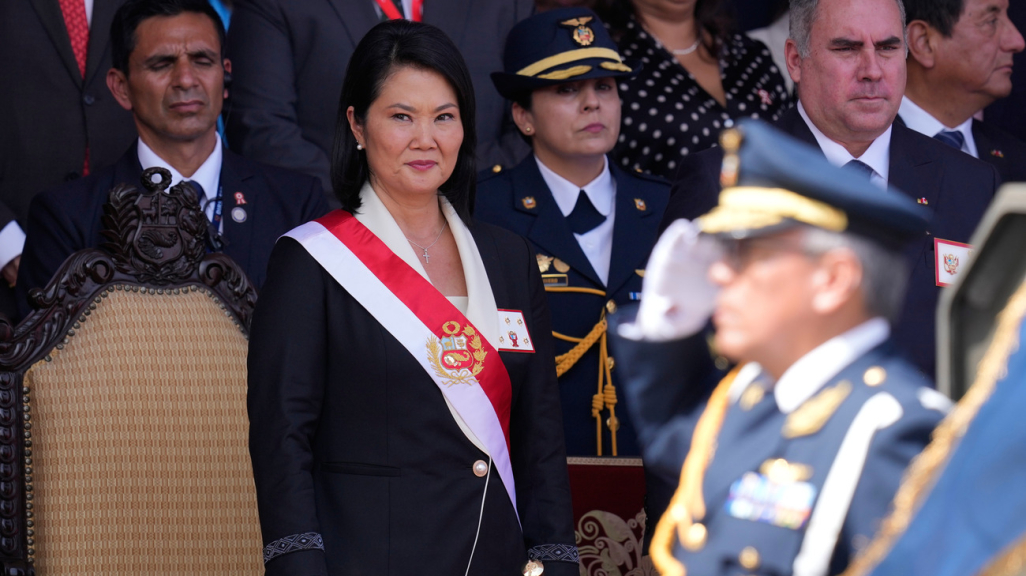
Peru's President Keiko Fujimori wasted no time defining the two immediate priorities of her administration. "We fear for our lives when we go out into the streets or that our homes will be flooded," she said during her July 28 inauguration speech to Congress, as she outlined plans to combat rising rates of extortions and other crimes and prepare for a potentially devastating El Niño weather phenomenon.
Three months into her presidency, Fujimori's pledge to quickly tackle these issues has run into a major hurdle: Congress. The legislature took two months to approve the new president's request to take executive control of crime and disaster response measures and cut the original package down to less than half its size. Now in the top office, Fujimori confronts a newly bicameral Congress in which the influence of her People's Force party may not be as strong as it was while leading the opposition for much of the last 15 years.
As fujimorismo steps into a new role as the ruling party, the movement is finally “trying to get some new allies from independent or even opposition groups. And this is probably the new scenario in the Peruvian landscape,” said Peruvian political analyst Carlos Meléndez, a columnist for El Comercio currently based at the University of Lisbon. In this episode of Latin America in Focus, Meléndez talks to AS/COA Online’s Khalea Robertson about key issues defining the new president’s priority agenda.
Despite Peru's solid economic performance in recent years, Meléndez notes that "Peruvian state capacity is underperforming," complicating the government's efforts to mitigate El Niño’s damage. On the security front, Peru joined the U.S.-led Shield of the Americas in September. Meléndez points to this cooperation with the United States as the biggest difference to otherwise familiar crime-fighting strategies.
The conversation also covers Fujimori's pragmatic approach to balancing closer U.S. cooperation with longstanding Chinese trade ties, and the "unusual" 17-point drop to a 40 percent approval rating as the leader approaches the 100-day milestone of her presidency.
Our guest

Carlos Meléndez is a researcher at the University of Lisbon and regular columnist for Peru's El Comercio. His work focuses on public opinion, political identities, support for the far right, and populist demand, with a cross-regional perspective on Latin America and Europe.
He is also the founder of 50+1, a consultancy firm based in Lima, and holds a PhD in political science from the University of Notre Dame.

Subscribe to Latin America in Focus, AS/COA's podcast focusing on the latest trends in politics, economics, and culture throughout the Americas.
This episode was produced by Executive Producer Luisa Leme and Associate Producer Khalea Robertson. Carin Zissis is your host.
Share and subscribe at Apple, Spotify,YouTube, or wherever you get your podcasts. Access other episodes of Latin America in Focus and send us feedback at latamfocus@as-coa.org.
The music in the podcast is "One Day at a Time” performed by Franco Pinna for Americas Society. Find out about upcoming concerts at musicoftheamericas.org. Share your love for Latin America: Join Americas Society.
Opinions expressed in this podcast do not necessarily reflect those of Americas Society/Council of the Americas or its members.
[Clip of President Keiko Fujimori: "Tenemos dos grandes problemas de urgencia: el tema del fenómeno El Niño y también el problema de la delincuencia."]
[MUSIC]
Carin Zissis: From skyrocketing extortion and crime rates to the potentially devastating El Niño weather pattern, Peru's President Keiko Fujimori began her term on July 28 facing two major challenges—and the need to address them quickly.
[MUSIC]
But it took two months for Congress to approve Fujimori's request to take executive control of crime and disaster response measures.
And the president didn't hide her frustration.
[Clip of Fujimori: "Están poniendo a prueba nuestra paciencia... Porque esto no se trata del gobierno."]
Zissis: This is Carin Zissis of AS/COA Online. Welcome back to Latin America in Focus, the podcast where we give the context behind the big issues affecting the Americas.
In this episode, just as Fujimori is preparing to hit the 100-day mark in her presidency, we hear from Peruvian political analyst Carlos Meléndez, a columnist for El Comercio currently based at the University of Lisbon. In a conversation that covers a range of issues on the new president’s agenda, Meléndez explains why Fujimori, a veteran political figure, faces challenges in a Congress that her party once controlled.
Carlos Meléndez: I think they weren't prepared for any of these two challenges, you know. I mean, and this is one of the main criticisms that the opposition and also the people, the citizens, elaborate against the government. Fujimorismo is a political party with presence in Congress in the last 20 years.
So this is the first time in decades that Fujimorismo is back to the executive. And what we have seen so far is that they don't have the human resources to improve the capacity of the Peruvian state despite the economic boom.
Zissis: Hear about this and more as Meléndez speaks with my colleague Khalea Robertson about topics like Fujimori's pragmatic approach to balancing Chinese trade with U.S. security cooperation, and the weight of governing as the founder of a polarizing movement that has shaped Peru's modern political landscape.
Stay tuned for the full conversation, subscribe to the show on all major podcast platforms, and follow AS/COA on social media.
[Show intro: You're listening to Latin America in Focus. Latinoamérica en foco. América Latina em Foco. A podcast by Americas Society/Council of the Americas on politics, economics, and culture in the region.]
Khalea Robertson: Carlos Meléndez, thank you for joining us on Latin America in Focus today.
Meléndez: Thanks for having me.
Robertson: I wanna start with how Peruvians are thinking about her first three months in office as their new president.
A recent poll by Ipsos earlier this month, in October, shows her approval rating at about 40 percent, down from around 57 percent in August, just after her term started. But of course, in recent years in Peru, we've seen presidential approval ratings at 2 or 3 percent.
So kind of keeping this in mind, what are the motivations behind her declining support in those first two or three months? And how much should we read into it this early into her term?
Meléndez: Yeah. I mean, you're right. Approval rating fell from 57 to 40 in three months, which is a 17-point drop. It's kind of unusual even for the Peruvian standards. If we compare with other presidents, for example, García went from 63 to 57. Humala from 55 to 62, he increased. Even Pedro Pablo Kuczynski dropped from 61 to 55 in three months. Even Castillo, the leftist president, actually started at 38 and was around 40 by his first 100 days. So this is unusual, and I think this has to do with the difference between expectations and what the government, what her government actually can do in the first 100 days.
Also, we have to remember that probably the most important, the most relevant political identification in Peru is anti-Fujimorismo. So, if it's true that finally she could manage to get the majority of the vote in the ballotage some months ago, we have to say that she, uh, faces a huge popular opposition. People don't believe not only in Fujimorismo, but also in political elites, in the political establishment in general. And she is part of the political establishment. She is supported by the political establishment, economic establishment, private holdings, media, the most important media based in Lima. And actually her base, her social support, is basically in the capital, in the higher income levels of the society.
This anti-establishment sentiment, plus historical anti-Fujimorismo, plus the difference between expectations and what she actually can do is what is explaining this drop.
Robertson: One of the actors that comes into play when we talk about, you know, implementing an agenda is Congress. And so I kinda wanna talk about Keiko Fujimori's relationship with Congress. In these first three months, we've seen that there's been, uh, some tension.
Given that Fujimori's party doesn't have a majority in Congress, in either the lower house or the newly restored Senate, even with the support of the other right-wing party in Congress, what are the chances of her being able to work with Congress, negotiate with the opposition, in order to deliver on her agenda as quickly and efficiently as she promised?
Meléndez: First, we need to know that this is Peru's first bicameral Congress since the '90s. Okay? So this is like a big change in political institutional design in Peru, which used to have a Congress of only one chamber in the last decades.
So, in this new arrangement, we have the lower house, the Chamber of Deputies, with 130 members. In these 130 members, 74 are MPs from the opposition. Okay, so the opposition controls the majority, but not the supermajority. I mean, Fujimorismo with Renovación Popular, which is a further-right political party, they together control like 56, around 56. So they still have some capability to block some constitutional reforms, for example, from the opposition.
However, I mean, 74 of 130 members, it's a huge, um, obstacle for policy, and this is what has happened lately. So in the first weeks of, uh, Keiko Fujimori's government, there's been that test of delegated powers, okay? The executive asked for delegated powers for 66 items, but the lower house approved only 20. And the 20 items were related to two areas: the area of public security and the area of El Niño.
Robertson: So just to clarify for our listeners, when you say delegated power, you mean that she's able to issue executive orders on these certain measures that you mentioned.
Meléndez: Exactly, exactly. Normally this is what happens with new governments in Peruvian politics. The new government asks permission from the legislature to try to rule by decree, but in some topics, in some areas, okay? In this case, in two areas, which are related to public security and El Niño. And not only in two areas, in just specific points of this, of these areas. So there is the limitation. They cannot do whatever they want.
So this is what happened in the last…in the last week: that the legislative branch, authorized the government to prepare policies in the next 90 days in these topics, in these issues. So imagine, this is actually less than one-third of what the government proposed.
But hopefully for—in the sense of the interest of the government—the Senate was able to amend and to increase the number of items from 20 to 27. Based on what? Based on an agreement with a kind of independent group, which is the political party of an, uh, outsider. The name of the political party is OBRAS. So the incumbent party managed to gain some votes from this political organization.
But as you can see, it's a lot about how the executive can negotiate, can try to gain votes from the opposition, of independent political parties in order to continue advancing on their policies.
Robertson: I also want to talk about Congress in the context of the last decade, where there was a lot of instability. And many people would maybe point to Congress as a major factor in that, especially in terms of the number of impeachments that we saw or presidents who resigned. And Fujimori herself was known to be a power broker behind the scenes of the legislature.
Is there something about the way Congress is made up now that can lessen the instability that we've seen in recent years?
Meléndez: We have to mention that Peru has had, uh, eight presidents in 10 years. I mean, political instability has been huge for a presidential regime, right? I mean, probably we are used to this type of instability, I don't know, in the UK, but it's not a presidential regime like in the case of Peru.
And this is basically because in the last 10 years, the executive hasn't had a majority in Congress. Okay? This scenario has changed slightly, in the sense that Fujimorismo and its allies can make a majority in the Senate. So this is kind of a new composition of the political coalitions.
And this is very important because the rules of the game, obviously, they matter. This is why we have, uh, institutional design, right? But what I think is more important is if the political actors want to make agreements or want to create coalitions and want to create stability in the long run. And this is what hadn't happened in Peru in the last 10 years because Fujimorismo and other political parties were in Congress [against] right-wingers [and] against left-wingers.
So the political instability in the case of Peru is not necessarily based on the rules of the game, but basically on polarization. The main political identities in, in Peru are anti-Fujimorismo or anti-communism. So political elites are even more polarized, parliament is more polarized than the society, and they are not willing to cooperate.
However, as I mentioned, in this new bicameral scenario, Fujimorismo is trying to finally—once in power, once as the incumbent party—is trying to get some new allies from independent or even opposition groups. And this is probably the new scenario in the Peruvian landscape.
Robertson: Very interesting.
And now bringing it back to that top priority that you mentioned both for the government and Peruvians, which is insecurity. Um, reports of extortions increased more than eightfold, I read, between 2018 and 2025, and have been connected to a rise in the murder rate.
So can you talk to me a little bit about the first steps that the Fujimori government has taken to tackle this issue of crime and violence? And how is it different from…or is it different from what previous administrations have tried?
Meléndez: Yeah. Unfortunately for Peruvians, it's not that different, okay? In terms of there's no reform of the police forces. The government has created this unified and combined, um, organization of the army and the police in order to fight against criminality in specific areas. But these, uh, policies are not that different from what has been done.
Probably the main difference is the support of the U.S. Okay? As you know, Peru has joined the Shield of the Americas, along with other countries. This is a U.S.-led security coalition, right? And it can imply that you can have some cooperation in terms of information, intelligence information about public security. Also considering that many of the criminal organizations that are acting in Peru are transnational.
So this might be the very important difference about what has been done before and what President Fujimori is trying to do now. The cooperation with the U.S. in terms of the fight against criminality is the new component in this story so far about public insecurity in Latin America.
Robertson: It's interesting that our last episode on this podcast was about a debate in Chile among the population on whether or not Chile should be in the, in the Shield of the Americas. Has there been a similar debate in Peru?
Meléndez: Yeah. I mean, actually, Latinobarómetro has just published some data about how Peruvians see cooperation with other countries, okay? So for example, 72 percent of Peruvians see China's influence as positive, but only 62 percent of Peruvians see collaboration with the U.S. as positive, okay? Public opinion in Peru is kind of inclined toward China.
And actually, uh, there is one question on Latinobarómetro about the international performance of Donald Trump, and only 38 percent of the Peruvian population, based on this source, approve of the international performance of Donald Trump.
So it's like the public opinion, like the average Peruvian, is kind of indifferent, or not necessarily indifferent, but they don't take sides as the political elites [do]. In the case of the Peruvian political elites, they do, and actually, uh, it's very interesting because even the left-wingers are kind of pro-U.S. Because during the last debates in Congress, you had left-wing congressmen asking why USAID doesn't, uh, return its funding to Peruvian activities.
So it's really interesting how the political elites are more inclined toward the U.S. Meanwhile, the population's kind of indifferent or doesn't have like a definitive position on this topic.
Robertson: Well, Fujimori herself during her campaign said she wanted to establish closer ties with the U.S., particularly in trade and investment.
But as you mentioned, there's a close relationship between Peru and China: China's been Peru's top trade partner for the last 15 years or so. It's a key buyer of Peru's copper, and there's a lot of Chinese investment in the mining sector and also in infrastructure projects.
So I wanna talk a bit about how is this Fujimori government approaching the balance between the U.S. and China, and how should they?
Meléndez: Keiko Fujimori is very pragmatic. Okay, she's a right-winger. For personal reasons, she might be connected more closely to the U.S.
The huge problem, as I mentioned, in Latin America is public insecurity, and the alliance, the Shield of the Americas, is an alliance that is connected with public insecurity. In the first months of her government, she knows that she needs support in public insecurity.
And in this topic, we don't have economic problems nowadays in Peru actually, based on the prices of minerals, okay? So the main topic for public opinion support is about insecurity, and the U.S. has the resources to cooperate with Peru in this area.
However, as you mentioned, China is really important for the Peruvian economy. In the next month, there is this summit in China, and actually, I think that she has requested bilateral meetings with Xi Jinping.
I think that this summit is an opportunity in order to try to balance the cooperation with China because nowadays we know these are the two main powers that have great influence globally. So she's being pragmatic. So we will see this balance going on in the next months.
Robertson: Right. No, that makes sense. Like a lot of South America, it makes sense that she needs to find where she's gonna cooperate with the U.S. and where she's gonna cooperate with China.
The other priority that we mentioned on the domestic agenda is El Niño. That's gonna be one of the big early tests for her presidency. Researchers have said that they expect that this is gonna be a very strong El Niño season. Already in northern Peru, there's been heavy rain and flooding, and it's expected that there's gonna be drier conditions in the south.
So what are the steps, the measures that the government has taken to reduce the likely impacts of this weather phenomenon—reduced food crops, high inflation, and economic concerns that Peruvians have about El Niño?
Meléndez: First, this is very important to mention that, for a right-winger, it matters that she is not a negationist in topics of climate change, right? I mean, if we can see what, what happened with other right-wingers or far-right-wingers in Latin America—I don't know...Bolsonaro or even Kast—they are right-wingers, more radical than others, but they don't have a position with concerns in terms of environmental politics. This is a very important difference to emphasize. I mean, El Niño hasn't created any divide in Peruvian politics. Even the right-wingers, even Keiko Fujimori, she is taking the agenda of climate change, the agenda of environmental policy seriously. So this is very important.
And it’s also very important because one of the first areas of the country, regions of the country that will be affected by El Niño is actually the stronghold of Fujimorismo. The electoral support that Fujimorismo has had in the last years is focused on the coast of the northern part of the country, where we will see the immediate effect of this weather phenomenon. So this is first. And so there is a predisposition of the government to tackle this topic.
The problem of, of El Niño is not a problem only for Peru, again. It's a problem for the region. We have already seen floods, flooding in Chile, in Ecuador, in other countries. So it will be a test of the state capacity, of the state resources to try to diminish the effects of El Niño.
And I think that in this case, the Peruvian state does not have the capacity to do it well. And the government knows this, okay? The government knows this. The government is in the first weeks of its tenure [and] is tackling preventive measures, but they know that there is not much what they can do.
So this will be, like, a huge challenge for that social support of Fujimorismo because, seriously, Peruvian state capacity is underperforming. Despite economic growth, despite the boom in mineral prices, the investment in prevention against this type of weather phenomenon is really weak.
Robertson: So how are they then communicating this issue to the public?
Meléndez: Communication is, is key on this topic. I think that we are very close, we are close to, uh, a phenomenon similar to what the COVID pandemic was. Okay? Because this is a phenomenon that's impacting not only the country,
there are other countries involved. So the Peruvian citizens will evaluate how the government is responding to El Niño based on comparisons of what’s going on in other countries, like in Ecuador or like in Chile. So this is a type of moment of crisis, and it's really interesting how the government, how Keiko Fujimori and Fuerza Popular will try to communicate this situation of crisis.
So there is the temptation to be populist, right? I mean, under this type of external threat to economic stability, in some cases, there is the temptation to increase income, increase salaries, social policy in favor of the people most affected. Okay, there is the temptation of populism, and I think that again, the government of Keiko Fujimori, as pragmatic as it is, will try to balance between some type of populism. And we will have to study better the new policies that they presented for this emergency, and also the communication, the communication style that they will plan for the upcoming months.
Robertson: We've covered in these first three months the Fujimori government's relations—tense relations—with Congress, the economic uncertainty around El Niño, and of course, the ongoing security challenges as the key things defining the early stages of Keiko Fujimori's presidency.
So looking ahead to when she marks her one-year anniversary as president, what are the key challenges, the key improvements that Peruvians will be looking for to judge her presidency?
Meléndez: I think that the agenda of the first year of the government will continue being these two topics: public insecurity and El Niño. And I think especially El Niño because this is a phenomenon that will last for the next six months, seven months.
So by the end of the first year of government, probably the response of the state to El Niño will be more important than public security, which is unexpected, because the government…I think they weren't prepared for any of these two challenges, you know. I mean, and this is one of the main criticisms that the opposition and also the people, the citizens, elaborate against the government.
Fujimorismo is a political party with presence in Congress in the last 20 years. So let's try to think of Fujimorismo as a parliamentary party, okay? So this is the first time in decades that Fujimorismo is back to the executive. And what we have seen so far is that they don't have the human resources, specifically at the high, technocratic rank positions in order to try to propose new reforms or huge amendments to improve the capacity of the Peruvian state despite the economic boom.
So, it has demonstrated the limitations of a political party that was focused on the political struggle, focused on the legislative arena, and has very serious limitations to deliver public policy from the executive branch.
And this is why the Peruvians will evaluate at the end of the first year if income has, family income has increased; if the state has helped people that were affected by El Niño; and if they can work on an everyday basis without concerns about public insecurity.And I think that this is a huge challenge for the government to try to convince Peruvians that they are doing a good job.
Robertson: Thank you so much, Carlos, for that conversation.
Meléndez: Thank you, Khalea. Thank you so much, and thank you for, again, for having me.
[MUSIC]
Zissis: Thank you for listening. I’m your host, Carin Zissis. This episode was produced by Associate Producer Khalea Robertson and our Executive Producer Luisa Leme.
If you haven’t subscribed yet, now's the time. Latin America in Focus has over 200 episodes on key issues that help you better understand the region. We’re on Apple, Spotify, YouTube, or wherever you get your podcasts. Or send us an email at latamfocus@as-coa.org to share feedback or let us know what you think on social media.
The music in the podcast was performed for Americas Society. Find out about upcoming concerts at musicoftheamericas.org. And consider becoming an Americas Society member for preferential access to all performances at 680 Park Avenue in New York, as well as art exhibitions, book talks, and more.
Opinions expressed in this podcast do not necessarily reflect those of Americas Society/Council of the Americas or its members.
[MUSIC]