LatAm in Focus: What Will It Take to Secure Haiti’s 2026 Elections?
LatAm in Focus: What Will It Take to Secure Haiti’s 2026 Elections?
GI-TOC's Haiti and Caribbean Observatory head Romain Le Cour analyzes the local and international efforts to ready an August vote amid a security crisis.
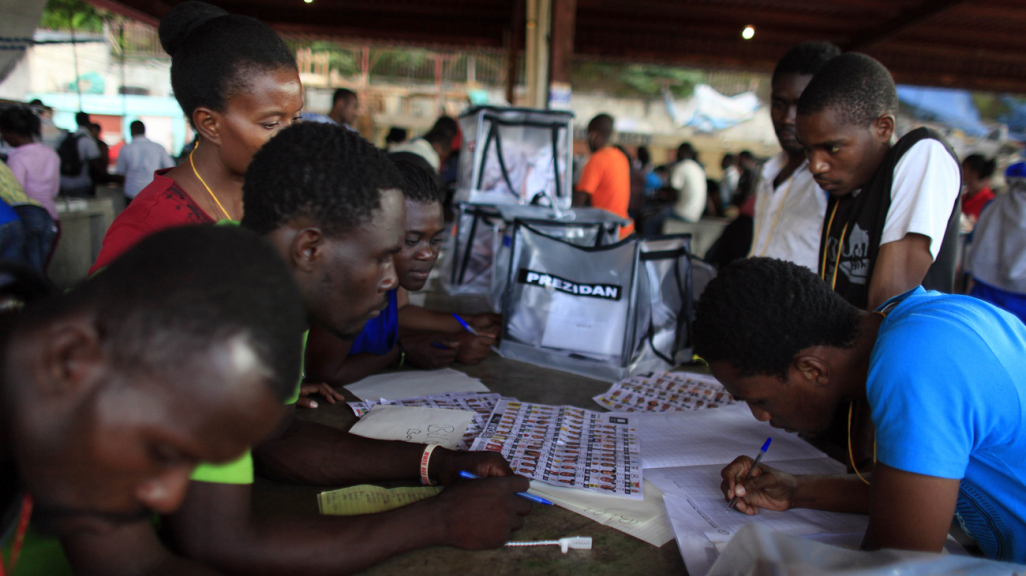
Haiti has been without an elected leader since the 2021 assassination of President Jovenel Moïse. In the five years since, the country has cycled through a series of transitional governance arrangements, while a spiraling security crisis has starved, displaced, and killed thousands of Haitians. Despite the turbulent context, political parties have answered the provisional electoral agency’s call to register by March 12 for the country’s first election in a decade. The first round of the presidential and legislative vote is slated for August 30, with potential runoffs in December.
“How likely the elections are to happen is the million-dollar question right now,” says Romain Le Cour-Grandmaison, director of the Haiti and Caribbean Observatory at the Global Initiative against Transnational Organized Crime. Criminal groups are said to control up to 90 percent of Port-au-Prince, Haiti’s capital, and are gaining ground in surrounding regions.
In this episode of Latin America in Focus, Le Cour talks with AS/COA Online’s Khalea Robertson about how a bumpy political transition in February highlighted Washington’s growing role in trying to address Haiti’s political turmoil. In addition to sanctioning members of the now defunct transitional presidential council who tried to oust acting Prime Minister Alix Didier Fils-Aimé, the U.S. government has led efforts at the United Nations to set up the multinational Gang Suppression Force due to start arriving in the country in April. “It is surprising because at a moment in which the U.S. has been extremely vocal in its criticism against the UN and the multilateral system... they have put so much effort to make sure that UN resolution on Haiti was passed and that the new deployment was designed and voted and funded,” notes Le Cour.
As for the long-term future of Haiti’s stability, he stressed: “We need to address and dismantle the system that makes the gangs attractive to political and economic actors and vice versa. Basically, we need a justice component.”
For now, if Haitians are able to cast ballots as scheduled this year, the new president will take office on February 7, 2027. On that same date just 35 years ago, the Caribbean country celebrated the inauguration of its first president elected in a free and fair vote, marking its entry into democracy.
Our guest

Romain Le Cour Grandmaison is the Director of the Haiti and Caribbean Observatory at the Global Initiative against Transnational Organized Crime. A PhD graduate of the Sorbonne University, his work as a researcher centers on organized crime, governance, and public security. He has collaborated with various international organizations, media companies, and NGOs throughout his career, and previously participated in and led several research projects focused on Mexico.
Subscribe to Latin America in Focus, AS/COA's podcast focusing on the latest trends in politics, economics, and culture throughout the Americas.