LatAm in Focus: Sandra Borda on the Figures and Forces behind Colombia’s Presidential Race
LatAm in Focus: Sandra Borda on the Figures and Forces behind Colombia’s Presidential Race
The Bogotá-based political scientist covers what's at stake in the June 21 runoff between the right's Abelardo de la Espriella and the left's Iván Cepeda.
The Colombian electorate sent a clear message with the two candidates they sent to the June 21 presidential runoff: they are no longer interested in politics as usual. Instead, 85 percent of first-round voters cast ballots for either far-right lawyer Abelardo de la Espriella or leftist Senator Iván Cepeda, with candidates connected to traditional center and center-right parties receding to the background. “[Colombia’s] political and ideological spectrum is now wider than it was before,” says Dr. Sandra Borda, a Bogotá-based associate professor of political science the Universidad de los Andes. In this episode of Latin America in Focus, the prominent political commentator and foreign affairs analyst tells AS/COA’s Carin Zissis that the country’s relatively new left-right divide has brought it closer to polarized political contexts more familiar to much of Latin America.
Still, she says, the center has an important part to play in the runoff, with candidates like Paloma Valencia, Sergio Fajardo and Claudia López pulling in a combined 2.8 million votes in the first round.
Self-described “outsider” de la Espriella has already gotten an endorsement from third-place Valencia, a center-right protegée of ex-President Álvaro Uribe. Borda says that while Uribe has a role to play in the election, de la Espriella’s unexpectedly high 44 percent first-round vote share means that he’ll be the one shaping the right’s agenda moving forward.
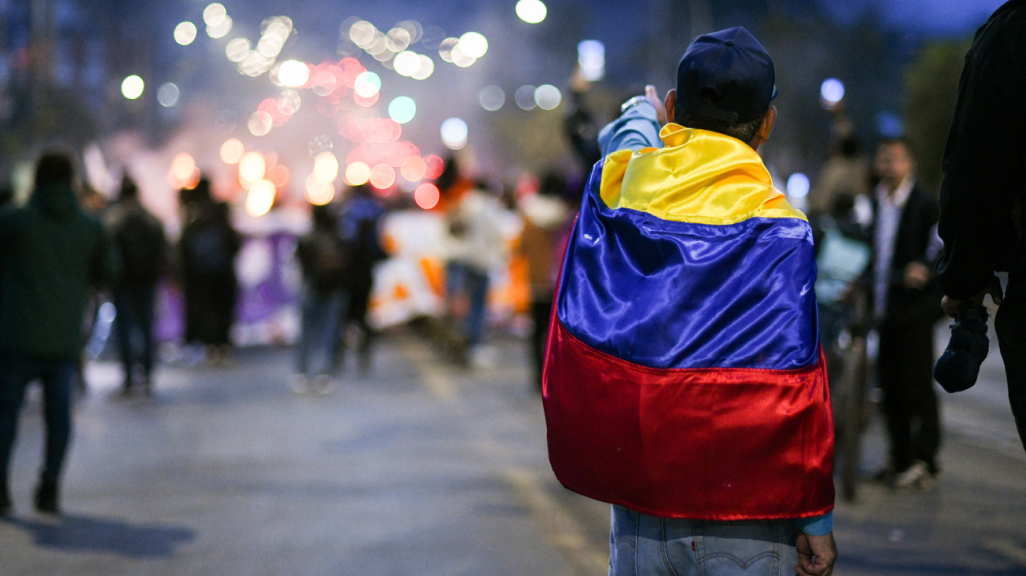
The right’s Abelardo de la Espriella won the top spot in the first round to face leftist and ruling party candidate Iván Cepeda in the June 21 runoff.
For Cepeda, on the other hand, Borda says a push to the center risks his relationship with incumbent President Gustavo Petro, whose electoral base propelled him to the second round. “Every time that he has to say something different than what the president says, he sounds and feels uncomfortable.” Petro’s electoral influence is now under scrutiny, as a congressional committee weighs whether he unfairly used his office to support Cepeda’s campaign.
Another supporting character in the election? U.S. President Donald Trump, who endorsed de la Espriella days after the May 31 first round vote. In the interview, Borda analyzes how U.S. relations factor into the two candidates’ foreign policy approaches, including relations with China and neighboring Venezuela.
Our guest
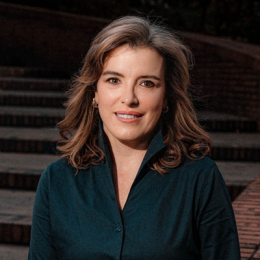
Sandra Borda is an associate professor with the Department of Global Studies and Political Science at the Universidad de los Andes in Bogotá. She has ample experience in the field of international affairs and combines her research with media contributions to prominent Colombian and global outlets. Dr. Borda holds a Ph.D. in Political Science from the University of Minnesota, a Master's degree in Political Science from the University of Wisconsin, and a Master's degree in International Relations from the University of Chicago. She served as a visiting researcher at ITAM in Mexico, the University of Toronto in Canada, the University of Groningen in the Netherlands, and the University of São Paulo in Brazil.

Subscribe to Latin America in Focus, AS/COA's podcast focusing on the latest trends in politics, economics, and culture throughout the Americas.
This episode was produced by Executive Producer Luisa Leme and Associate Producer. Carin Zissis is the host.
Share and subscribe at Apple, Spotify,YouTube, or wherever you get your podcasts. Access other episodes of Latin America in Focus and send us feedback at latamfocus@as-coa.org.
The music in the podcast is “Dame la Mano Juancho” performed by Shangó Dely for Americas Society. Find out about upcoming concerts at musicoftheamericas.org. Share your love for Latin America: Join Americas Society.
Opinions expressed in this podcast do not necessarily reflect those of Americas Society/Council of the Americas or its members.
[MUSIC]
Carin Zissis: Hi, this is Carin Zissis of AS/COA Online.
When the results of Colombia's election on May 31st came out, it wasn't too surprising to see which two candidates had made it to the presidential runoff.
[CLIP — campaign jingle: "Iván Cepeda, futuro presidente."]
Zissis: Iván Cepeda, a bespectacled left-wing senator often seen donning a cardigan, led polling in the weeks leading up to the first round. His promises to carry on much of President Gustavo Petro's program got him 41 percent of the day's vote.
But he didn't take the top spot. That instead went to a political upstart who calls himself El Tigre, the tiger.
[CLIP — campaign jingle: "Tigre que ruge y muere...”]
Zissis: Abelardo de la Espriella, a far-right criminal defense lawyer with a controversial client list and a multilingual music career, convinced 44 percent of voters to take a chance on an outsider, à la El Salvador's Nayib Bukele and Argentina's Javier Milei.
The success of the two diametrically opposed candidates did raise a revealing question: has Colombia's political center disappeared?
[CLIP of Sandra Borda: "Paloma Valencia had almost 7 percent of the vote, right? Sergio Fajardo had 4 percent of the vote. Claudia López had 0.9 percent of the vote. If you add all that, we're talking about 2,800,000 votes. So this is an important amount of votes that I'm absolutely convinced is going to make a difference in the second round."]
Zissis: That's our guest, Dr. Sandra Borda, professor at the Department of Global Studies and Political Science at the Universidad de los Andes in Bogotá, and a prominent Colombian political commentator. In our interview, she talks about how this election has stretched both ends of Colombia's political spectrum, shaping a left-right divide more familiar to the rest of the region.
Plus, with Donald Trump endorsing de la Espriella, we look at how U.S. relations factor into the two candidates' approaches to China and Venezuela.
[CLIP of Borda: "On the side of Abelardo de la Espriella, what you find is a person who thinks that the best way to advance any sort of foreign policy is just being a close ally of the U.S. government. I don't think that Iván Cepeda is very interested in playing the same type of role that Petro played in the international system."]
Zissis: And on the domestic front, Dr. Borda analyzes the distinct visions on security and economic issues that voters will decide between in the June 21st runoff.
Thank you for joining us. Whether you're listening in Neuquén, Nashville, or Newcastle, don't forget to subscribe to and share Latin America in Focus on Apple, Spotify, YouTube, or your podcast platform of choice.
[SHOW INTRO — Latin America in Focus Podcast]
[Voice over: You're listening to Latin America in Focus. Latinoamérica en foco. América Latina em foco. A podcast by Americas Society/Council of the Americas on politics, economics, and culture in the region.]
[MUSIC]
Zissis: Thank you so much for being with us today on Latin America in Focus, Sandra. It's a pleasure to have you here.
To start: Now that Colombia's first round is over, we're looking at a very polarized race between Abelardo de la Espriella, an outsider and a right-winger, and Iván Cepeda, a leftist senator who is viewed as a continuation of the government of current President Gustavo Petro. Now, you have written about and argued that this left-right divide amounts to a kind of Latin Americanization of Colombia. Can you explain to our listeners what you mean by that?
Sandra Borda: Sure. I think that the main issue with Colombia—and this is something that comparative politics people always complain about, because every time you're talking about Latin American politics, everybody always says, “Well, except for Colombia. Colombia is the outlier case.” And mainly that's due to the fact that since we had a civil conflict for more than 60 years, especially with the FARC, the most important insurgent group in Colombia, it was very difficult for the left, the civil left, to constitute itself as a strong political party.
So the left was always on the fringe of the political spectrum in Colombia. And I would say that during most of the twentieth century, we had governments that belonged to what you would call the center and the center-right, but we didn't have a full political and ideological spectrum.
When the conflict with the FARC ended—during the peace negotiations that President Juan Manuel Santos advanced—what you have there is a space that opened up for the left, and this is the window of opportunity that Gustavo Petro took advantage of. And since that moment on, the left has been a strong political force in Colombia, which basically means that our political and ideological spectrum is now wider than it was before. It's more similar to the political spectrum you find in any other Latin American country.
You have your classical left, and in this particular case you also have a right that you might define as an extreme populist right, which is also new for Colombia, but which you can find in countries like Argentina, El Salvador, or even the United States. So what you see here is a process of normalization of the political system in Colombia, which gives us the sense—because this is new to us—that we're in the middle of a very polarized political conversation. But if you compare us to the rest of the region, what we have here is closer to conversations we've seen in the past in other Latin American countries.
Zissis: You referred to this a little bit by discussing de la Espriella, that we have this sort of outsider candidate. And we really saw, in the first round of this election, an anti-establishment vote manifested in many ways. And now that Paloma Valencia, the Uribista establishment candidate, is gone from the race, what do you see happening in the runoff?
Borda: I would start by saying that this idea that Abelardo de la Espriella is a complete outsider is half true and half not. And this is a trick that most of these populist politicians use and implement in their electoral strategies. It's very useful. But the fact is that behind Abelardo de la Espriella you have a whole bunch of political clans from the Caribbean coast, very powerful people, very traditional in the way they've done politics in the past, and people who have been in the political spectrum for a long time. So he is hardly a person who has no links to the traditional political class.
For instance, now that they're going to the second round, he already has the support of the Democratic Center, the party of Paloma Valencia and former President Álvaro Uribe. I'm pretty sure that once the campaign starts, he's not going to insist on that fact. We're not going to see them around him all the time, and he's not going to emphasize that most of the political parties in this country that were supporting Paloma Valencia are now supporting him. That, to begin with.
Now, what is true though, is that the political parties and the political establishment are going to join his campaign more for the second round than for the first, which means they are going to be way less powerful inside that campaign than if they had been with him from the very beginning. So this is more a process of accommodation by the political class with the person they think is going to win the second round. Which means, basically, that they are not going to play a role in shaping the political agenda or the governmental plan he has for the country over the next four years.
Zissis: So what do they get out of this accommodation? To some degree, it almost sounds like Republicans in the United States, who have had to become comfortable with a rightward shift within their own party.
Borda: Absolutely. They have no choice. It's very interesting, because what some people say here in Colombia is that this is the end of the Centro Democrático as one of the most important political forces in Colombia. And I think part of that's true, because now, the version of the right that we have now is a more extreme version.
And I think that President Uribe is going to play an important role in this campaign, but the one who's deciding the content of that campaign—the positions they'll adopt on the many issues that will be discussed over these three weeks—is Abelardo de la Espriella. It's not Uribe. So they're going to need to feel comfortable with the idea that they're not the main character in this play. They're going to play a secondary role, and I think there's no doubt about that.
Zissis: Okay, let's talk about some of the other characters in this play, then. I'm interested in hearing what you think about the fact that President Donald Trump endorsed de la Espriella. How are people responding in Colombia to the Trump endorsement? How do you see that endorsement playing out?
Borda: I think I should start by saying that this kind of behavior has been normalized in Latin America. When you hear Colombians reacting to this post by President Trump, their reaction is like, “Well, are you surprised?” Or, “We knew this was going to happen at some point." Or the other response is, “Well, Petro has done the same thing.” And I mean, Petro also participated in domestic politics in the U.S. My concern is that I don't think it's a good idea to normalize this sort of intervention in domestic affairs to begin with.
Now, in terms of the political impact of this kind of declaration, I don't think that at this point in the race, it's going to change anybody's political preference. I don't think it's going to help Abelardo de la Espriella, among other things, because it's the left [that is] the political force called to react strongly to this sort of thing, and President Petro is the one who's reacted strongly to this kind of thing in the past. The fact that two days later we don't have a national discussion around that declaration is, for me, very symptomatic of the fact that this isn't important anymore.
Zissis: The other character, obviously, is Gustavo Petro himself. We've seen an initial poll come out from Atlas Intel that gives de la Espriella the momentum. It has him about eight points ahead of Cepeda.
It seemed as though Petro was a boost for the left to some degree, in spite of the fact that obviously some portion of the electorate would reject him, he still had 40 percent approval. Now, it's notable to me that that's about where Cepeda is polling. Is Cepeda hitting the ceiling? How is Petro playing his part, and what does Petro's role as such a strong actor mean for the left in this election?
Borda: This is the main conundrum for Iván Cepeda. On one side, the number of votes he obtained in this first round is exactly the same number of votes Petro had in the first round four years ago. That means Iván Cepeda hasn't been able to increase his electoral base. He has exactly the same group of people who supported Petro and his government over these four years, which means Cepeda is in no position to separate himself from Petro. That's not an option for him.
So when President Petro, the day after the election, said he thought there was fraud and that he won't recognize the results, Iván Cepeda initially said, “Yeah, I think there's something wrong going on with these results.” And then the next day, he realized that was a bad move and said, “Well, we haven't been able to find evidence that there was fraud in these elections, so we're not going to pursue any further steps in terms of this argument that the president has.” But he's very uncomfortable. Every time he has to say something different from what the president says, he sounds and feels uncomfortable.
On top of that, President Petro has been the person basically deciding what topics we talk about during the whole campaign. He's been the one saying, 'Today we talk about this, tomorrow we talk about that,' putting the debates and positions on the table. So he's been more dominant in the public conversation than Iván Cepeda himself. And the candidates are always dancing around the music that Petro plays. That's a big problem for Iván Cepeda, because every time he tries to present himself as independent person or to criticize the government, he’s always figuring that he’s going to lose the electoral base he has right now.
On the other side, the problem he has is that if he wants to increase his vote total beyond this electoral base for the second round, he has to convince the political center—the people who aren't clearly convinced by either option. And if he wants to move toward the center, he has to separate himself a little bit from the president.
So,there's a whole discussion in this country about the Constitution: Petro has said many times during these four years that he wants to change the Constitution, to call a constituyente, a big reform, and change the institutions. The political center doesn't agree with that, because most people here think our 1991 Constitution is a great constitution that has problems, it has to be subjected to some reforms, but that it's overall a good constitution.
So now, they have decided not to move forward with this call for a new constitution. And Iván Cepeda makes this speech, very triumphantly, saying, “We're going to stop this idea of changing the Constitution” and he knows that this is something that will help him move toward the center. Well, Petro hasn't said a word. Nothing. Absolutely quiet. So there's a tension there that isn't easy to resolve, and it's going to be very important for the second round for the left.
Zissis: I'm wondering, in Colombia, how do people respond to Petro's cries of fraud? We've seen this play out in different ways in different countries. Obviously, we've seen polarization around cries of fraud in the United States. In Mexico the political base of the governing MORENA party has sometimes supported cries of fraud by Andrés Manuel López Obrador. How do Colombians respond to Petro's claims of fraud, and does the fact that Cepeda is backing away from them reflect a rejection of that cry?
Borda: I think that people in general—and of course I'm not talking about Petro's political base, because that's a very faithful base that always agrees with the president—but the rest of the country has felt, over the last four years, that Petro has a very ambivalent relationship with our democratic institutions. Sometimes he goes out and says, “I'm trying to do this, I'm trying to do educational reforms, labor reforms, retirement reforms, and I haven't been able to do this because these establishment institutions don't allow me to do what I want to do, what the people, el pueblo, want to do.”
So, he's been saying this for four years. He’s been saying, “The fraud is going to happen, the fraud is going to happen,” repeating it over and over. So of course, the day the results come in, he’s going to say, “Well, there you go. I told you the fraud was going to happen. Here it is.” So, people really don't believe that.
Now, the other thing that's very important to keep in mind is that this is the first time in Colombian elections that we've had so many international observers in the process. We had exactly double the number we had four years ago. We had the OAS, people from both political parties in the U.S., people from the European Union, people from Latin America, we had a lot of international observers. And after Petro talked about fraud, these observers came out and said, “Listen, there's no grounds for this. We checked every single step of the process, and we have no evidence that this is happening.” So I think that, together with the fact that Iván Cepeda decided not to follow through with this argument, Petro is very lonely in this idea that there was fraud in the process.
Zissis: And you mentioned the center. In this election, to some degree Valencia represented the centrist vote, even though she's center-right, in part because her running mate, Oviedo, was a firm centrist. I want to talk about this centrist vote, because it could, in many ways, decide the outcome of the runoff. What do you see happening in terms of endorsements? Is there a certain kingmaker in this runoff?
Borda: Well, let me give you some numbers to give you an idea of how big the political center is after this election. When you talk about Sergio Fajardo, your classic centrist candidate, we're talking about a million votes. Paloma [Valencia], more than a million and a half. So this is an important number of votes that I'm absolutely convinced will make a difference in the second round.
Now, these are not all the same. These are completely different candidates. As you mentioned, Paloma Valencia was part of a center-right coalition, but she was coming from the Democratic Center. Even before the first round, she said, “If I lose, I go with Abelardo de la Espriella,” who is way more to the right than to the center. When she was running, she also said, “I want Álvaro Uribe to be my Minister of Defense,” and that basically made the center look in a different direction, because she couldn't convince people she was a center, moderate, liberal candidate with that kind of discourse. So I think those votes are more center-right votes that will lean more toward de la Espriella than toward Iván Cepeda.
With the other two candidates, it's a bit more complex. I think Claudia López's voters, these aren't a lot, but will go surely closer to the Iván Cepeda side. And the Sergio Fajardo voters, I'm thinking something like 50/50, or 60/40, with a lot of blank votes and abstention too, because these are people not convinced by either option.
With all that in mind, this is not going to be enough to overcome the difference between Iván Cepeda and Abelardo de la Espriella from the first round. The difference was 673,000 votes. That's a lot. That’s a lot of votes.
Zissis: Alright, so a tough hill to climb.
Borda: Yeah.
Zissis: I'd like to hear, as you're an internationalist, your perspective on the candidates and how they view international relations and foreign policy. And I want to start with the topic of Venezuela. Now, if we look at de la Espriella, it's kind of a strange situation, because he's a lawyer to very important figures, and he was a lawyer to Alex Saab, close to Nicolás Maduro. And at the same time, you could say Iván Cepeda would be a natural ally for the Chavistas in Venezuela, and yet Delcy Rodríguez has become an ally for Washington to a great degree. How do you see these two candidates in terms of their relations and perspective on Venezuela?
Borda: It's super confusing, very, very confusing. Before this whole crisis, before the U.S. intervened in Venezuela and took Maduro out and all of that, the lines between the left and the right in Colombia were very well defined in terms of the relationship with Venezuela. The right, specifically the Democratic Center, was very close to the opposition in Venezuela, very close to María Corina Machado and all these opposition leaders in Venezuela. And on the left, you might find some posts on social media by Iván Cepeda saying, “ I think Maduro is a great guy. This is a great option for Venezuela,” and so on. They had a very clear empathy with the regime in Venezuela. Petro also adopted a completely different view of that regime and decided he didn't want to be part of the international pressure against Maduro.
But now, after the U.S. intervention, things are a bit more difficult. What I would say though, is that Iván Cepeda has said—and this is written in his political program—that he wants to see a democratic Venezuela, and whatever Colombia can do to procure that sort of outcome, he wants to be part of it. It's difficult, though, because I don't think the opposition is going to trust a Colombian government in the hands of Iván Cepeda to help with that, because they think the are too close to the government.
And on the side of Abelardo de la Espriella, what you find is a person who thinks that the best way to advance any sort of foreign policy is just being a close ally of the U.S. government. Not any U.S. government, but this U.S. government. He's very close to the MAGA political project. I think he wants to follow the model that Milei or Bukele have developed in terms of their relationship with the United States. So he's going to do whatever the U.S. thinks is appropriate for Colombia vis-à-vis Venezuela. I don't think he wants to get into trouble, he doesn't want to get too involved in that whole political process there. I don't think that's going to be his priority.
In one campaign event he said, “I'm not going to leave the country, ever, in four years. I don't think the president should travel that much.” This is a populist move against Petro, because Petro went all over the place and always wanted to play this role of international leader. So de la Espriella knows people don't like that, and he says, “Here you're going to have a president who's never, ever going to leave the country.” Somebody asked, “So you're not going to go to Washington?” And he said, “Well, that we'll see.” My sense is that he's a person who doesn't want to make foreign policy a priority, and who wants to navigate by following U.S. leadership while avoiding any sort of trouble.
Zissis: Now, regardless of his worldview and whether he might go knocking on doors, sometimes foreign leaders come knocking on yours. I'm very interested in hearing what you think a relationship with Beijing might look like under a de la Espriella government, in particular, given this alliance with the U.S. We know that Petro tried to woo Beijing a little bit. How do you see that potential relationship?
Borda: As an implication of the previous point, I think Abelardo de la Espriella is not planning to approach or get closer to China. I think he's read the situation well. He knows that the current U.S. government doesn't like the idea of Latin Americans getting too close to China, and I don't see him trying to challenge that premise.
Plus, he's on the same page as the private sector in Colombia, which also doesn't want to get too close to China, because they're very protectionist and comfortable with the kind of commercial relationship we have with the U.S. So nobody wants to challenge that. We have commerce, of course, we have investment, there's a lot going on with China. But I think his idea is, “Yes, let's keep doing business, but let's not let the business logic come into tension with the political logic.”
The interesting thing, though, is that if you look at Iván Cepeda's program, in the section on foreign policy, China is not mentioned, not even once, in the whole program. Which is kind of weird, because Petro tried to approach China. Granted, he did it because he was mad at the U.S. I don't think Iván Cepeda is very interested in playing that same kind of role Petro played in the international system. I think he wants to keep that front functional, but it's not going to be his main emphasis.
Zissis: So we've talked about foreign policy, and I'm interested in hearing what you think is the issue that's going to shape this runoff outcome. In a lot of Latin America, we've seen security being the top issue. And we know de la Espriella is taking a hard-line, mano dura approach on security, for ecample. Whereas Cepeda... how do you think he fits into the Total Peace policies of Petro? But also, if we look back at Colombia's recent history, we know that during the Duque years there were major protests as a result of concerns about inequality and economic issues.
So I'd be interested in hearing how you view their security approaches, but do you think it's going to be security or the economy that decides this runoff vote?
Borda: It's definitely those two issues. Those are the two most important topics of conversation for the candidates.
When you talk about security, I think the differences are very stark. You have Iván Cepeda being part of the design of Total Peace, the negotiation program this government tried to implement. So he wants to continue this, he's said so explicitly, even though it's been four years and they haven't been able to demobilize any of the armed groups, they haven't had any type of success. And on the contrary, some people say the problem with this kind of process is that it was so chaotic, so hectic, that at this point of the story, all it really did was help these groups get stronger and gain more territorial presence than they had before the process began. So that's a tough issue for Iván Cepeda, because a lot of people, especially from the political center, think that program was a failure.
And on the other hand, Abelardo de la Espriella, as you might expect from that type of candidacy, is a guy who says, “I don't want to negotiate with anybodyy. This is something we need to address by using military power.” It's a strong-fist approach, without a lot of details—that's part of the problem.
So those are two opposite ways of understanding how to solve the conflict in Colombia. And this is a very different conflict from the one Álvaro Uribe had to deal with in his time, because we're not fighting mainly against one, big guerrilla group . We've suffered from a proliferation of many groups across many areas of the country. It's a very different problem from what we had before.
The problem is that most people recognize that Total Peace hasn't worked well. But the thing is, you have to balance that failure against the political space the Petro administration and the left opened up for many groups in the country. So, I'll give you just one example: our foreign service. We never had members of minorities in the foreign service. Now we have leaders of indigenous groups serving as ambassadors here and there, leaders from Afro-Colombian communities serving as ambassadors and consuls, here and there. That's important. You don't see that kind of approach from the other side of the political spectrum.
Also, you have all these social programs that have changed life for a lot of people in this country, and I don't think there's any discussion about that. The poverty level is down, the economy is doing fine. It's very difficult for the opposition to construct the argument that our economy is in shambles and that nothing has been done to improve conditions for people in difficult social and economic situations over the last four years.
So, my guess is that what people think is, “Of course the security program has been a failure, but on the other hand, our economic and social conditions have improved in a way that has no precedent with other governments.” So, as a voter, it depends on which of those two things has touched you more closely. That's a very key determinant of your vote.
Zissis: Thank you so much for joining us. It's been such a pleasure to talk with you, and we'll be following your coverage of what's going on in Colombian politics.
Borda: Absolutely. It was my pleasure.
[MUSIC]
Zissis: Thanks for listening. I'm your host, Carin Zissis. This episode was produced by our Executive Producer Luisa Leme, and Associate Producer Khalea Robertson.
You can find other episodes of Latin America in Focus at www.as-coa.org/podcast, or write us an email telling us what you think at latamfocus@as-coa.org. Share, rate us a review, and subscribe at Apple, Spotify, YouTube, or wherever you get your podcasts.
Check the podcast notes for links to more coverage of the Colombian election. The music in the podcast was performed for Americas Society. Find out about upcoming concerts at musicoftheamericas.org. And if you like the soundtrack of this episode, consider becoming an Americas Society member for preferential access to all performances at 680 Park Avenue in New York, as well as art exhibitions, book talks, and more exciting events.
[MUSIC]
Zissis: Opinions expressed in this podcast do not necessarily reflect those of Americas Society/Council of the Americas or its members. Thank you.