WCA 2026: Former Negotiators' Perspectives on USMCA and Trade Policy in the Americas
WCA 2026: Former Negotiators' Perspectives on USMCA and Trade Policy in the Americas
Panelists from Canada, Mexico, and the United States covered what's at stake in the 2026 review of the trilateral agreement.
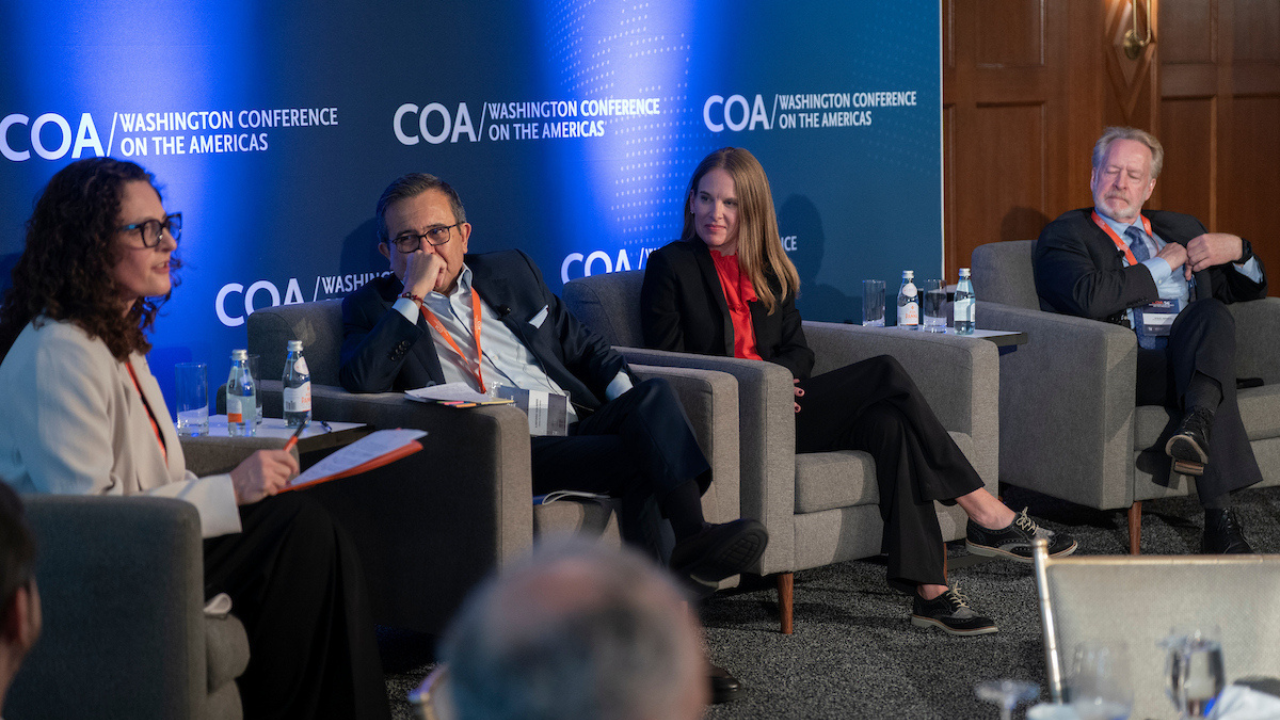
Speakers
- Ildefonso Guajardo, Former Mexican Secretary of Economy
- Kate Kalutkiewicz, Former Special Assistant to the President and Senior Director for International Trade at the National Economic Council
- Steve Verheul, Former Canadian USMCA Chief Trade Negotiator
- Carin Zissis, Vice President, Content Strategy and Editor-in-Chief, AS/COA Online (moderator)
"The United States is thinking very seriously about how to improve the [USMCA] agreement, not walk away from it," noted Kate Kalutkiewicz, a U.S. trade expert. At the 56th Washington Conference on the Americas, she joined with other former USMCA negotiators to dig into the three countries' views on the agreement as it undergoes its scheduled review.
Moderator Carin Zissis of AS/COA reminded the audience of the stakes at the start of the panel by saying, "The agreement is worth nearly $2 trillion in annual trilateral trade. Mexico and Canada buy more than one-third of U.S. manufactured goods, which is more than the next 12 U.S. trade partners combined." Panelists noted that Trump, though, is fixated on the trade deficit the United States runs with its North American neighbors. "Because Mexico and Canada have the best access to the United States market since the beginning of the Trump second administration [it's] only natural, of course, that we are bringing in more goods," explained Kalutkiewicz.
Each panelist addressed sticking points in the review for their countries. Ildefonso Guajardo, the former Mexican secretary of economy, spoke on the Trump administration's belief that China is moving goods through Mexico to take advantage of USMCA. He explained that cooperation could be key: "What we should do is join forces to do intelligent import substitution to replace China imports." He continued, "If you just go straight to tariffs, we're shooting [ourselves] in the foot. So, we better look at exactly how we want to strengthen North American integration."
Canada's Steve Verheul noted his country has looked to trade diversification in light of tension with the United States. Still, he said, "If we can get to a place with the U.S. where we are going to be back to more of a predictable trading relationship, one that's going to be based on rules that we're all going to fall follow, then clearly that would be where our interests would lie. But we're not sure that we're going to get there." He said the Canadian government may be looking for "a down payment on some sensitive issues" like dairy and liquor to kick off negotiations.