680 Park Avenue
New York City



Lolo y Lauti, La pasión de Andrea del Boca. Ópera para un barítono y dos televisores (Andrea del Boca's passion: Opera for a baritone and two televisions), 2027. Commissioned by Americas Society. Courtesy of the artists.
As a part of our Performance Series, the Argentine duo will reflect the sonic and choreographic language of telenovelas.
As a part of our Performance Series, Art at Americas Society, in partnership with Music of the Americas, is pleased to present La pasión de Andrea del Boca. Ópera para un barítono y dos televisores (Andrea del Boca's Passion: Opera for a Baritone and Two Televisions), a performance by the Argentine duo Lolo y Lauti. This performance is free and open to the public and will take place in person at Americas Society.
Wednesday, March 10, 2027, from 6 to 8 PM ET
680 Park Avenue, New York, NY 10065
Registration is required
RSVP HERE
Doors open at 6 PM. The performance will begin promptly at 6:15 PM. Early arrival is suggested as space is limited, and entry is not guaranteed for late arrivals. The program's recording will be available on our website and on the Art at Americas Society YouTube channel.
This program is in conjunction with the exhibition Telenovela, curated by Aimé Iglesias Lukin.
La pasión de Andrea del Boca. Ópera para un barítono y dos televisores (Andrea del Boca's Passion: Opera for a baritone and two Televisions) draws on the soundtracks and melodramatic performances that defined Latin American telenovelas between 1975 and 2005. Its title references a song by Andrea del Boca, the iconic star of Argentina's golden age of telenovelas, about a woman who repeatedly falls into the same trap of love.
The performance reflects the influence of the sonic and choreographic language of telenovelas on queer audiences. Drawing on telenovela songs as an emotional archive, it unfolds across two temporalities: the young gay boy who first encountered these songs and discovered a secret language within them through which to name himself, and the adult who returns to them and recognizes in that archive the very material from which he is made.
At a time when queer representation was virtually nonexistent in mainstream media, generations of gay men found in telenovela heroines a set of codes through which to understand themselves and locate their place in the world. For many, telenovelas offered the first mirror in which they could recognize themselves.
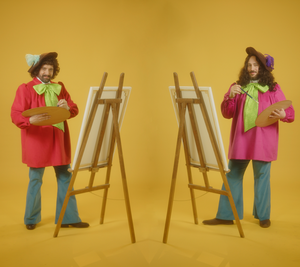
Lolo y Lauti (Buenos Aires, 1980 and 1986) are an artist duo who have been working collaboratively since 2011. Their practice spans performance, video, sculpture, installation, and photography, presented across formats ranging from exhibitions and opera to social media and virtual reality. Lolo y Lauti embrace humor as both an autonomous aesthetic experience and a tool for engaging with themes such as sexuality, drugs, death, and art. Their iconography draws from the worlds of internet entertainment and television, as well as magazines and amusement parks. Fictional characters like Mafalda and television icons such as Moria Casán share the same spotlight in a psychedelic remix infused with theatrical references.
Just as they incorporate elements of mass media into art, they approach art through the strategies of mass media. Rather than celebrating or dismissing their references, they amplify them to the point where critique and fandom become indistinguishable. At the core of the duo's practice is appropriation—a strategy shared by both contemporary art and Argentine popular entertainment, which itself often appropriates international spectacle. Just as Susana Giménez appropriates Broadway, Lolo y Lauti appropriate Susana, offering a queer reframing of the free play of popular culture's symbols.
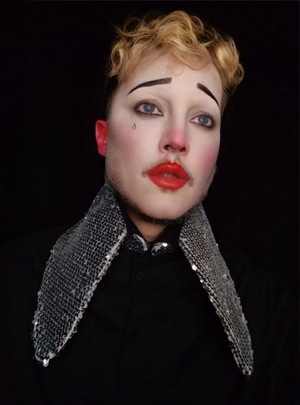
Manuel Attwell is an actor, dancer, and singer. As an actor, he has appeared in El hombre que se fue and Lorca, el teatro bajo la arena, directed by Laura Paredes; Pobre Daniel, directed by Santiago Gobernori; and La piel del poema and Bailan como muñecos mis anhelos, directed by Ignacio Bartolone, among other productions. In film, he has appeared in El perro que no calla, directed by Ana Katz; El público, directed by Mariano Pensotti; and Los tonos mayores, directed by Ingrid Pokropek. He is also one of the creators and performers of El rebenque, directed by Vivi Tellas.
As a choreographer, Attwell has collaborated on numerous projects with the artist duo Lolo y Lauti, including Localidades Agotadas, Jaguar, El Gusanito, and Triple Threat. His film credits include Relatos salvajes, directed by Damián Szifrón; Dos hermanos and El nido vacío, directed by Daniel Burman; and Passage, directed by Shekhar Kapur. He also choreographed Madonna's short film Secret Project Revolution, directed by Steven Klein, music videos for Café Tacvba, Miranda!, Vicentico, Emmanuel Horvilleur, and David Bisbal, and more than seventy commercials directed by filmmakers including Alejandro González Iñárritu, Wayne Isham, and Sanji. His most recent choreography credits include the series El Eternauta, directed by Bruno Stagnaro; El fin del amor; Envidiosa; and the feature film El jockey, directed by Luis Ortega.
This program is supported by Fundación Ama Amoedo.

Telenovela has been made possible by generous support from the Andy Warhol Foundation for the Visual Arts, Henry Luce Foundation, New York City Department of Cultural Affairs, New York State Council on the Arts with the support of the Office of the Governor and the New York State Legislature, Cowles Charitable Trust, and Colección Patricia Phelps de Cisneros. Significant in-kind support has been provided by Globo.
Americas Society acknowledges the generous support from the Arts of the Americas Circle members: Amalia Amoedo, Ileana Anselin, Estrellita B. Brodsky, Virginia Cowles Schroth, Emily Engel, Blanca and Sunil Hirani, Isabella Hutchinson, Carolina Jannicelli, Diana López and Herman Sifontes, Elena Matsuura, Maggie Miqueo, Maria Mostajo, Antonio Murzi, Marco Pappalardo and Cintya Poletti Pappalardo, Gabriela Pérez Rocchietti, Carolina Pinciroli, Erica Roberts, Sharon Schultz, and Edward J. Sullivan.