Peru election worker

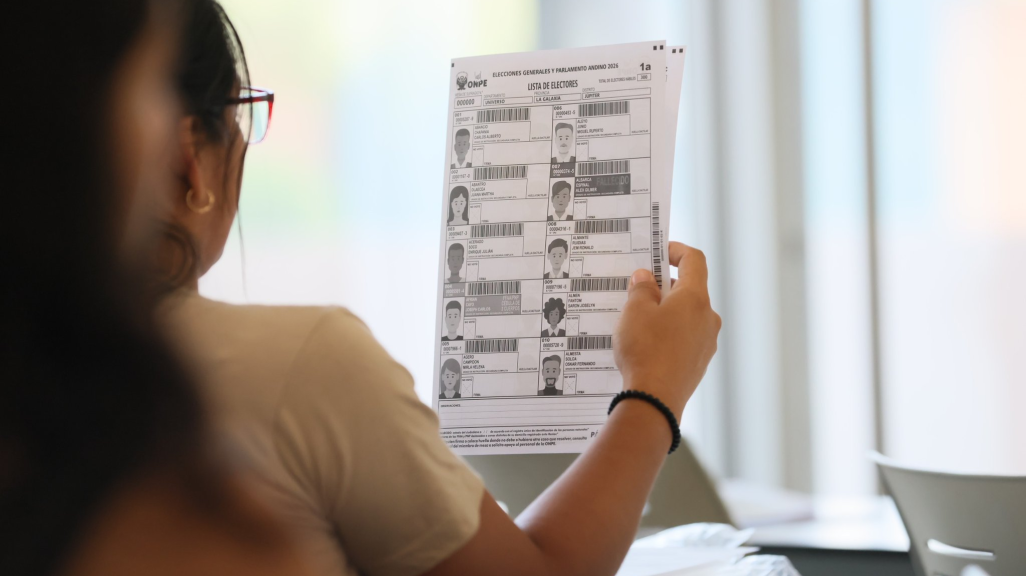
An election worker in Peru looks at an example electoral roll. (Peru's National Office of Election Processes on X)

Share

Q&A with Datum CEO Urpi Torrado on Polling Peru's Razor-Close Elections

By Khalea Robertson

“This is the most complicated election we’ve worked on,” says the head of the major pollster, who discusses voter volatility ahead of the April 12 vote.

In the week leading up to Peru’s April 12 elections, pollsters are legally barred from releasing voter intention data. But that also happens to be when around a third of the country’s 27.3 million voters are likely to make their decision.  

Image
Urpi Torrado
Urpi Torrado

“We have 14 percent of people saying that they decide the same day as the election,” said Urpi Torrado, CEO of polling firm Datum, “Even the candidate with the highest voting intention doesn't have 14 percent. So 14 percent deciding the day of the elections can change everything.”  

In this interview, Torrado covers the challenges of polling across Peru’s diverse geography and population, late surges in candidate popularity, and why there might be a high percentage of invalid ballots. 

AS/COA Online: There are a record 35 candidates competing to be president and five elections happening on April 12. Voters have a very large ballot to fill out! What challenges does that present for you as a pollster?

Urpi Torrado: The challenge, more than the ballot, is the country. Peru is divided into five different regions. One is Lima, the capital city, and then we have north, the jungle, the highlands, and the south of the country. And each region has its own challenges.  

Some populations are quite difficult to reach, so the first challenge for us is reaching a representative sample and going to both urban and rural areas so we can have complete coverage of the country.  

The rural areas are especially challenging because people are a closed community, and they decide as a community if they want you in or not. They can say, “You can’t do interviews here,” and we are not allowed to enter.  

The fieldwork itself is a big challenge. It's different from other countries where you can do online or telephone interviews. In Peru, because of these different realities around the country of different phone penetration or internet coverage, what really works is in-person interviews. We have to visit every community or city to reach the sample and to have a representative sample of the country. 

AS/COA Online: Speaking of the challenges of accessing some parts of Peru, let’s talk a little about the last election in 2021. After Pedro Castillo won despite not polling highly, analysts suggested that the strength of voters in central and southern Peru had been underestimated. How would you describe the differences between voters in different regions of the country?

Torrado: I don't think that the polls didn't represent areas of the country. I think that what happened is that people decided their vote at the very end and there was a candidate that grew in the last days [leading up to] the elections.  

All the polls that we did had the numbers, and we found that he was growing. The problem is that there is a law that doesn't let us publish results the week before elections, so internally we knew. We saw the data and we saw that the votes were changing, but we couldn't publish them.

And this is happening again after the debates in Peru. We saw that people started changing their votes or deciding their vote, but this Sunday [April 5] was the last day for publishing results. What we are seeing in our interviews is that on Monday, we got different results from what we published on Sunday. And we see that today is still changing, and it will continue changing until Sunday.  

We have asked many times, “When do you decide your vote?” and we have 14 percent of people saying that they decide the same day of the election. That’s a low percentage, but it is 14 percent in a country that has 35 candidates. Even the candidate with the highest voting intention doesn't have 14 percent, so 14 percent deciding the day of the elections can change everything. 

"And we see that today, [polling data] is still changing, and it will continue changing until Sunday."
AS/COA Online: You mentioned that polls can’t be released in the week leading up to election day, but we’ve seen with Castillo, for example, that a presidential candidate can have a quick, late rise in popularity just before the election. Do you see signs that something like that might happen again this year?

Torrado: The problem is that I can't comment on the [exact] results, but what we are seeing is something similar to 2021: that an unexpected candidate is still growing. But it's different from 2021 because we have other candidates that are also growing.

For us, this is the most complicated election that we have worked on. Our company was founded in 1980, so we have worked in many elections. This is the first time that we have, in second place, four candidates that are fighting for the runoff with a candidate [Keiko Fujimori] that is now in the first place.  

In 2021, we had one candidate who was growing while others were losing votes. Now we have two, three, four candidates fighting for this. Two candidates are growing more than the others, but still the other two are statistically very tight. Any of them can go to the runoff. 

AS/COA Online: From the survey that Datum published on April 5, the candidates that got a boost after the debates include Carlos Álvarez, Jorge Nieto, Ricardo Belmont, and Roberto Sánchez. On the other hand, former Lima Mayor Rafael López Aliaga, who led polls throughout much of the past year, fell off. What can you tell us about the different kinds of voters these candidates attract?

Torrado: Carlos Álvarez is a candidate that is attracting people from the whole country in different percentages, but more in the base of the pyramid. He is a little bit stronger in the North and maybe Lima, but you can find votes for him in the whole country or in every segment.

Jorge Nieto is another candidate that grew after the debate and he's more centered in Lima and among young people. Another candidate that grew after the debate is Ricardo Belmont. Belmont also has young people and has a strong vote in the center of the country, the highlands. And López Aliaga is a candidate that is more centered in Lima. He was the city mayor, so Lima is his most important voting [base].  

Also from the debate, another candidate that grew is Marisol Pérez Tello. She's also a candidate more centered in Lima [but] she's more left-wing. You can say that the people that consider themselves left are voting for her. The same as Jorge Nieto. Carlos Álvarez and Ricardo Belmont are the ones that are perceived more in the center of the political spectrum. Keiko Fujimori and López Aliaga are more right. 


AS/COA: You mentioned earlier that a lot of people decide their vote at the last minute. Polls, including Datum’s, estimate that a third of voters decide during election week or even on the day itself. How do you account for that in your work?

Torrado: We are doing polls every two days so that we can measure what is going on and we are prepared for Sunday. But the problem is not how we work, because we are working the same way. The problem is that people don't know what is going on. And of course, not now but after the elections, you always will have politicians that say, “Oh, your results one week before were quite different from the final results.” But it's one week apart. And in one week, you have the campaign, and also you have the attacks that all candidates receive, and so you don't measure the impact of those attacks. Or you measure it, but nobody knows what impact it is having in the polls.

AS/COA Online: Of course, it’s not just the first round of the presidential election that’s happening on April 12; there are also legislative elections. And for the first time in decades, this includes a vote for a Senate. How do the polls suggest this might be shaping up?

Torrado: It's quite difficult to measure how the composition of the congress is going to end up, because for that we need a minimum of 5,000 interviews and you won't find a client that will pay that much.

It’s difficult because every region (we have 25 different regions) has their own representative for the Senate and for the Chamber of Deputies. So you need to do representative samples in each region and it is very, very difficult or quite impossible to do it, so we are looking only at the elections for national senators. And also we are measuring Lima because one-third of voters live there, so Lima is easier to measure because we do a bigger sample. But it's not enough to get the whole picture.  

But from what we're analyzing in our polls, what we see is that we will have maybe in the Senate four or five political parties. And in the Chamber of Deputies, maybe eight parties. But if it is going to be a right-wing party or a left-wing? We don't have enough information. 

"For us, this is the most complicated election that we have worked on."
AS/COA Online: What else do you think is important to keep in mind when we compare polls to Sunday’s results?

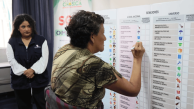
Torrado: Another thing that is important is that what we released on [April 5 were] two different results. One is the results of the interviews we did in which we asked people, “How are you going to vote?” And the other thing we did is, with the same ballot that we're going to use on Sunday, asked, “Please vote as you will [on election day].” So this is not people answering how they are going to vote, but they are actually voting.  

This exercise is quite important because we really can understand how they are going to behave. And what we are seeing is that people get scared from this huge ballot. They don't know how to decide for each election. There are two different elections for one Senate. So it will be challenging for voters to vote this Sunday.  

The average of people that leave the ballot blank or they make a mistake—it's around 40 percent, so it is going to be huge. That's why people in Peru don't feel represented by the Congress. 

This interview has been edited for length and clarity. 

Related

Explore