Peru's 2026 Presidential Candidates: Keiko Fujimori and Roberto Sánchez
Peru's 2026 Presidential Candidates: Keiko Fujimori and Roberto Sánchez
On her fourth try, conservative Keiko Fujimori faces off against leftist Roberto Sánchez after a first-round vote marred by mishaps.
Peruvians waited five weeks to find out which two candidates would advance to the June 7 presidential runoff. A disorderly April 12 election day saw the delayed delivery of electoral materials hold up voting across dozens of polling stations leading to an unprecedented one-day extension at sites in Lima and abroad. Then, the review of thousands of disputed vote tally sheets slowed the vote count. Mounting backlash prompted the April 21 resignation of the head of the electoral agency. And while local and international observers have sought to allay fears of fraud, concerns persist about institutional weakness in Peru, which is on its ninth president in a decade.
But one thing was clear in the aftermath of the first round: Keiko Fujimori had made it to her fourth consecutive presidential runoff. Garnering around 17 percent of valid votes, she took the top spot in a field of 35 candidates.
Early results suggested that ex-Mayor of Lima Rafael “Porky” López Aliaga (2023–2025) of the Popular Renewal party would join her in the second round. But as votes from remote areas of the country came in, Congressman Roberto Sánchez of the leftist Together for Peru party overtook the conservative businessman. In the end, just 21,000 votes separated Sánchez from López Aliaga; each earned around 12 percent of valid votes.
So who are the two candidates set to face off in the June 7 runoff? And how do they propose to address the top voter concerns of crime and corruption, while keeping the economy running?
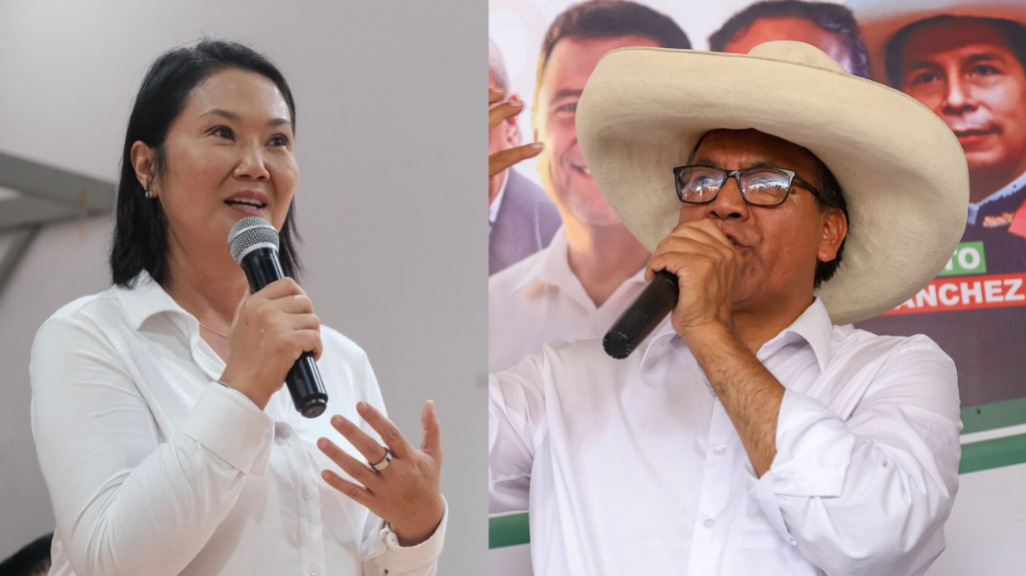
Keiko Fujimori and Roberto Sánchez will compete in the June 7 runoff that pits right versus left.

Background
Keiko Fujimori, 50, is the eldest daughter of the late authoritarian ex-President Alberto Fujimori (1990–2000). At 19, she paused her university education to enter her father’s government as first lady (1994–2000), and has maintained her prominence in the national political landscape ever since.
Fujimori served one term in Congress (2006–2011), during which time she founded the conservative Popular Force party. Though she has not held an elected role since, Fujimori is a key political operator behind the scenes of the country’s legislature, which has impeached five presidents over the last decade.
Between 2018 and 2020, Fujimori served three stints in preventative prison while facing money laundering charges related to campaign financing and the region-wide Odebrecht scandal. Peru’s Constitutional Court dismissed the case in October 2025 on “a lack of legal grounds.”
This is Fujimori’s fourth attempt to take the presidential reins. She lost the previous three runoffs by close margins. If victorious this time around, she would be the first woman elected president in Peru.
"Today, when Peru is bleeding because of criminals and extortionists, they are asking for a Fujimori. Here I am!"—Fujimori

Keiko Fujimori emerged from the runoff with a razor-thin victory. Her term begins on July 28. Learn about her campaign and key moments of a tight election.
Background
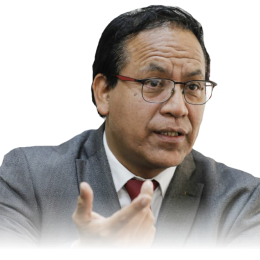
Roberto Sánchez, 57, was born in Huaral, a coastal, agricultural city in the outer provinces of the department of Lima, to parents from the Andean regions of southern Peru. A psychotherapist, his entry into politics was with the Peruvian Humanist Party (PHP), under which he unsuccessfully ran for both a congressional seat and the mayorship of his hometown in 2006. In 2017, the PHP merged with other leftist parties to form Together for Peru under Sánchez’s eventual leadership.
In the 2021 general elections, Sánchez won a congressional seat representing Metropolitan Lima. Then-President Pedro Castillo (2021–2022) appointed him as foreign trade and tourism minister. Sánchez resigned from his cabinet position in 2022 following Castillo’s impeachment for an attempted “self-coup,” a move that Sánchez spoke out against at the time, although he abstained from the impeachment vote in Congress.
“¡Castillo vuelve!” read a printed slogan behind Sánchez at an April 21 press conference. Castillo returns. Borrowing a distinctive accessory of Castillo, Sánchez has taken to wearing a large, wide-brimmed hat on the campaign trail while pitching himself as the successor to the now-imprisoned ex-president, who endorsed him in the first-round vote. Multiple investigations into the Castillo administration sketch a network of bribes and influence peddling, allowing the ex-leader's friends and family to win high-level government positions and state contracts. Sánchez has pledged to pardon Castillo if elected.
"We want a new social contract, a plurinational state that recognizes the true face of Peru."—Sánchez
AS/COA Online covers major votes across the region for presidents, legislatures, municipal votes, and more.