Kevin Sullivan on NPR about U.S. Policies Toward Latin America
Kevin Sullivan on NPR about U.S. Policies Toward Latin America
Washington's credit swap line to Argentina "is part of the geopolitical competition with China," said the AS/COA vice president to National Public Radio.
In an interview on WOSU-NPR's "All Sides with Amy Juravich," Ambassador (ret.) Kevin Sullivan, vice president of Americas Society/Council of the Americas and head of the AS/COA Washington office, discussed the relationship between the United States and countries like Argentina, Brazil, and Nicaragua.
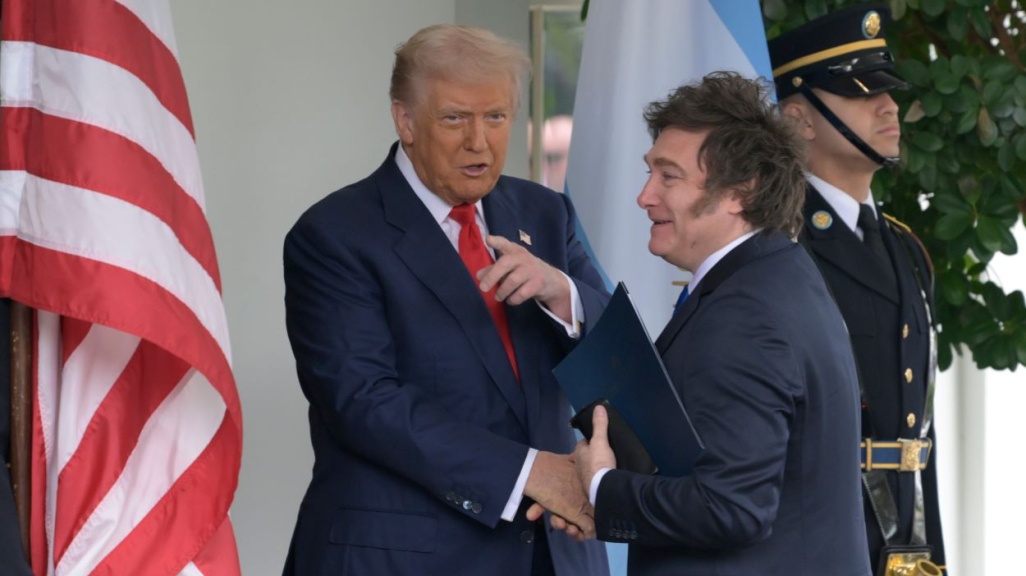
Juravich asked Sullivan about the friendly relationship between U.S. President Donald Trump and Argentine President Javier Milei. Sullivan noted that Milei's image and rhetoric seemed to "appeal" President Trump, and that "there is a lot of affinity there in terms of the styles of the two leaders."
Sullivan also spoke about the $20 billion credit swap granted to Argentina by the United States: "The currency swap that Scott Bessent, U.S. treasury secretary, organized basically helped convince speculators that Argentina would have the macro economic ammunition to defend its exchange rate. And in that sense, it was very successful. [...] Although the jury is still out over the medium and long term, the currency has stabilized since the election."
He pointed out that this decision by Washington could have been influenced by Argentina's "strategic importance," derived from its rich mineral resources, and the broader "geopolitical competition with China," which he sees as a significant driver of recent U.S. actions across Latin America.
Regarding the relationship between the Trump administration and Brazilian President Luiz Inácio Lula da Silva, Sullivan stated that the relationship had a "very rocky start," primarily due to ideological differences, and other factors such as strong ties between Trump and the Bolsonaro family, Elon Musk's disputes with the Brazilian government, and Trump's early tariff announcements against the South American country.
However, Sullivan noted an improvement in this relationship over time: "We've seen President Trump and his administration begin to take more account of that strategic relevance that Brazil has. And we've seen in recent weeks and months, a lowering of the tensions or lowering of the conflict of tone between the two governments."