Deadline Writes about Americas Society's Show on the Cultural Significance of Telenovelas
Deadline Writes about Americas Society's Show on the Cultural Significance of Telenovelas
"Telenovela reclaims the televised soap opera as a primary subject of rigorous art-historical, social, and political inquiry," said the publication.
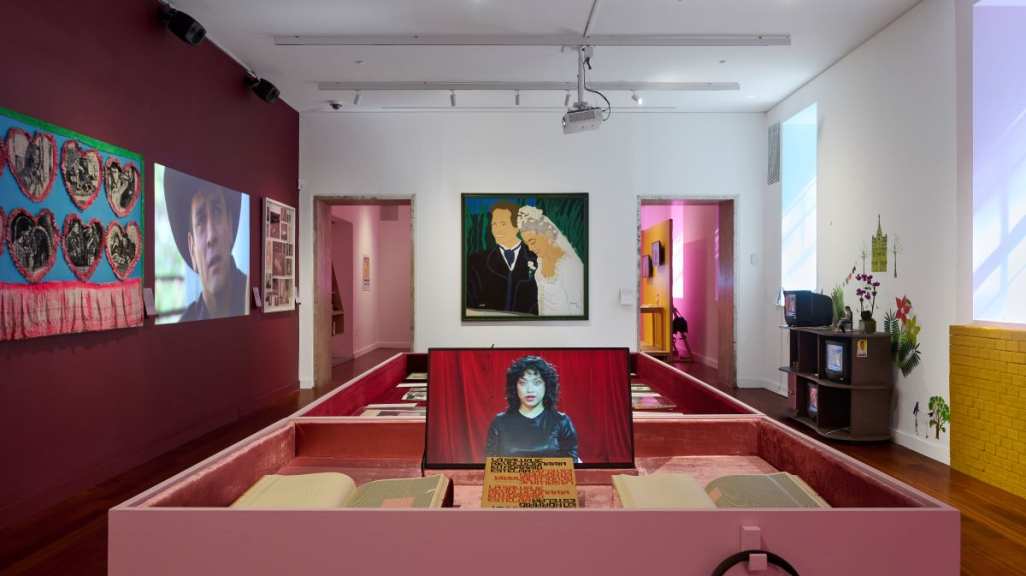
Long dismissed by critics as melodramatic television or “lowbrow” cultural consumption, the telenovela has quietly served as the most widely circulated Latino cultural export of the postwar era. Opened on September 9, 2026, at Manhattan’s Americas Society, the exhibition Telenovela reclaims the televised soap opera as a primary subject of rigorous art-historical, social, and political inquiry. Curated by Aimé Iglesias Lukin, Director and Chief Curator of Art at Americas Society, the exhibition spans over 50 artworks created from the 1970s to the present. Through painting, sculpture, performance, photography, video, and immersive installations, the show demonstrates how Latinx and Latin American artists have drawn on the visual language, camp aesthetics, and emotional intensity of the genre to examine identity, class, gender, and migration across the Western Hemisphere.
At its heart, Telenovela addresses how mass media forms a unifying thread across plural, geographically fragmented communities. Across Argentina, Brazil, Colombia, Mexico, and Venezuela, serialized dramas have historically transcended social stratification and regional borders to shape collective memory. As curator Aimé Iglesias Lukin notes, the passion for telenovelas among artists and audiences has often been kept hidden due to persistent class and cultural prejudice. Yet, within diaspora communities and migrant networks in cities like New York, these melodramas function as a vehicle for nostalgic connection and collective catharsis. By elevating the genre into gallery spaces, the exhibition breaks down the hierarchy between “high art” and popular culture, proving that melodrama provides a vital platform for working through shared social realities.
The entrance to the exhibition sets a dramatic tone with a multi-screen audiovisual prologue that combines television monitors with elements of a physical studio set. At the center of this presentation is Mexican artist Pablo Helguera’s Instituto de la telenovela: Entre la gloria y el olvido, a newly commissioned iteration of his long-running project. Filmed on location with local actors in Bogotá, Buenos Aires, Mexico City, and Rio de Janeiro, with in-kind studio access provided by TV Globo, Helguera’s parallel melodramatic scenes highlight both the universal tropes and hyper-local nuances of the genre...