


Brian Winter on CBC Podcast about Brazil's Presidential Election and the "Donroe Doctrine"
Brian Winter on CBC Podcast about Brazil's Presidential Election and the "Donroe Doctrine"
"What people are really voting for above all is a tougher approach against organized crime," said AQ's editor-in-chief.
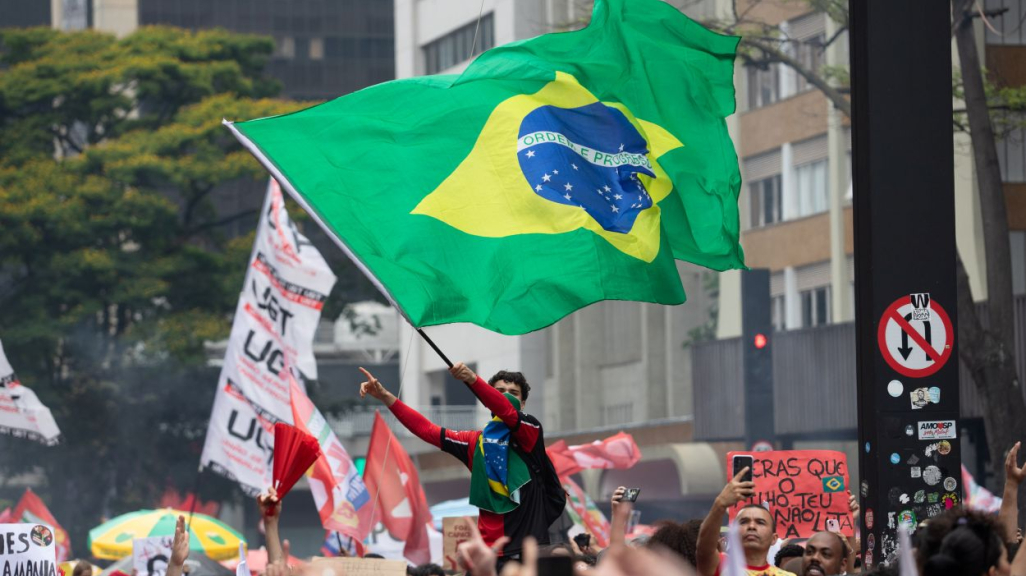
In an interview with Jayme Poisson of the Front Burner podcast, Brian Winter, editor-in-chief of Americas Quarterly and vice president of Policy at Americas Society/Council of the Americas, discussed Brazil’s first-round election results amid a broader rightward shift across the region that aligns with Donald Trump’s “Donroe Doctrine,” his version of the Monroe Doctrine.
Poisson started the chat asking for Winter's analysis of what happened at the polls on October 4.
"While it's true that Flávio Bolsonaro only won by two percentage points, the math greatly favors him as this moves toward a second round on October 25," said Winter. "Basically because the other 8 percent or so of votes that went to other candidates, all of those other candidates are right of center. And so the bets being made in Brazil right now are that Flávio Bolsonaro will be the next president of Brazil, barring some sort of massive, unexpected comeback by Lula in the second round."
They also talked about the rightward shift happening in politics across Latin America.
"Of the last 16 presidential elections in Latin America that were democratic, right or centre-right candidates have won 13 of them," said Winter. "So this really is a significant conservative shift, similar, as you note, to what we saw in Latin America during the 2000s when it was left-of-center leaders that took office. And it's interesting. You know, these are leaders that are often aligned with President Trump."
"What people are really voting for above all is a tougher approach against organized crime," he added. "That is the number one issue for voters, according to polls, in almost every country in the region right now -- from Mexico down through Colombia, Costa Rica into Chile, and yes, Brazil."
"The bottom line is there's no doubt that Washington has a preference for the Bolsonaros in this election, and they've been willing to take concrete steps in order to try to help him," said the expert. "The United States, for the last 30 years or so, really did not take this kind of approach. It was more hands-off, more kind of a peer-to-peer relationship with these countries. The Monroe Doctrine was hardly mentioned at all during most of those years. In fact, you had officials in the Obama administration who explicitly said those days are over. But now President Trump has made very clear that the Monroe Doctrine is back."