
LatAm in Focus: The Math Behind Cartel Recruitment in Mexico
LatAm in Focus: The Math Behind Cartel Recruitment in Mexico
El Mencho’s payroll ledger revealed how cartels fill ranks. Mathematician Rafael Prieto-Curiel shows why stemming recruitment is the key to curb violence.
After a February military operation led to the death of Nemesio Rubén “El Mencho” Oseguera, Mexican authorities sifted through the cartel leader’s belongings. There, in the cabin where he was ambushed, they allegedly uncovered logs showing that low-level members of El Mencho’s Jalisco New Generation Cartel earned as little as $140 per week. Why, many people asked, would somebody take such a deadly job for such low pay?
But Complexity Science Hub’s Dr. Rafael Prieto-Curiel explains that, with the entry-level gigs paying at least 50 percent higher than Mexico’s minimum wage, “the cartel is being a bit seductive because they offer so much money.”
And he’s got the numbers to prove it. Prieto-Curiel, a mathematician who worked on crime forecasting in the Mexico City police force, coauthored a landmark 2023 study for Science calculating that, with 175,000 members, cartels represent Mexico’s fifth-largest employer. Moreover, he estimates that they count as the country’s top recruiter, given that they have to repeatedly replenish their ranks following arrests, killings, and disappearances. “With 350 recruits [per week], they are preventing their own collapse,” he tells AS/COA’s Carin Zissis.
As Mexico’s war on organized crime stretches into its twentieth year, the government of President Claudia Sheinbaum has touted arrests, drug seizures, and kingpin captures. Washington, meanwhile, has suggested the solution is military strikes.
But Prieto-Curiel argues the real solution is cutting off recruitment—whether forced or financially driven—through targeted social and rehabilitation programs, as well as by penalizing cartel enlistment. For now, he says, “The impact of violence is costing around 18 to 20 percent of the country’s GDP.”
He does hold hope for the future, however. “I am convinced that Mexico and Latin America can…defeat crime. It just takes time—and it takes a very scientific approach.”
Our guest
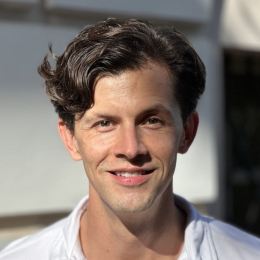
Rafael Prieto-Curiel is a faculty member at Vienna's Complexity Science Hub where he investigates the dynamics of organized crime alongside patterns of human mobility, migration flows, and urban development. He previously served as director of strategic analysis at the Emergency Attention Center of Mexico City, where he worked on crime forecasting and police and resource allocation. He holds a PhD from University College London (UCL) in math and security and crime. While at UCL, he founded the math magazine Chalkdust, as well as the science communication website Punto Decimal MX. In 2024, he became the first Latin American finalist at Berlin’s Falling Walls Science Summit.

Subscribe to Latin America in Focus, AS/COA's podcast focusing on the latest trends in politics, economics, and culture throughout the Americas.
This episode was produced by Khalea Robertson, Luisa Leme, and Camilo Salas. Carin Zissis is the host.
Share and subscribe at Apple, Spotify,YouTube, or wherever you get your podcasts. Access other episodes of Latin America in Focus at www.as-coa.org/podcast and send us feedback at latamfocus@as-coa.org.
Read Dr. Prieto-Curiel's research in Science.
The music in the podcast is performed by Alejandro Escuer and Leandro Díaz Keller for Americas Society. Find out about upcoming concerts at musicoftheamericas.org. Share your love for Latin America: Join Americas Society.
Opinions expressed in this podcast do not necessarily reflect those of Americas Society/Council of the Americas or its members.
[MUSIC PLAYING]
Carin Zissis: This is Carin Zissis of AS/COA Online.
In February, in the resort town of Tapalpa, Jalisco Mexico’s military captured and killed their country’s most wanted criminal, Nemesio Rubén Oseguera.
[Clips from TV news reports in Spanish and English about the killing of El Mencho]
[MUSIC CONTINUES SOFTLY]
Zissis: Better known as El Mencho, Oseguera was the leader of the extremely violent Jalisco New Generation Cartel. And the operation leading to his death set off retaliatory clashes and blockades, not just in Jalisco, but in multiple states across Mexico.
[CLIPS from TV news reports in Spanish and English about the cars set ablaze, blockades, and shootouts]
[MUSIC CONTINUES SOFTLY]
Zissis: After the smoke cleared, authorities sifted through El Mencho’s belongings in the cabin where they ambushed him and allegedly found accounting ledgers, known as narconómina...
[CLIPS from TV news reports in Spanish about the discovery of the ledgers]
[MUSIC CONTINUES SOFTLY]
Zissis: ...outlining cartel income, expenses, bribes, and the cartel payroll.
And that last item sparked this episode of Latin America in Focus. Because many people were surprised by how little the cartel lookouts and hitmen earned—as little as $140 per week—given that their jobs can be, quite literally, deadly.
If people working for cartels earn so little for such a dangerous job, why do they join?
[MUSIC PLAYING]
Zissis: As Mexico’s war on organized crime stretches into its twentieth year and the cartels continuously find new members, the government of President Claudia Sheinbaum has touted arrests, drug seizures, and kingpin captures. Washington has suggested the solution is military strikes on narcoterritory.
But our guest today makes the case that the real problem to solve for is cartel recruitment.
Rafael Prieto-Curiel: I'm Rafael Prieto-Curiel and I'm a faculty member at the Complexity Science Hub in Vienna.
Zissis: For Rafael, as a mathematician, solving the problem requires understanding the numbers behind it. And he was the co-author of a landmark study that did just that.
Prieto-Curiel: X Is the size of one cartel that shrinks a bit because they kill each other, shrinks because they are arrested by the police, shrinks maybe because some of the members retire, but then they compensate by recruiting. By putting those four terms—that is recruiting, arresting, killing, and retirement—we solve the system of equations. It took a lot of time actually, months of computing, because it's not easy to solve such equations; too many equations, too many unknowns. But what we did get is an estimate that cartels are 175,000 members in Mexico. Cartels, together, they would be the fifth-largest employer in the country.
[MUSIC CONTINUES]
Zissis: We’ll hear how to get to the root of one of Mexico’s most challenging problems: how to stop cartels from finding new recruits.
Thank you for joining us. And whether you’re listening in Puebla, Petropolis, or Panama City, don’t forget to subscribe to and share Latin America in Focus on Apple, Spotify, or wherever you get your podcasts.
[SHOW INTRO WITH UPBEAT MUSIC – Latin America in Focus Podcast]
VOICE OVER 1: You’re listening to Latin America in Focus.
VOICE OVER 2: Latinoamérica en foco
VOICE OVER 3: América Latina em foco
VOICE OVER 1: A podcast by Americas Society/Council of the Americas on politics, economics, and culture in the region.
Zissis: So today we're talking about how math can help us understand and even solve security issues in Mexico and beyond. And our guest Rafael Prieto-Curiel quit his career in finance to use his math talents to that end. So how does a mathematician end up fighting crime?
Prieto-Curiel: Well, I experienced five years in the police, and it was honestly the job of my life. And I will go back any day, as I am. Yeah, because you know, with mathematics, trying to make your city safer was extremely exciting, and that's what I did every day. And that was my first encounter with the power of mathematics to deal with crime.
Zissis: How did you use math to make Mexico City safer?
Prieto Curiel: If you think of a map of Mexico City and you put a pin on every crime that happened in 2025, you will see immediately that there is a spatial pattern. So, it means some neighborhoods concentrate a lot of crime, not even neighborhoods, something smaller—a junction, a crossing, a metro station—has a lot of crimes, whereas a lot of the city actually sort of crime free. Those patterns, they also happen in time. So Monday morning, crime happens in some locations, but Friday evening, happens in very different places.
If you combine those two, the temporal and the spatial patterns of crime, you can conceive a strategy for the police. So where do you put your police officers to react faster? Where do you put cameras? Where do you put ambulances, firefighters? Where do you put investigative police? So all of those, using data and using, obvious of course, experience from the police officers.
So what we did at first is sitting down with police officers and ask him, “Why do you think crime happens here?” And they have answers, because they have experience, 30 years working in the city trying to make us safer. Their theories, we could corroborate them with equations and with data and with mathematics and science. Extremely interesting is that many of the theories are actually true. So for instance, “Crime happens here because there is a metro station.” Yes, it's true. And I can see it in 197 metro stations in Mexico City, so I can tell you it's true. “Crime happens here because there is an ATM.” No, that one doesn't happen so much because, you know, we have 30,000 ATMs in Mexico and you only observe it in these ones. So what makes these ATMs special? So that sort of questioning was first, trying to understand the patterns of crime.
And then let's deliver it back to the police officers. So we produced instructions for particularly the people who are watching cameras on the emergency attention center in Mexico City. Mexico has more than 70,000 cameras today for protecting us and to monitor crime. But out of the 70,000 cameras, we cannot watch 70,000 in real time because you would require 70,000 police officers on the other side. But we only have a few hundred. That means the ratio of the number of cameras to the number of police officers that are actually watching cameras is too high. You need maybe 120 cameras per police officer. Out of those 120, which one is the most strategic to observe so as to increase the chances of detecting a crime?
So we created also steps for them to react to these issues, trying to think of the ... let's optimize what we already have as resources here in the police.
Zissis: And you then went on to get your PhD and you went on to use math to understand crime in other ways. And in 2023, you co-authored an article for the journal Science that determined that Mexico's cartels are the fifth-largest employer in the country. And I remember when it came out, because this drew a huge amount of attention in Mexico, and I think, in part, because it made people consider cartels not just as criminal organizations, but as employers, with turnover and staffing needs.
But for listeners who aren't familiar with that study, what were the findings?
Prieto-Curiel: For me, the biggest issue is that I left Mexico in 2013 thinking that we were going through the most violent moment in history and that eventually violence will go down. But then, many years went by and Mexico is just getting more violent.
So it's frustrating, you know, to just see your country getting more and more violent and trying to understand why is this happening. I remember once when President López Obrador said in a conference, “Oh, you know, if yesterday we observe so many homicides, no worries. It's just because there was like, cartel versus cartel, they were just [settling] up the bill.” Ajuste de cuentas they would say in Spanish. So it’s even better. And I, I remember I ... These words started resonating in my brain because it cannot be true.
If you think of a city with 100 criminals and they are [settling] up the bill: Well, tomorrow they maybe will have 90, and if they [settle] the bill again, they will have 80 and then 60 and then this is creating a balancing effect, right? So if they [settle] up the bill, go ahead and let them.
And then I thought, it doesn't work. It cannot work because that's the same that Felipe Calderón 10 years ago was saying. And the same that Peña Nieto six years ago was saying. And now the third is again thinking that they are [settling] up the bill. So I would expect crime to go down, but crime is going up, homicides are going up. So we have something fundamentally broken.
And that's what brought me to study this with my colleagues Gian Maria and Alejandro Hope, who unfortunately passed away in 2023. But the idea was let's try to even understand the dynamic of cartels. And it's not easy. It's not easy because there is no data. Let's start with that. There is no census for cartels and there will never be a census for cartels. We cannot expect that somebody will come to your house and ask you, “Hello. Have you been approached in the past year by Cartel Jalisco to see if they want to recruit you?” No, that doesn't happen. So we need to start with approach that is: Data to validate this will never exist. Moving forward from that, we need to come up with an idea, a best estimate, and that's where, again, mathematics is a tool.
So the size of a cartel is an unknown variable. So like those that we used to solve in elementary school, X. X Is the size of one cartel that shrinks a bit because they kill each other, shrinks because they are arrested by the police, shrinks maybe because some of the members retire, but then they compensate by recruiting. By putting those four terms—that is recruiting, arresting, killing, and retirement—we solve the system of equations. It took a lot of time actually, months of computing, because it's not easy to solve such equations, too many equations, too many unknowns. But what we did get is an estimate that cartels are 175,000 members in Mexico, which combined would be the fifth-largest employer.
And I use employers just because we need something to understand the magnitude. As a mathematician, if you tell me that there is a number, 70. Is 70 large or is it small? What does it mean? I could talk in terms of cartels about, for instance, the biggest stadium in Mexico City. Yeah but that stadium, Estadio Azteca, has 100,000 spectators at capacity, but who cares? That doesn't ... you know ... So I thought, no, let's put it in context of employers, people working there.
[MUSIC PLAYING]
Zissis: What's more: those 175,000 cartel members Rafael and his co-researchers estimated for in 2022 represented a more than 50 percent increase on the 112,000 they estimated ten years earlier. And that's because while cartels all together would be equivalent to the fifth largest...
Prieto-Curiel: (overlap) ... be the fifth largest employer in the country, they will be the number one recruiter of the country, because they have to recruit 350 people per week. That is an interesting side. I don't have data to validate except the number of homicides observed from INEGI and the number of missing people observed in INEGI. That's for me the best validation that I can get. With 350 recruits, they are preventing their own collapse. If they recruited less members, they would've collapsed already. If they recruited more members, then we would observe more violence. And because I don't observe any of those, I can tell you, yeah, it's almost 350 per week.
Now does that mean that this week they will recruit 350? No. It's an estimate that obviously fluctuates. That changes and there are shocks and so on. So it's not, it's not a perfect model. It's not telling you exactly Juan and Pedro are being recruited today. It’s more like a global framework to understand the dynamic of cartels.
Zissis: Another way that you helped your audience understand and quantify this number is that the cartels employ more people than Oxxos. The Oxxos are the most common convenience store, it’s like the 7-Eleven of Mexico. They're on every corner. Everybody knows what the Oxxo is.
Um, so I wanna talk more about recruitment and what that means. But as part of that, I wanna talk about some recent events. Because a few weeks ago, El Mencho, the leader of the Jalisco Cartel was captured and killed in Tapalpa, Jalisco. And authorities found ledgers documenting the cartel's payroll, amongst other things. And what caught many people's attention was that the wages seemed lower than they expected.
So lookouts, who would be usually lower level, they earned as little as $140 a week. Gun men did better, uh, about $225 a week. Now, now we need to put this in context because the minimum wage in Mexico is about $90 a week. So $140, for many people, it still didn't seem like a lot, because you're risking your life, you're entering into a very dangerous environment, a violent environment.
How do you see these numbers? Are these wages low? And what should we understand about recruitment when we're considering these numbers?
Prieto-Curiel: The number precisely that they offer is one of the challenges that we're fighting. Because the most naive way to understand how people are being recruited is by a cartel participation model. That means when would a person decide to join a cartel or not.
And the idea behind any participation model is that you put in a balance what they offer, and, on the other side of the balance, what your second plan offers. So your plan B. And then if the cartel is offering you too much, then you say yes. But if the cartel is not offering you too much, you say no, right? You just compare.
And on the side of the cartel, they are offering you this $140 per week plus food, transportation, and uniforms, and the feeling of belonging and a fraternity group, uh ...
Zissis: It's like $140 plus benefits.
Prieto-Curiel: Yeah, right. There are other things included. And that is on the entry level, but as you say, there are higher-level employees. So by looking at job advertisements in, uh, different social media, they have estimated around $11,000 to $18,000 per year for, uh, one recruitment. With this advertisement on El Mencho's capture is $7,200, so it's on the low scale. Now, the cartel also gives you the risk of being a victim of a homicide and the risk of being arrested and then spending a lot of time in prison. That is the cartel offer. On the other side, what is the social offer? So is the salary from your legal employment, if you have one, plus social programs. It's a bit less than $5,000.
So there is some extra benefits, some premium, that the cartel is suffering for these young, uh, mostly male people to be recruited by a cartel, which is very tricky to fight. Because, you see, it's $2,000 per year, at least. In some other estimates, they say $6,000 extra versus what the society offers. So that's why the cartel is being a bit seductive. They offer so much money. That's the challenge for recruitment, right? That how do we prevent such a pervasive force in Mexico? They have a lot of people inside. In one of the cartels, we estimate 25,000 members at least, with such a flow that they have to just keep recruiting every week.
Now Mexico is going through a demographic stage where we have the biggest pool of young male people who are, some of them, in the vulnerable population. That means people who don't have enough for providing a sufficient way of a living standard. So those people are actually very vulnerable for cartel recruitment
Zissis: now the question is how do you stop this recruitment? I mean, is there a certain point where it's like, oh, we can just keep arresting more people? I mean... And I ask this question in part because, if we look beyond just Mexico, we're seeing in many parts of Latin America a sort of hardline approach to security where people are building mega prisons.
What do you think about that? is Mexico arresting more people? Is it resulting in some sort of dent in this recruitment?
Prieto-Curiel: So for me [these] are two separate elements that don't go necessarily hand by hand. Let me talk about arrests and incarceration for a second.
So, the idea of incarceration is that I will put some of the badly behaved people in a prison for a period of time such that either they learn how to behave and they are scared of coming back, or at least so that I can prevent crimes from happening during the time that I have them in prison, right?
Now, the issue with this is that the level of impunity in Mexico is just too high. It’s ridiculously high. In 2024, there were around 600 homicides in Mexico City, if my numbers are roughly correct, out of which almost the 600 murderers are free today. That means crimes where the perpetrator doesn't have any accountability is 99 percent. So we arrest individuals, but are we arresting the right ones? I don't think so.
Now, the second challenge, after we arrest somebody and we put them in front of a judge, they might serve some sentence in prison. Is prison actually preventing the cartel member from committing crimes during the time they are in prison? Well, actually, no. There is a lot of crime activities, especially with phone extortions and coordinating cartel activities, that happen from inside the prison.
And not only that: When you eventually release the criminal, do we have any rehabilitation for those persons? And the answer is, today, we don't offer them a second chance. They mostly have to go back to criminal activities because there is very, very low chances that they can find the job. After being incarcerated for eight years because they did extortion being members of a cartel, so who's going to hire them? Because of this, what happens now is that those people that we arrested eight years ago are being released, but eventually they find the cartel again. And we just have these lapses of eight years on average. That's my estimate on the sentence for a prison length for a cartel member. Super tricky, because prisons are not working.
Now on the part of the recruitment: Recruiting should be considered a crime, right? But today isn't something that we do. So today, exposing a person to a cartel and trying to convince them to join the cartel is not, is not clearly penalized in the law. And there are a lot of initiatives to actually make it like a punishable crime.
[MUSIC PLAYING]
Zissis: Not only that, Rafael said, but cartel recruitment can spread like a virus.
Prieto-Curiel: Where a cartel member is capable of using his own social network, the friends, the family or the neighbors, to keep recruiting. This recruitment, once it’s inside a neighborhood, you see that more and more people will join this cartel.
For instance, you take two cities of a similar size in Mexico. Think of Merida and Acapulco. In Acapulco, you have some cartel members which keep recruiting, and now Acapulco is going through a very violent moment in its history with, for instance, public transport drivers. They are constantly being victims of crimes because they are being used to, uh, transport cartel members. So Acapulco is a very complicated place, with this reproductive process of cartels.
And on the other side, Merida is a city that has been considered as one of the safest from Mexico. And because there is almost no presence of cartels, at least not identified in the victims as we detect them, then it means that there is no need for recruitment. So it doesn’t reproduce.
Zissis: You know, you talked about prison and why it can't stop recruitment. When we think about ways to stop recruitment, it would be giving people other options, right?
So one question I have for you is, if we look at the current government of Claudia Sheinbaum, that government might argue, well, they've put programs in place for youth, they've increased social programs and, and funding for people. We've seen that there's been a recent announcement that homicides have decreased, uh, to a great degree. One figure puts it at a 40 percent decrease since she came into office.
What do you think about the statistics you're seeing currently in Mexico? Do you think that there are signs that recruitment is being halted?
Prieto-Curiel: Unfortunately, no. And I am going to be very honest. Having the experience of having worked in the police, I can tell you that these numbers, we need to be very critical about them before we trust them. Because there are a bunch of elements that, for me, are playing a role.
We see in the official numbers a decrease in the number of homicides, but simultaneously we are seeing an increase in the number of extortions and an increase in the number of missing people, an increase in the number of victims of an accident, an increase in the number of victims of other types of crime. So for me, it's weird to conceive that there are less criminals or they are being more active but they don't kill each other.
The issue is that in the whole security system, we have very broken motivations for this. And what do I mean by that? It’s that everyone, from the police that is in the street to the investigative police, to the judges, to the state governor, the security officer, the prosecutor, and even the president, they are all motivated to say that the number is smaller. Now with the football about to happen in Mexico, the football male World Cup, of course we need to say that homicides are going down. But then when I see an increase in the other types of crime, I'm just reading with care. I'm not saying it’s wrong; I'm just saying let's try and understand the big picture, and let me tell you in a couple of years whether we actually observed this decrease, or whether it was just a statistical gimmick, let's say.
I do believe that social programs is a strategy.
[MUSIC PLAYING]
Zissis: The Mexican government spends almost $9 billion every year on social programs. Another 2025 study co-written by Raphael found that while these programs do little to stop cartel violence, they can and do prevent some recruitment, especially if they give vulnerable youth access to education and jobs. The problem, Rafael argues, is that in recent years, social programs have trended towards more broad-based cash transfers instead of targeting specific issues and communities.
Prieto-Curiel: In other words, Mexico invested a lot in social programs, but for every hundred pesos that is invested today in social programs, 12 are being received by the 10 wealthiest percent in Mexico. And 33 percent, so one third of social programs, are being received by the 30 richest [percent] in Mexico. This is an issue.
Social programs work because it means we are offering a better opportunity for, uh, a young male that is maybe today 14 years old, but then we need to design social programs better to reach that person with a sufficient amount so that the cartel is not attractive anymore. But it's not what we did.
Zissis: You referred to demographics in Mexico. Mexico has this benefit of having a relatively young population, so it's living through a demographic bonus. But the population is rapidly aging. According to, uh, one study I saw the demographic bonus in Mexico is actually going to end with the end of Claudia Sheinbaum's government. So that comparative advantage that Mexico has compared to, say, the U.S. or Europe of this young population is soon going to end.
Given that recruits tend to be young, is it possible that Mexico could age out of its cartel recruitment problem?
Prieto-Curiel: An elderly population usually has less participation in crime, less cartel participation, and they even tend to be less victims of a crime. So demography will definitely play a role in the recruitment process in the country.
My only fear is that playing it only on demography is not enough, because today we have around 17 million males of recruitment age by the cartel. That's what we say that is between 15 to 35. And in 10 years we will have only 15. It's less, but still 15 million. That's huge, it’s the size of countries in Europe. And in 20 years, we will have maybe 11 or 12. The police compared to the sizes is still infinitely long because cartels recruit a lot.
But demographically speaking, they are just a tiny percent, a tiny dollop of what the size of the population is. So demography will make it more difficult, but on the national level, maybe it doesn't actually have such a relevant, uh, impact.
Zissis: How should we think about cartel recruitment as an economic and competitive issue for Mexico? Especially right now when there are economic plans in place with the goal of attracting more investment, expanding the formal economy.
Prieto-Curiel: Um, I know that cartels, they sound gigantic because it's 175,000 people, so that is huge, right? Maybe more today, because as I said, they are increasing in size. However, there is also, uh, an issue with the magnitude. Mexico has 130 million people. 50 million people are of working age. 175,000 is not that much really in, in percent it’s 0.2 percent of the country at most. And that means, really, Mexico is 99.8 percent not working for a cartel. And that's the honest people that my country is mostly made of, right?
However, there is the issue of cartels by themselves, and not only cartels, but violence. So estimates are that the impact of violence in Mexico is costing around 18 to 20 percent of the country's GDP. And that is because the costs are distributed in at least three segments.
First is the victims of a homicide, for which we don't receive the production of what they could have made. If you kill a person who's 20 and you expected them to live all the way to 70, you miss those 50 years of production. But you already invested 20 years in growing them, feeding them, educating them. So you lose 20 years of investment, and you don't get it in return. So that's a huge loss. 30,000 homicides every year.
Plus, all the injuries, all the hospitals, all the medical emergency and attention and so on, that's another cost that is quite severe. But importantly as well is everything that we do or reacting against the fear that we have. That means changing the locks, investing in security, hiring a police officer. Plus, all the investment and consumption that doesn't happen. Like today, would you go to a restaurant in Culiacán? Maybe no. And so all of that consumption that didn't happen because we are afraid.
Plus, all the investment that perhaps a person from the U.S. or from Canada wanted to invest in Mexico, but they find these violent scenarios and they think maybe investing in Thailand is easier and safer. So all of that is costing the country around 18 to 20 percent of the GDP. It's so much that Mexico hasn't grown economically in terms of the GDP per person. So we have already a decade basically with a growth of close to 0 percent per person. It grows because there's more people, but it doesn't grow per person.
Now, do cartels compensate? Not at all. If they were very productive, they produced 0.3% of the country's economy, at best. It doesn't really create an incentive, and we shouldn't observe cartels as the ones that provide income to Mexico. No, no. Mexico's economy is mostly services, a lot of industry in the north, some agriculture products, and cartels that cost the country 20 percent of the GDP.
Zissis: Well, we've been talking about some really grim statistics, um, some difficult math. And I wanted to ask you: With all of the research you're doing, what is something that, that gives you some hope for the future in this area, when we think about Mexico and security?
Prieto-Curiel: I believe in my country. And I'm hopeful and I'm trustful that Mexico is not doomed to be a war zone.
And I have seen very successful cases in Latin America happening. For instance, in Medellín. I was lucky to live in Colombia for two years, specifically in Medellín. And it just takes 30 years. But back in the early nineties or late eighties, Medellín was more violent than Syria during its civil war in 2015. Medellín was the super tricky place, explosions all around. And 30 years later, it's the most warm place, the happiest city in Latin America, and a very successful case for the pacification of a city. They could. They did it. With the presence of Cartel Pablo Escobar in the nineties, 30 years later, it becomes a peaceful location. Not perfect. I'm not saying that Colombia or Medellín specifically is perfect today, but they have been able to reduce violence.
So we can. I am convinced that Mexico can, and Latin America itself. Honduras, Guatemala, Panama, we can all defeat crime. It just takes time and takes a very scientific approach. What works, what doesn't, and what we need to reproduce to the scale of the size of Mexico to defeat this, uh, violence wave.
Zissis: So, it's gonna take some more math.
Prieto-Curiel: Yes, I think so. And more science of everything. I use math because it's the one I know how to use. It's like, uh, asking a person that learned how to use a hammer. Well, yeah, they, they try to find nails all around. But I have a deep respect for all, every other science. So we need more math, but we also need more psychologists, more sociologists, more engineers, more physicists, more astronomers, more ... More science, more evidences to deal with such a complicated phenomenon.
Zissis: Rafael, thank you so much for joining us on the podcast. It was really a pleasure to hear about your work and to talk with you today.
Prieto-Curiel: My pleasure and thank you for the space.
[MUSIC PLAYING]
Zissis: Thanks for listening. I’m your host Carin Zissis. This episode was co-produced with Associate Producer Khalea Robertson. Our executive producer is Luisa Leme.
Check out the podcast notes for links to Rafael Prieto Curiel’s research.
You can find other episodes of Latin America in Focus at www.as-coa.org/podcast or write us an email telling us what you think at latamfocus@as-coa.org. Share, write us a review, and subscribe at Apple, Spotify, YouTube, or wherever you get your podcasts.
The music in the podcast was performed for Americas Society. Find out about upcoming concerts at musicoftheamericas.org. And if you like the soundtrack of this podcast, consider becoming an Americas Society member for preferential access to all performances at 680 Park Avenue in New York, as well art exhibitions, book talks, and more exciting events.
Opinions expressed in this podcast do not necessarily reflect those of Americas Society/Council of the Americas or its members.