LatAm in Focus: Andrés Velasco on How Latin America Can Reboot Its Economic Rules
LatAm in Focus: Andrés Velasco on How Latin America Can Reboot Its Economic Rules
The former Chilean finance minister presents new economic principles for a twenty-first century approach.
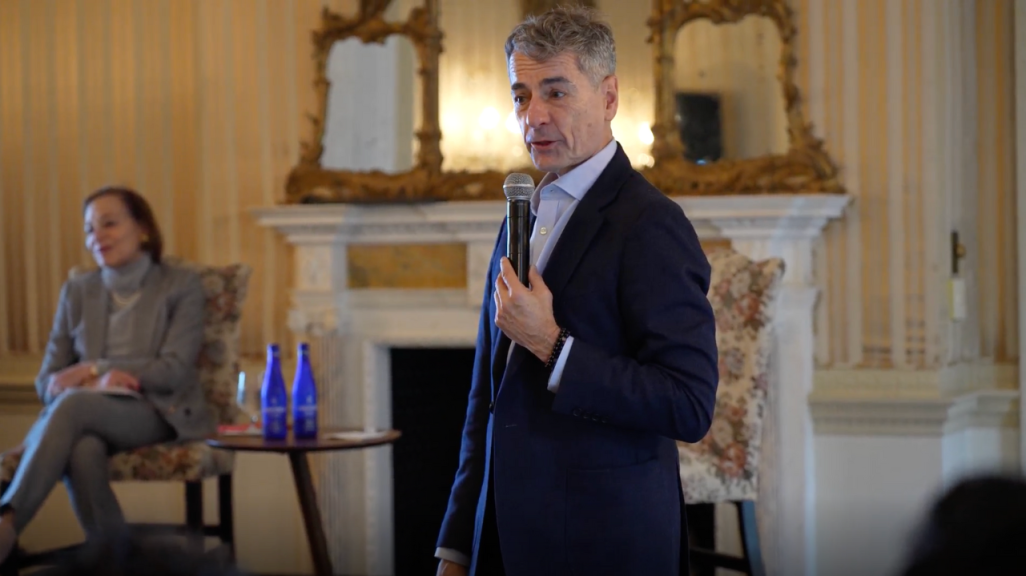
“People forget about this, but the Washington Consensus was largely about Latin America,” said prominent Chilean economist Andrés Velasco during a December 4 event at the New York headquarters of Americas Society/Council of the Americas. Velasco reminded that some 35 years ago, when a group of the world’s leading economists sat down at the Institute for International Economics in Washington, DC, they came up with a set of 10 policy prescriptions largely designed for a region emerging from a debt crisis and hunting for stabilizing macroeconomic policies in the post-Cold War era.
Now, many Latin American countries suffer from persistently high inequality, security crises, and weakening faith in democracy while facing global challenges like climate change and AI’s impact on the future of work. —All of that begs the question: Do we need a new economic recipe?
Velasco is one of three co-editors of The London Consensus: Economic Principles for the 21st Century, a book that brings together more than 50 top economists and policymakers from around the world to ignite that conversation.
In this episode, we hear AS/COA President and CEO Susan Segal’s conversation with Velasco, the current dean of Public Policy at the London School of Economics and Political Science. In it, he called on economists to approach policy prescriptions more like medical doctors. “ We really want to know your symptoms, and we really want to know some test results before we say. ‘Take the blue pill, the yellow pill, the white pill,’” he said, advocating for a move away from one-size-fits-all policies.
The former Chilean finance minister also stressed the need for an “able government” with the capacity to implement proactive redistribution policies that ensure social well-being while investing in innovation to drive economic growth. “ You can have a very efficient economy that doesn't grow. In fact, a perfectly efficient economy by definition will not grow. Why is that? Because growth follows from innovation,” he said. At the same time, Velasco advised that each country’s definition of innovation will be contingent on its economic and political realities.
“You can follow a very good economic policy and that economic policy may have very undesirable political consequences. And if the political consequences are undesirable, the next government is not going to follow the same policies,” he pointed out. As a former cabinet member, Velasco highlighted the need for governments to craft an appealing political narrative to get buy-in from voters. “In a democracy, you need a story. I train students to be very good with numbers and equations, and once I'm done training them with numbers and equations, I say, ‘never use that in public.’”
Subscribe to Latin America in Focus, AS/COA's podcast focusing on the latest trends in politics, economics, and culture throughout the Americas.