


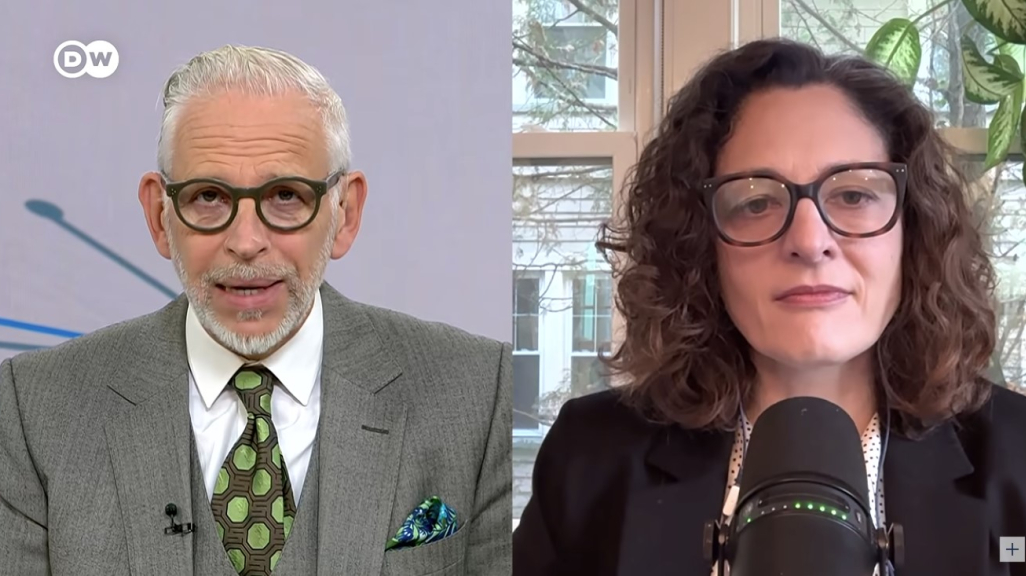
Carin Zissis on DW about What U.S. Midterm Results Mean for Immigration Policy
Carin Zissis on DW about What U.S. Midterm Results Mean for Immigration Policy
Migrant caravans are heading for the U.S.-Mexico border amid misinformation about post-midterm policy shifts, explained the AS/COA vice president.
In an interview with Deutsche Welle, Carin Zissis, vice president of Content Strategy and editor-in-chief of AS/COA Online, covered what’s behind a new migrant caravan headed through Mexico toward the U.S. border, as well as migrants’ expectations of U.S. immigration policy shifts following the Democrats’ victories in the U.S. midterm elections.
The migrant caravan headed for the United States is hoping that legislative shifts spell less restrictive immigration enforcement. Zissis explained that the newly elected Congress will not take office until January and that President Donald Trump’s administration will remain in power. “The concern is that this is just really not something that will change from day to night,” she said, adding that “immigrants are making this perilous journey with misinformation with an idea that things can change that quickly.”
When asked about restrictions on migrant caravans in Mexico, Zissis said that Mexican authorities had already taken steps at the country’s borders. “Once people are traveling through the country, there are certain laws, constitutional protections for people, migrants traveling through Mexico,” she said. “So really where you’re seeing restrictions primarily is at the northern and southern border.”
Zissis described social media as “a catch-22 for migrants.” It can provide information about safer routes, she said, but it can also spread “misinformation from bad actors, or false news” about how quickly policies might change. “That contributes to this being a really dangerous trip for a lot of migrants,” Zissis added.
Despite a decrease in migration across the U.S. border, Zissis said people were ready to travel again. “That means that the drivers for people to migrate north still exist and there’s still this humanitarian need.”