AQ Cover Story

Share

Americas Quarterly's New Issue: Latin America's Space Moment

The magazine looks at how countries in the region are jumping into the booming global space industry amid the U.S.-China rivalry.

New York, July 14, 2026 — "Several Latin American countries are emerging as protagonists in the new space economy," write editors in Americas Quarterly's new issue. "Sitting just two degrees south of the equator, where the planet spins fastest and rockets get a free boost toward orbit, Ecuador is courting investors with the promise of cheaper launches. Plans for spaceports are now on the table in Brazil, the Dominican Republic, Peru and Uruguay, while Argentina and Brazil already build satellites that help farmers assess crops and governments respond to disasters."

After Elon Musk’s SpaceX going public in June in a record-setting $75 billion share offering and with the U.S-China rivalry as backdrop, countries in the region are pushing for their technological independence and are determined to be more than a battleground.

In AQ's new issue, Laura Delgado López, a leader on Latin American space issues and fellow at Florida International University, writes that across the region, professionals in the space industry are consistently advocating for solutions with sovereignty in mind. However, she notes that no country or company can operate in space alone. The goal is not independence but resilience: the capacity to manage risk and diversify partners, she says.

"Interdependence is the nature of the domain," Delgado López writes in her story, titled "Latin America's Quest for Space Sovereignty." She continues, "This creates a genuine tension at the heart of the space autonomy narrative. Reducing vulnerability is important, but it should not be confused with pursuing total technological independence."

Juan Pablo Toro, senior research fellow at the think tank AthenaLab and professor of journalism at the Pontificia Universidad Católica de Chile, is the author of another of the issue's stories, in which he describes future and current spaceports in the region, the determination of Latin American governments to be part of the industry's growth and the key challenges they face.

Brazil's Landmark Satellite Program

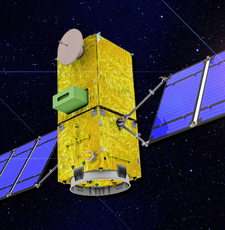
Satellite

Emilie Sweigart, editor at AQ, writes about how Brazil plans to put two new units of the satellite Amazônia-1 into orbit as part of a mission to observe and monitor deforestation in the Amazon and in other natural and agricultural areas.

Argentina's Global Satellite Aspirations 
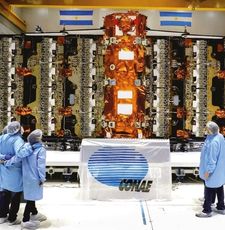
Saocom

Argentina’s SAOCOM satellite program stands out as a rare example of sustained strategic investment as a time of fiscal constraints, writes Buenos Aires-based journalist Horacio Aizpeolea. He also reports a second story about how the company Satellogic is pushing competitors to rethink who owns the sky.

Latin America Has a Space Agency
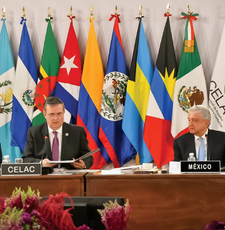
Andres Manuel Lopez Obrador and other CELAC leaders

Mexico-city based journalist Cyntia Barrera Díaz reports on how the Latin American and Caribbean Space Agency (ALCE) faces pressing questions about its political support and future funding.

Latin America's Final Frontier

Susan Segal

In the space industry, the private sector cannot go it alone, writes AS/COA's President and CEO Susan Segal, who says that governments will need to provide the regulatory framework, infrastructure and sometimes the capital necessary for success.

Also in this issue:

  • Robert Muggah, co-founder and research director of the Igarapé Institute, offers solutions to Latin America's prisons crisis and growing inmate population in the region.
  • Citizens and leaders are abandoning the rules of liberal democracy in Latin America, write academics Juan Pablo Luna, Andrés Malamud, and Alberto Vergara. They look at what can reserve the trend.
  • Renata Keller, associate professor of history at the University of Nevada, looks back at when the Cuban missile crisis shook the hemisphere.

The full issue is available at americasquarterly.org

View the PDF.

To request interviews with the authors, or to request publication permission, please contact AS/COA Media Relations at mediarelations@as-coa.org