Venezuela's Twin Earthquakes: What Happened, Relief Efforts, and How to Help
Venezuela's Twin Earthquakes: What Happened, Relief Efforts, and How to Help
The June 24 disaster caused large-scale damage to Caracas and La Guaira. Learn about the catastrophe, as well as the U.S. and Latin American response.
This coverage was originally published on June 25, 2026 and has since been updated.
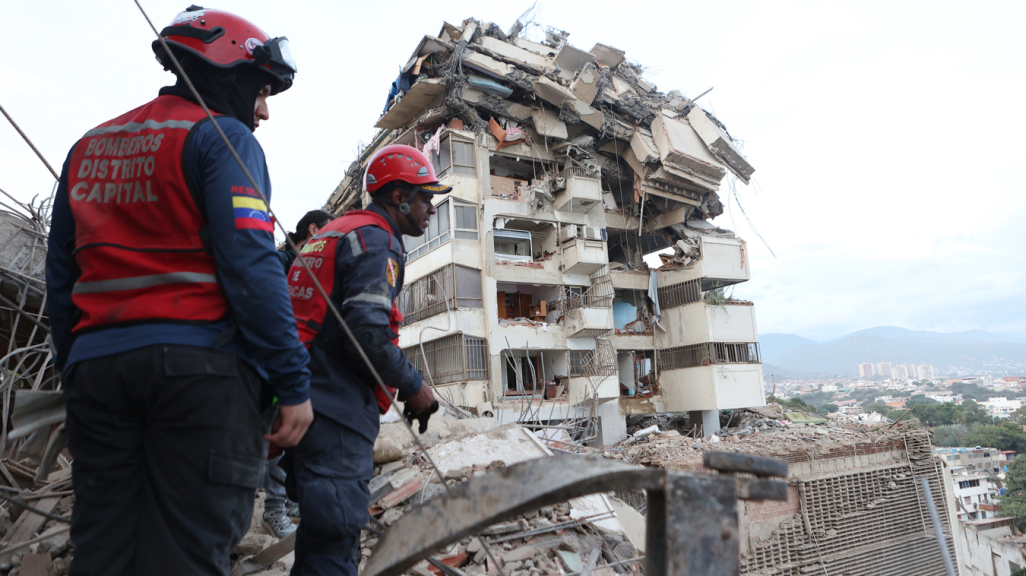
Two earthquakes, occurring within a minute of each other, struck Venezuela on June 24. The epicenter of the quakes, the strongest to hit the country in more than a century, was roughly 100 miles west of Caracas and the capital, as well as the city of La Guaira, sustained large-scale destruction.
The disaster comes at a challenging moment for the country, which is seeking to stabilize its economy after the long rule of Nicolás Maduro. Interim President Delcy Rodríguez declared a national disaster on the same night as the quakes, saying: “I ask that we act in national unity, with calm, and that we know that together we are going to overcome this tragedy.”
AS/COA covers the details of the disasters, the context of Venezuela’s vulnerable infrastructure, and the international response.
At 6:04 pm on June 24, an earthquake of magnitude 7.2 on the Richter scale struck near Venezuela’s Central Caribbean coast, with its epicenter near the town of Morón. About 40 seconds later, a second quake of 7.5 hit just to the east of the first one.
The second earthquake was the strongest to hit Venezuela in 125 years. In 1900, a 7.7-magnitude temblor hit near Caracas and remains the strongest on record. Prior to the double tremors of June 24, the most recent earthquake in Venezuela to exceed 7.0 on the Richter scale was in 2018 and claimed five lives. But the fatalities and infrastructural damage wrought by this year’s earthquakes will be higher, in part due to their relative shallowness. In 2018, the 7.3 quake emanated from 93.2 miles underground; the epicenter of yesterday’s 7.5 earthquake was 6.2 miles below the surface.
In an update issued in the afternoon of June 30, the government reported 1,943 confirmed deaths and at least 10,571 injured. But the toll is expected to rise as emergency services continue search and rescue efforts. The U.S. Geological Survey, using statistical analysis based on historical data, predicts the count could reach well into the thousands.
While the quake was felt in neighboring Brazil, Colombia, and the Dutch Caribbean islands off Venezuela’s northern coast, no reports of damage or injuries have been logged in those areas at this time.
The preexisting precarity of Venezuela’s infrastructure, due in part to the country’s governance and economic crisis, has only amplified the disaster and complicated rescue efforts. Even before June 24, nearly 8 million citizens were categorized by the UN as in need of humanitarian support.
Per a June 29 government report, at least 15,800 people have been left without a home, while the earthquakes damaged around 2,500 buildings. However, NASA researchers, using satellite analysis, estimated that "approximately 58,870 buildings were likely damaged or destroyed." The U.S. Geological Survey has noted that many of buildings in the affected regions are not built to resist an earthquake, constructed in many cases of unreinforced brick masonry and adobe blocks.
Venezuela’s electrical grid has been prone to prolonged and chronic power outages, and this disaster knocked out power in large parts of the country. Cell service suffered severe interruptions and Internet connectivity dropped from 90 percent to 65 percent in the hours after the disasters. However, on June 25, Starlink announced that it would be deploying terminals to restore coverage in affected areas. And on June 29, the president of Venezuela’s telecommunications business chamber said up to 70 percent of service had been restored to La Guaira.
Providing care for the injured will be a massive challenge for the country’s healthcare system. Experts note Venezuela’s hospitals and clinics have been resource strapped for years and have recently faced a doctor shortage.
Another complication? Venezuela’s censored social media and press. The UN called upon the country’s telecommunications regulator, CONATEL, to unblock access so that critical information about the disaster response could flow. As of June 25, some Venezuelans reported the ability to access X, which was previously unavailable.
Rescue efforts have been hampered by the state’s limited capacity, after years of economic crisis and mismanagement gutted Venezuela’s emergency response network and resulted in a shortage of heavy machinery, such as excavators, which are essential in post-earthquake response. Rodríguez has asked the private sector to contribute such machinery.
The interim president has already begun conversations to secure reconstruction funding, including a potential $200 million package from the International Monetary Fund. The U.S. Geological Survey estimates damages are likely to run into the billions of dollars. This will complicate the country’s economic recovery efforts; the Rodríguez administration had just begun efforts to restructure its $240 billion debt.
Offers of aid and support have poured in from across the hemisphere and world, with Rodríguez reporting on June 30 that more than 3,300 rescue workers had arrived from 27 countries. In an effort to coordinate the hundreds of disaster response personnel coming into the country, the Venezuelan government has assigned geographic zones to each international response team.
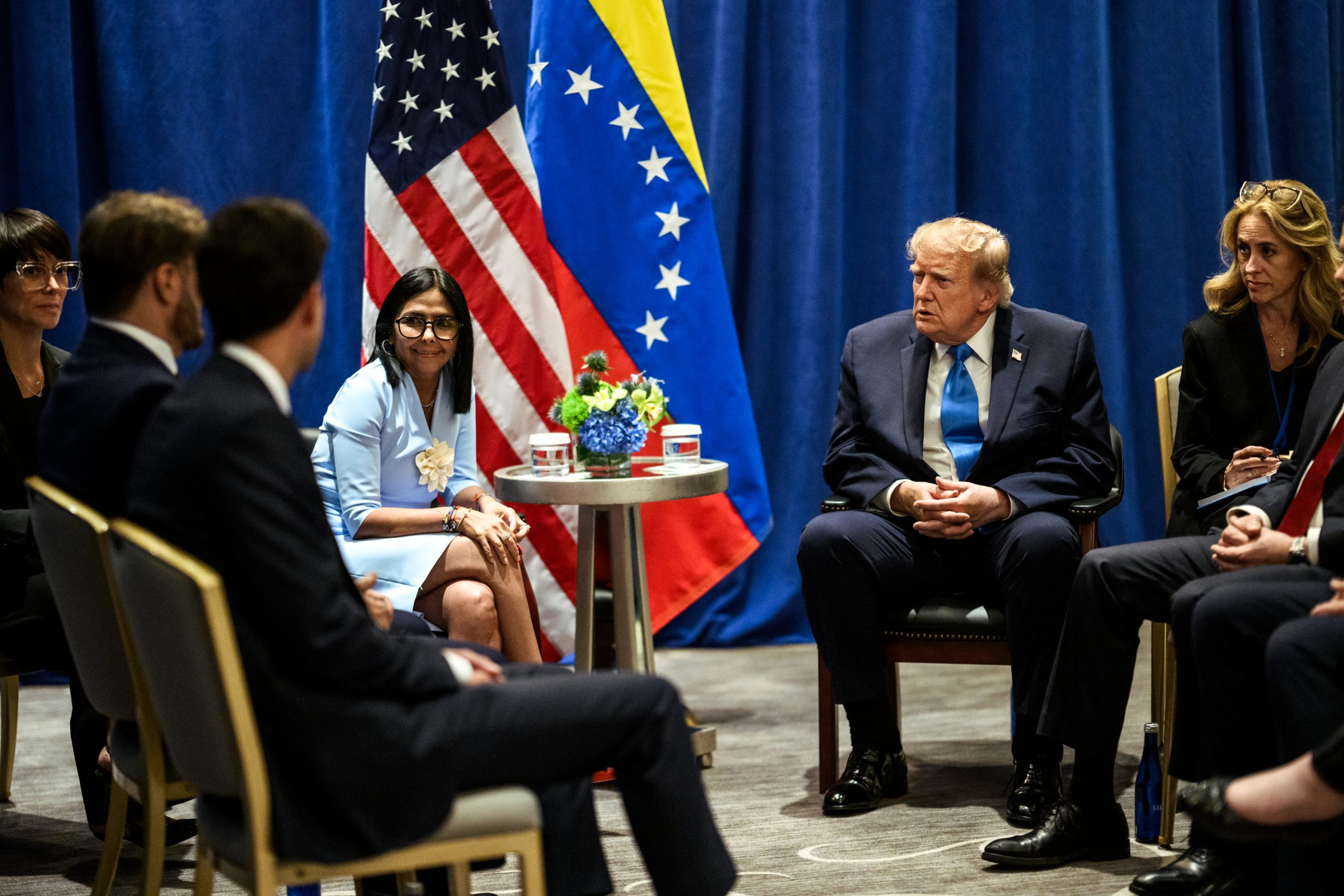
The United States, which captured and removed Maduro from power on June 3 and has been facilitating an economic opening, has sent search-and-rescue teams, in addition to resources and aid. On June 26, U.S. Southern Command (Southcom) informed that it deployed specialized troops and emergency personnel, load-bearing equipment, and assistance on overhead imagery to assess damage in coordination with the State Department. The search-and-rescue teams include more than 300 specialized firefighters and 23 search dogs from Virginia, Los Angeles, and Miami.
“The two major earthquakes that just hit the great people of Venezuela are both massive in scale and have left a devastating number of deaths. The U.S.A. stands ready, willing, and able to help!” - President Donald J. Trump pic.twitter.com/laeZ9nvTMf
— The White House (@WhiteHouse) June 25, 2026
U.S. Southcom said in a June 28 press release that Air Force troops had helped partially reopen Caracas’ Simón Bolivar International Airport to facilitate aid and equipment deliveries. Initial damage from the earthquakes forced the UN to reroute emergency flights through the La Carlota military airbase. A June 29 State Department press release noted that Marines are working with Venezuelan authorities to repair the Port of La Guaira "for humanitarian operations.”
In terms of financial aid, the State Department said on June 29 that the U.S. government had committed $300 million to relief efforts, including a $100 million contribution to a fund coordinated by UN Office for Humanitarian Affairs (OCHA) and $100 million in donations to various NGOs operating on the ground. Moreover, the U.S. Treasury waived certain sanctions on Venezuela for a four-month period to allow relief funds to be sent to the country. And on June 26, the OCHA allocated $15 million in support of urgent relief efforts.
Support has also poured in from across Latin America, including from earthquake-prone countries such as Chile and Mexico with a long history of related disaster response.
Argentina: A team of Argentine soldiers specialized in disaster response and rescue dogs arrived in Venezuela on June 27. They are set to be joined by another contingent that includes emergency medical responders, urban search-and-rescue specialists, and veterinarians, as well as water treatment equipment and a drone.
Brazil: On June 26, the country sent 36 firefighters and eight technicians as part of a search-and-rescue team, along with eight tons of equipment. President Luiz Inácio Lula da Silva added that materials to erect a field hospital would arrive the following day, as well as “one hundred solar-powered water purifiers, medications, and medical supplies for surgeries.”
Colombia: Venezuela’s neighbor sent a specialized urban search-and-rescue team (USAR COL-1) from its Disaster Risk Management National Unit, which included four rescue dogs, and 12 tons of equipment on June 25. USAR COL-1 is comprised of firefighters, police, military and civil defense troops, and Red Cross workers, as well as technical support from Colombia’s Space Force. The unit is based in La Guaira, the area most affected by the earthquakes.
Este es el instante en que los rescatistas del USAR COL-1 lograron sacar con vida a Moisés, el niño de 11 años que permaneció atrapado bajo los escombros en La Guaira, Venezuela.
Detrás de cada imagen hay horas de esfuerzo, trabajo en equipo y una sola convicción: no rendirse… pic.twitter.com/5hUycKLO15— UNGRD🇨🇴 (@UNGRD) June 27, 2026
Cuba: Havana announced the June 29 arrival of rescue workers and doctors to boost the efforts of medical brigades already present in Caracas and La Guaira prior to the earthquakes.
Dominican Republic: The Caribbean country deployed military troops trained in emergency response and search-and-rescue operations on June 25. Three days later, an additional team of rescue workers from the Dominican disaster management and emergency operations departments and civil defense departed for Venezuela.
Ecuador: Quito sent a team of 60 specialized firefighters along with two rescue dogs to La Guaira. The military then delivered 14 tons of aid on June 29.
El Salvador: Less than four hours after the June 24 earthquakes, Salvadoran President Nayib Bukele wrote on X that 300 rescue workers and paramedics were “ready to leave for Caracas.” Per Bukele’s social media feed, Salvadoran rescue teams have been working in Caraballeda, a coastal town in La Guaira state. The Salvadoran president said on June 26 that six planes of humanitarian aid were sent to Venezuela.
Mexico: President Claudia Sheinbaum announced a deployment of over 250 military troops, including search-and-rescue teams, medical personnel, and 18 search dogs. The Defense Secretariat confirmed the June 25 departure of this mission, alongside 8.4 tons of equipment and 10.7 tons of medical aid. The Mexican team is supporting rescue efforts in La Guaira, including by providing emergency medical care and assisting in the recovery of bodies.
On June 29, Sheinbaum said Mexico stands prepared to send more teams if necessary and informed that the Venezuelan government had requested additional aid in the form of water purifiers, power generators, and non-perishable food items.
Also arriving from Mexico was a group of trained volunteers from the Tlatelolco International Rescue Brigade. Better known as Los Topos, this group formed following Mexico’s 1985 earthquake and has since assisted in disaster response across the world, including the 2004 tsunami in Indonesia and 2010 earthquake in Haiti.
Panama: The country sent a team of 63 rescue workers to the cities of La Guaira and Valencia. President José Raul Mulino pledged more than 200 tons of humanitarian aid in the form of food, medicine, and other essential supplies.
Peru: The country’s search-and-rescue deployment is composed of 44 specialist volunteer firefighters alongside rescue dogs. The interim government also committed to donating $80,000 worth of food, clothing, tents, and other emergency items.
🇵🇪🐕🦺 ¡Kaira también viaja a Venezuela para salvar vidas!
Kaira, una Belgian Shepherd Malinois de cuatro años, integra el equipo de más de 40 bomberos voluntarios del Grupo Especializado USAR del @cgbvpoficial que viajó a Venezuela para apoyar las labores de búsqueda y rescate… pic.twitter.com/0e5WoKP2Ze— Ministerio del Interior 🇵🇪 (@MininterPeru) June 27, 2026
AS/COA’s Young Professionals of the Americas has gathered information about reputable organizations supporting recovery efforts. Please see options of ways to provide help from the United States:
World Central Kitchen (WCK): Provides freshly prepared meals to displaced families, first responders, and emergency personnel in affected communities. WCK mobilizes quickly after disasters by partnering with local restaurants and chefs. Learn more.
Doctors Without Borders (Médecins Sans Frontières – MSF): MSF is delivering emergency medical supplies, including Individual First Aid Kits (IFAKs), while supporting overwhelmed healthcare facilities and emergency responders. Donate.
International Rescue Committee (IRC): The IRC is providing emergency relief and humanitarian assistance to families affected by the earthquakes. At the time of publication, donations are being matched two-to-one, doubling your impact. Donate.
Cáritas Venezuela: One of Venezuela's largest humanitarian organizations, Cáritas is working through local churches and community networks to deliver food, hygiene supplies, shelter assistance, and other essential aid directly to affected families. Donate.
FUNDANA: A long-standing Venezuelan nonprofit focused on supporting vulnerable children and families. In the wake of the earthquakes, FUNDANA is helping meet urgent needs for families impacted by the disaster. Learn more.
Hazlo Hoy (Local Emergency Relief Campaign): A Venezuelan grassroots fundraising initiative coordinating resources and financial support for earthquake response and recovery efforts. Contribute.
Community Relief Fundraisers: Several community-led fundraising campaigns are supporting emergency relief efforts for earthquake survivors, including verified GoFundMe campaigns that provide direct assistance to affected families. Donate.
Direct Relief Campaign: A dedicated donation page supporting earthquake response efforts in Venezuela. Contributions help fund immediate humanitarian assistance where it is needed most. Donate.