José Enrique Arrioja on BBC News about the Post-Earthquakes Crisis in Venezuela
José Enrique Arrioja on BBC News about the Post-Earthquakes Crisis in Venezuela
The AQ managing editor spoke on the humanitarian impact of the twin natural disasters and the state of the country's logistical and medical infrastructure.
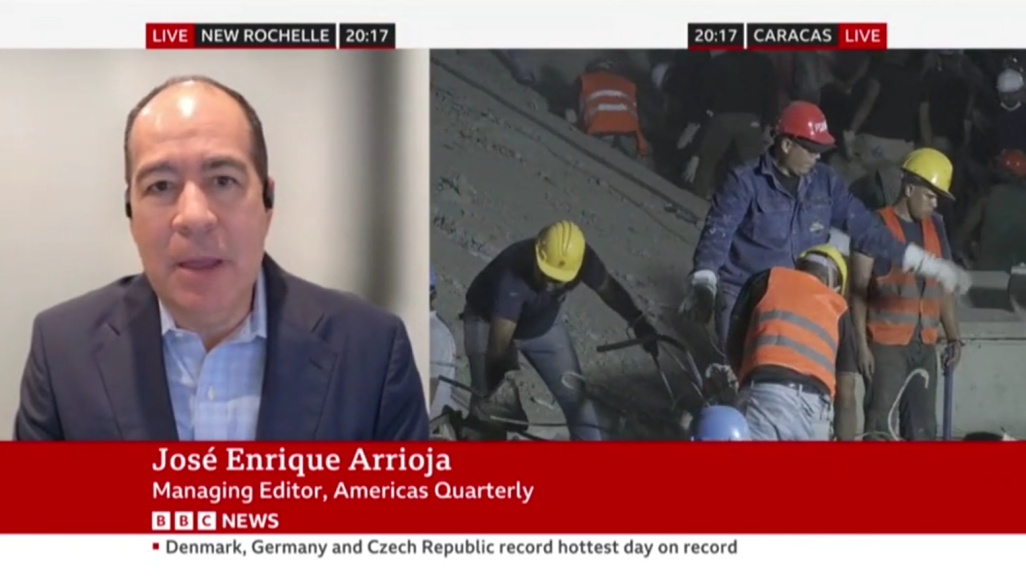
José Enrique Arrioja, managing editor of Americas Quarterly, spoke on BBC News about the devastating situation in Venezuela after twin earthquakes struck the country on June 24 and the crisis response by the current administration.
Anchor Carl Nasman asked Arrioja about the current state of the country. According to the expert, Venezuelans face a harsh reality marked by the slow mobilization of local authorities. "Hearing from friends and acquaintances... they tell us a picture of an incredible pain as we know it, and desperation, frustration," said Arrioja. "And that comes from the slowness that the government has been showing during these dire times."
Arrioja pointed out a delay in internal military deployment, noting that local armed forces only began moving in a substantial way after foreign assistance from the U.S. Southern Command (SOUTHCOM) had already arrived on the ground. "That type of situation tells you a lot about the capacity—or incapacity—of the government to actually react to all of this," Arrioja explained.
He attributed the response delay to several factors including a severe lack of coordination and internal fracturing. "This is an interim government with political factions, rivalries in there for control. And this is something that might be also the explanation," he said.
The managing editor mentioned that the catastrophe has hit seven out of the country's 23 states, affecting more than 73,000 families who are currently in dire need of medical and humanitarian attention. However, Venezuela's medical infrastructure—severely degraded by an economic crisis dating back over a decade—lacks the basic resources required to handle the situation. Hospitals "are poorly supplied [and] have been poorly kept throughout the years," noted Arrioja.