Brian Winter on CNN about Cuba's Worsening Humanitarian Situation
Brian Winter on CNN about Cuba's Worsening Humanitarian Situation
Economic reforms "seem more like a political gesture on the part of the Cuban government," said AS/COA's vice president of policy.
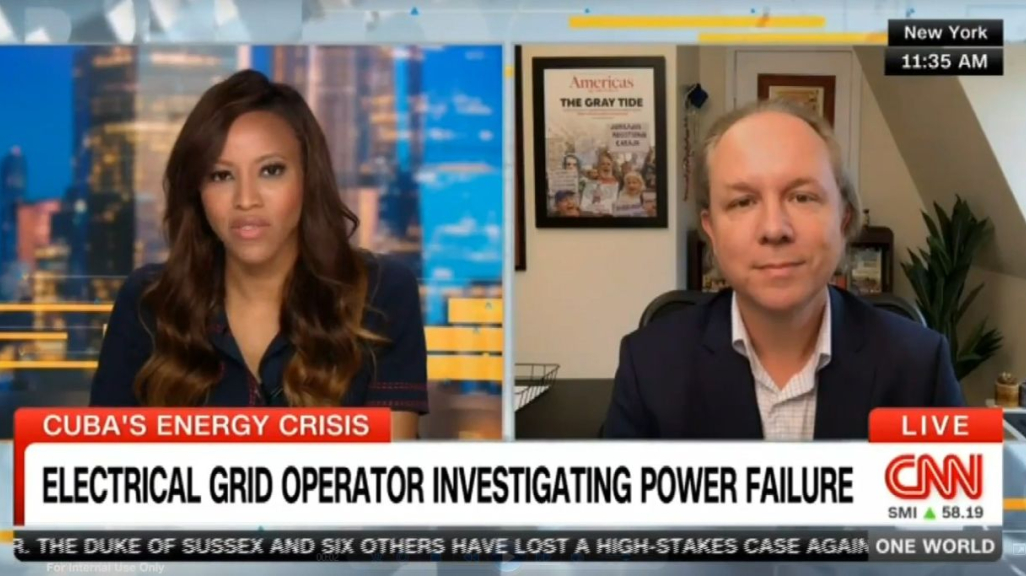
In an interview with CNN, Brian Winter, vice president of policy at Americas Society/Council of the Americas, spoke with anchor Zain Asher about the worsening humanitarian situation in Cuba and the Trump administration's oil blockade.
As the island faces total electrical grid failure and fuel shortage, Asher asked Winter to explain what happens to Cuba if the crisis continues, in terms of the impact on the economy infrastructure, food shortages, potential protests, and social unrest.
"I think we're in the end game now," responded Winter. "Since the beginning of this year, when the Trump administration announced this blockade on fuel imports into Cuba, the plan was always to get to the Caribbean summer, to these hot months of July and August, when even under good conditions, life in that part of the world can be unbearable, in the hopes, from the Trump administration's perspective, of generating some kind of political change. Here we are, and conditions on the island, according to accounts from your correspondent, have become exceptionally difficult, not just because of the inconvenience of not having electricity, but the effect that it has on things like surgeries in hospitals and the amount of food that is available for Cubans to eat. The question now is whether that will or whether it even can result in some kind of political change."
Asher and Winter also talked about the economic reforms announced this week by the Cuban government.
"The thing about capitalist reforms is that they don't depend exclusively on the government," said Winter. "It is relevant that the Cuban government has announced these changes, which would allow, for example, investment by the descendants of Cuban expats in places like Florida and the private sector in Cuba for the first time. But you have to ask yourself, who would be willing to invest in these conditions, especially if you bet, as some people do, that the Cuban regime is... that they're short timers, that they're not going to be around for much longer. So, the way you ask the question, Zain, this seems more like a political gesture on the part of the Cuban government. No one really senses that it's going to be enough to placate the Trump administration."